
|
This exceedingly rare instrument was purchased in
a severely distressed condition from a perpetual traveller during
November 1995.
Even though the instrument was cocooned in an excessively
heavy, wooden, "coffin-type" travel case - the instrument was
literally falling to pieces when one lifted it up by hand.
The instrument was still in its original three string
form with wooden barrels that still had thick gut strings wrapped
around them. In brief the damage consisted of;
- Open cracks that had never before seen glue.
- Heavily
corroded screws and nails aplenty that held the table and back
down to the ribs and blocks.
- Some worm damage to the back.
- White emulsion
paint damage to the treble-side lower table and centre rib.
- A
heavily mutilated scroll and peg box covered in a thick red paint.
Yes - we estimate that it must have been lying around
neglected and unplayed for between 60 to 100 years - quite possibly
more.
The instrument amounted to little more than a couple
of boxes of kindling wood – so the biggest concern - besides the fairly
substantial asking price - was whether the instrument was salvageable.
Yes - it was definitely a long term - colossal challenge
type project. Not only would a reconstruction project - "A total rebuild." -
of such immense proportions involve many, many long hours of dedicated
restoration work, but in-depth thought, analysis and careful consideration
with regard the optimum approach would be necessary throughout
proceedings.
The project finally got underway in mid June 1999.
Over the next nine and a half months in excess of 800 hours of
almost undivided attention was committed to this one instrument.
Yes in total the bill came to 24K (1K = One thousand
GB pounds) - a UK, if not a world record price for a bass restoration.
Every repair technique known plus many more were
utilised to return this long lost treasure back to its former glory.
The overall condition of the instrument wasn't quite
museum quality – so
by converting – it would appeal to a much wider market.
Yes - the most pleasing aspect about good restoration
work - is that it is difficult to see exactly what has been done.
If a restorer has accomplished his job well - comments such as "What have
you done to it" or "Gosh, it's in absolutely fabulous
condition" - are really satisfying to hear.
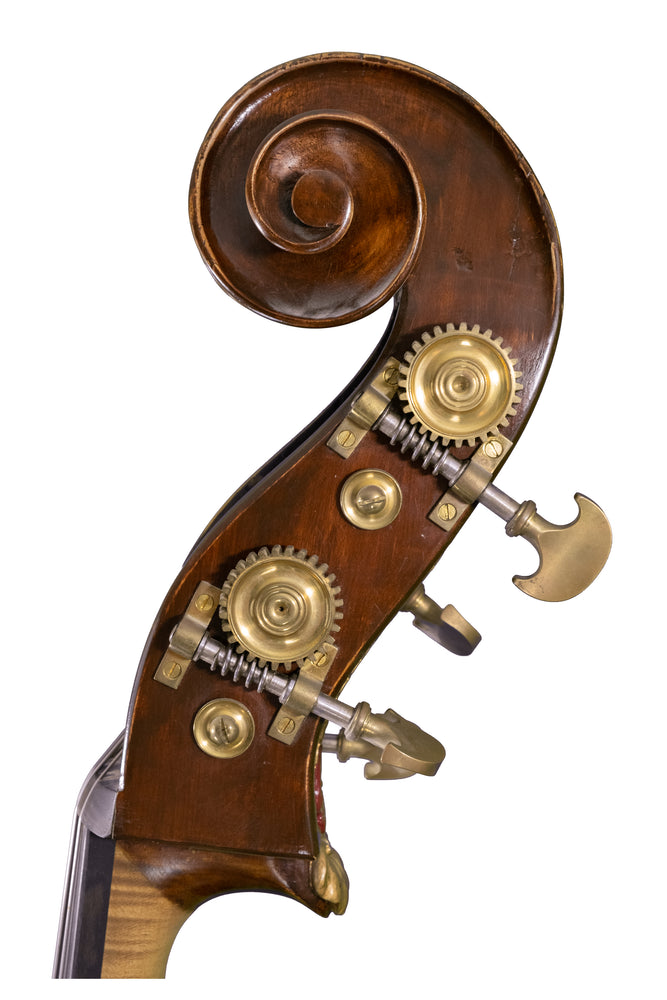
Yes – the set of cogs were made for the instrument by Peter
Barnaby of Louth in Lincolnshire. The "Gull-wing" design
was inspired by two Classical 17th century designs that were found
in a museum catalogue. Each cog and worm was made entirely by hand
and is a work of art in its own right. Collectively they complement
the instrument perfectly.
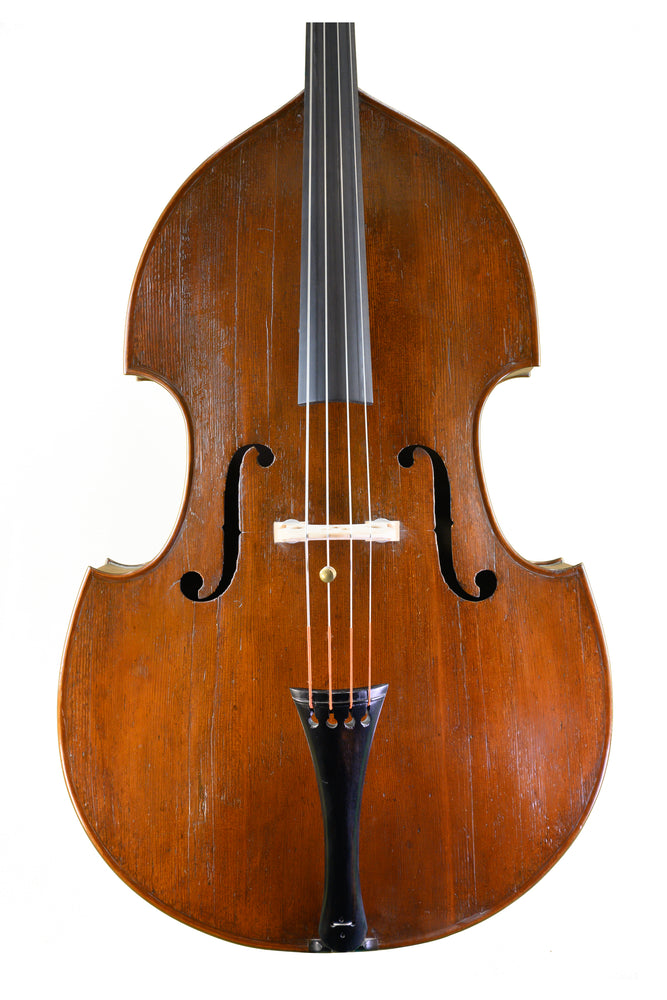
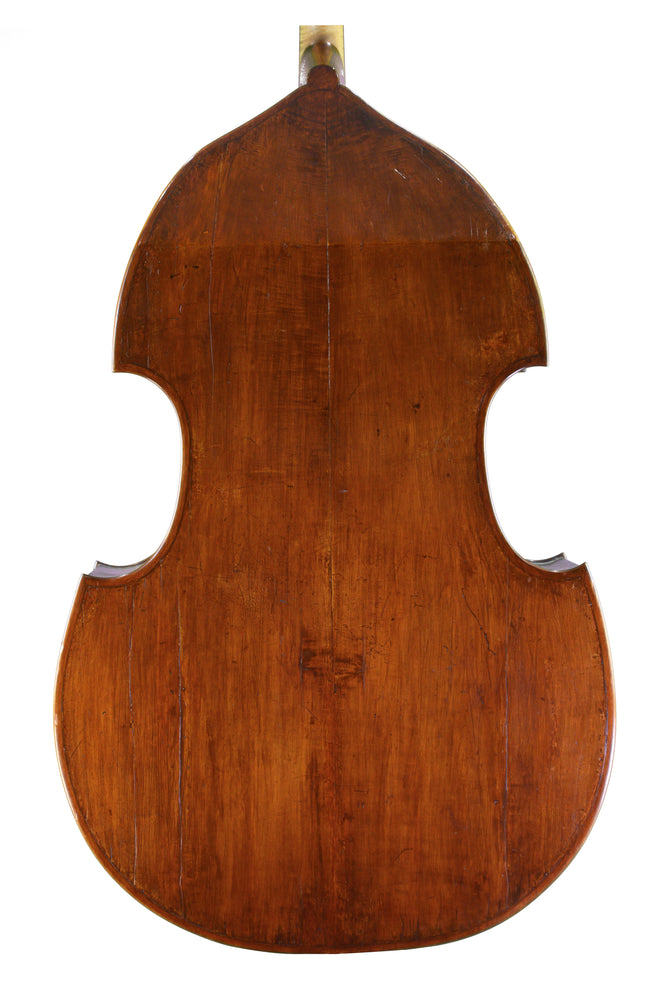
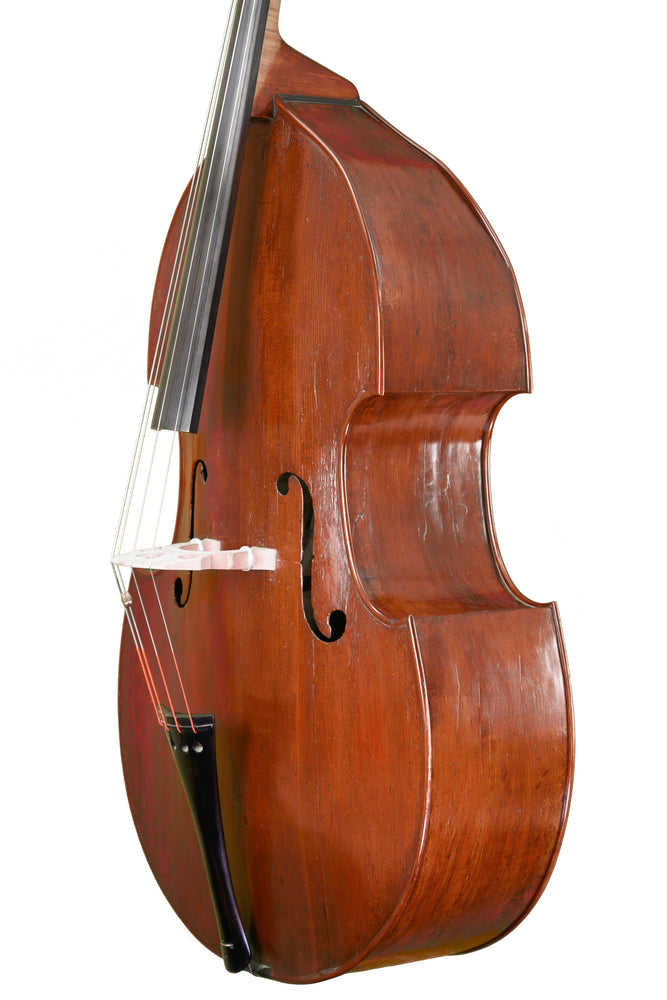
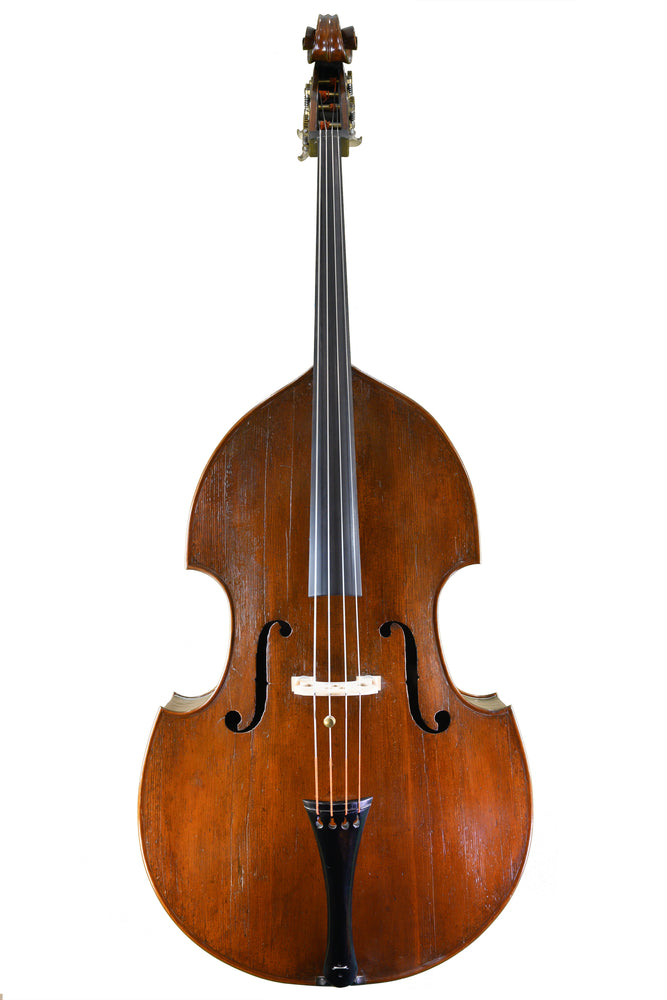
The external features of this instrument were to
point strongly to the makers Giovanni and Francesco Grancino of
Milan and suggest that this was an instrument of well over 300
years in age. Yes - more than three centuries old. Confirmation
was to be provided when the table was removed revealing all the
original methods of construction. Of most significant value was
the fact that the top and bottom blocks, the four corner blocks,
the linings, centre brace and bass bar were all completely original.
Yes – it is highly unusual to find a Classical instrument
that hasn't already been changed or messed about. To closely inspect
and examine the internal fundamentals of an exceedingly rare Brothers
Grancino double bass was indeed a rare opportunity.
Yes – we managed to photograph and document both the external
and internal features of the instrument. In addition the many exciting
and innovative restoration techniques utilised throughout the project
have been photographed and documented.
For an instrument that has undergone the equivalent
of a heart bypass operation and brain surgery at the same time
- the sound is surprisingly mature and rounded. There is a wonderful
touch of clarity and brightness to the sound and an absolute evenness
over the entire tonal range. Bowing feels incredibly articulate – with
every movement producing an instant tonal response.
Jonas Tauber, from Switzerland, is a multi talented
musician who has worked with a large and varied selection of orchestras,
groups and musicians. Included in the list is the Oregon Symphony,
Pink Martini, Michael Vlatkovich, Rudy Smith, to name but a few.
Jonas has produced his own series of albums for
Origin Records, in Zurich, including a solo album of improvised
pieces that has received great critical acclaim.
Several video clips are now available within our
Multimedia Section - see Jonas play the Grancino in a specially
recorded performance at the Shoppe.
Yes for sure - it's definitely an instrument to
die for. If you are a soloist, principal player in a chamber ensemble,
collector or investor - then this instrument has extra-special charm.
No problem. Please contact us for an appointment.
This is an instrument of undoubted visual and tonal
distinction, As far as we are aware it is also the only Brother's
Grancino instrument in existence.
LOB (length of back) - 110.8cm (43.65in)
Width across upper bouts - 53.2cm (20.95in)
Width across middle bouts - 38.1cm (15.00in)
Width across lower bouts - 71.1cm (28.00in)
Depth of lower ribs inc both plates- 22.7cm
(8.92in)
Body Stop - 56.8cm (22.40in)
String length - 101.2cm (39.77in)
|