
|
Having been safely housed in a South West of England
Grammar school for innumerable years the overall fabulous condition
of this most intriguing of instruments initially suggested to us
that it was only about 70-80 years old. Our second estimate was
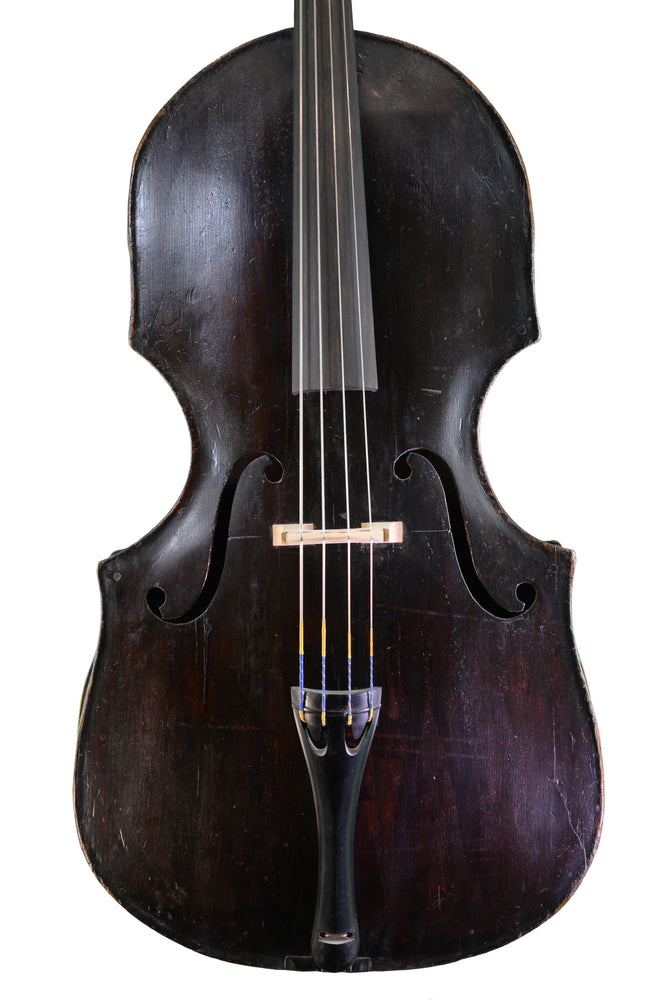
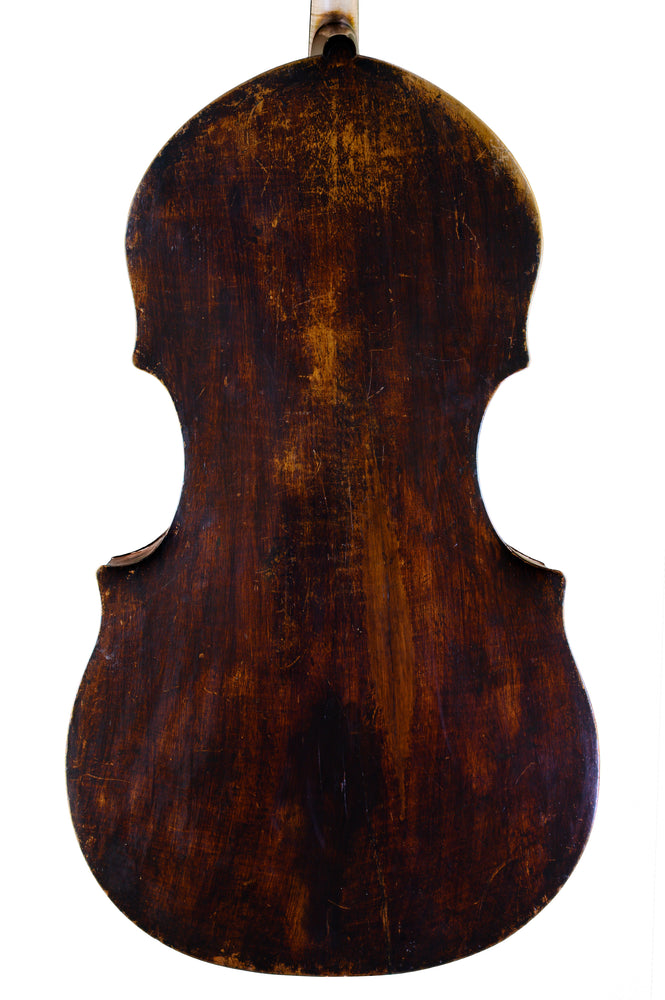
to be in total contradiction. The lack of purfilling, the thin one-piece
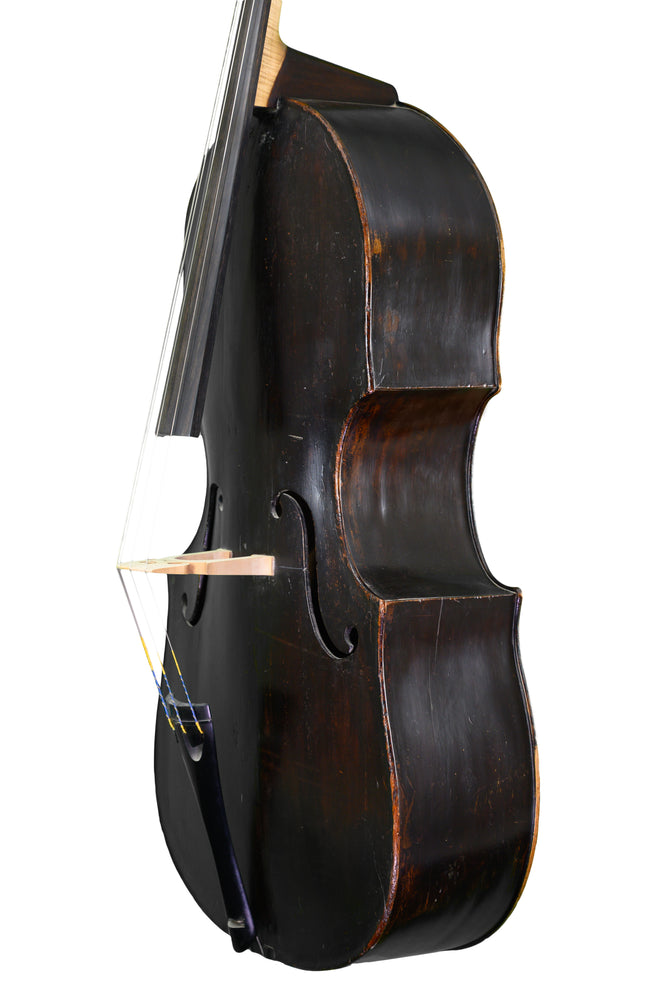
semi-swell back, the cello like shoulders and unusual crescent shaped
centre bouts strongly suggested that this was some kind of transitional
instrument that dated right back to the second half of the 16th
century. We were confused to say the least. After considerable discussion
our second estimate seemed the more likely. In terms of violin history
this was a very exciting period, for there was considerable experimentation
taking place in an endeavour to create instruments that produced
much stronger sounds than the viols that were in current use. One
only has to view paintings and sketches of the period to learn that
there were gamba type instruments of all sizes and forms being used.
Even though the dimensions of this double bass were larger than
average for the period, there was the very real prospect that this
instrument was going to offer us a rare insight into the earliest
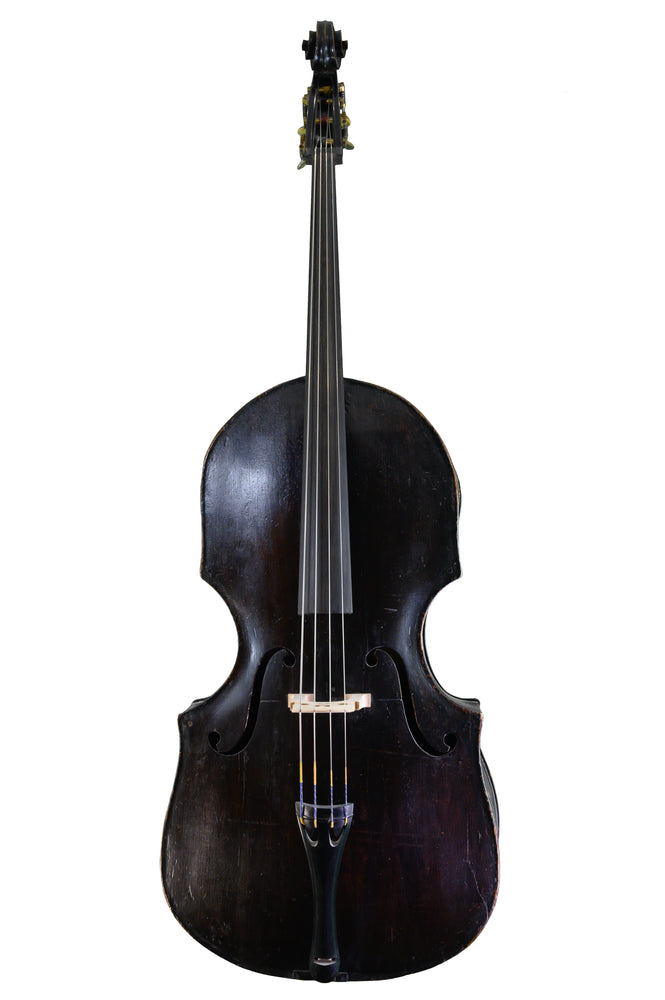
history of the double bass. The awe-inspiring form appeared to be
a precursor to the instruments of both Gasparo da Salò [1540-1609]
and his apprentice Giovanni Paolo Maggini [1580-1630] - both
recognized because of their experimental work as highly important
contributors to the form of the violin and the double bass as perceived
today.
Following the removal of the table, the workmanship
and materials used suggested that this instrument was most likely
to date from the late 18th century. Can you believe it - right in
the middle of our two estimates. Emanating from Brescia (Northern
Italy - to the East of Milan) or possibly slightly further North
in Bolzano it was here that several generations of the Albani family
were born and worked.
Characteristic of this family of makers is the deep-dark-red
varnish that has oxidized and turned virtually black giving an appearance
of much greater years. We can clearly see by the "tubby"
contours of the table arch that Stainer has had a strong influence
on its maker. The Brescian school too has embraced the form of this
instrument. The timber used is plain and worked as though done quickly.
The curves of the outline are gentle, especially those of the corners.
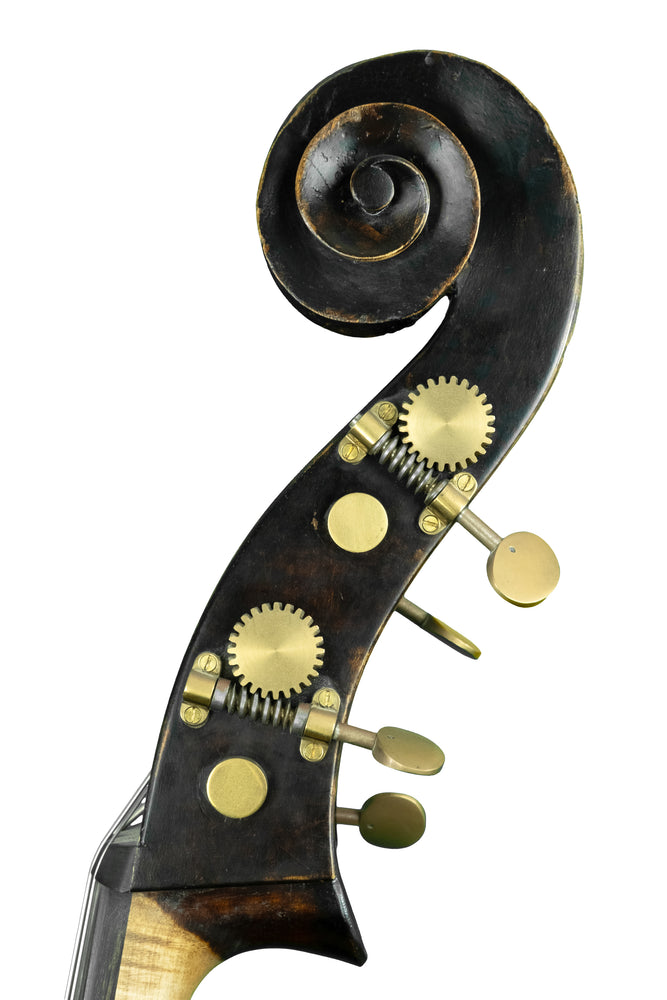
The volutes of the scroll flare outwards. The ƒ`s slope very
much in the manner of da Salò and the nicks are of the "slashy"
Milanese type.
With very little damage apart from a skilfully patched
post crack to the back and a few minor cracks to the ribs and front
the condition of this instrument can be described as absolutely
amazing. When the condition is further considered in relationship
to the instruments age then amazing becomes too insufficient an
adjective. To complement this fine instrument the peg box has been
re-cheeked, new machine heads have been adapted and fitted and a
new neck and fingerboard fitted. Slight re-thicknessing to the inside
table has been necessary and there is also a new bass bar and new
linings.
An instrument of the Italian school that is as intriguing
to look at, as it is inspirational to play.
LOB 42in ( 106.4cm )
St. length 39.75in ( 101cm )
|