|
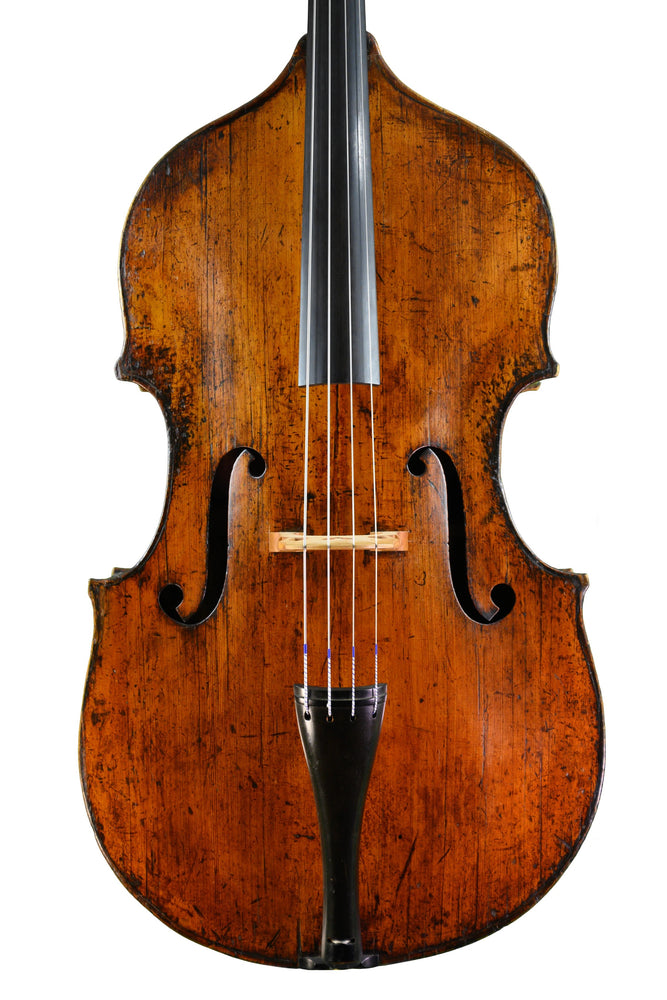
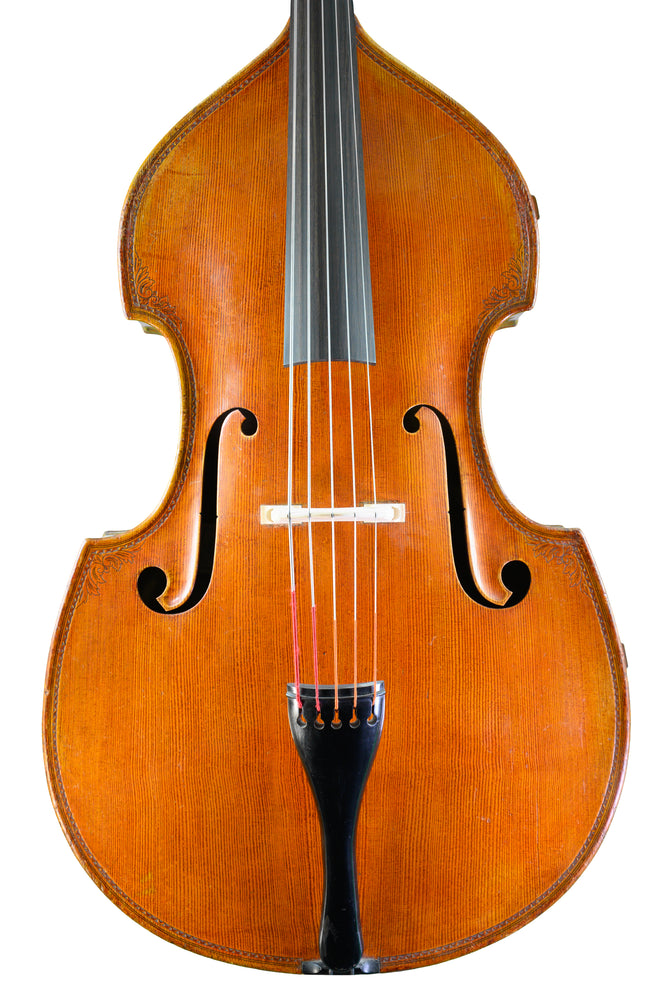
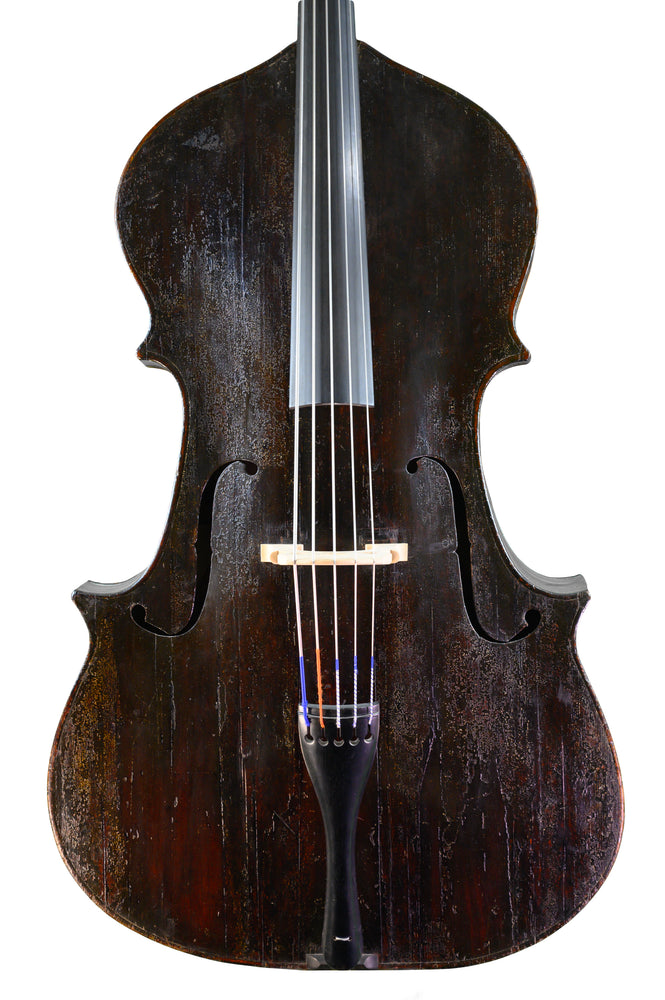
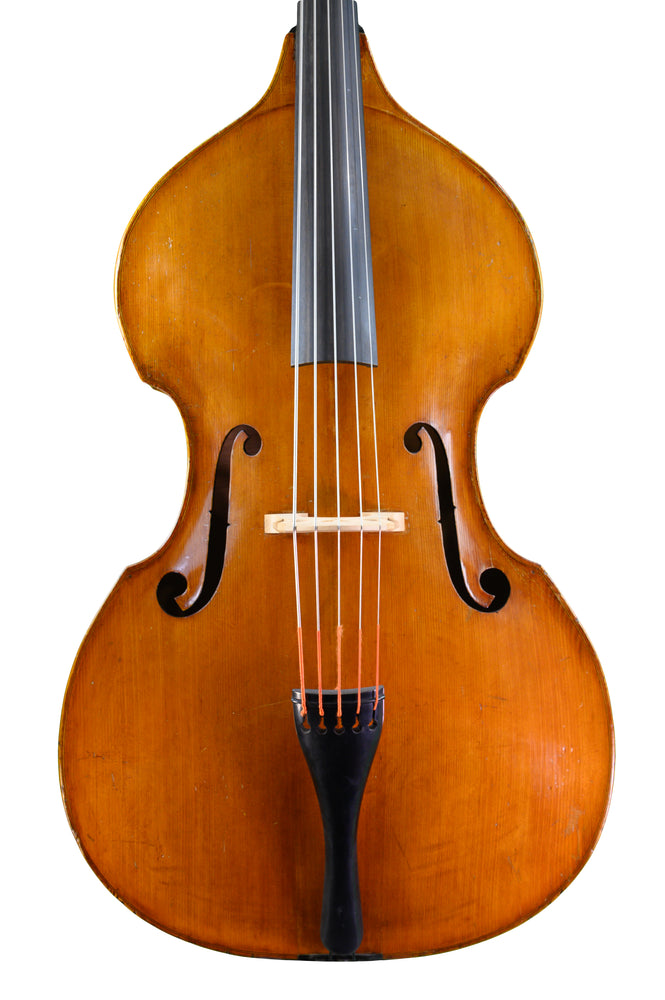
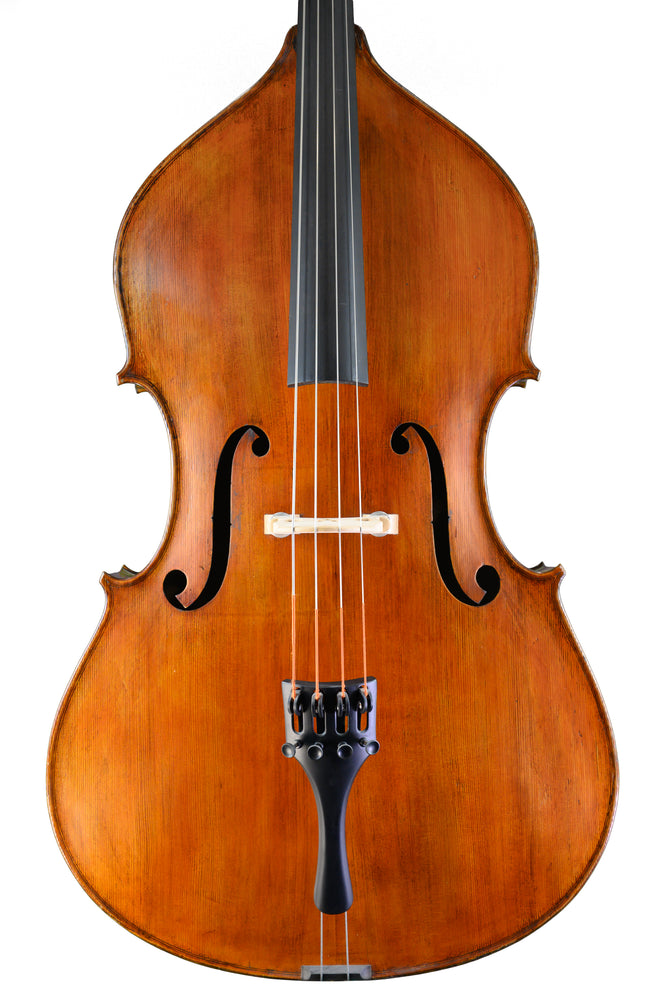
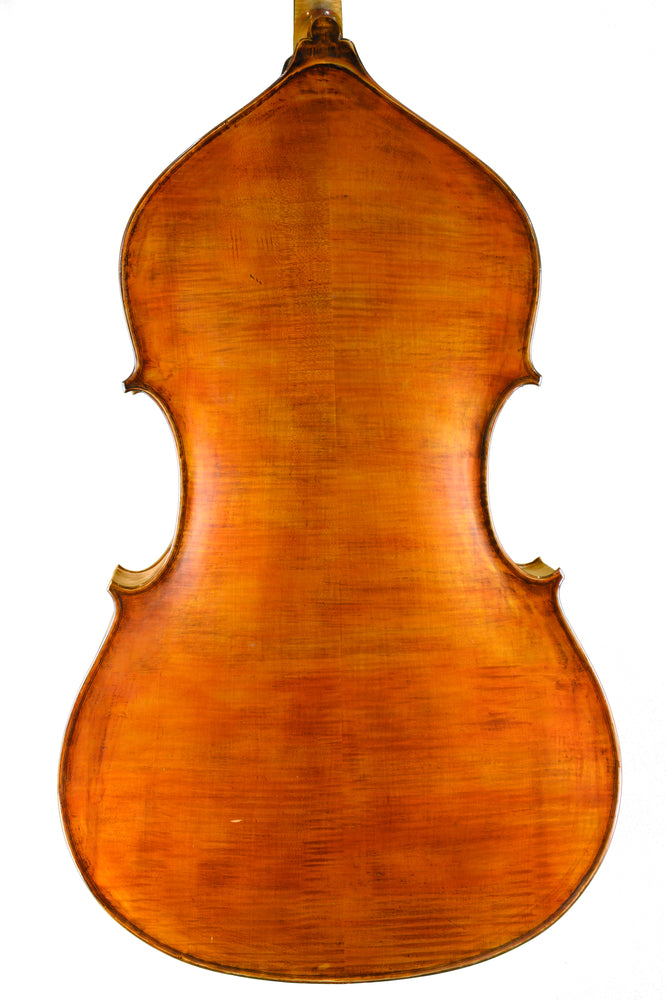
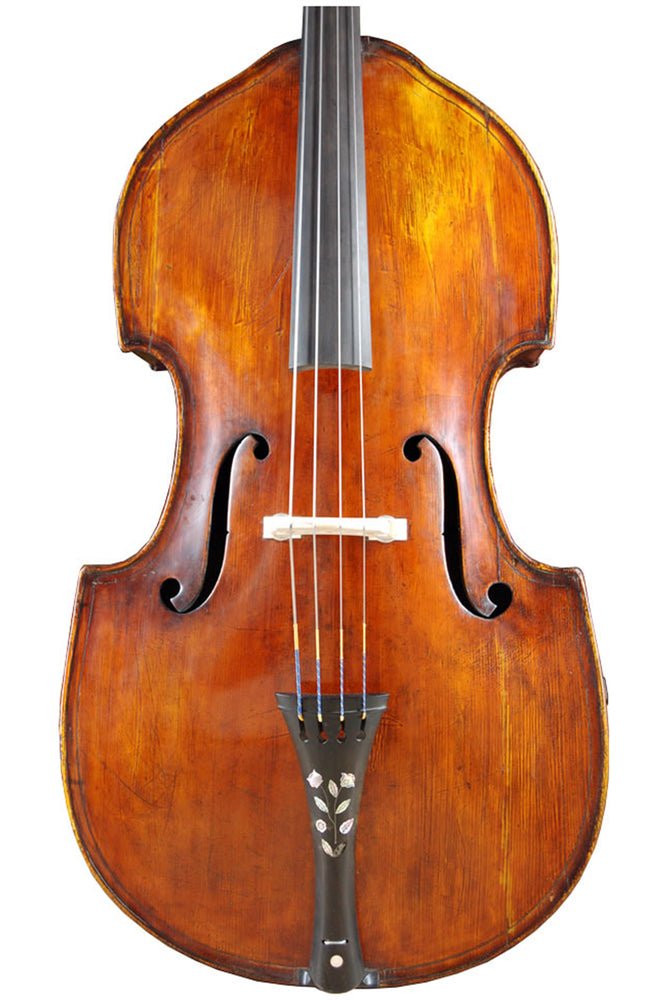
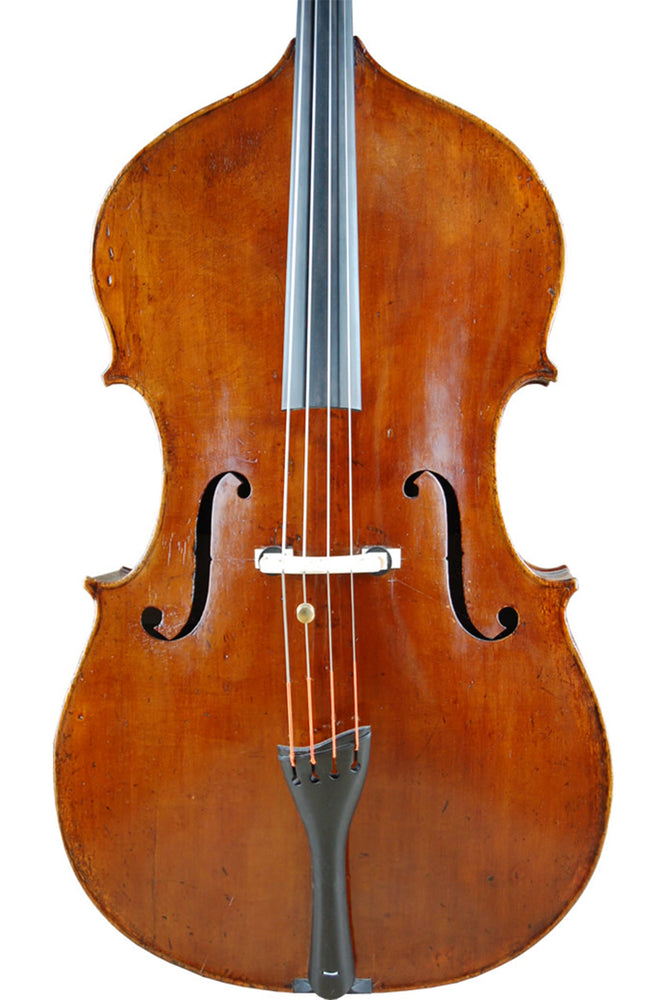
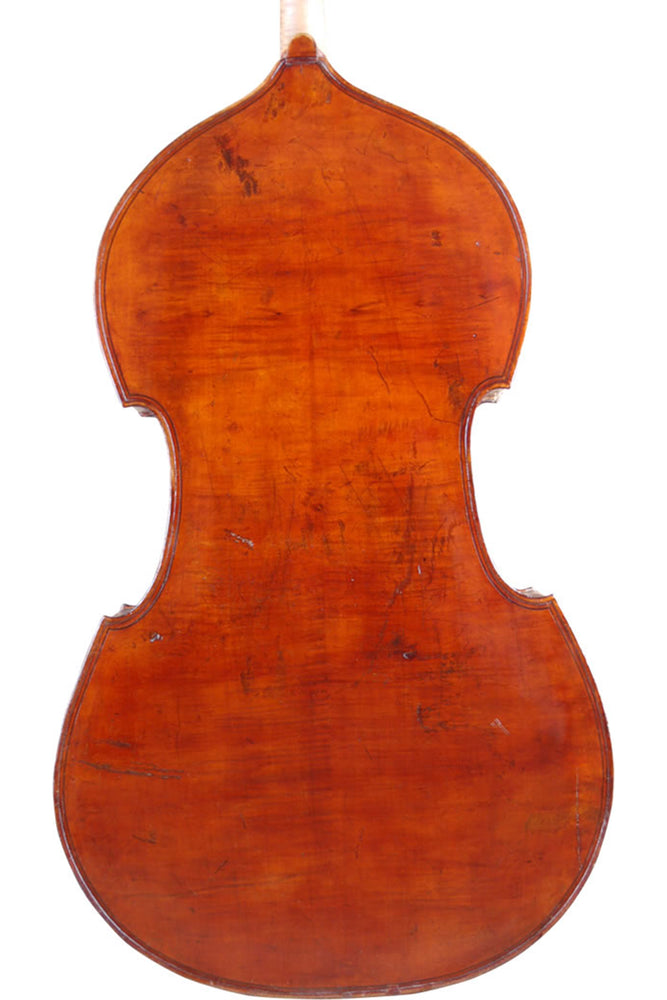
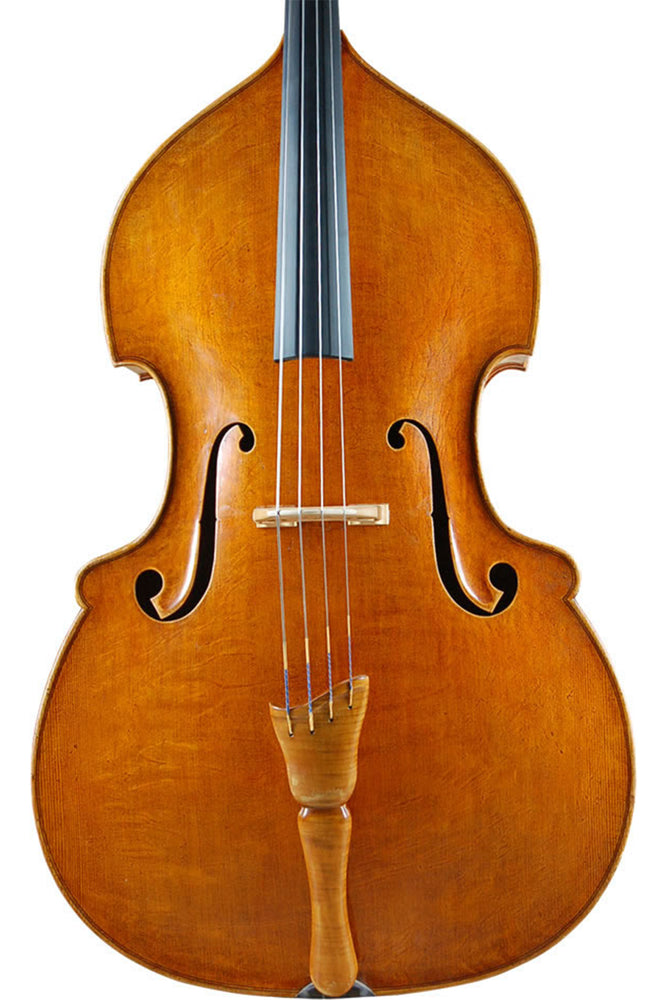
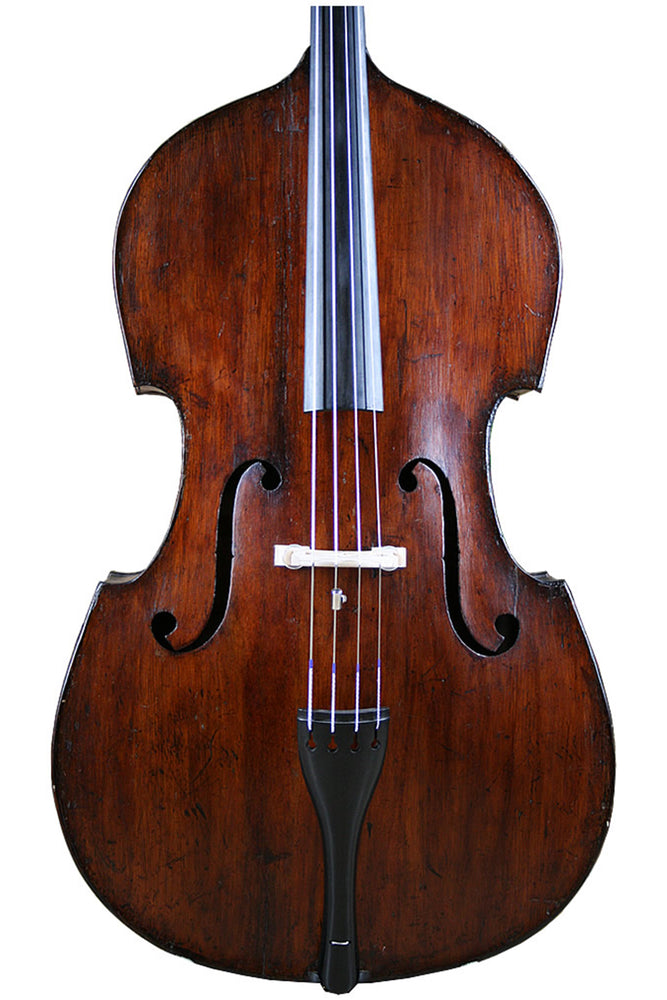
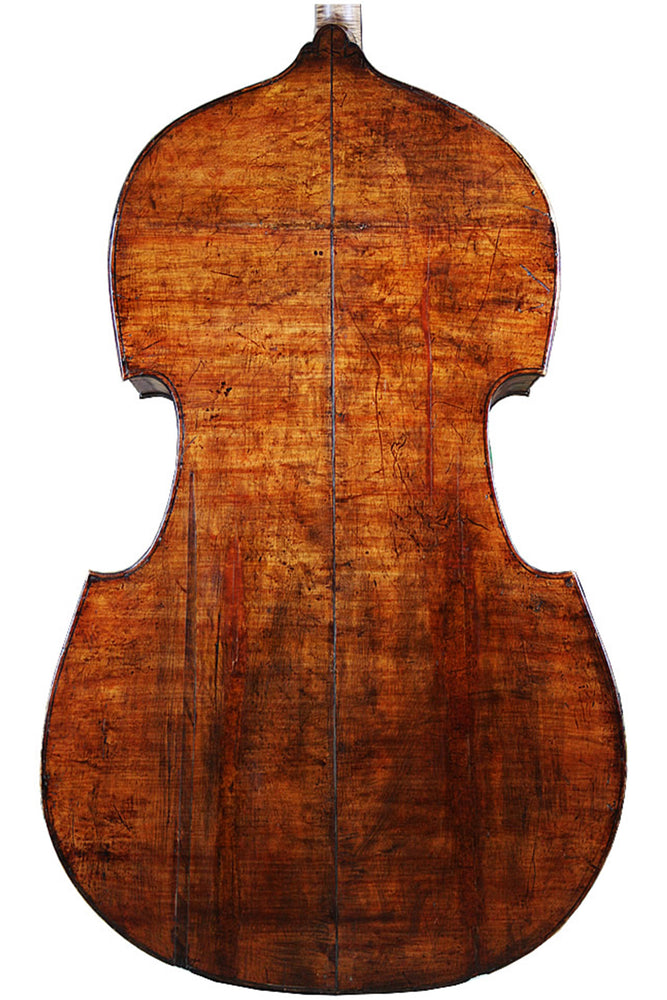
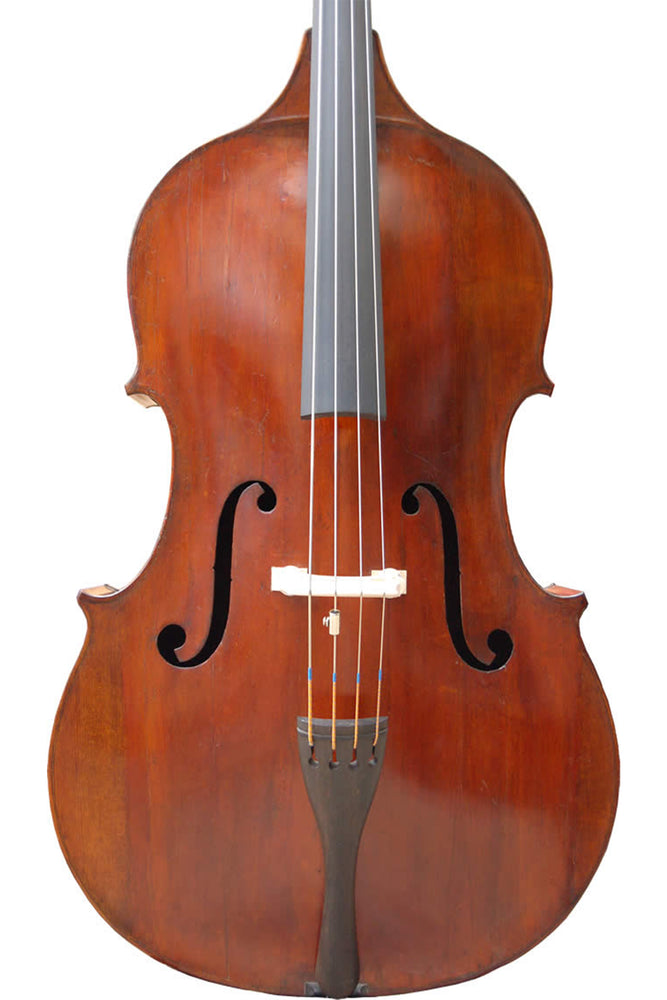
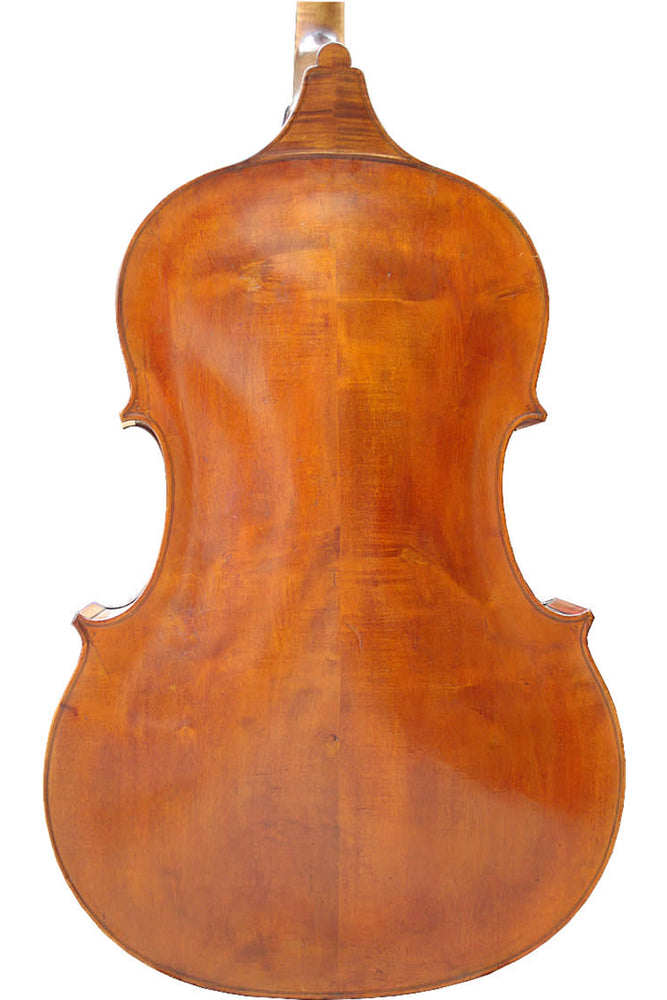
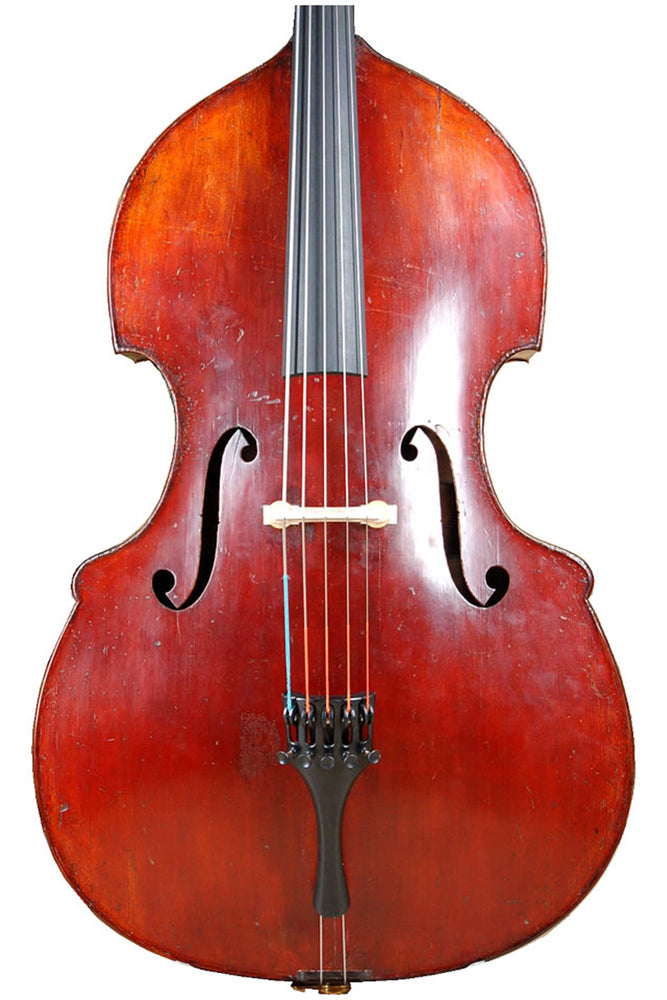
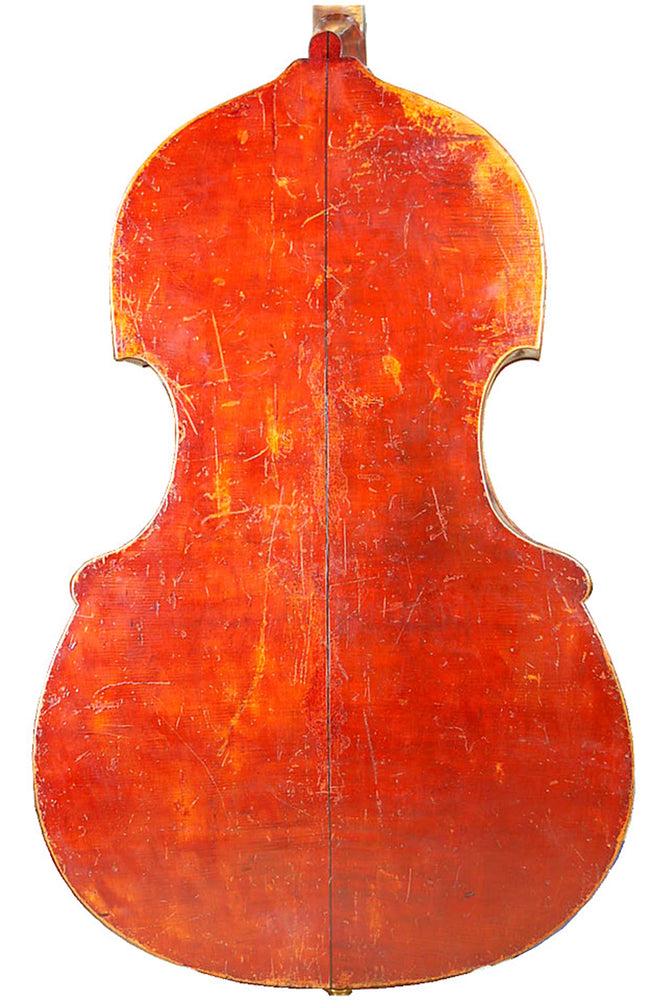
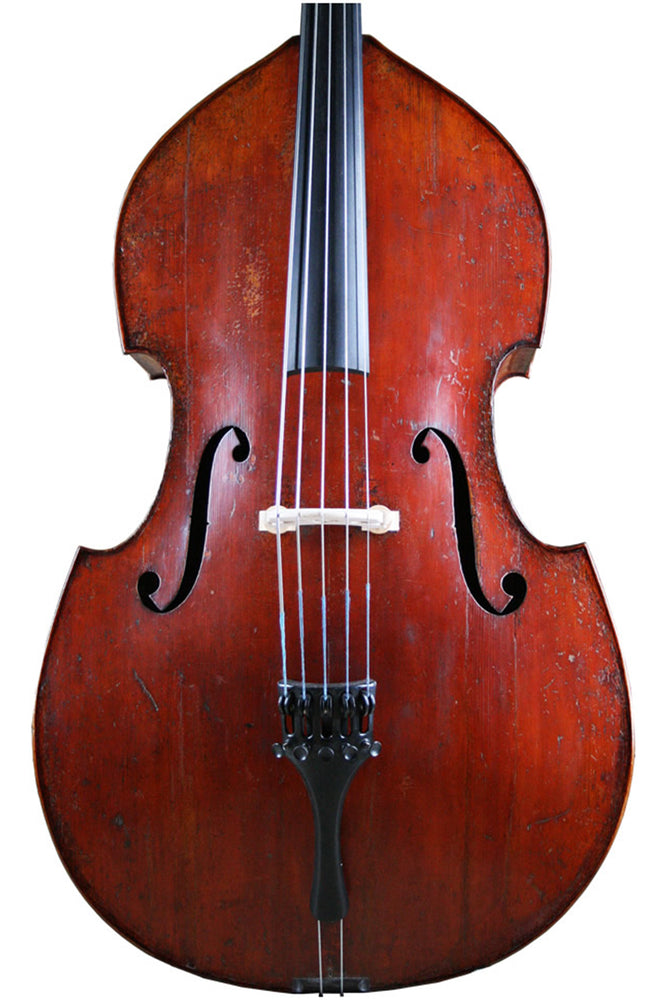
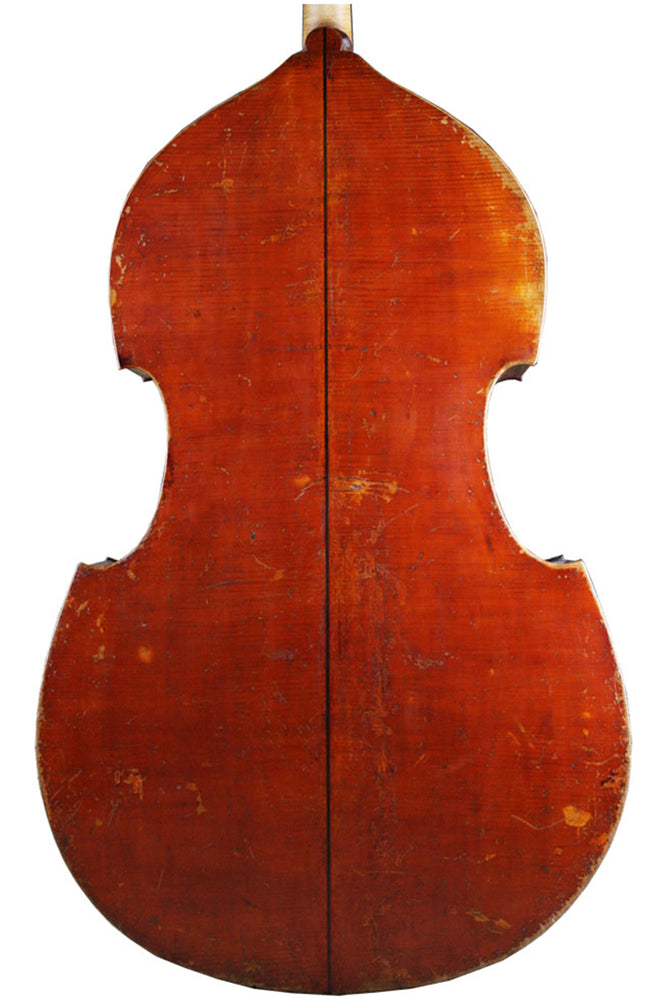
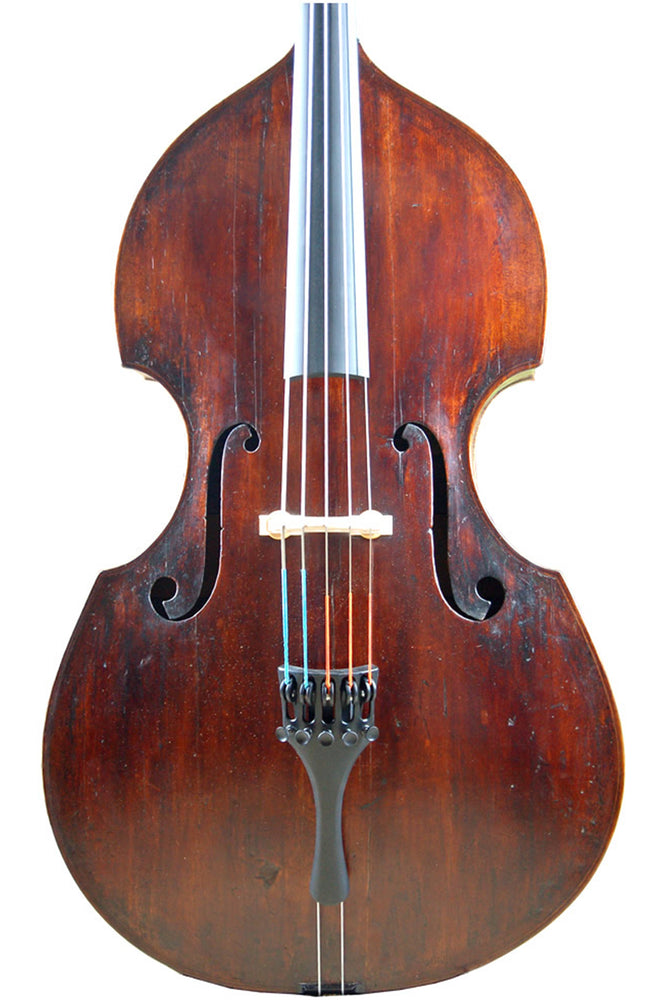
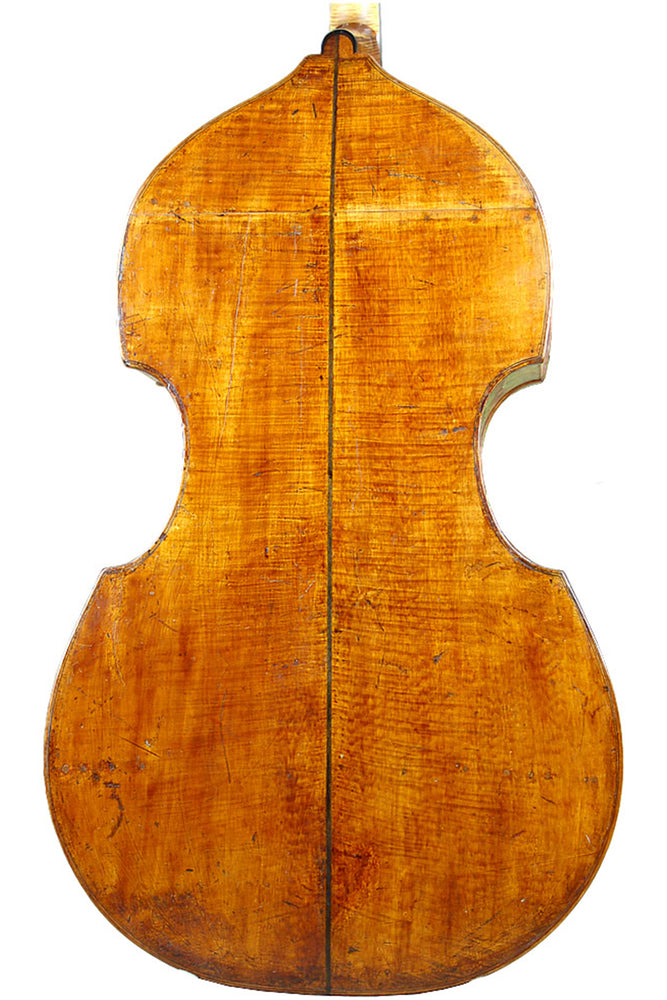
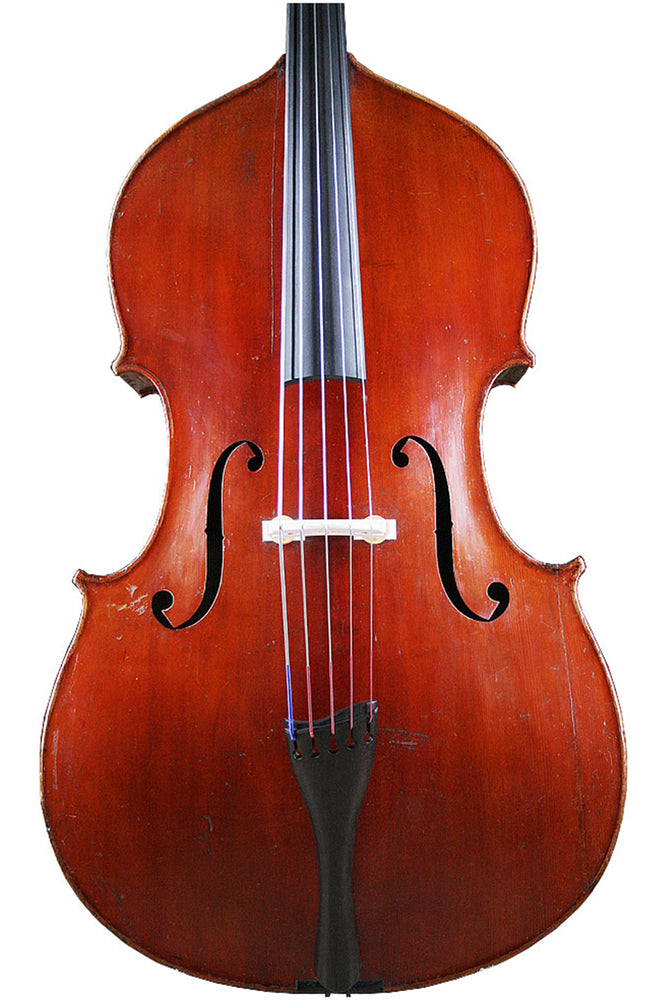
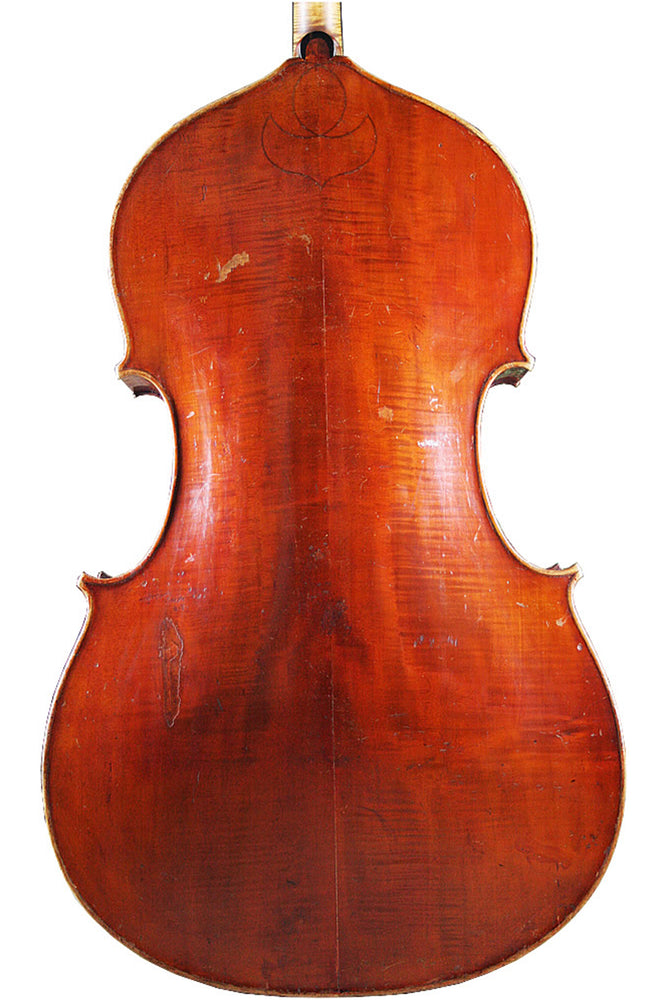
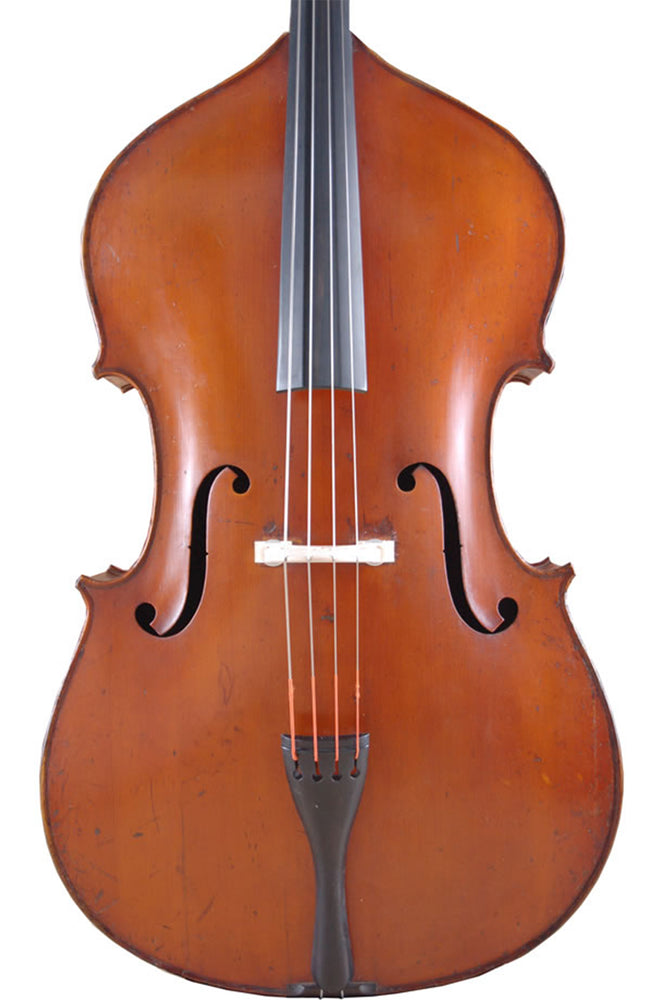
Another one of those desirable Mirecourt instruments
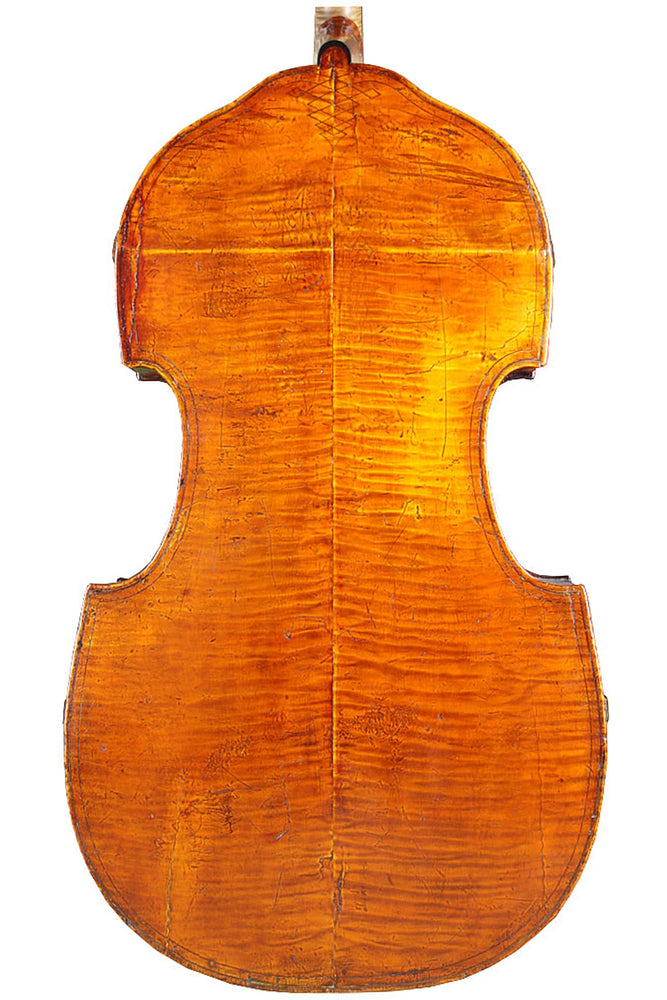
shaped like a large violin with a swell-back and characterised by
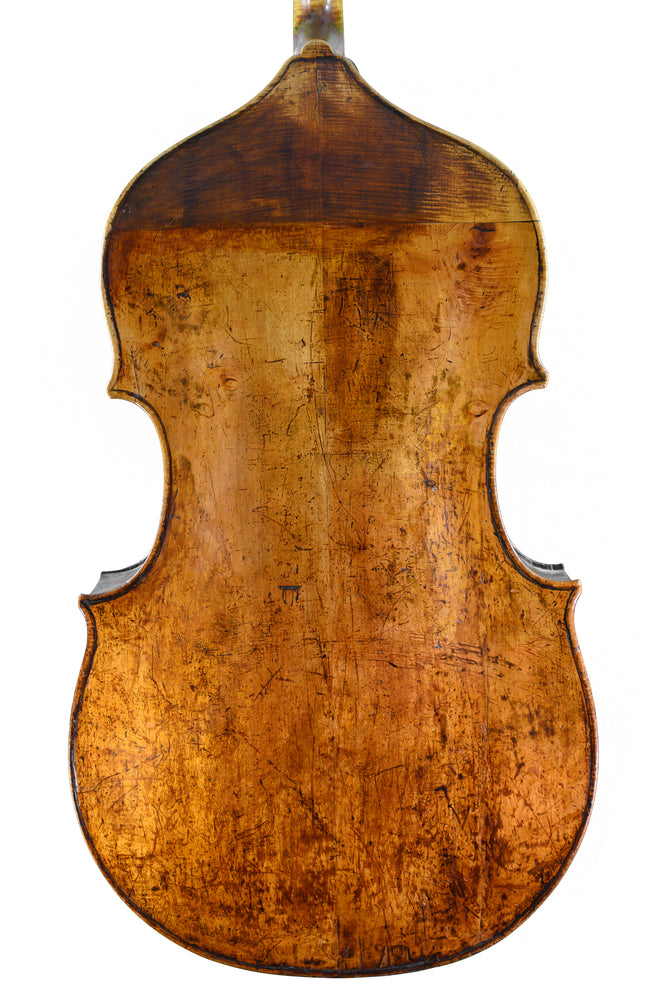
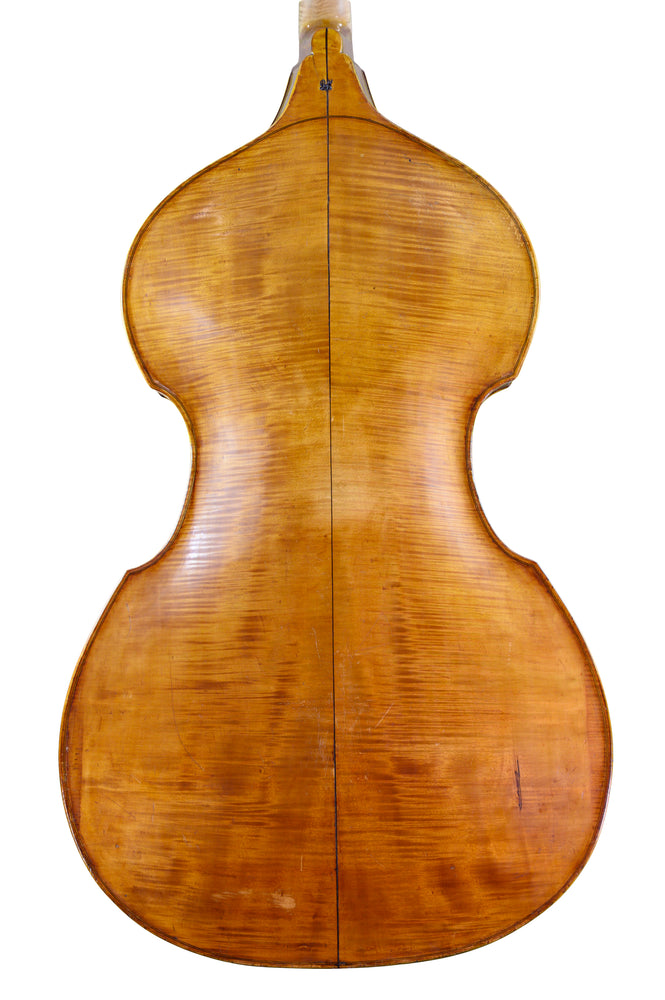
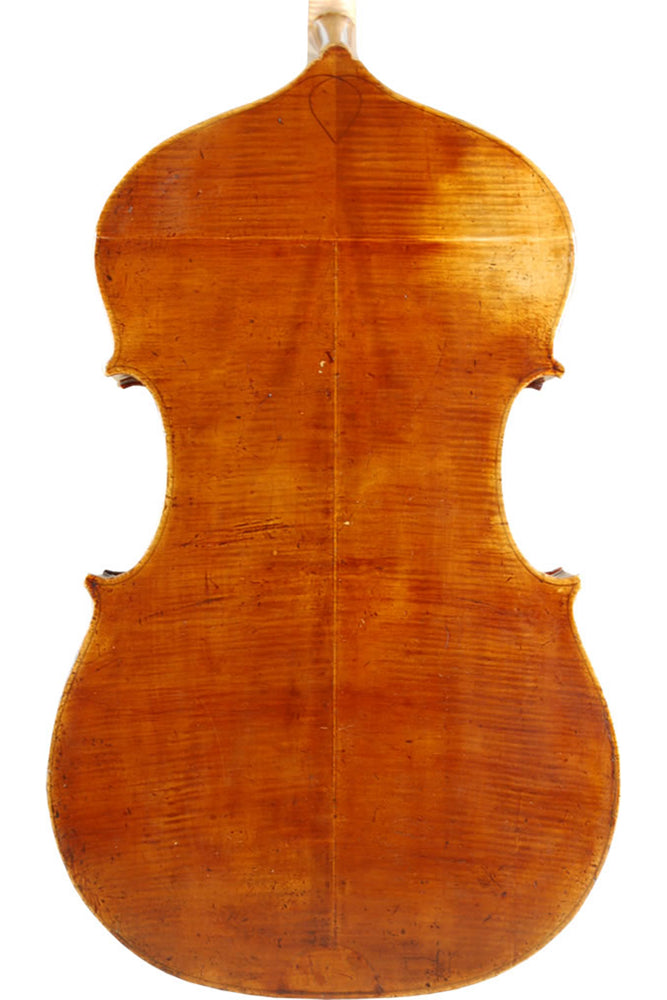
one of those secondary buttons on its upper back. On first glances
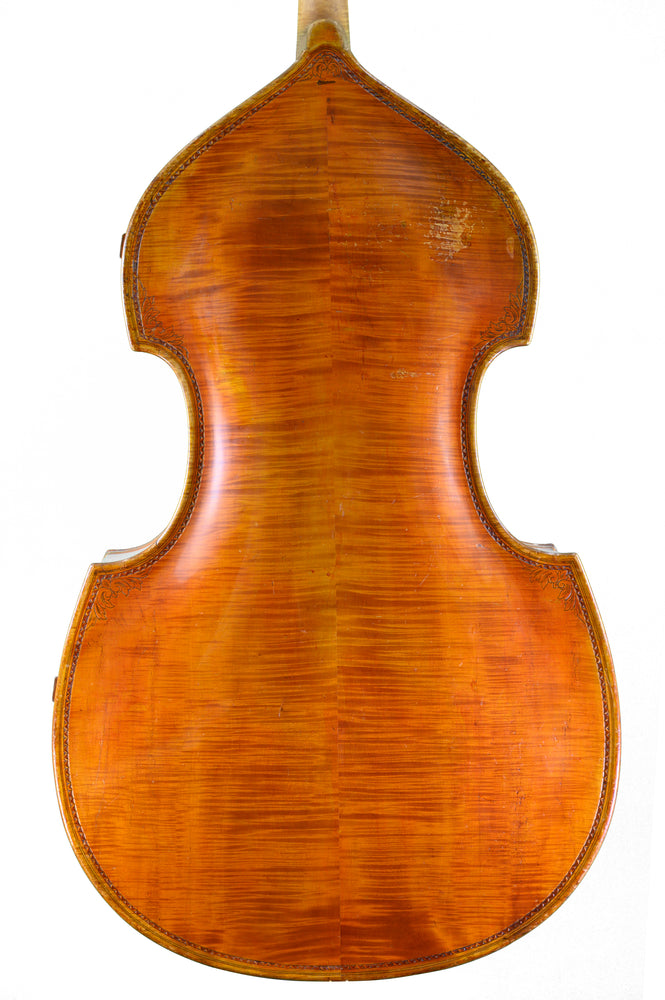
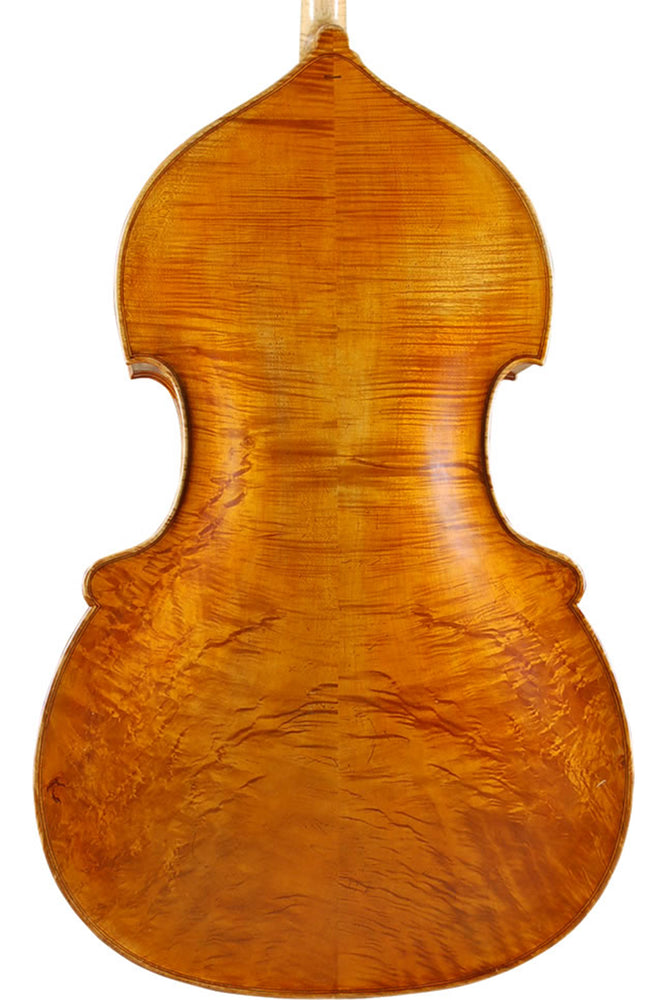
it is. But what about a second glance? Just take a look at the heavily
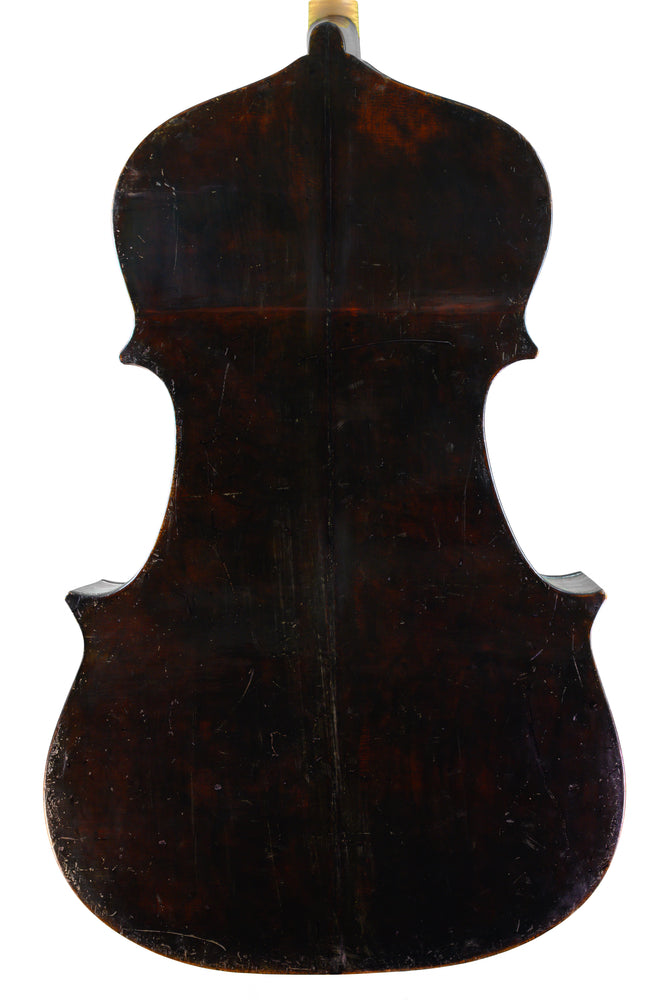
flamed two piece back with matching wood in the ribs and scroll,
then take a look at that stunning deep-red oil varnish with that
ever so fine craquel to it's surface texture. It's definitely
some of the most exquisite stuff that one will ever have the pleasure
to feast one's eyes upon. Yes, this instrument is something
very special indeed. Peering through the bass side “f”
hole of this instrument will reveal the most perfect of handwriting
imaginable. There, inscribed in pencil on the back is the name and
date ‘Riviere & Hawkes, November 1886.' A Hawkes
I hear you cry. But that doesn't look like the big Hawkes
Professor, Concert and Panormo instruments that I know. Yes, that's
right, it doesn't. And that's because this one is the
French version of the instruments that we commonly associate with
the name Hawkes & Sons. Hawkes & Sons imported instruments
from both Germany and France. Today however one seldom sees the
French version. These were made to exacting standards by some of
the best Mirecourt makers of the day.
Can you tell me who exactly made them? Well, up until
we took the table off from this instrument there was, to my knowledge,
no information as to who made them or supplied them to Hawkes, especially
regarding an instrument made in the earliest of days of the Hawkes
company. On the inside table of this instrument, located on
the lower treble side can be found the pencil inscription ‘Jacquet
- Barbezant, Mirecourt, Vosger 1886'. What does this
mean? Well the Encyclopaedia of Violin Makers by Karel Jalovec
reveals that Fréderic Barbezant (b. Mirecourt 1834 d. 1906)
owned a business that supplied the home industry of Mirecourt. Under
the six surnames listed by Jalovec entitled Jacquet, a Joseph Jacquet
(b. Mirecourt 1850 d. 1900) is of interest. Joseph was in fact the
third son of Joseph Xavier Jacquet the renowned double bass maker.
Jalovec continues; ‘After a long association with his brother
Gabriel he took over the workshop of his brother-in-law Fréderic
Barbezant, where, however, he organised only the mass-production
of instrument parts'. From Jalovec`s valuable information
and the indisputable evidence inscribed on the table of this instrument
it would be safe to say that the Jaquet- Barbezant association were
suppliers of instruments to Hawkes and indeed this was obviously
quite a family affair. It is also quite possible that both Jacquet
and Barbesant contributed to some of the actual instrument production,
although based on the quality of this particular instrument, it
is more than likely that the production of this high class instrument
was commissioned from one of the better Mirecourt makers of the
day. Who else do we know was making in Mirecourt at that time? Well
Justin Derazey`s name does spring to mind for we know that he did
make a considerable number of double basses, based on this model,
of this quality of construction and with an oil varnish similar
to this in terms of colour, quality and texture. For now and until
we learn more this would be the Contrabass Shoppe's attribution
if one had to be made.
Wonderful as all this research is. What about the
instrument itself? Well as you know, quality of construction usually
results in a certain quality of sound and as far as this instrument
is concerned both are not far from perfection. This is quality stuff
indeed. With regard restoration, there's a new neck that complements
the instrument perfectly while the conversion from the original
three strings has been effected with a stunning set of English style
cogs. Internally all cracks have been immaculately studded and there's
even a new bass bar.
Should you doubt that the restoration work has not
been done without compromise then a photograph of the table restoration
accompanies this instrument, as do photographs of the historically
important internal table inscription.
Width at the upper bout 20.9in (53.0cm)
Width at the centre bout 15.1in (38.3cm)
Width at the lower bout 26.6in (67.6cm)
LOB 44.4in (112.7cm) St length 41.5in (105.3cm)
|