Musical header Click here to discover some of the feedback our customers have given given us over the past few years. Click here to discover our articles in relation to the Double Bass Click here for our range of Double Bass specialist Books Click here for our quality Double Bass Accessories Click here for our quality Double Bass Bows Click here for our highest quality Double Basses over UK£20,000 Click here for our quality Double Basses up to UK£20,000 Click here for our range of Budget Double Basses up to UK £5000 Click here to review some of the instruments previously sold by The Contrabass Shoppe. Click here for the web site introduction Click here to discover more about The Contrabass Shoppe Click here for the outstanding Double Bass Gallery Click here for more information on our restoration work Click here to make contact with us
 

German Double Bass (Mittenwald) circa 1800 - #2355 - SOLD

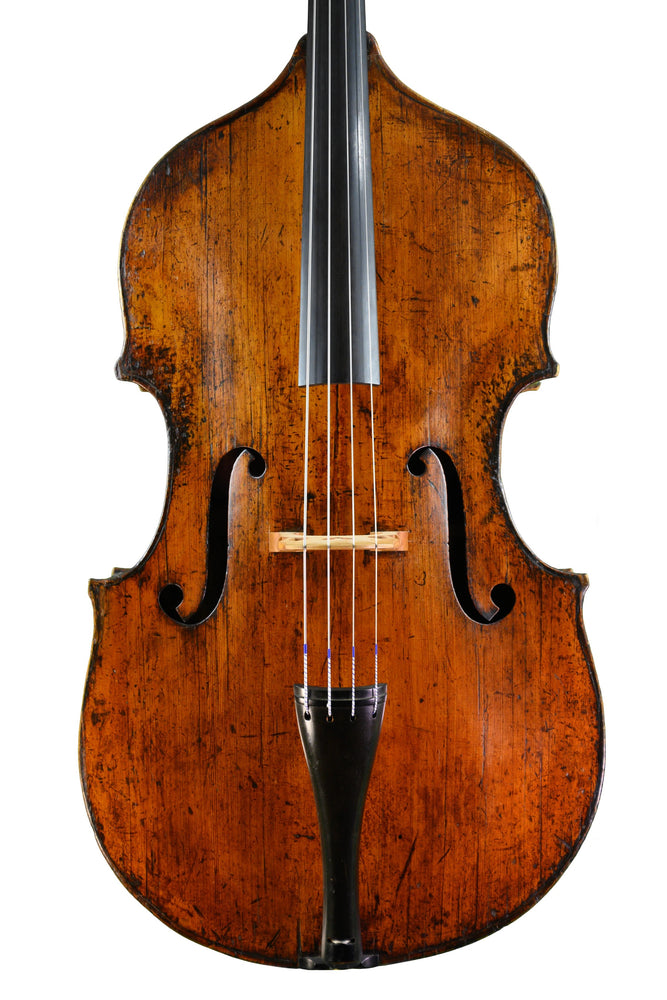
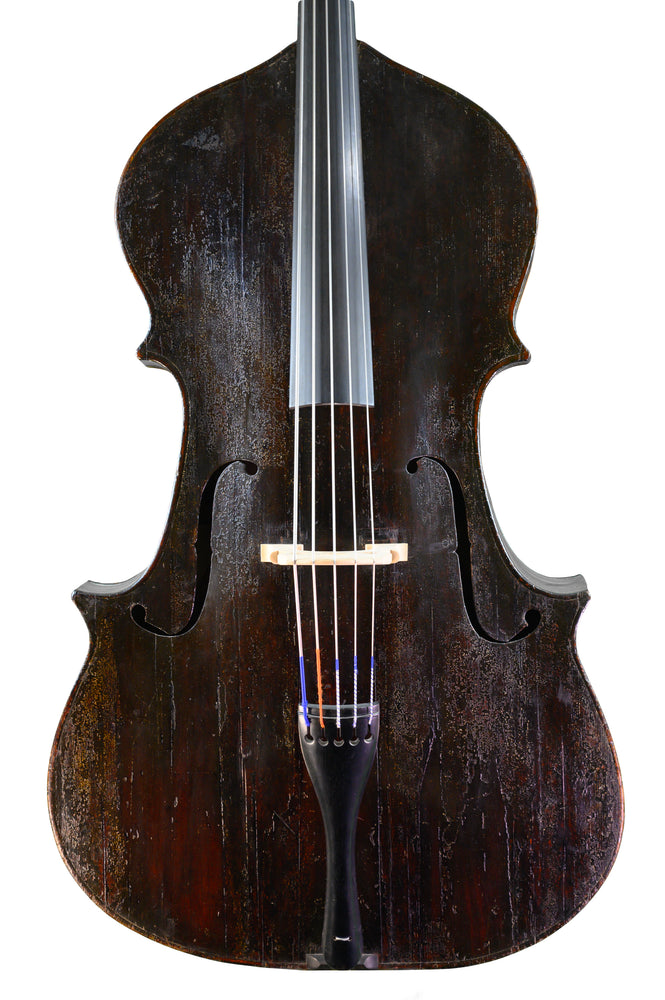
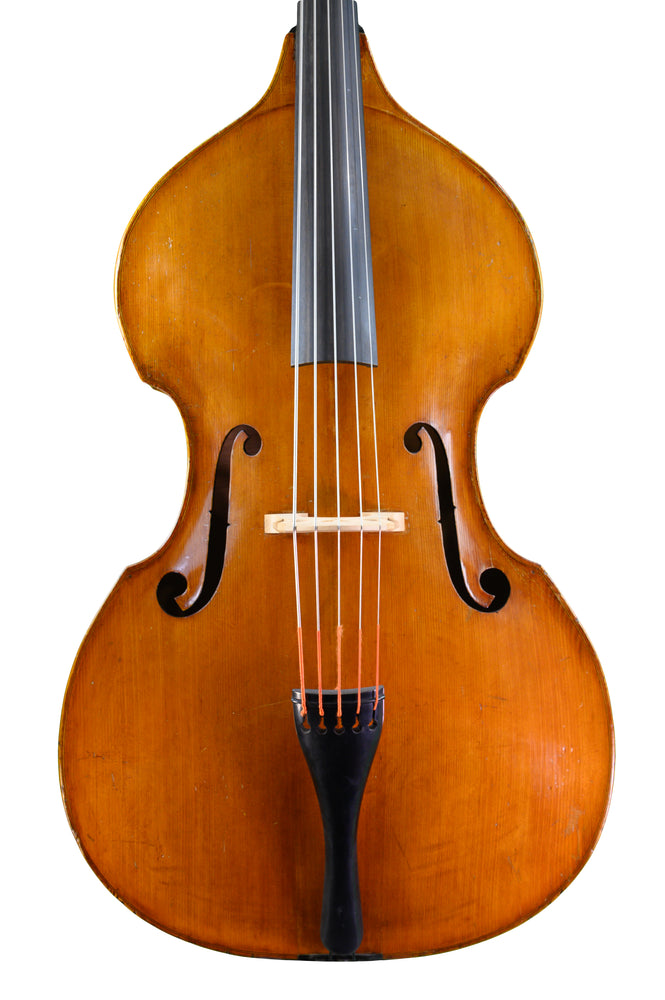
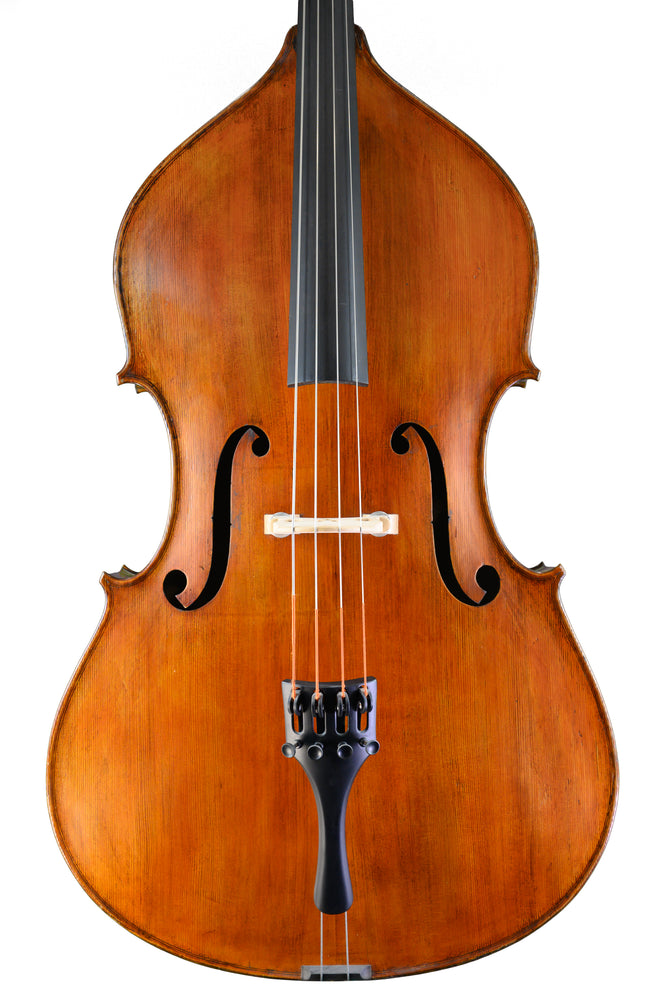
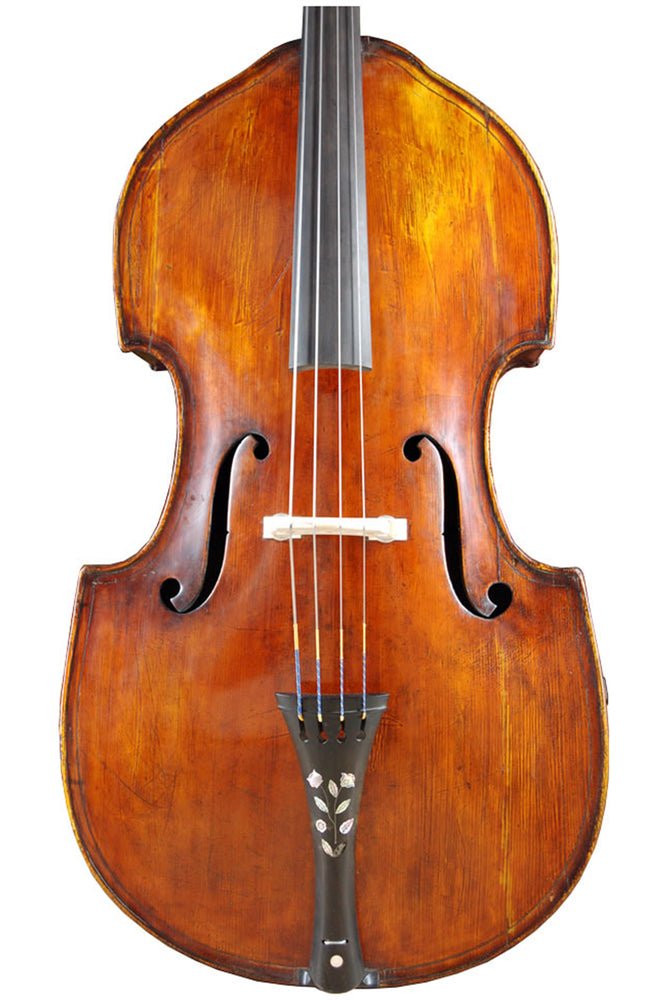
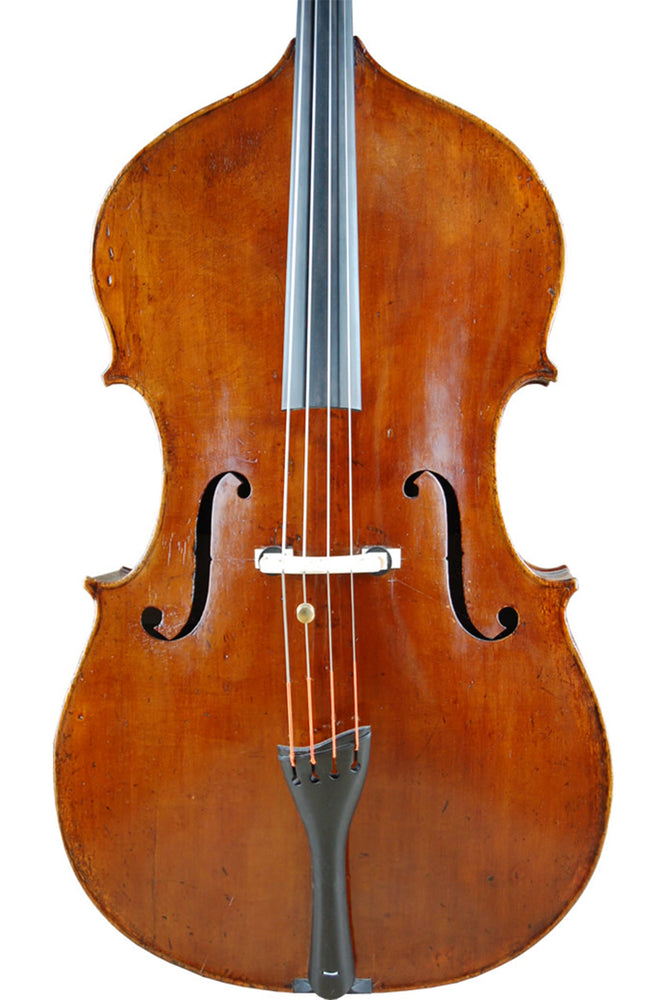
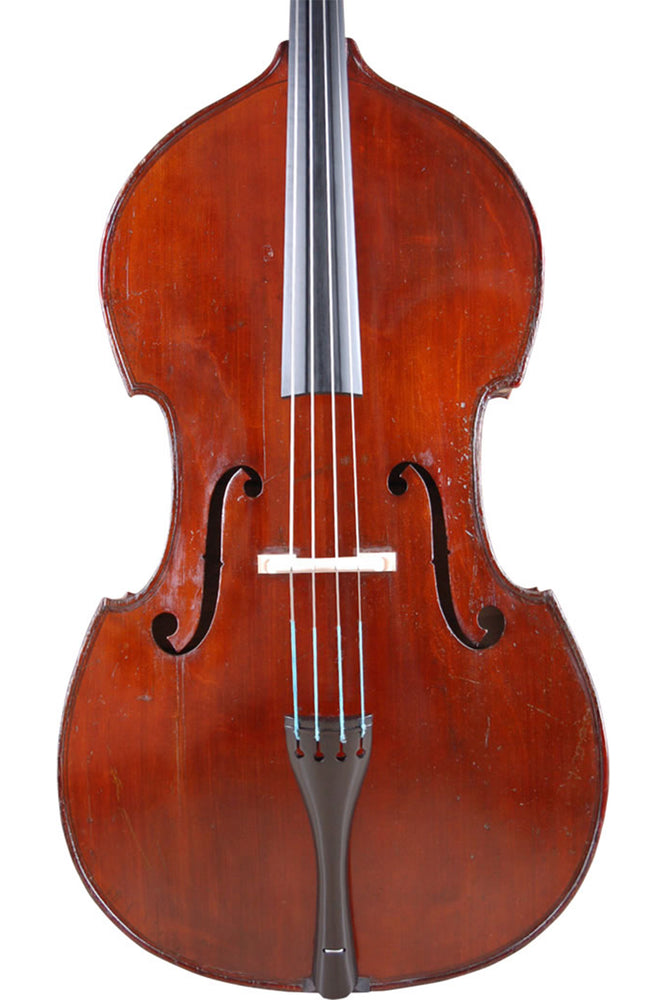
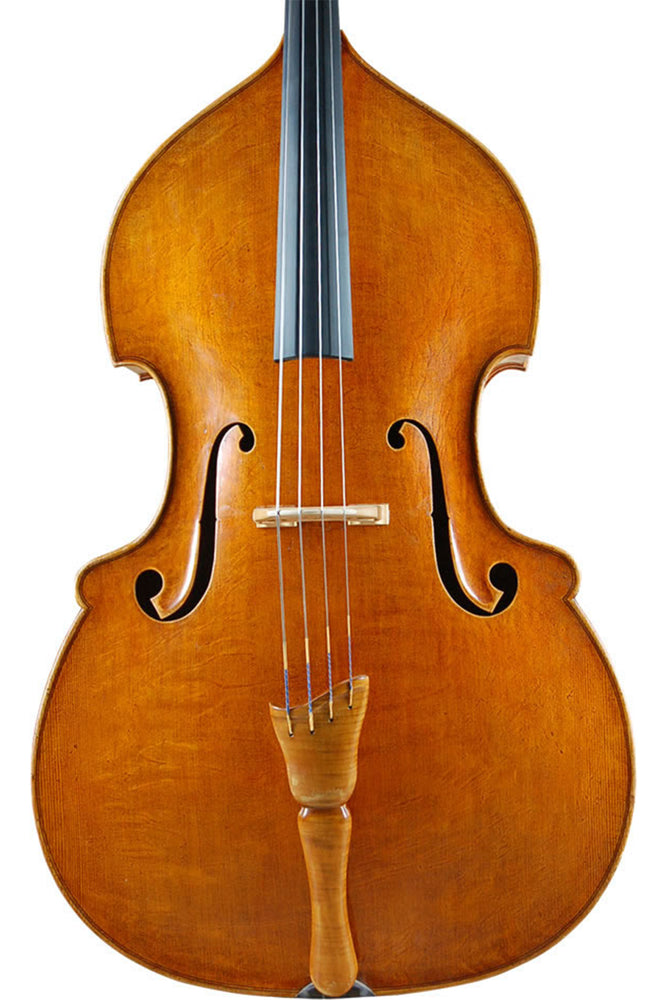
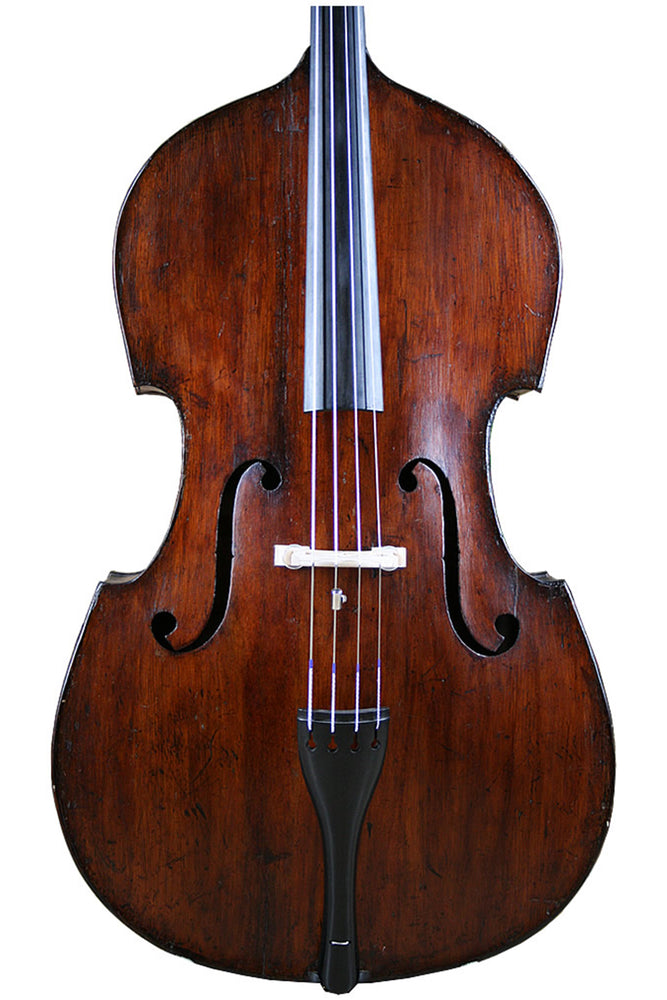
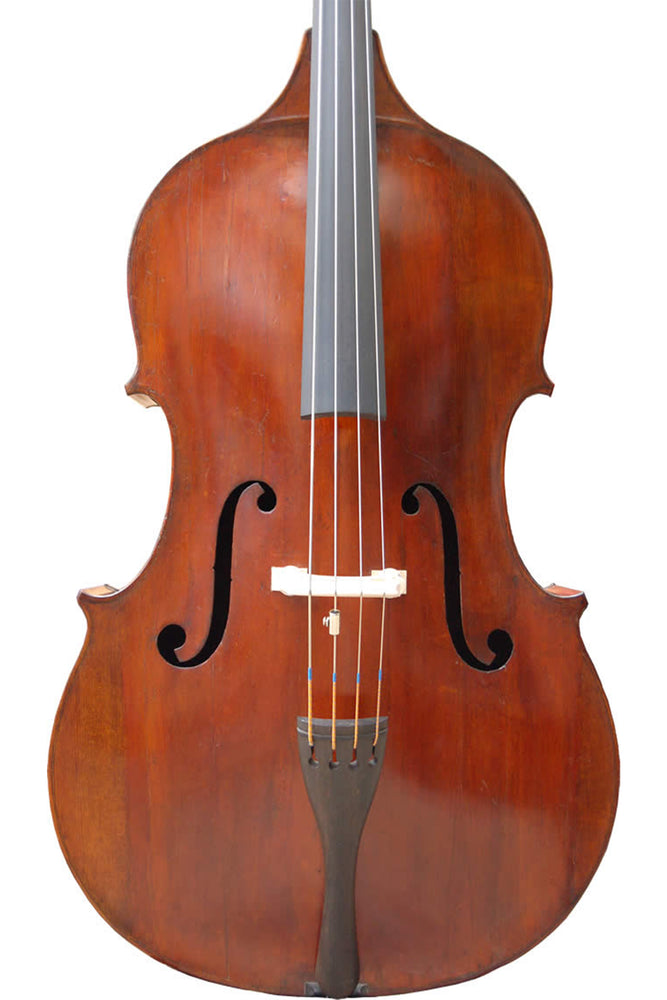
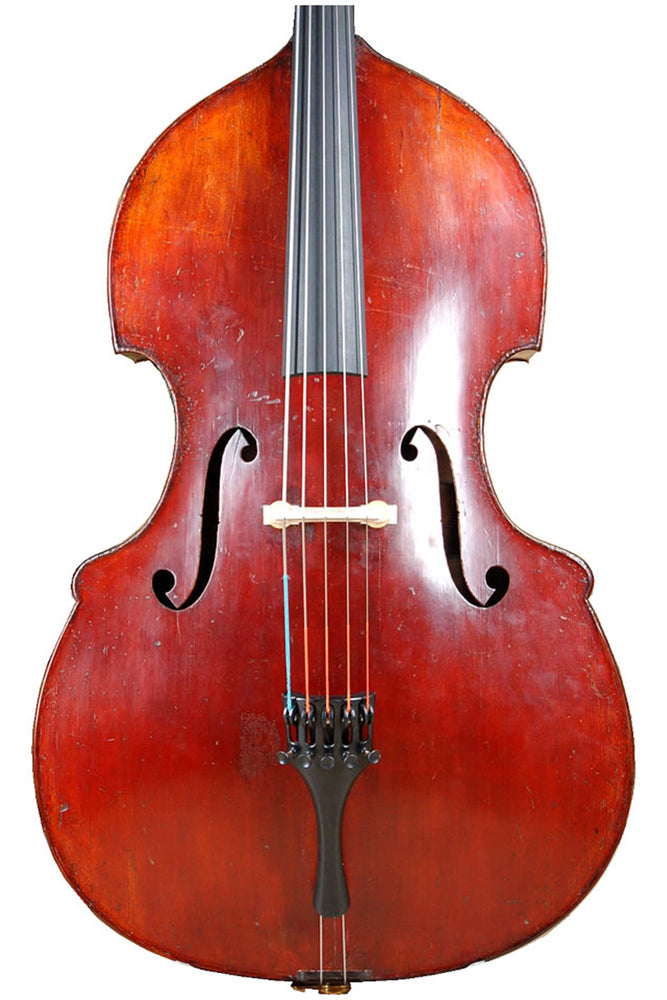
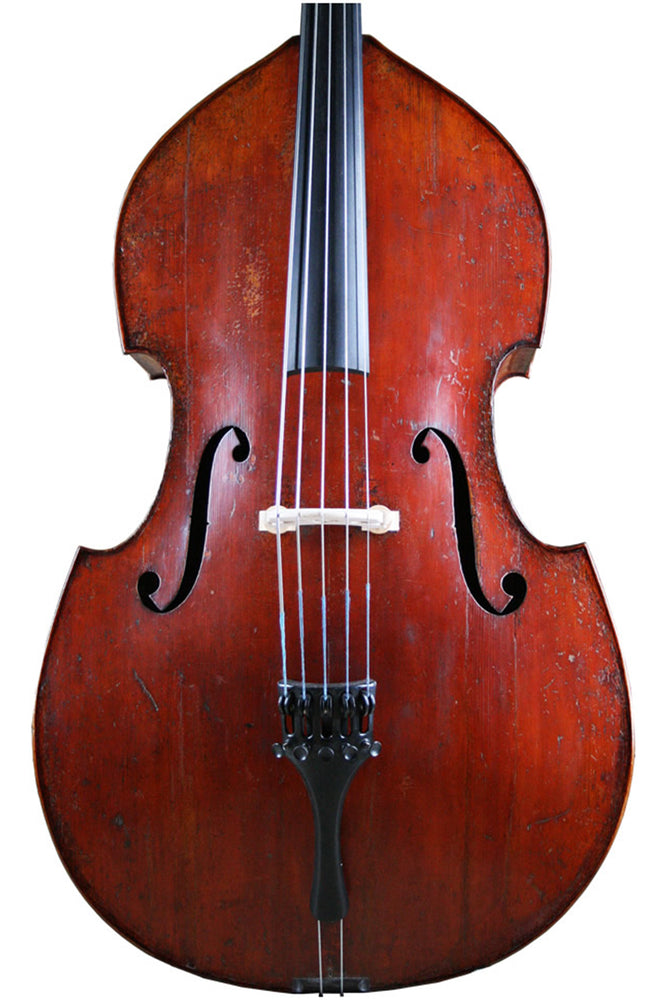
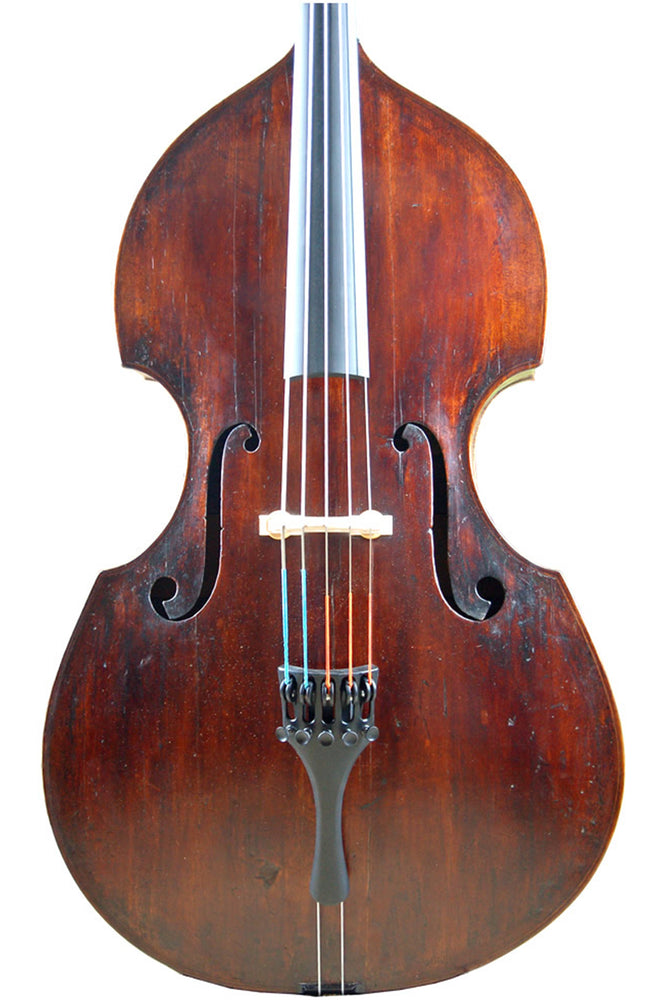
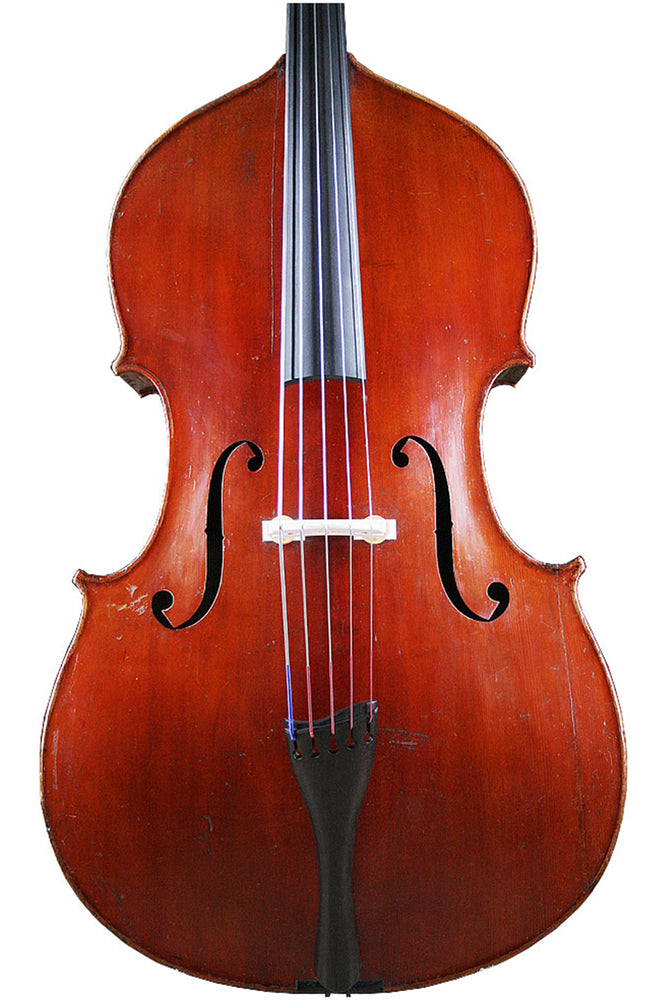
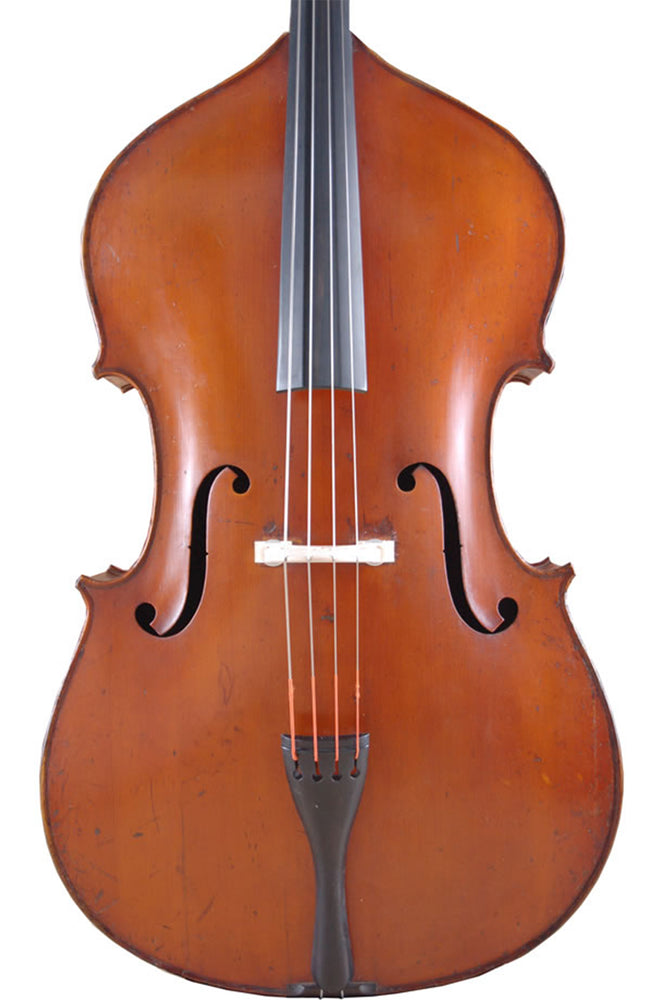
Front image of a German Double Bass (Mittenwald) circa 1800
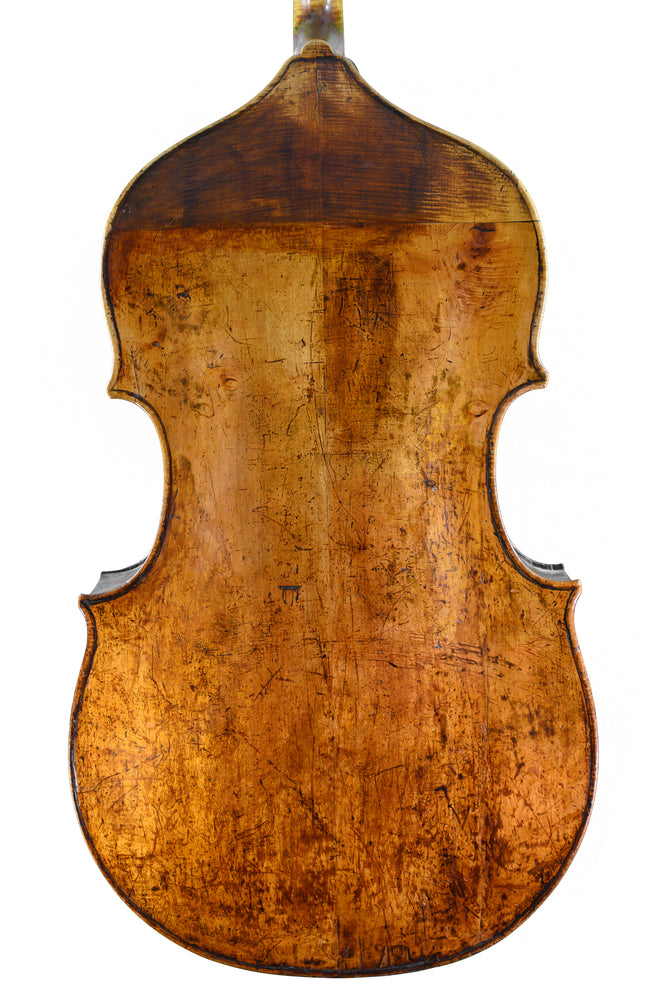
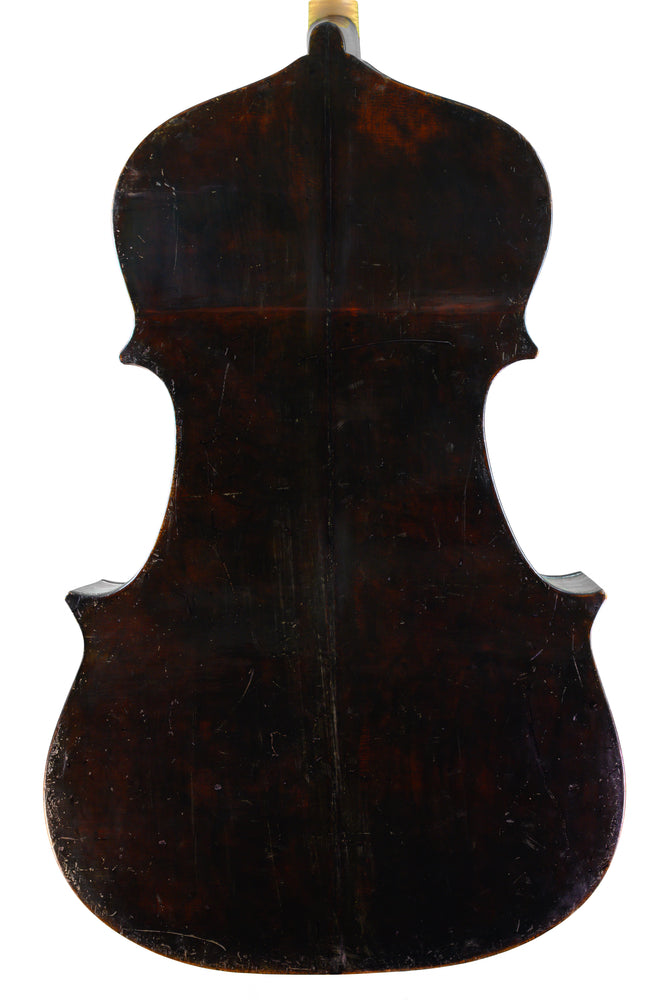
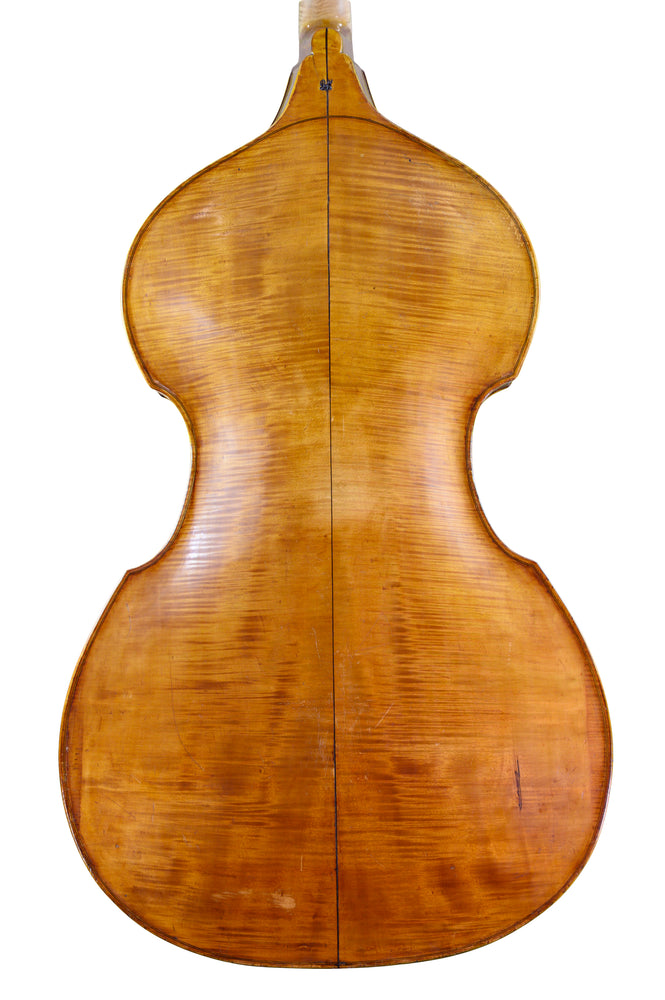
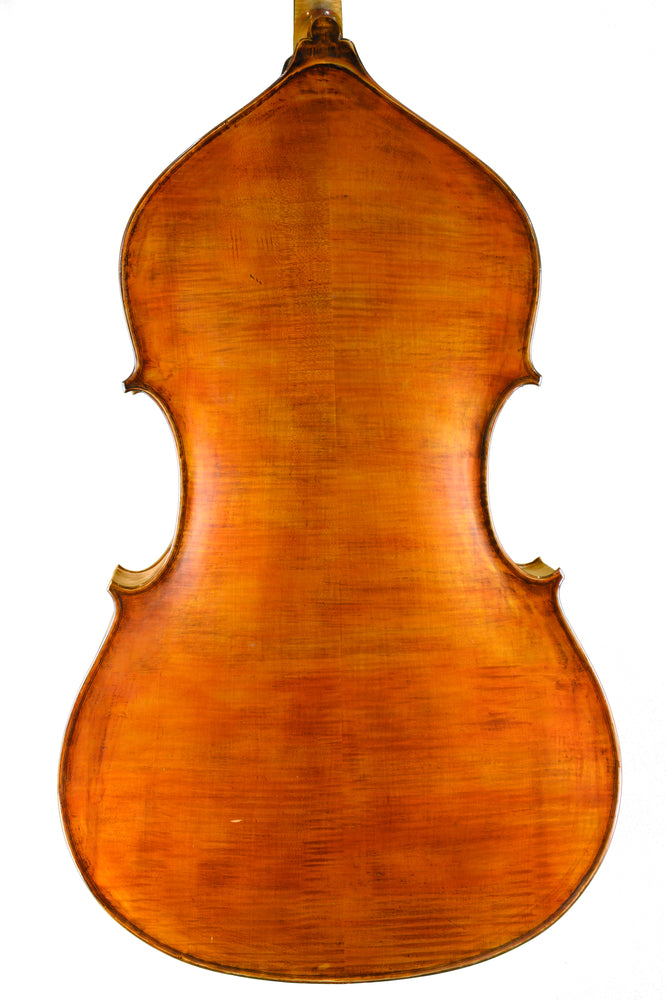
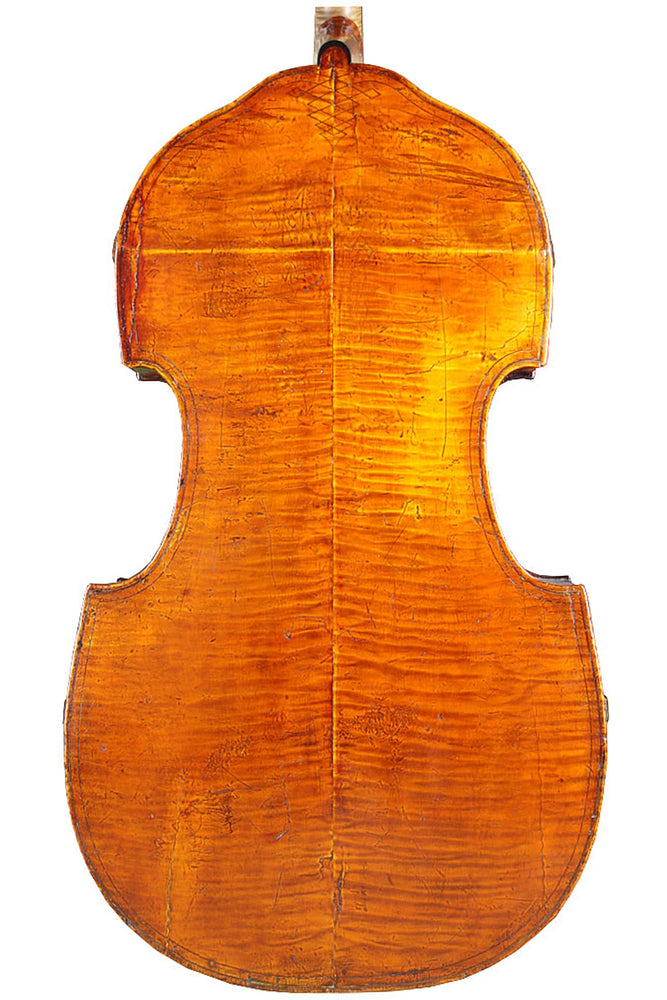
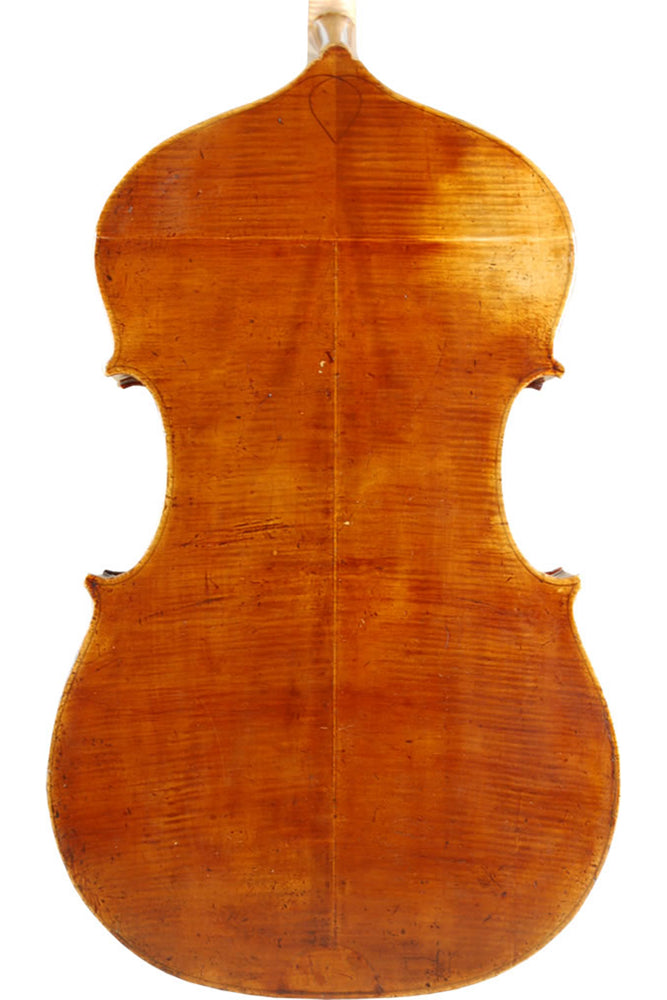
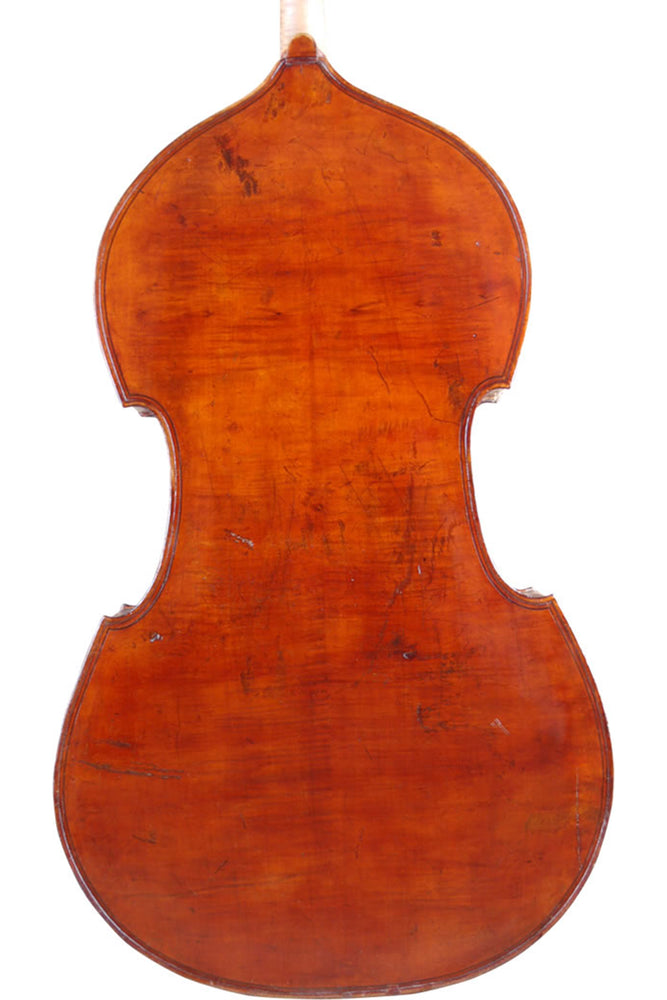
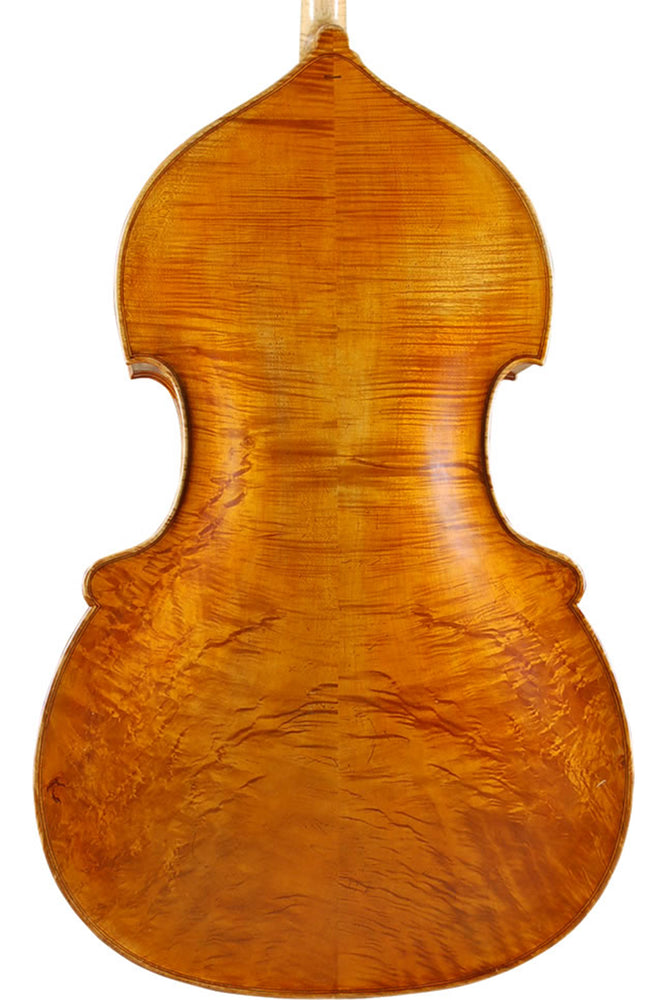
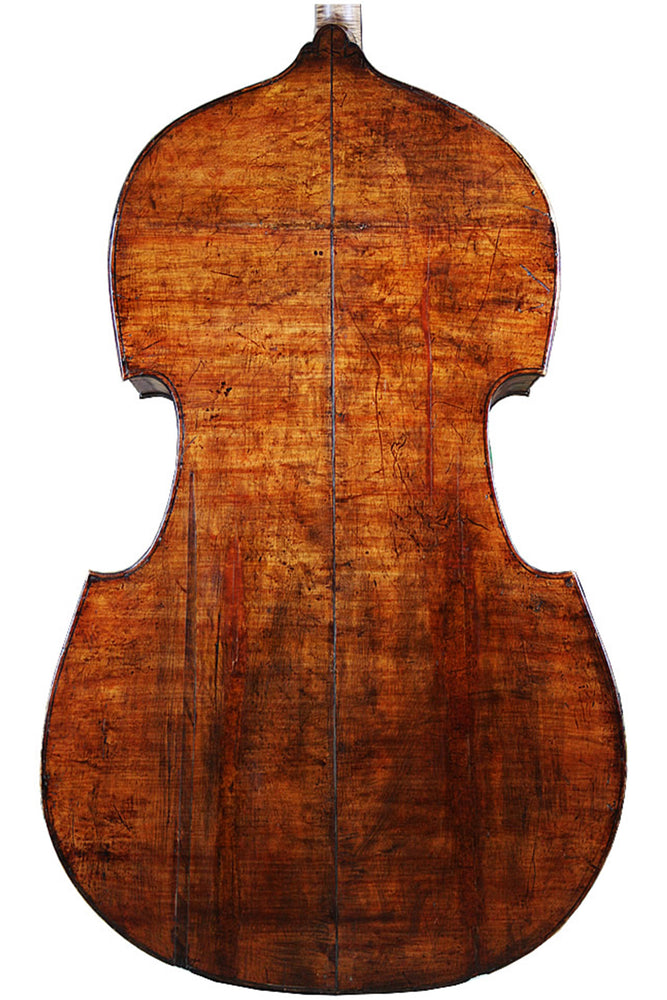
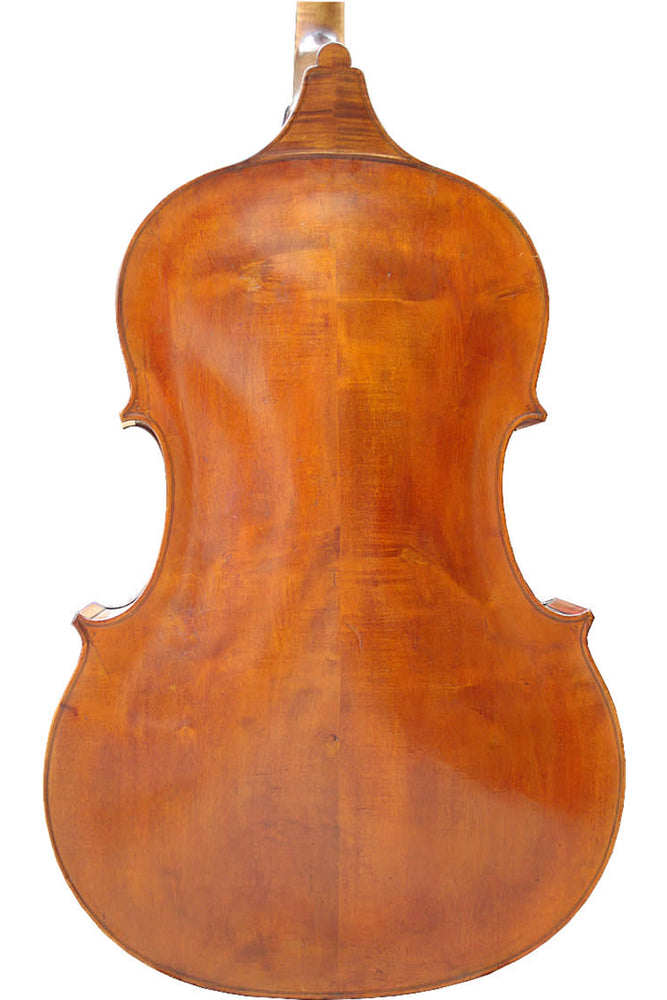
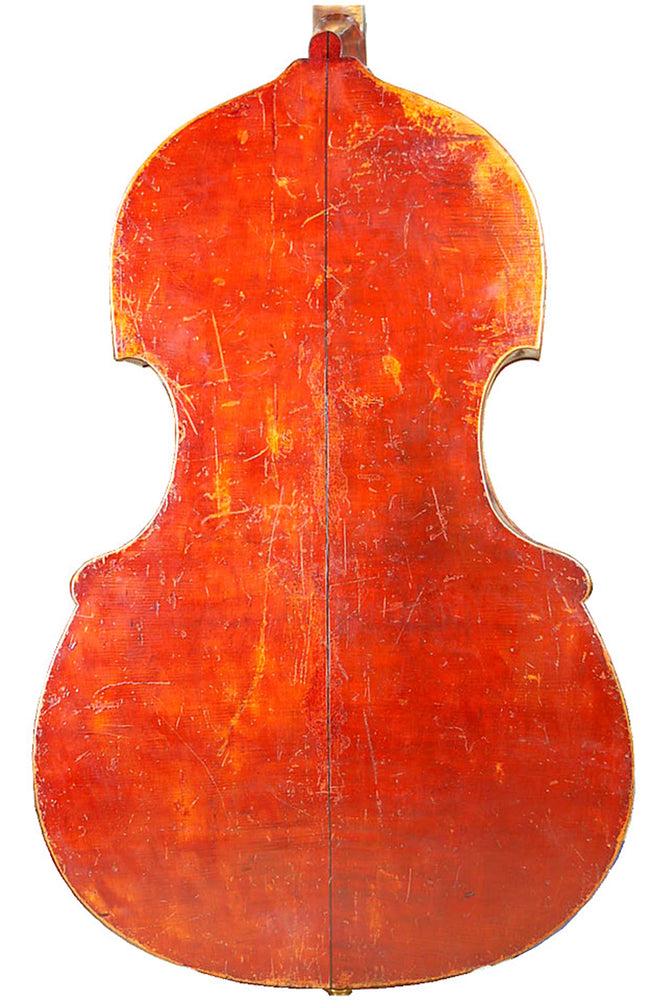
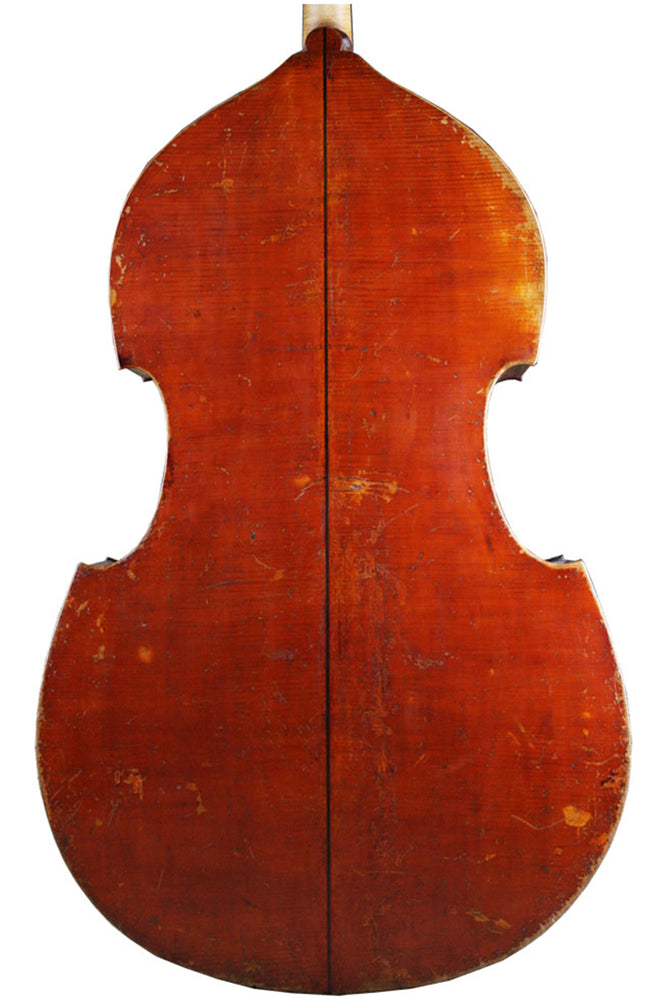
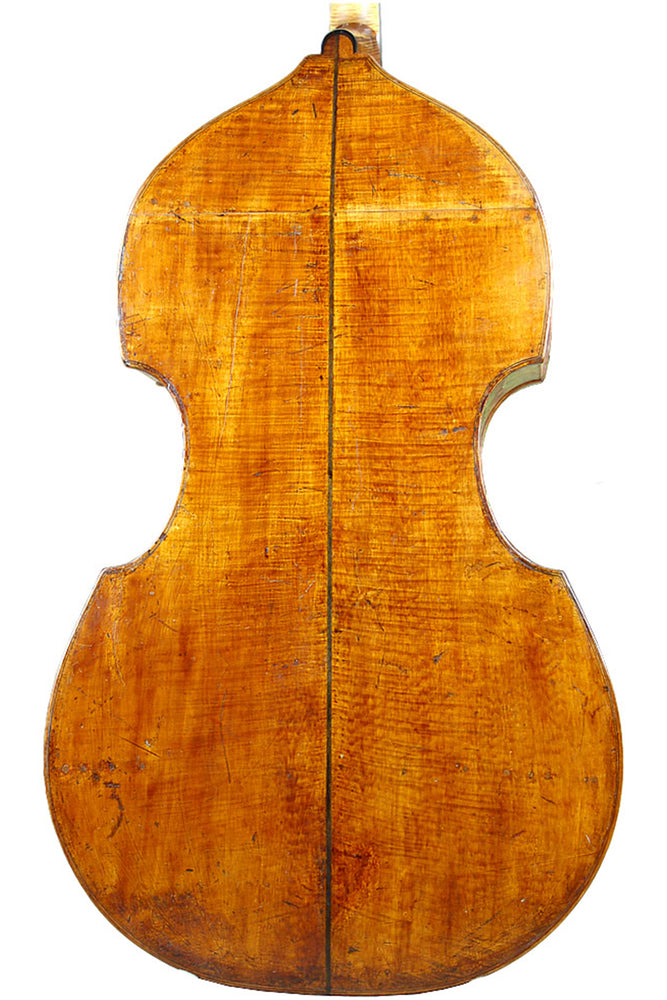
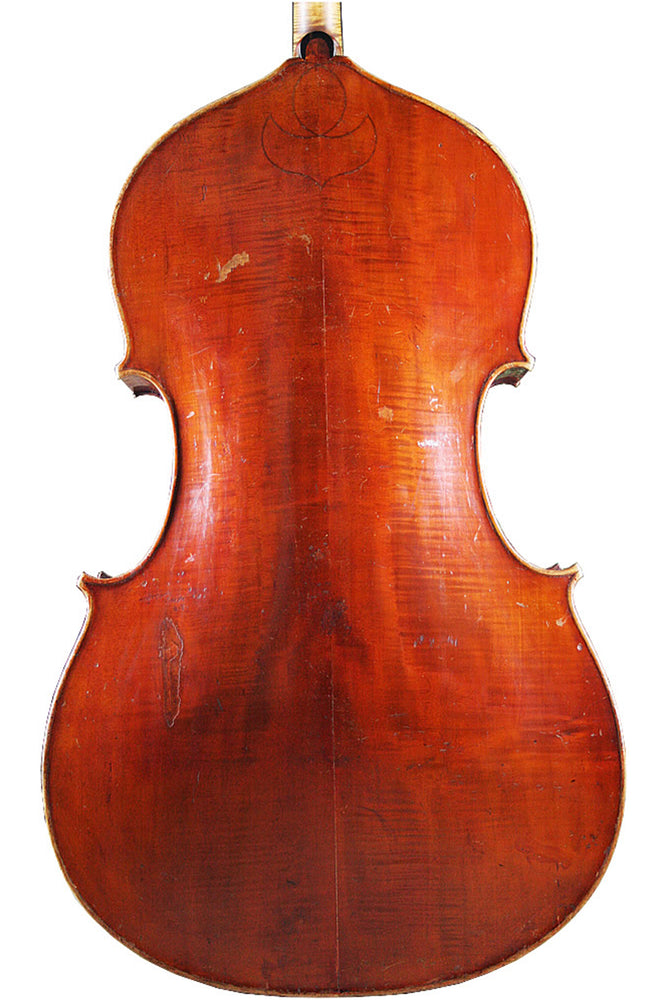
Back image of a German Double Bass (Mittenwald) circa 1800
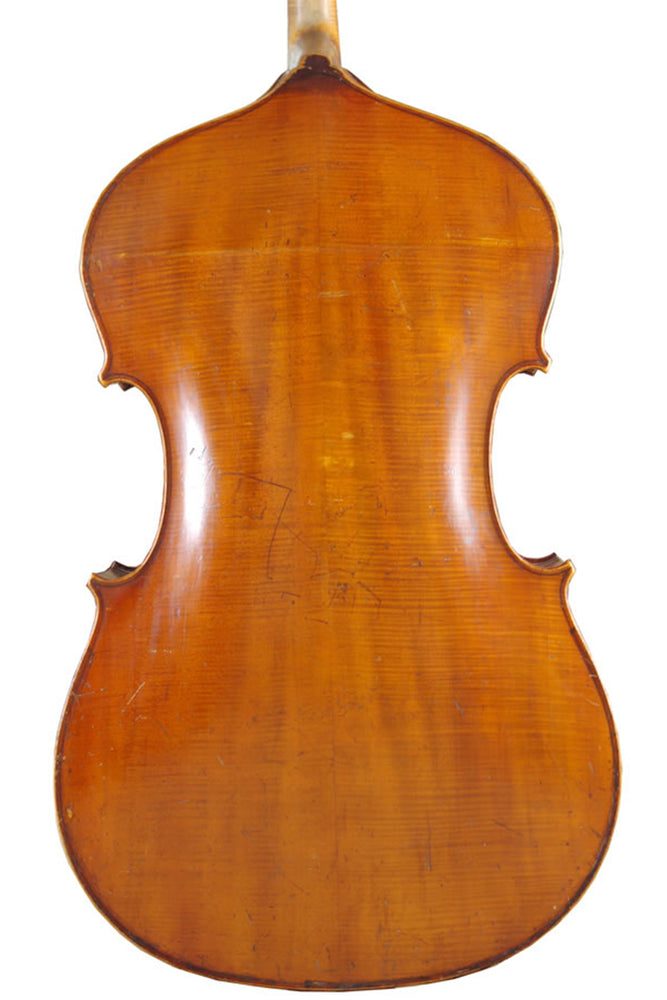
Side image of a German Double Bass (Mittenwald) circa 1800
Scroll image of a German Double Bass (Mittenwald) circa 1800
Click to zoom to a German Double Bass (Mittenwald) circa 1800

Where does this instrument come from? This is a good quality early Germanic instrument. Although there are no internal labels or pencil inscriptions to help firmly identify the exact whereabouts that this instrument was made, the rich red-brown colours of the varnish laid over a yellow ground strongly suggest that it originated in the far south of Germany where violin making centred on the Bavarian town of Mittenwald.

What sort of instrument is this? As you can see from our images, it is an instrument of the most eye-catching and distinctive appearance. Basically it is viol shaped with a flat back and upper angle break. What is most interesting about this angle break is that it commences very low down the upper bouts and has a pitch of only few degrees. The other most notable feature of this instrument is the area around the upper block. Instead of there being a normal concave-sided block the upper part of this block is distinctly convex. The bulbous contours that result dominate the form of this instrument in a way that most players will find unfamiliar. Wait a minute - don't those block-less instruments that were mass-produced in there thousands in Germany during the 20th century have a similar shape to their neck block area? Yes they do and it is highly likely that this early 19th century full-blocked instrument or something similar would have been the inspiration in their design.

What else tells us that this is an instrument of quality? Just take a look at the quality of the timber used in the back. The pronounced flaming that descends from the centre joint is visually exceptional. Run your fingers down the back and you can actually feel the harder flame wood standing marginally proud. Wonderful indeed.

The ribs seem to be matched in terms of figure to the back quite well and the table is made from spruce of a nice even grain.

Tell me about the scroll and pegbox. The scroll is origional to the instrument. It is well carved and as one would expect, there is a great sense of earliness in its character.

The four cogs and worms were present on the instrument at the time The Contrabass Shoppe purchased it. Visually they are totally in keeping with the instrument. Two of the cogs are slightly different in appearance to the other two yet there are three of the cogs which measure exactly the same as each other at 4.7cm diameter -which is large. The D cog is very similar in appearance to the G cog but differs by being even bigger in diameter at exactly 5.0cm. The Contrabass Shoppe had assumed that the cogs were of an early German design but after cleaning them a manufactures stamp - E. Irrot a Mircourt - was revealed on the lower arm of each worm bracket. So not early German at all but fairly early French. The D and G cogs being of a design that we have never come across before.

Will I fall is love this instrument? We would certainly like to think that you would because having lavished over UK£7,900-00 inc. Vat in repairs, this is now a fully secure playing instrument. A copy of the inventory of repairs accompanies the instrument as does a digital print out of all the work that was done on the inside table.

Overall this is a nicely presented, good-looking instrument. It most certainly has a great deal of character and appeal and we believe that the size, shape and sound will definitely appeal to all you orchestral players.

Width at the upper bout 22in (55.8cm)
Width at the centre bout 15in (38.3cm)
Width at the lower bout 27.65in (70.3cm)
LOB 45.25in (114.8cm)
St length 42.25in (107.2cm)

SOLD.

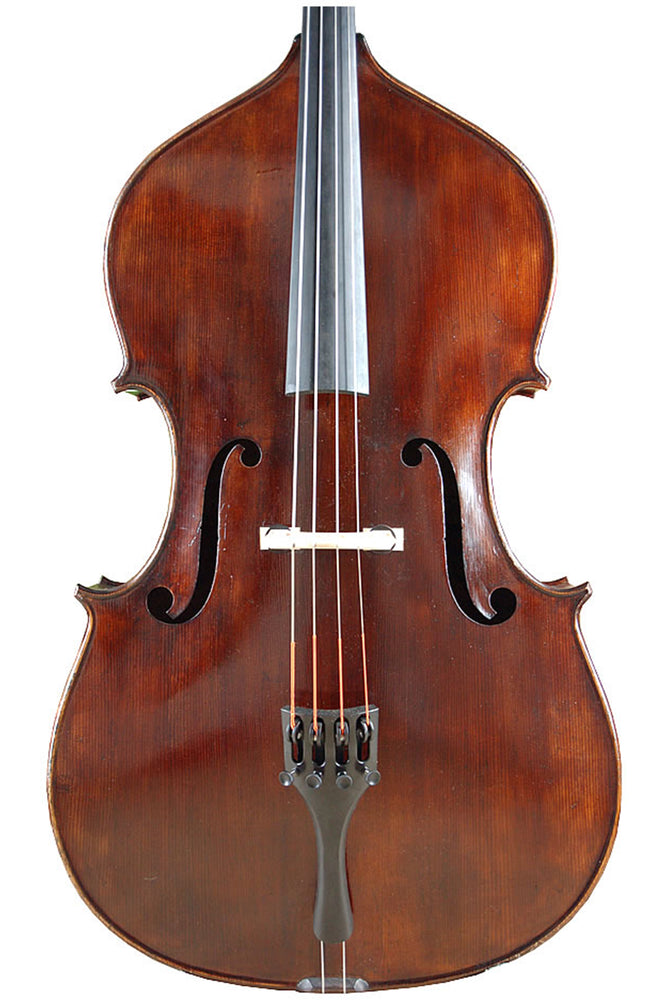
Quarter View

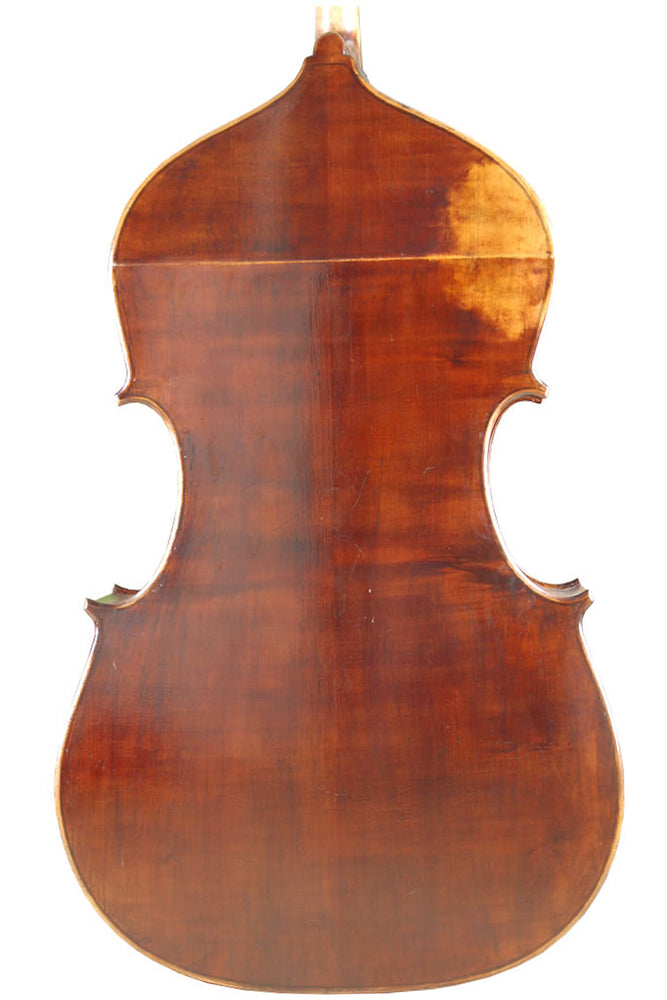
Back View

Quarter View Back View
Side View Scroll view

Side View

Scroll View

Click here for a full view of this instrument
Back to the Top Quality Double Bass Section
Back to top
Contrabass Shoppe footer Click here to review some of the instruments previously sold by The Contrabass Shoppe Click here for our range of Budget Double Basses up to UK £5000 Click here for our quality Double Basses up to UK£20,000 Click here for our highest quality Double Basses over UK£20,000 Click here for our quality Double Bass Bows Click here for our quality Double Bass Accessories Click here for our range of Double Bass specialist Books Click here for the web site introduction Click here to discover more about The Contrabass Shoppe Click here for the outstanding Double Bass Gallery Click here to discover our articles in relation to the Double Bass Click here for more information on our restoration work Click here to make contact with us Click here to make contact with us Click here to email us.