|
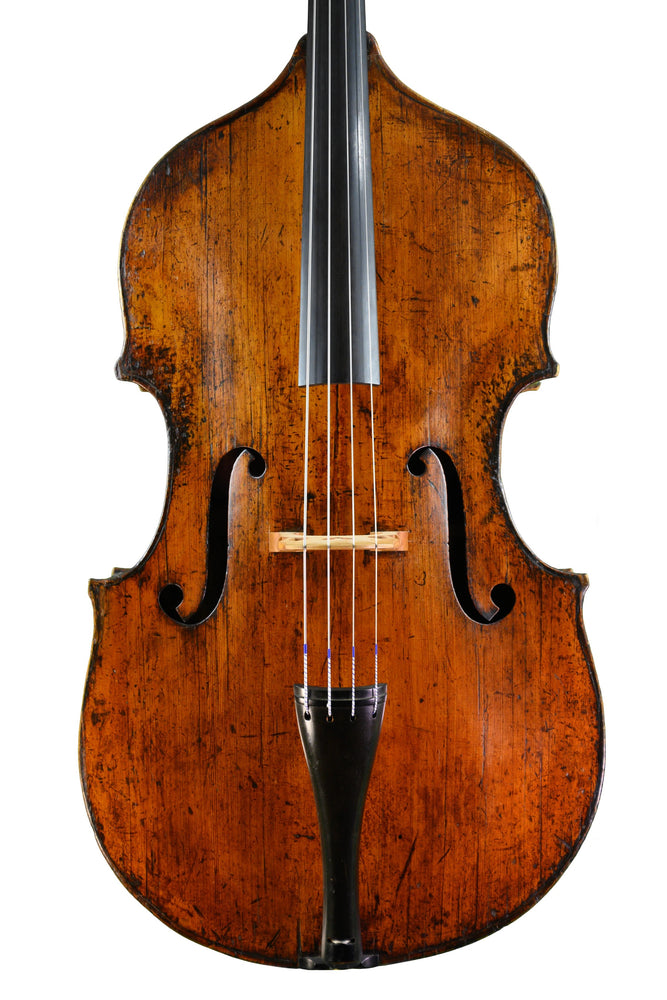
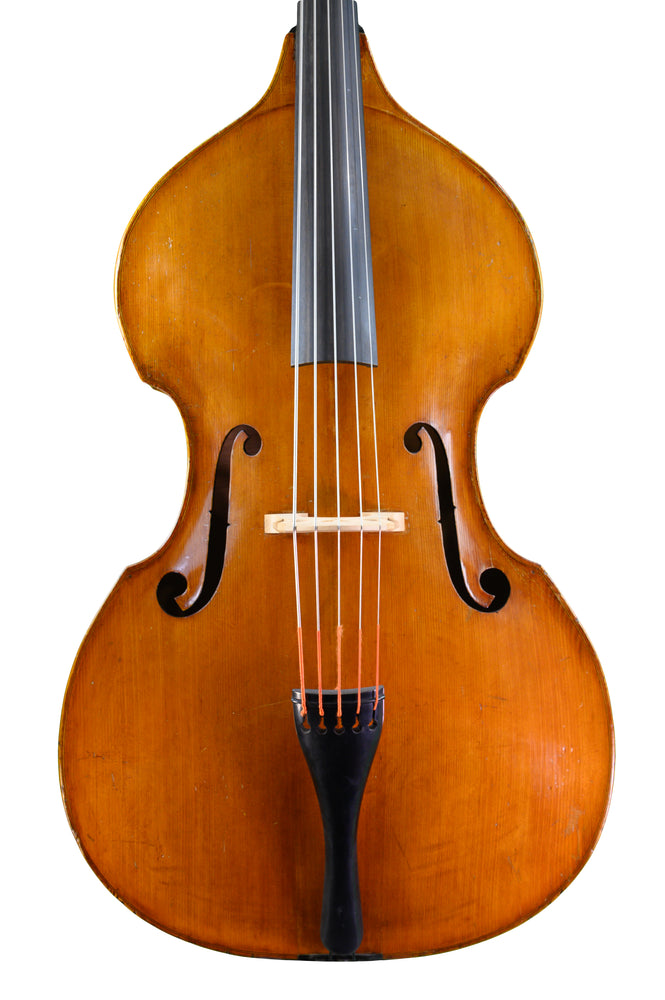
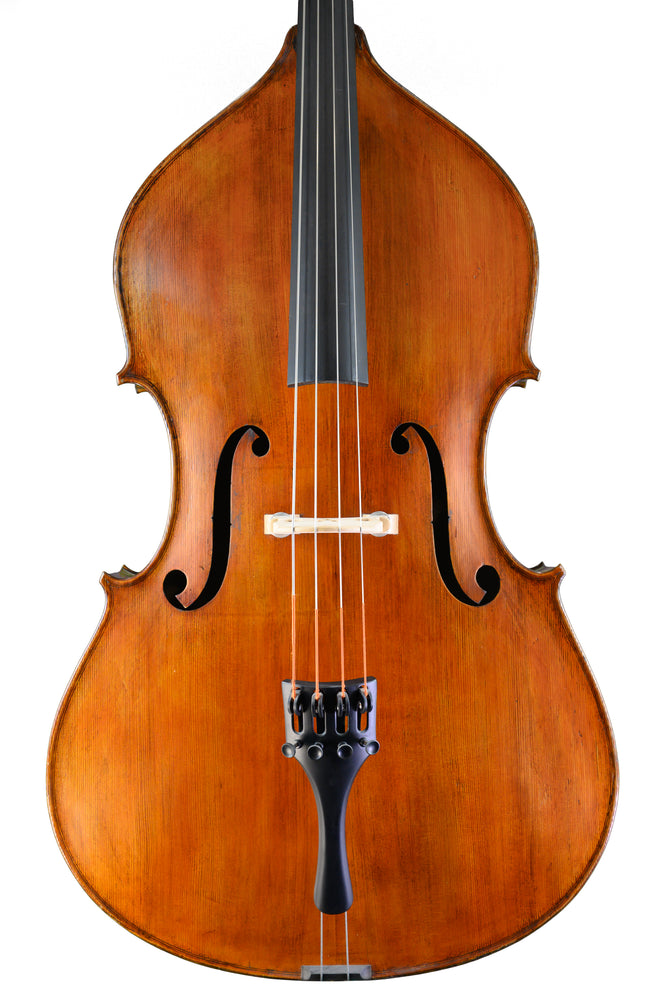
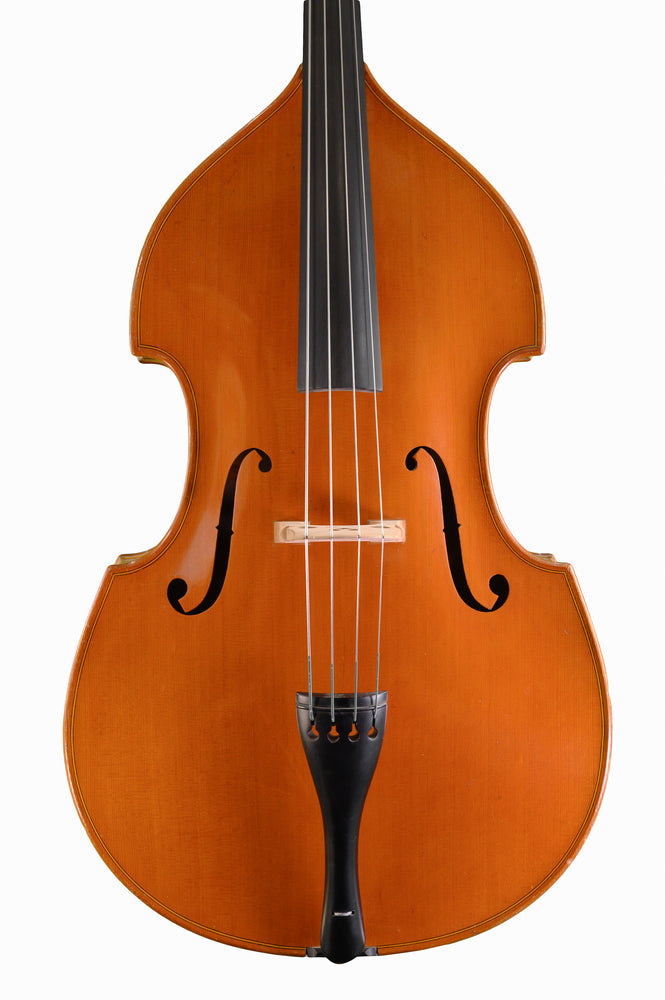
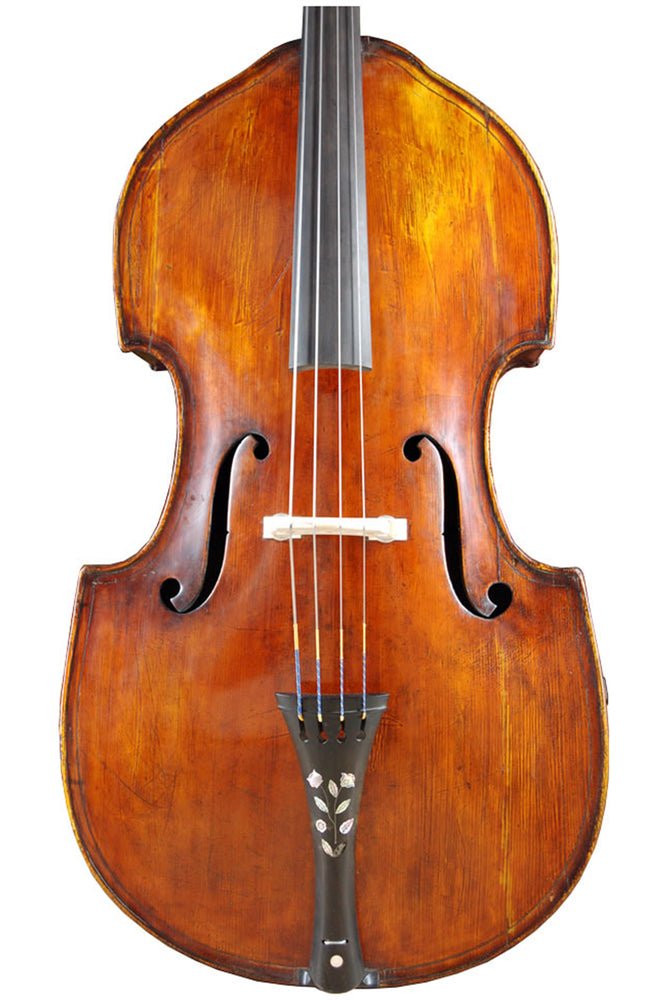
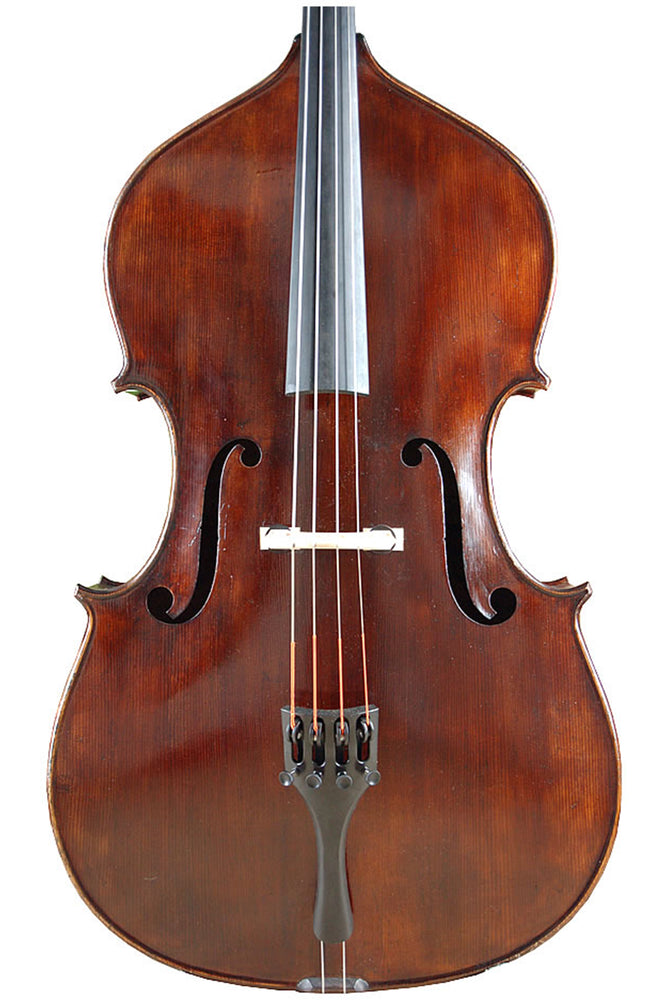
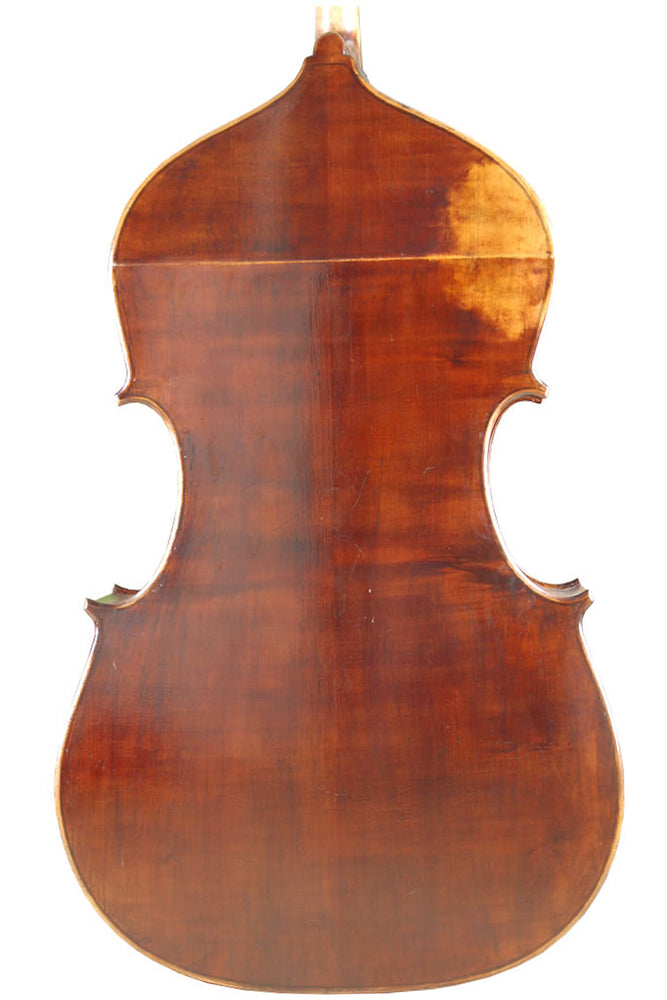
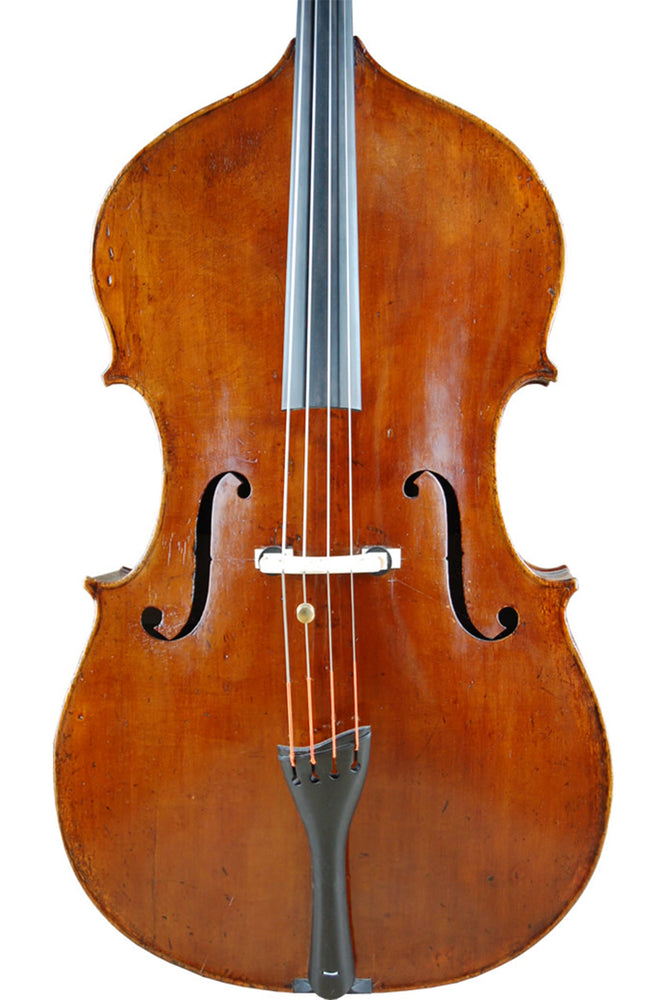
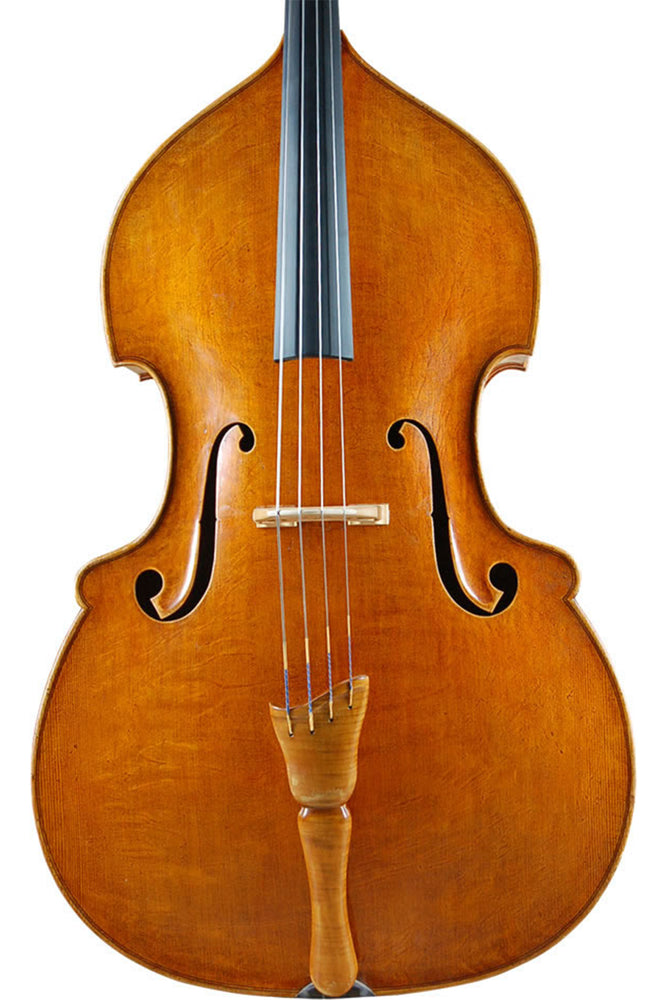
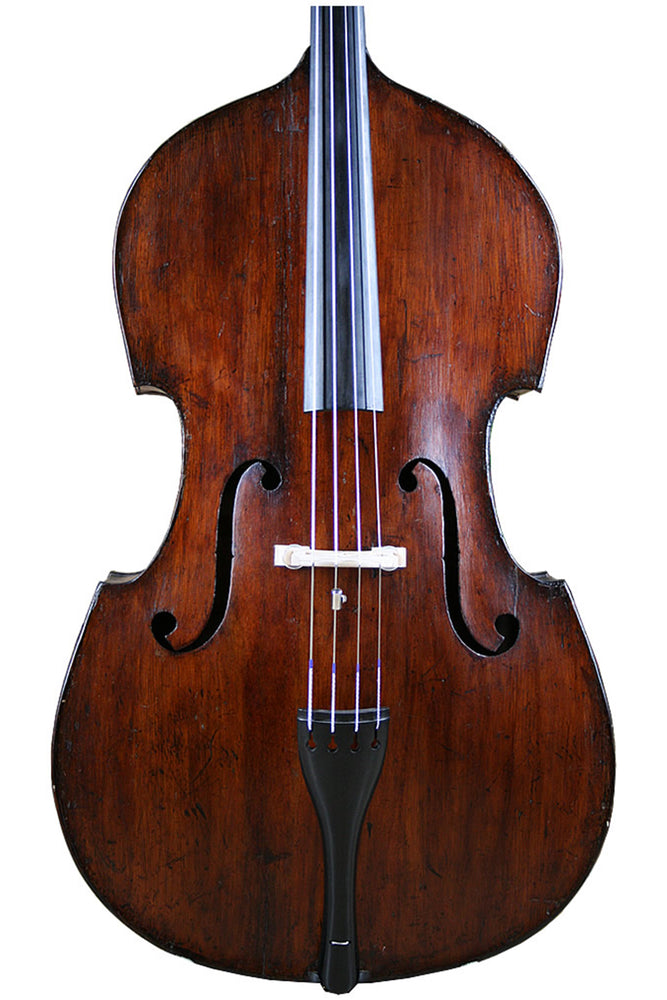
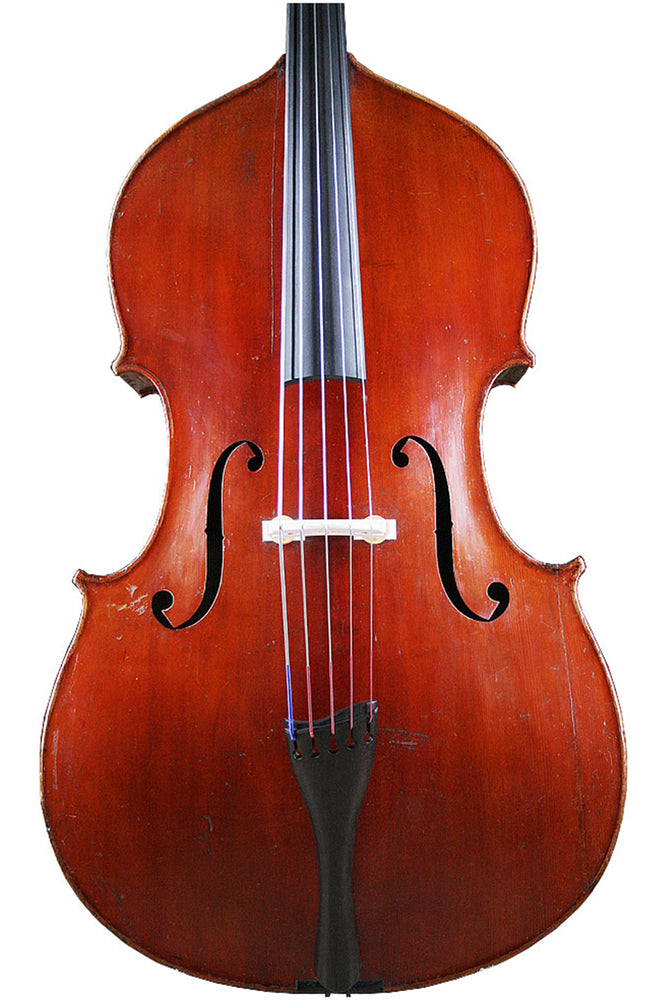
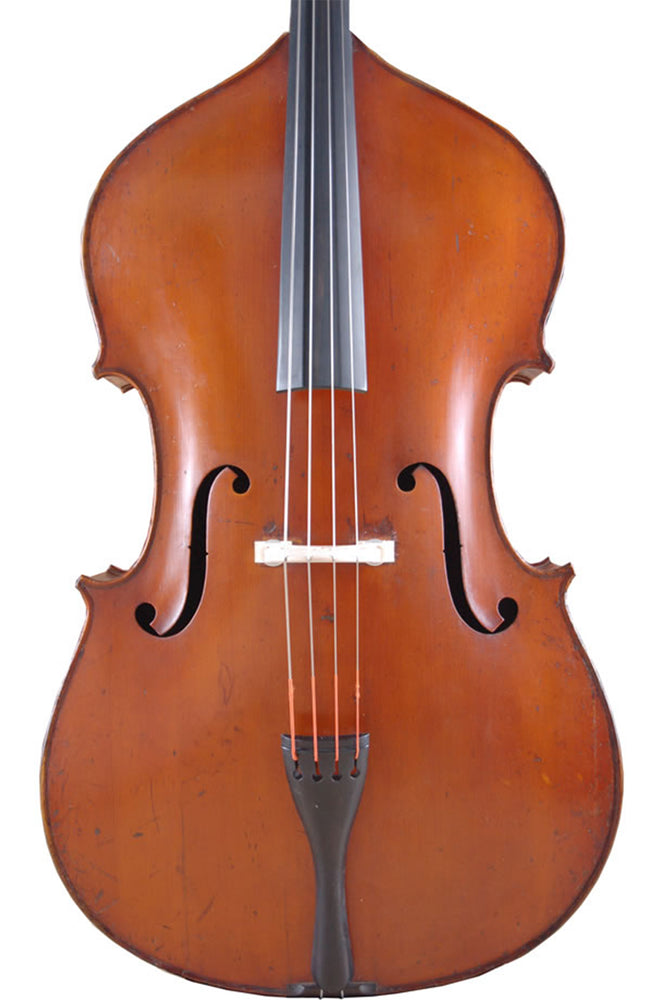
Yes this is one of those magnificent instruments
with the rounded or "Busetto" type lower corners in
the style of Mathias Klotz (1653-1743) that are quite awesome in
every aspect. At 120cm in length of back this really is a true 5/4-size
instrument. However - even though this really is about as big an
instrument as one will find it is still very playable due to the
fact that The Contrabass Shoppe has fitted a stunning new neck to
it that gives it a string length of only 107.4 cm. Can you believe
that? Only 107.4cm. So big bass but incredibly easy to play.
Yes indeed. As one draws the bow across the
strings the whole instrument begins to vibrate and a simply colossal
sound comes out. I promise you - you won't be able to
stop smiling at the enormity of sound. Hold on to the china plates!
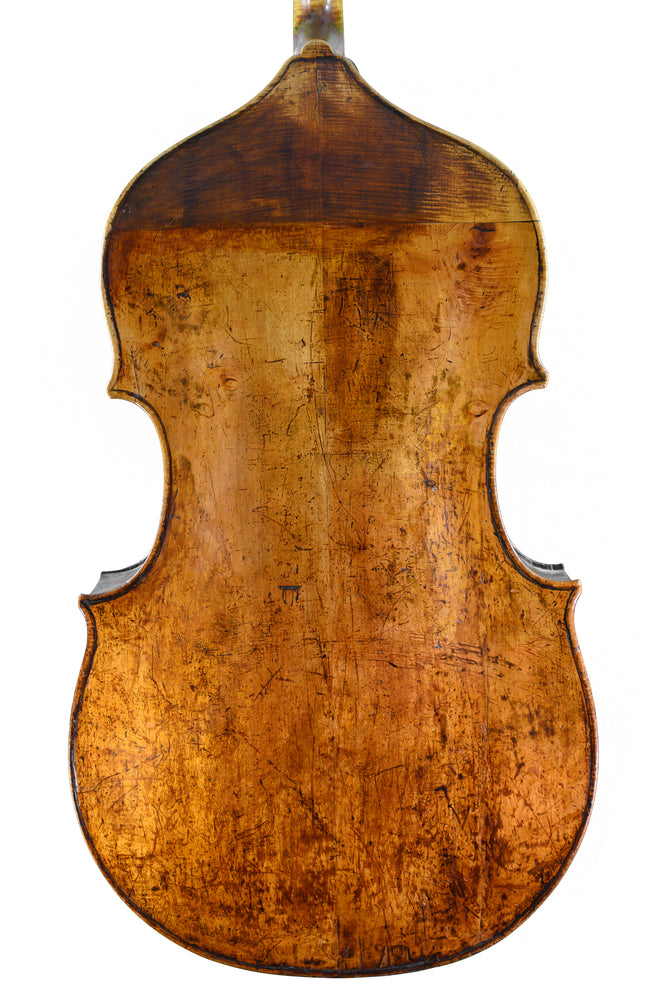
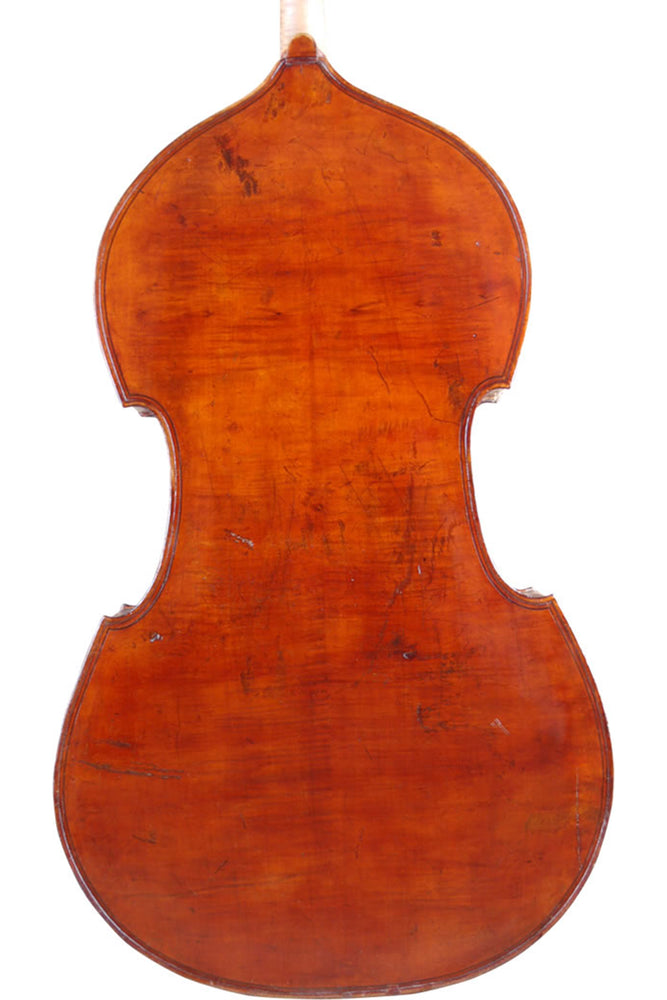
No it is not but it is signed in ink -
'Ferdinand Seitz 1856' on the bass side lower table.
In addition - and underneath the centre brace we saw a Latin
inscription in very neat handwriting. Unfortunately it was not possible
to decipher it before the new brace was put in.
Yes he was. Although there is very little recorded
about Ferdinand Seitz even in the larger reference books, double
bass players the world over recognise his name as being synonymous
with these large well sounding orchestral instruments for which
he is so famed. German players especially favour these 5/4 size
instruments that were often made - as is this example - with
the rounded or "Busetto" type lower corners.
Ferdinand worked around about 1840-1857. There
were several generations of violinmakers with the name Seitz, most
of whom worked in Mittenwald. The Encyclopaedia by Karel Jalovec
records no less than 18 with a surname spelt either Seitz or Seiz
many of whom worked for or supplied instruments or parts of violins
exclusively for the dealers and manufacturers namely Matthias (3rd),
Neuner and Matthias Hornsteinster.
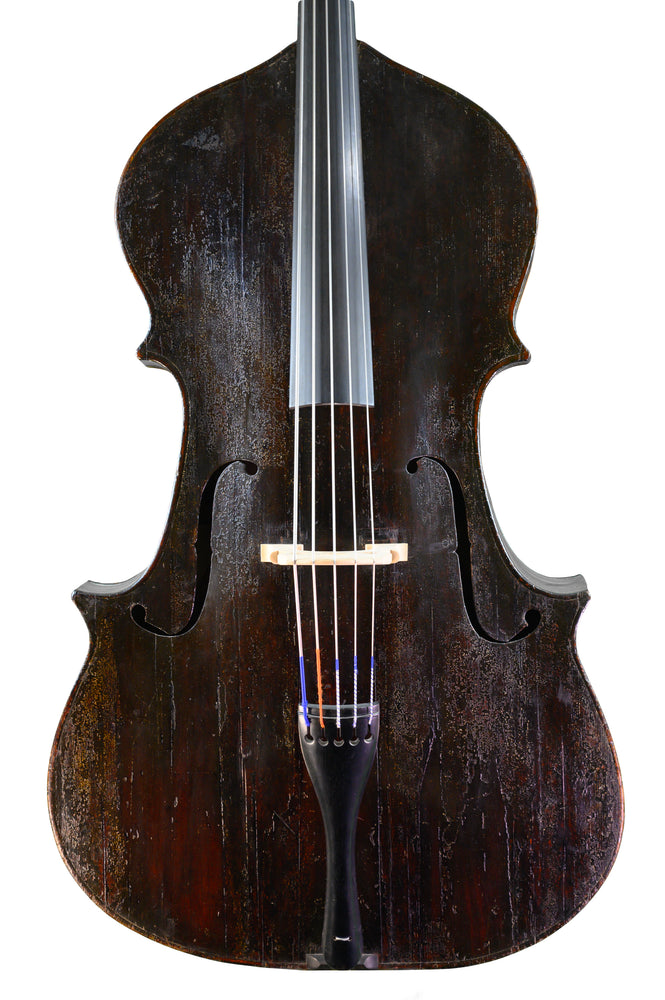
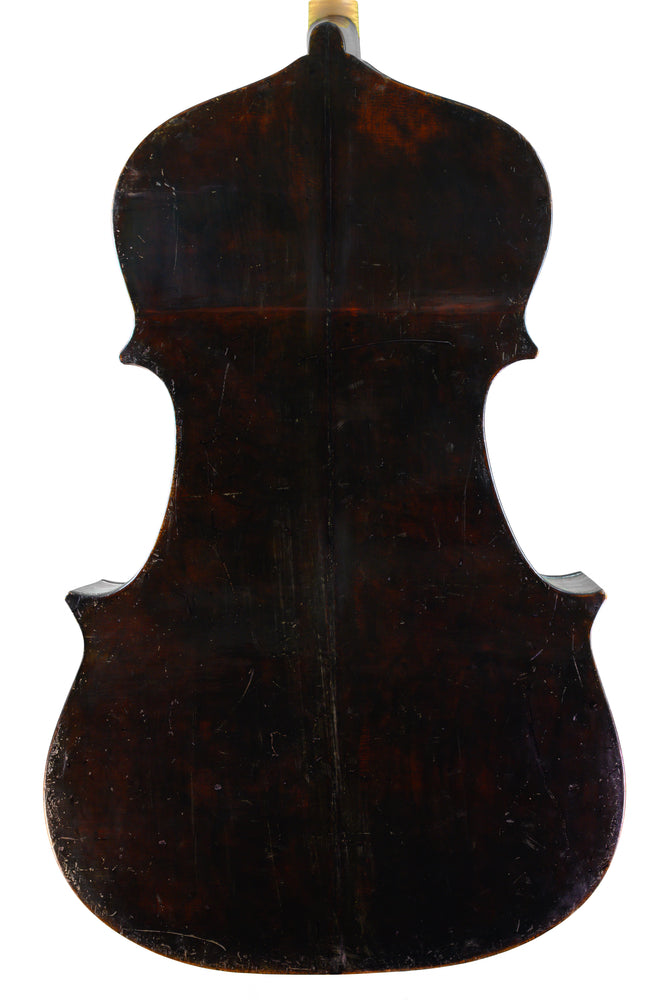
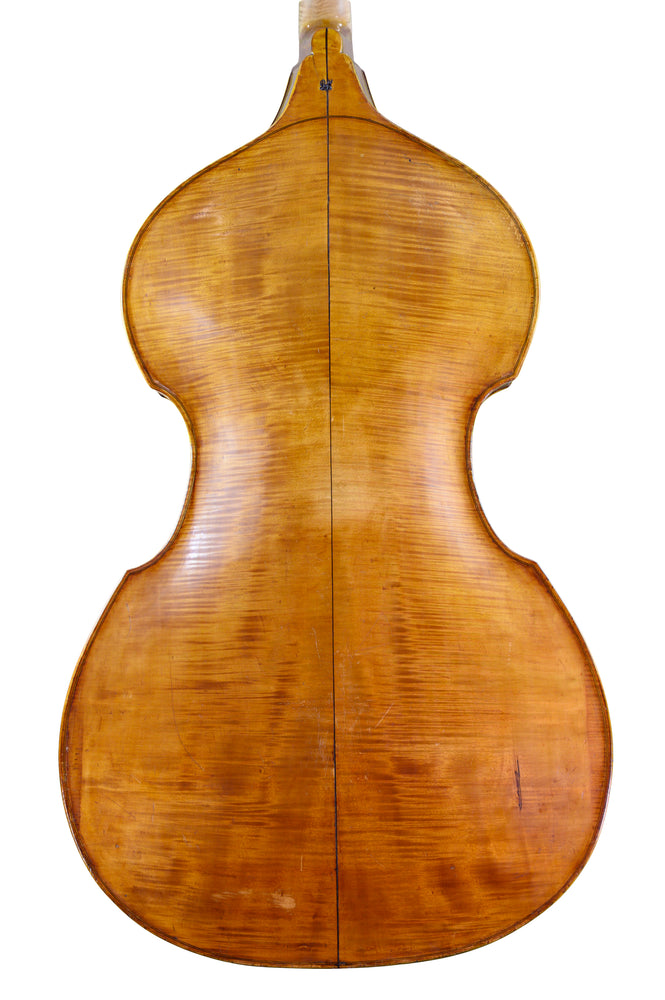
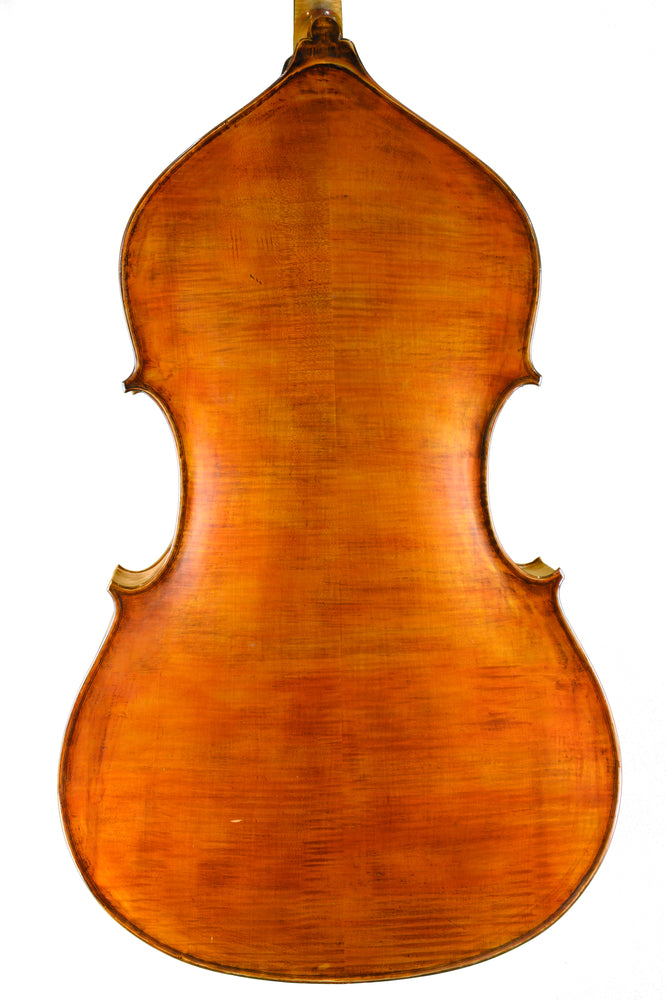
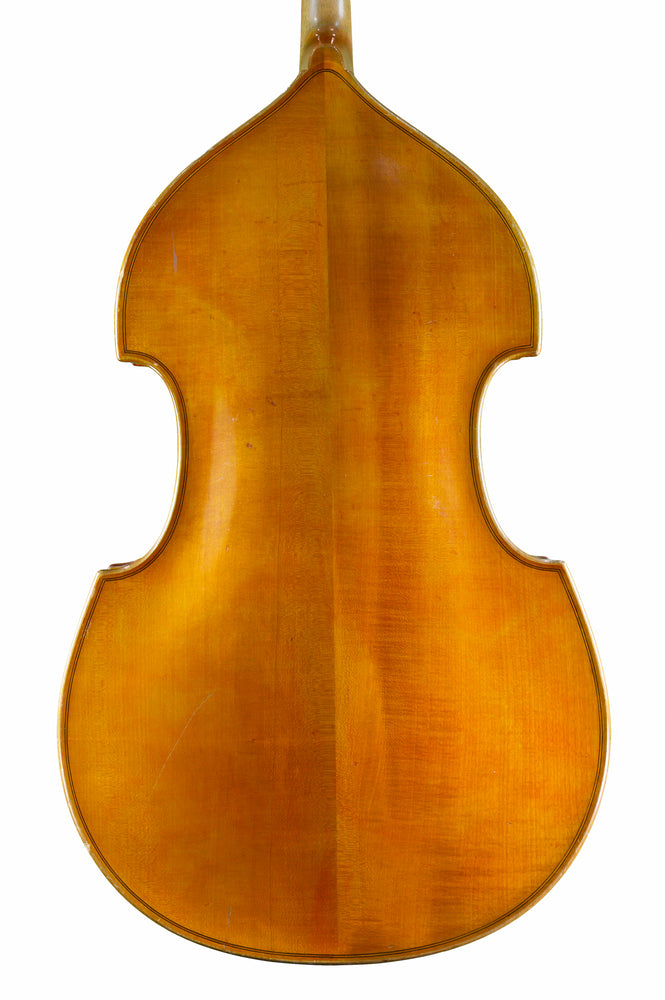
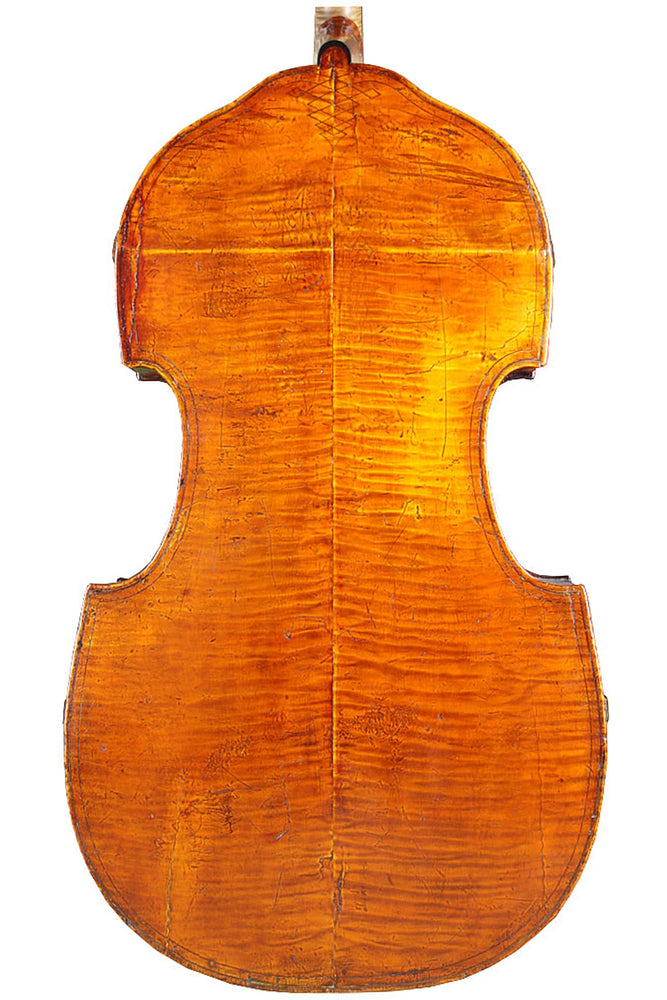
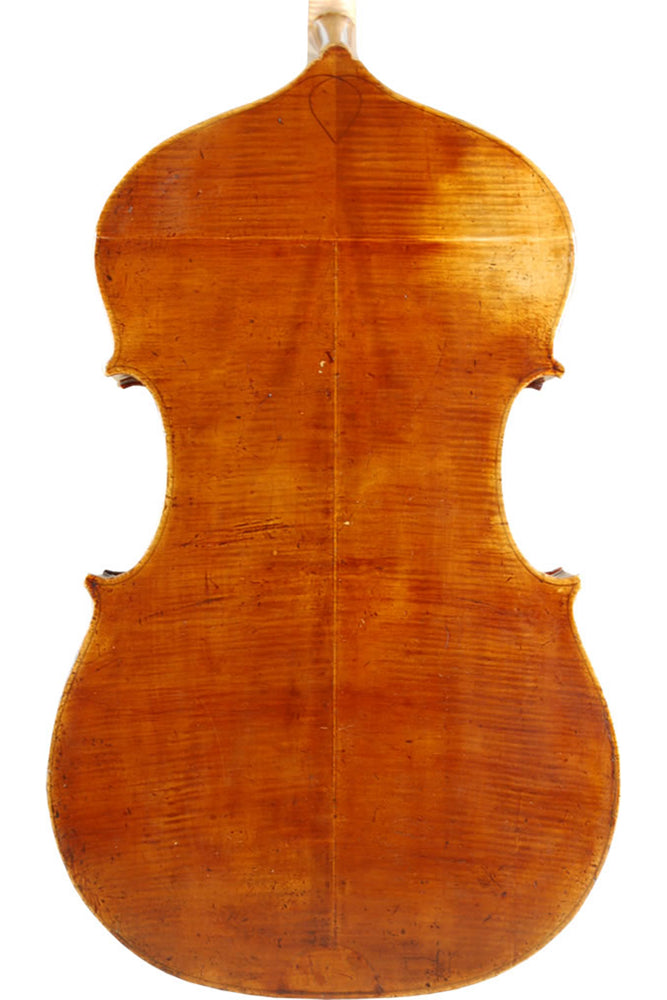
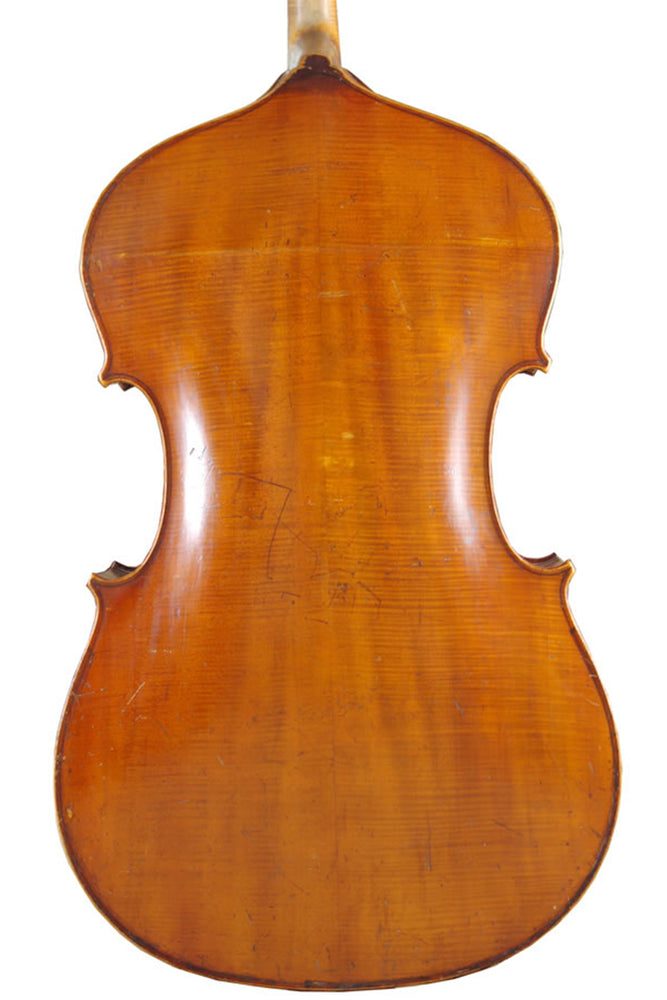
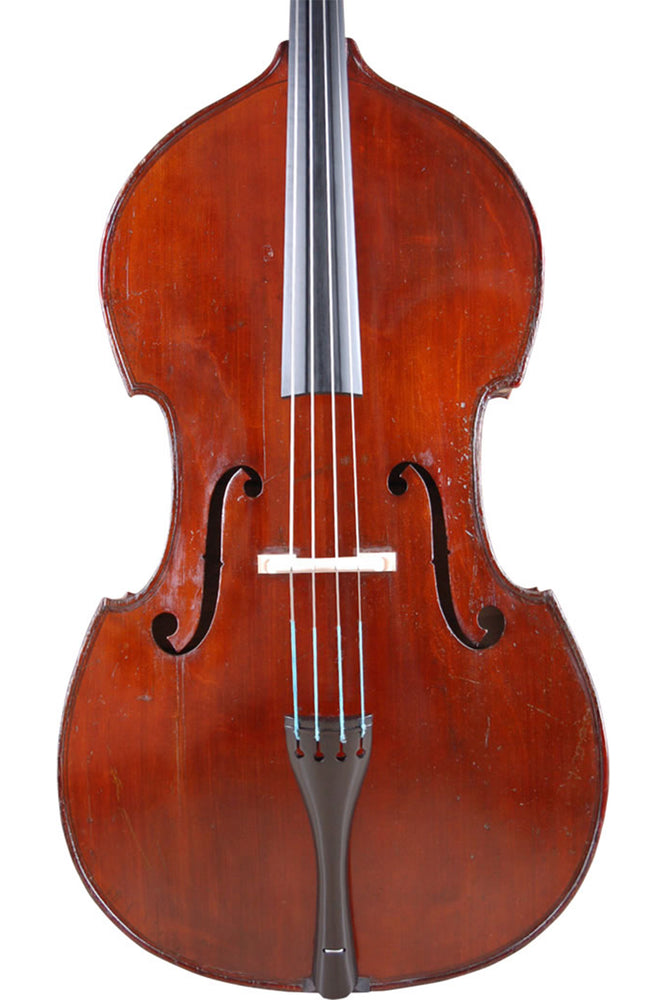
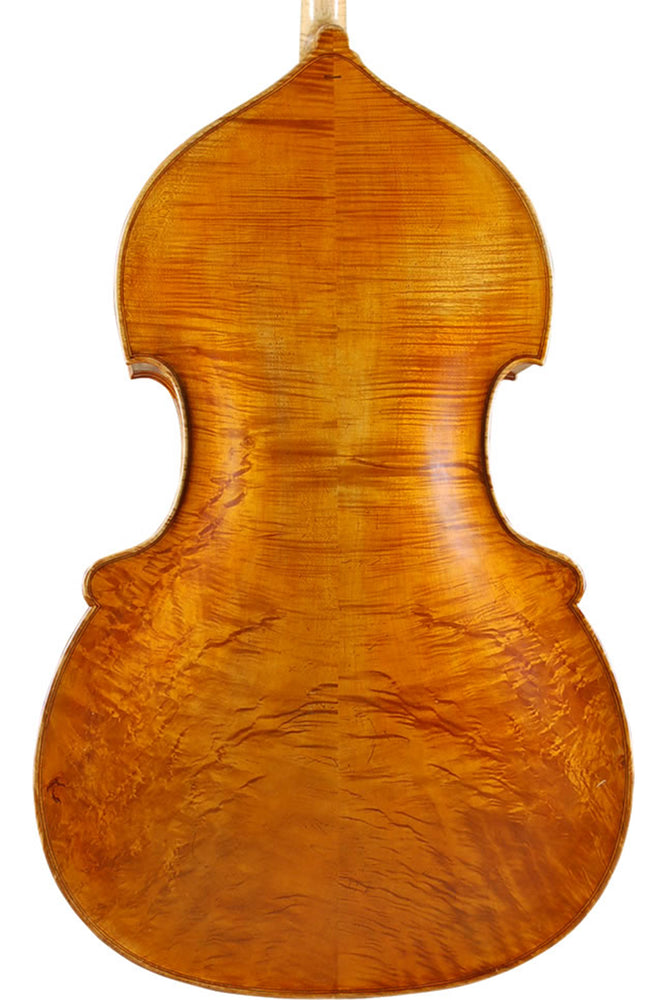
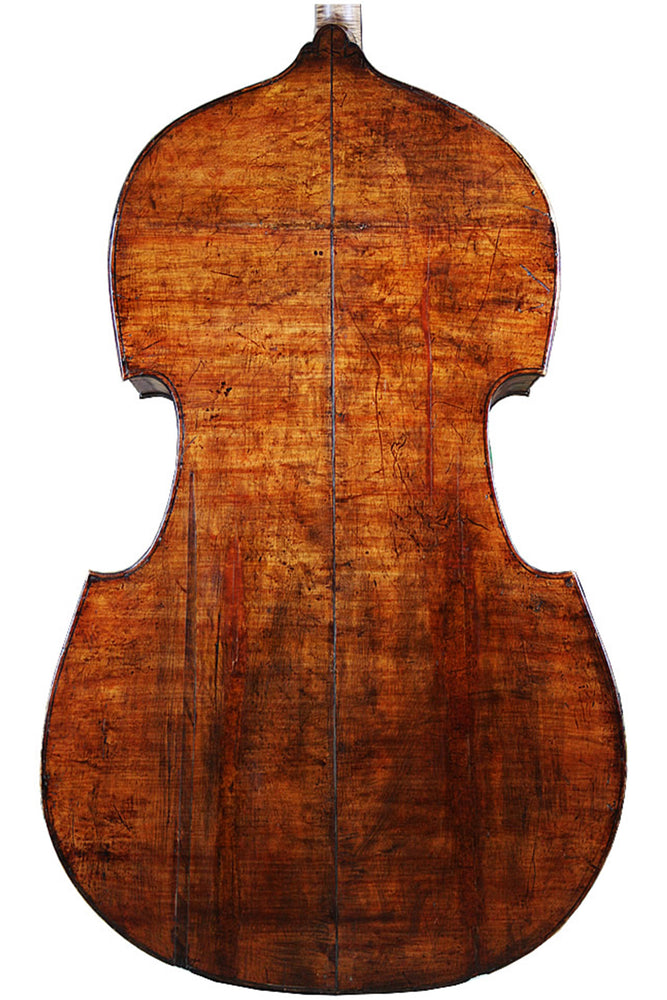
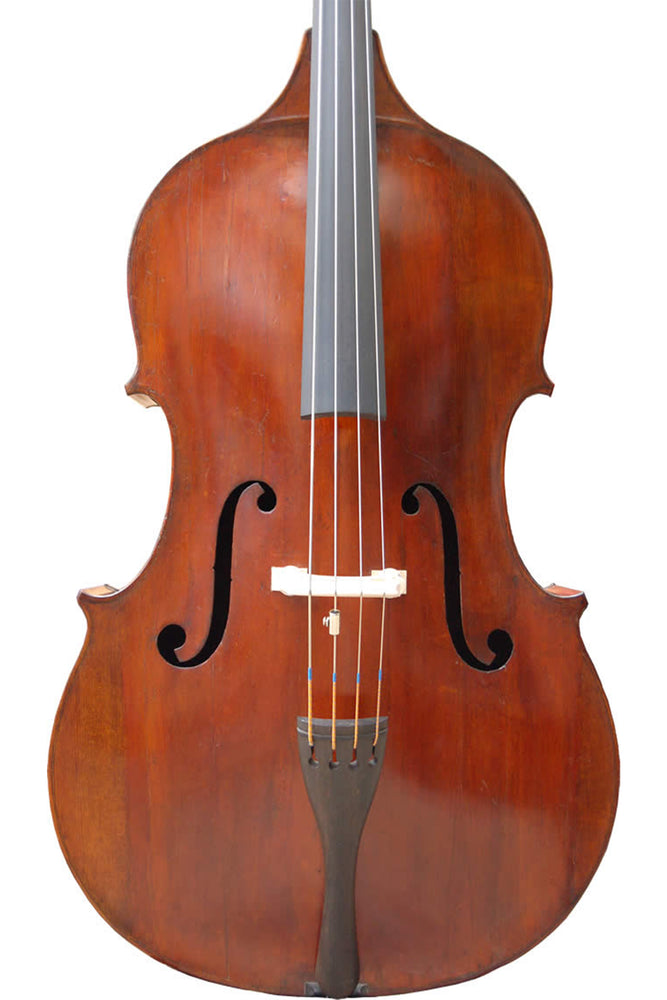
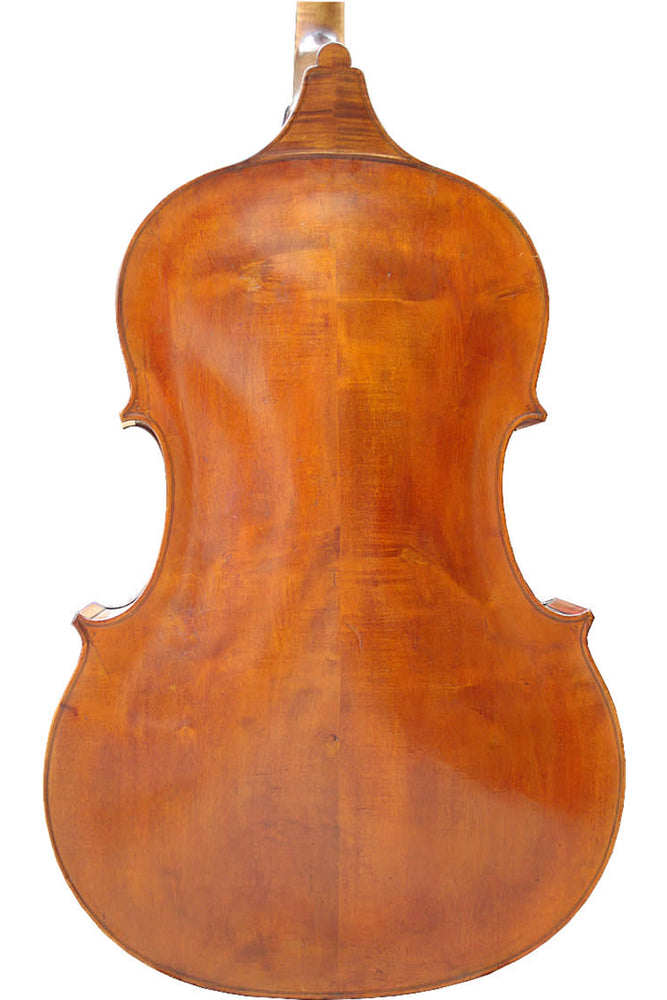
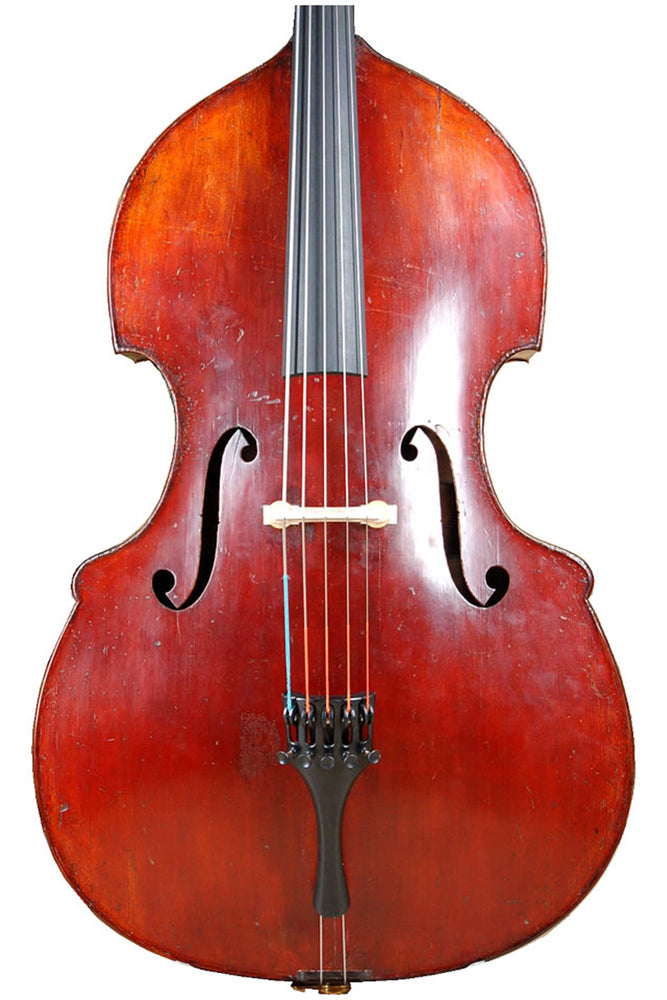
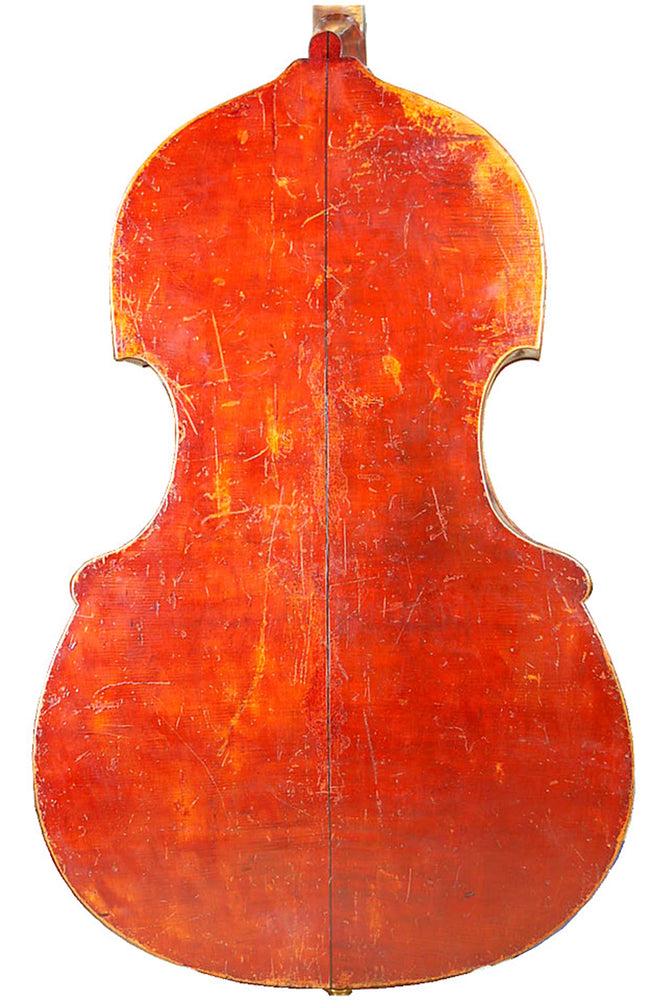
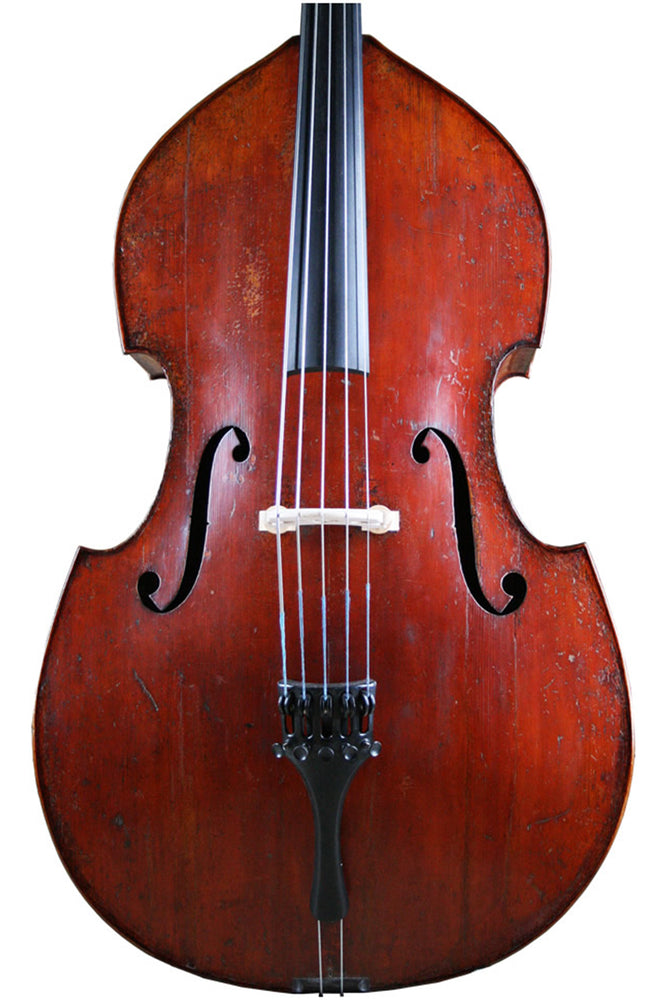
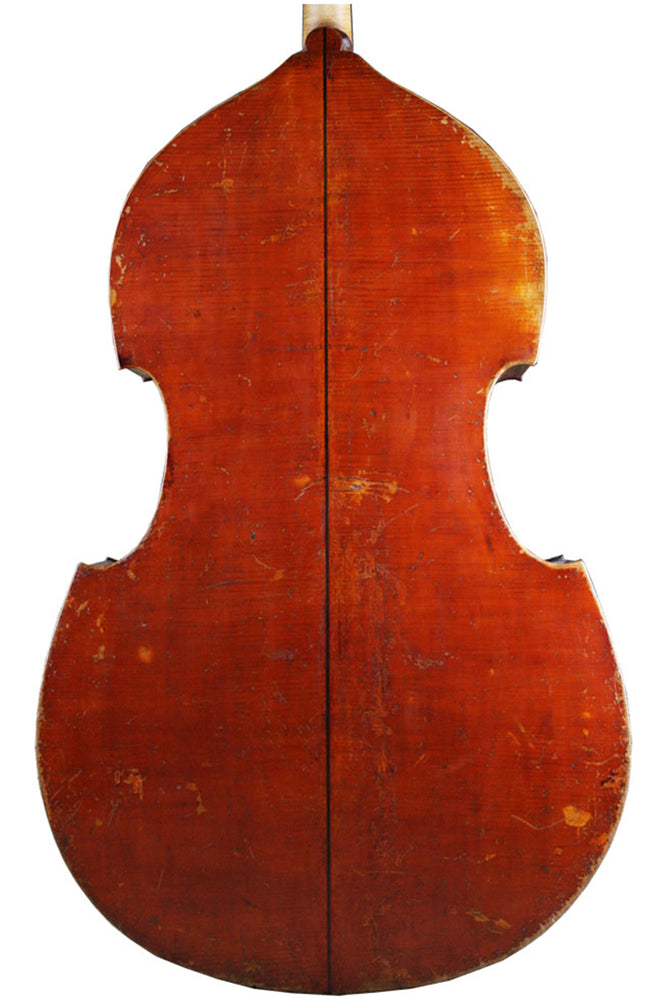
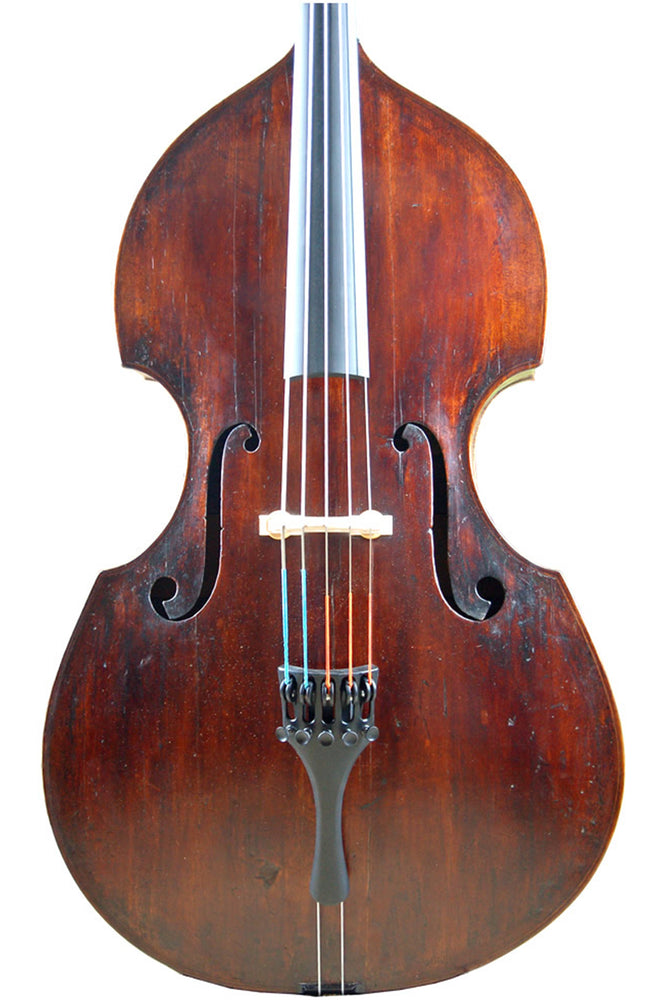
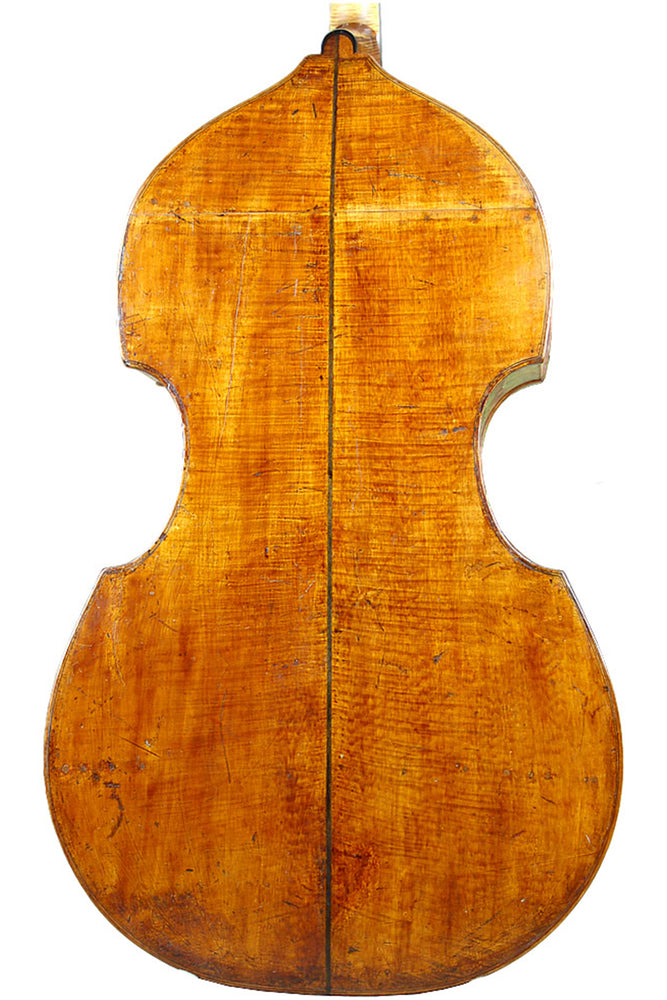
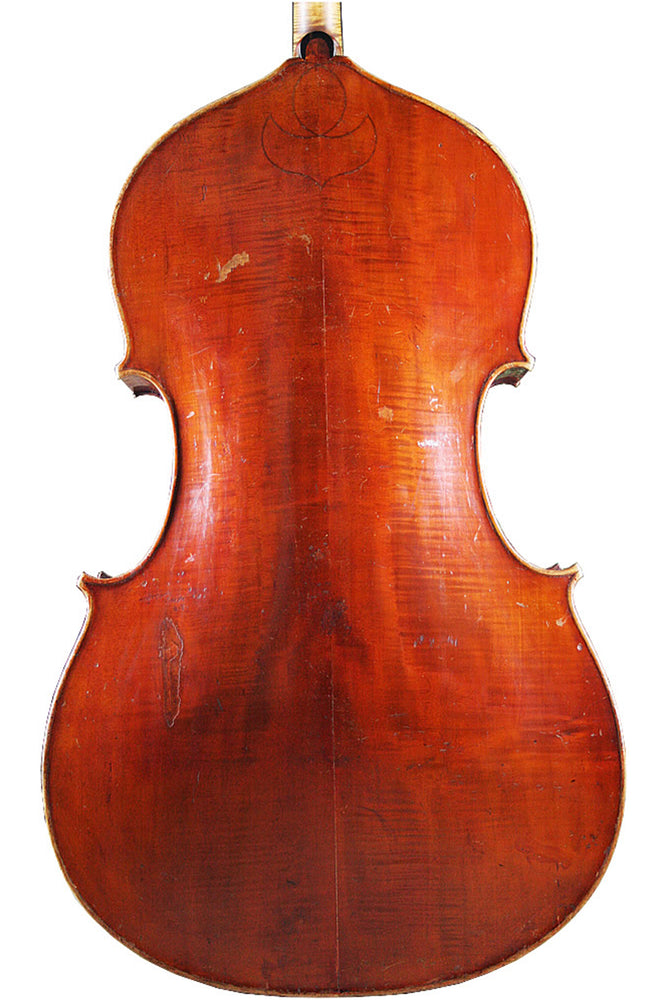
A viol shaped instrument with a flat back that
slopes gently in towards the neck and a characteristic strip of
ebony along the back centre join. This instrument is made in the
traditional style of the Mittenwald School. The wood used is nicely
figured, well thicknessed and of good quality. The carving details
of the scroll, f-holes and purfilling are neat and well controlled
and although the varnish on the body of the instrument is from a
later date the oil varnish on the scroll is origional. Just take
a look at the glorious texture and deep-dark red-brown colour -
it is just so typical. Splendid stuff indeed.
There is a printed label which is affixed on
the back next to the centre brace that states - J.K.Monk's
Tripple-Bars. March 1898. John King Monk (b1846) was a fairly prolific
maker (Over 250 instruments.) who worked in Merton, Surrey, England.
He was the inventor of a "Maggini bass bar system" and
a "Triple bass bar system" - which he believed would
eliminate the inequality of certain notes. Indeed this instrument
was fitted with a normal bass bar with a second smaller (Length
of cello bar, about half the thickness.) bar placed about 5.5cm
towards the sound-post. Hmm…. all fairly interesting stuff
especially as we had to remove both bars and replace them with one
of the proper length and height - but the main point that is raised
by the internal label and the fact that Monk worked-on the instrument
in 1898 is that it establishes another fact - which is that
the instrument has been in the UK for over 106 years.
Well - new bass bar for one plus a whole list
of other stuff that totalled more that £8000-00. Restorer
Martyn Bailey put in a completely new back brace system and a neck
graft. In addition repair to the ribs was required, repair to the
bass bar crack and one other, half-edge work to the entire front,
varnish work and a complete fit-up. As you'd expect the instrument
is now in absolutely A1 condition.
Named instruments by Ferdinand Seitz are considered
highly desirable property right around the world. The huge 'octobass'
like sound - glorious and reverent - rather like a fine red wine
- mature and full-bodied - will be of considerable interest to the
player in the a symphony or opera orchestra. Conversion to five
strings is also a feasible option.
Width at the upper bout 21.85in (55.6cm)
Width at the centre bout 15.25in (38.8cm)
Width at the lower bout 29.5in (75.5cm)
LOB 47.25in (120.0cm)
St length 42.25in (107.4cm).
|