|
Raymond Elgar in his reference dictionary "Looking
at the double bass" (1967 - published by the author.)
writes that Herold worked in Brunndobra in the early part of the
19th century and made well made instruments that were based on a
Stradivarian model. Elgar praises Herold`s instruments for their
good tone and notes that his label was usually affixed in a difficult
to find position - against the lining of the G-string side upper
inside table. Indeed we did find the original label located more
or less in that exact position. It reads (printed) "Reinhold
Herold, Bass-und Cello-Fabrikation, Brunndobra b. Klingenthal"
followed in hand written ink "in Sachsen, Germany".
One theory proposed by one of our expert restorers
- namely Roger Dawson - was that Herold had an outlet for his instruments
either through the "trade" or via some other reseller or retail
outlet who actually stipulated at the time of their order that Herold`s
own label would not be required. This sort of request never goes
down well with any maker worth his salt - so the practice
of hiding ones personal details in a non visual position was frequently
adopted under such circumstances. To make viewing of the label easier
The Contrabass Shoppe has taken the liberty of relocating the label
to a more conventional position - on the back and visual through
the bass-side F-hole.
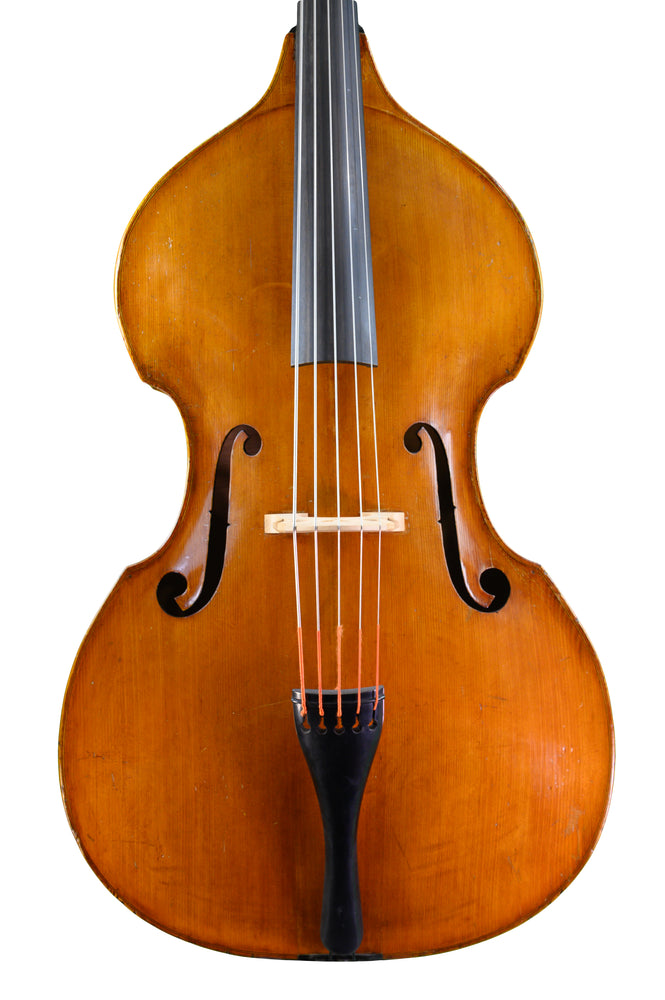
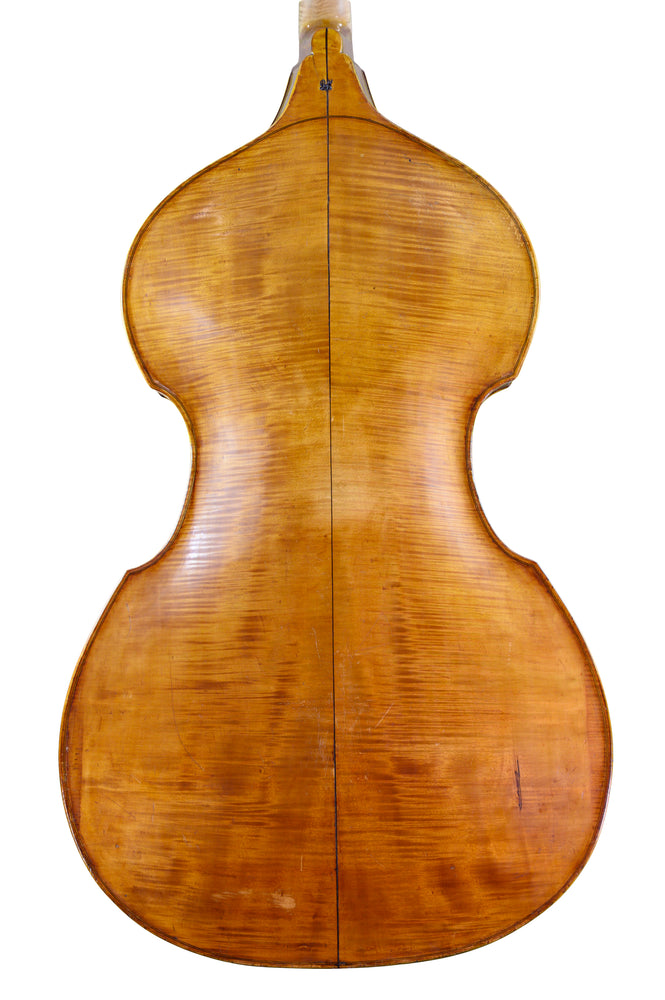
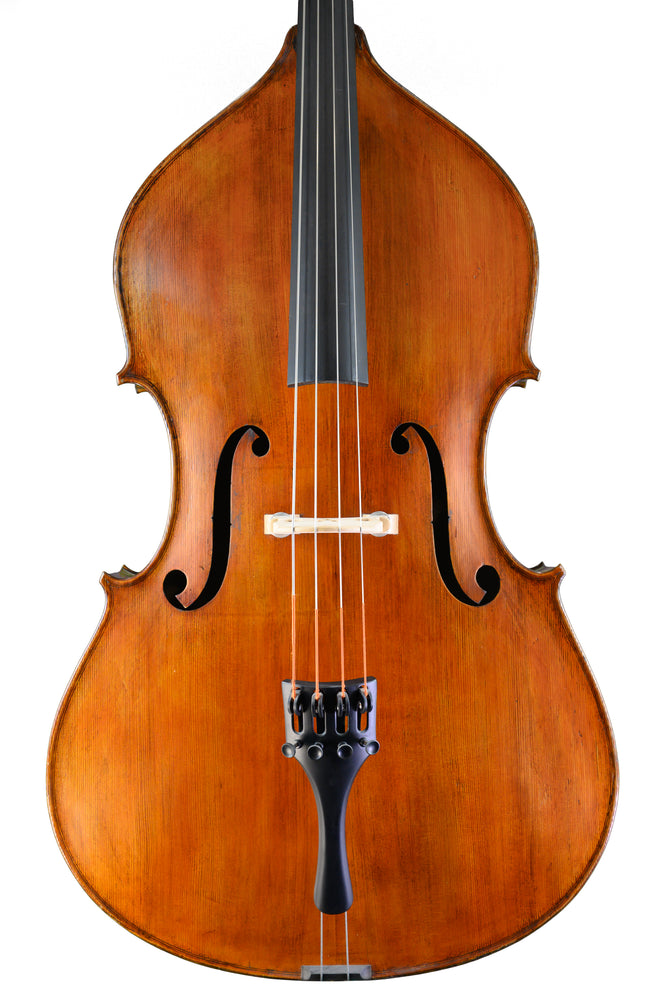
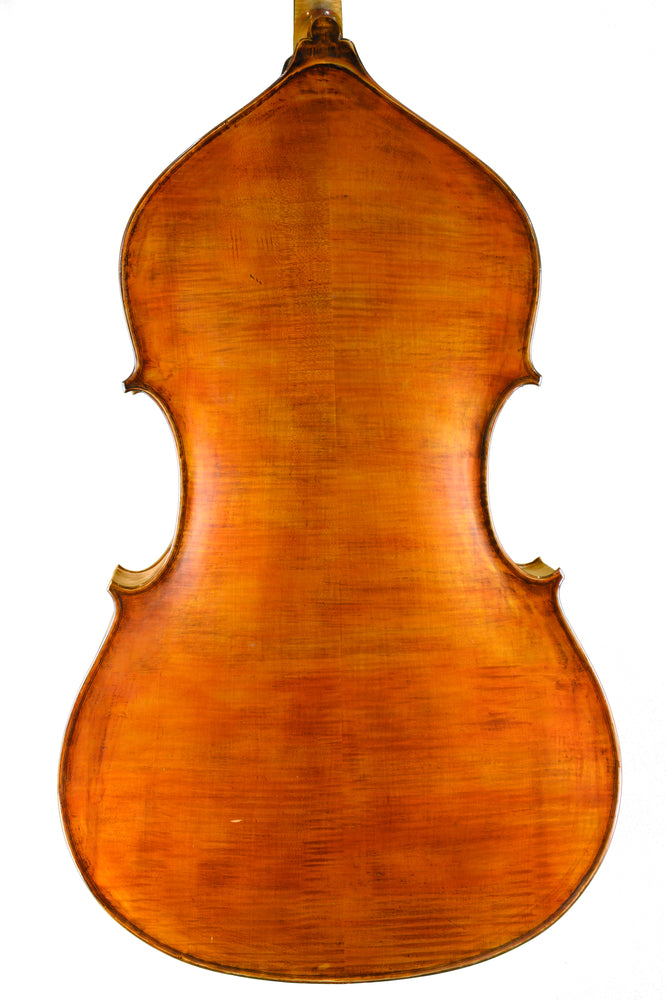
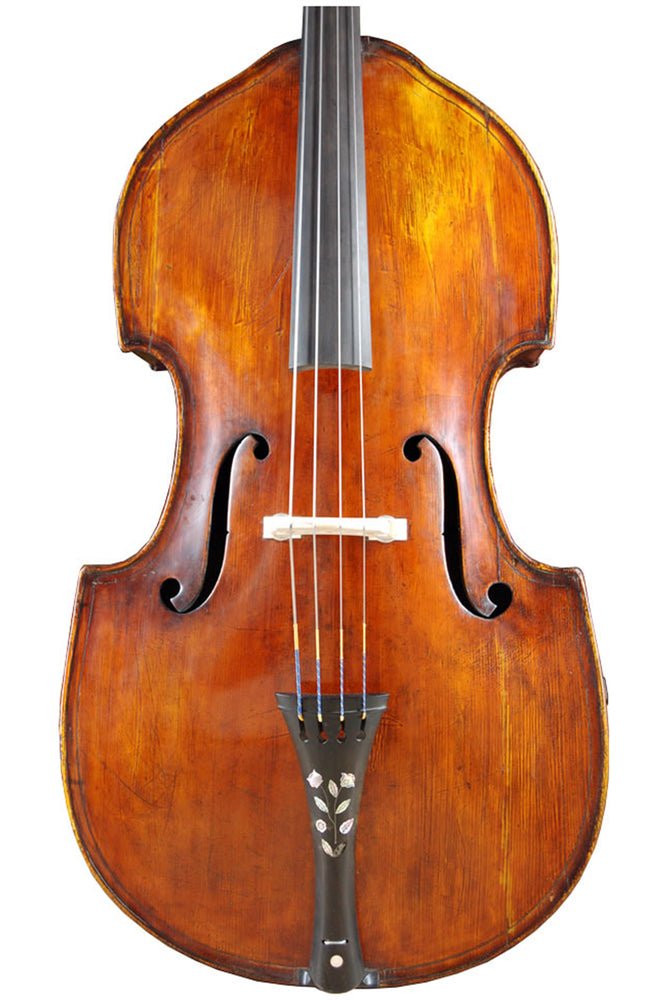
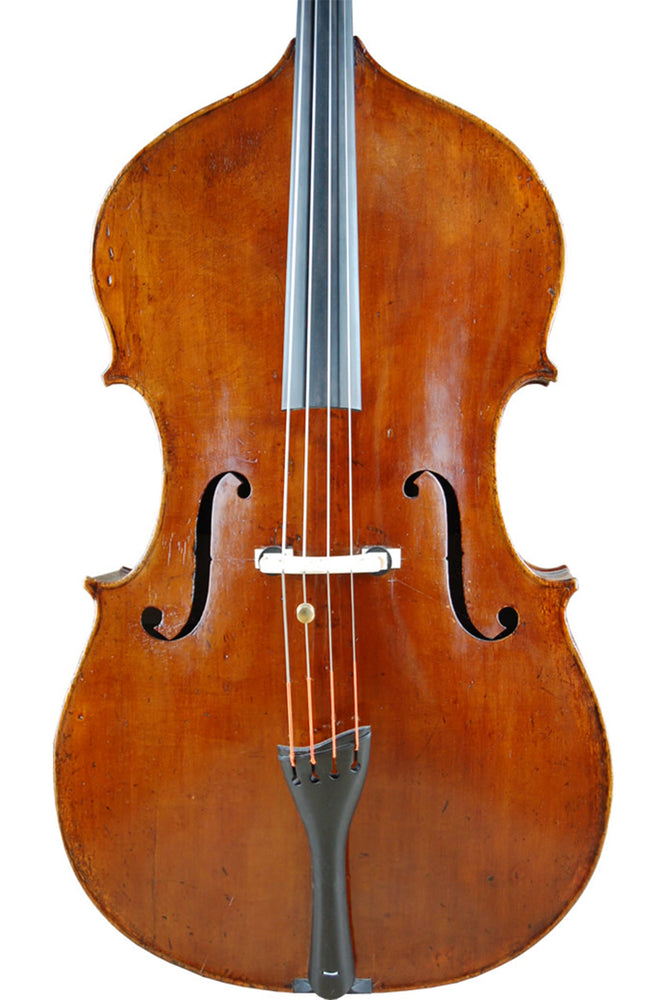
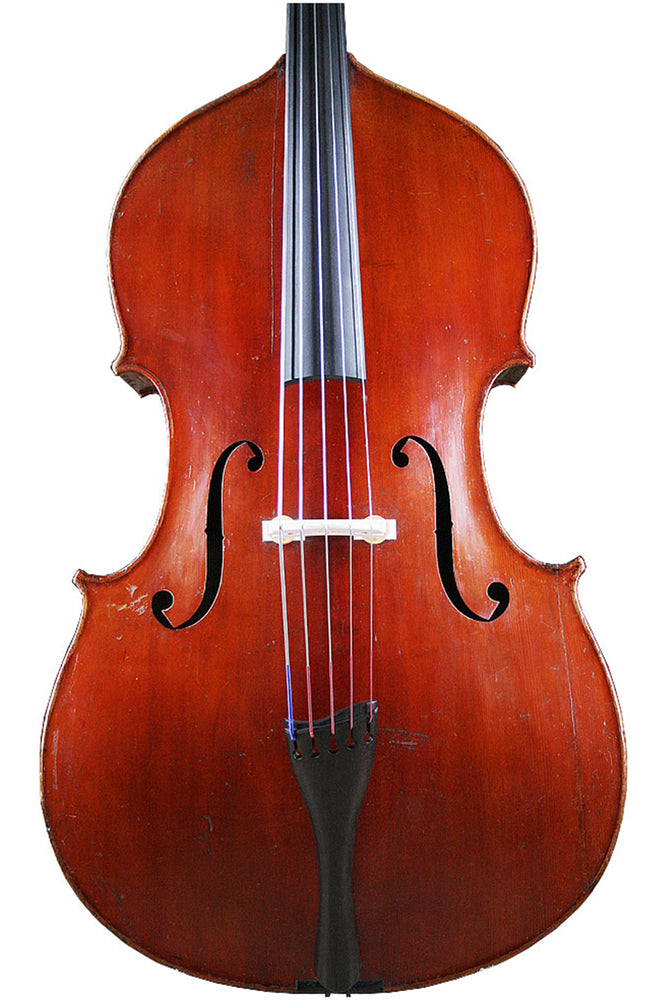
So an excellent write up about Herold from
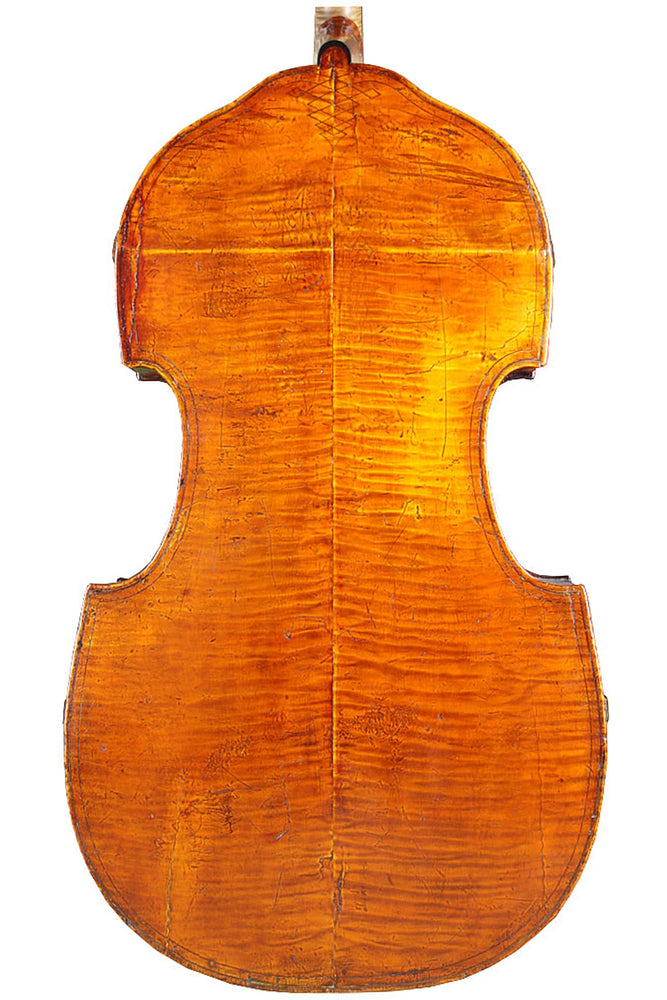
Henley - and quite deservedly so - for this really is a well-made,
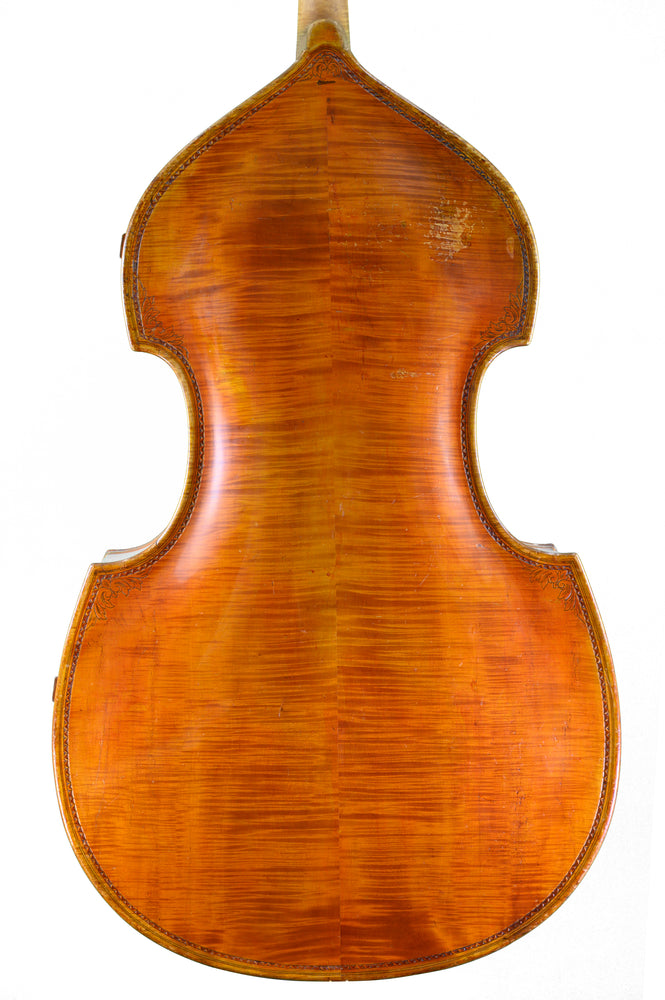
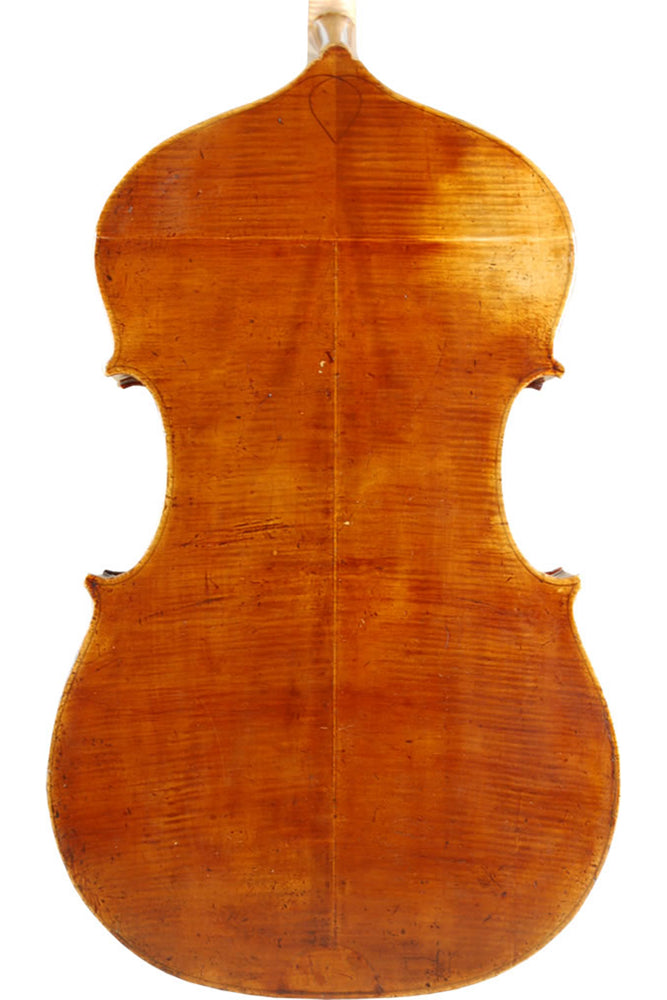
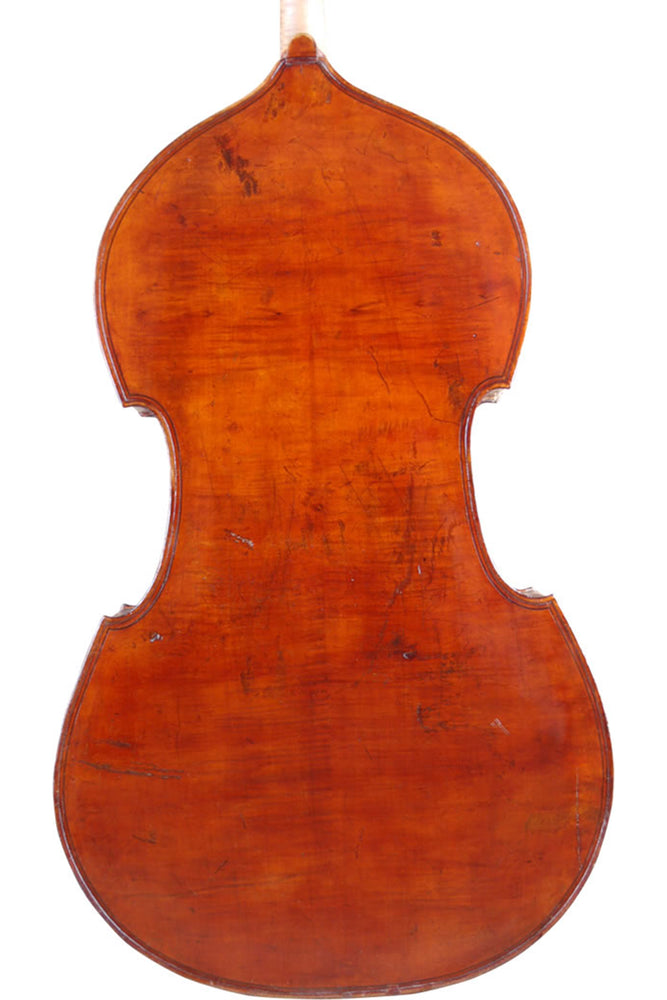
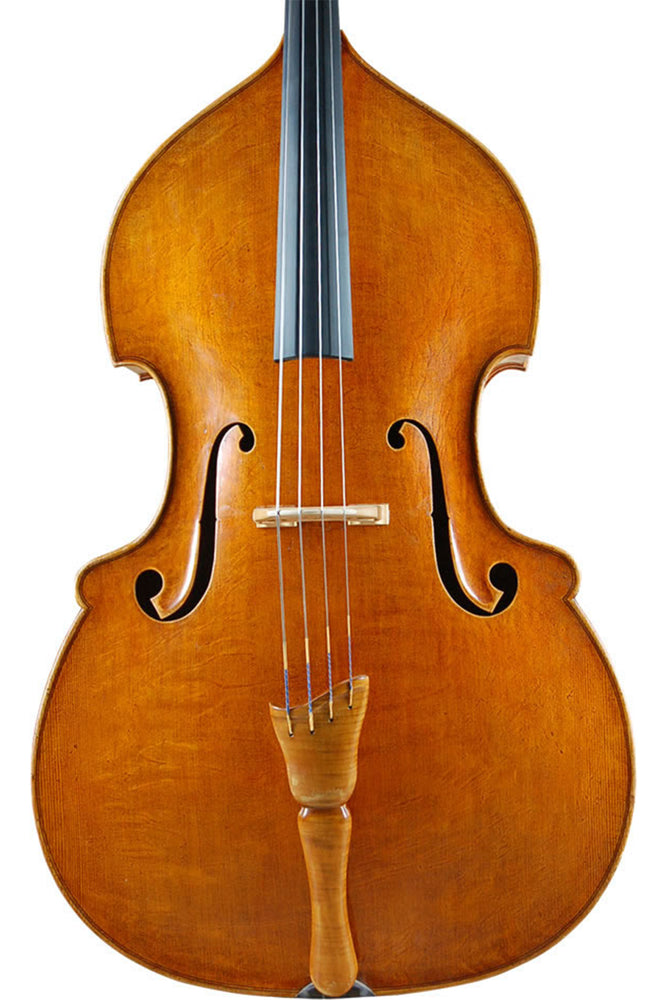
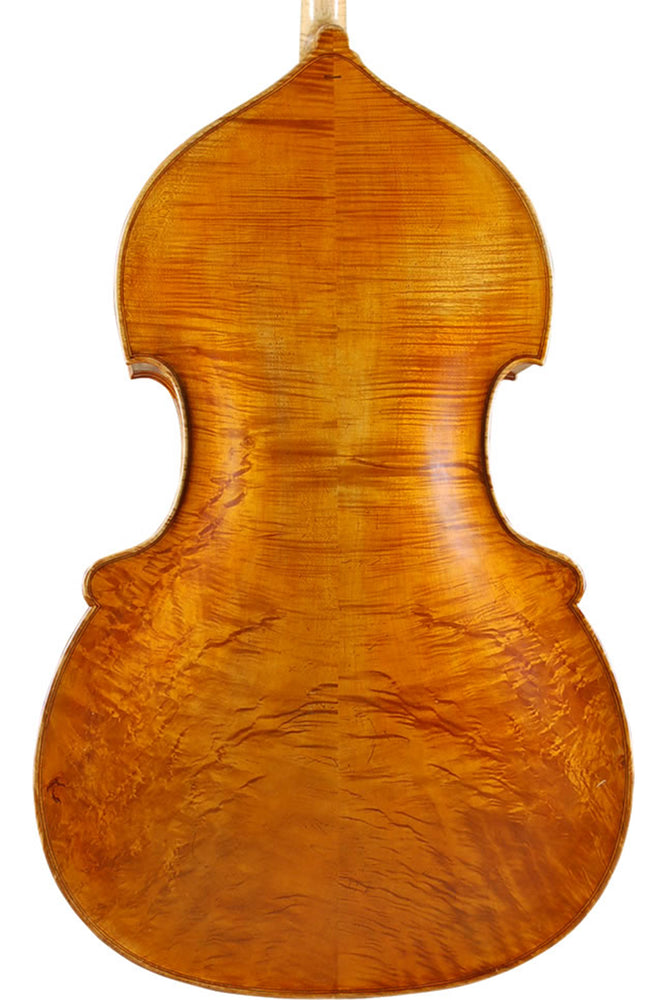
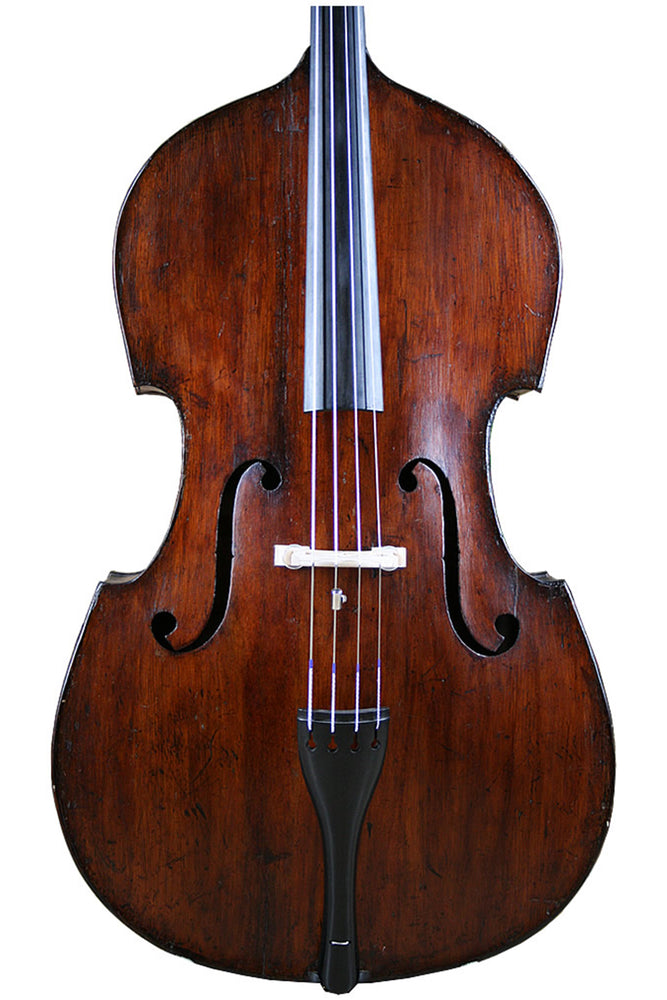
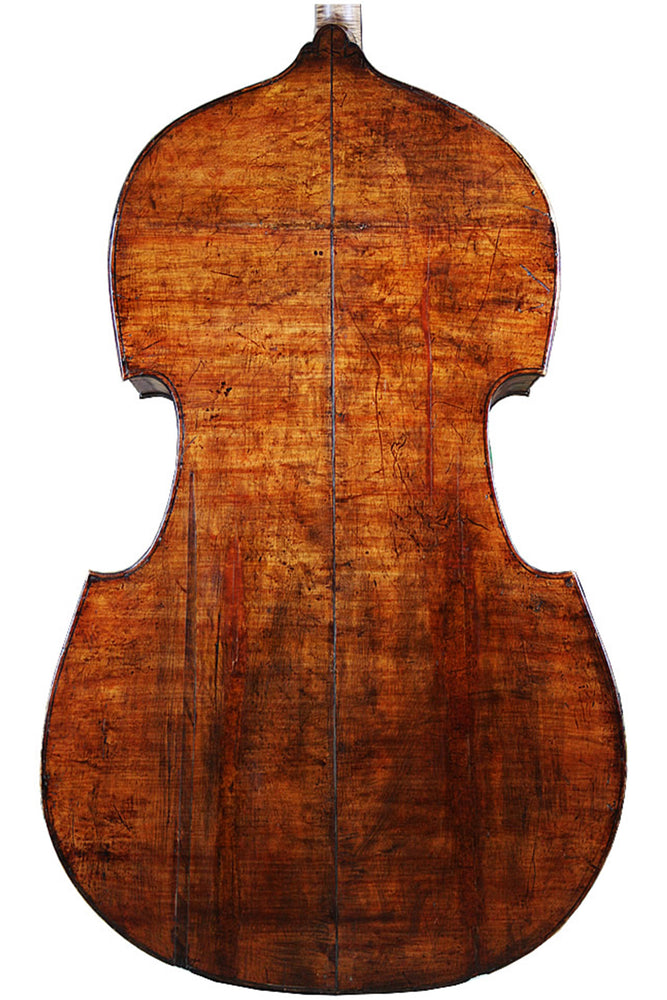
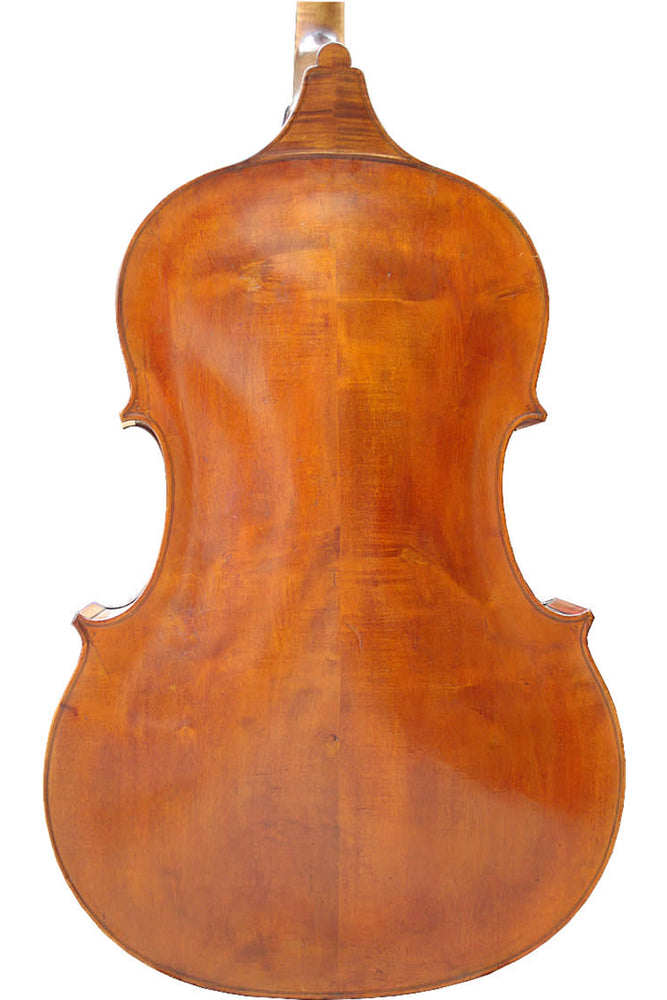
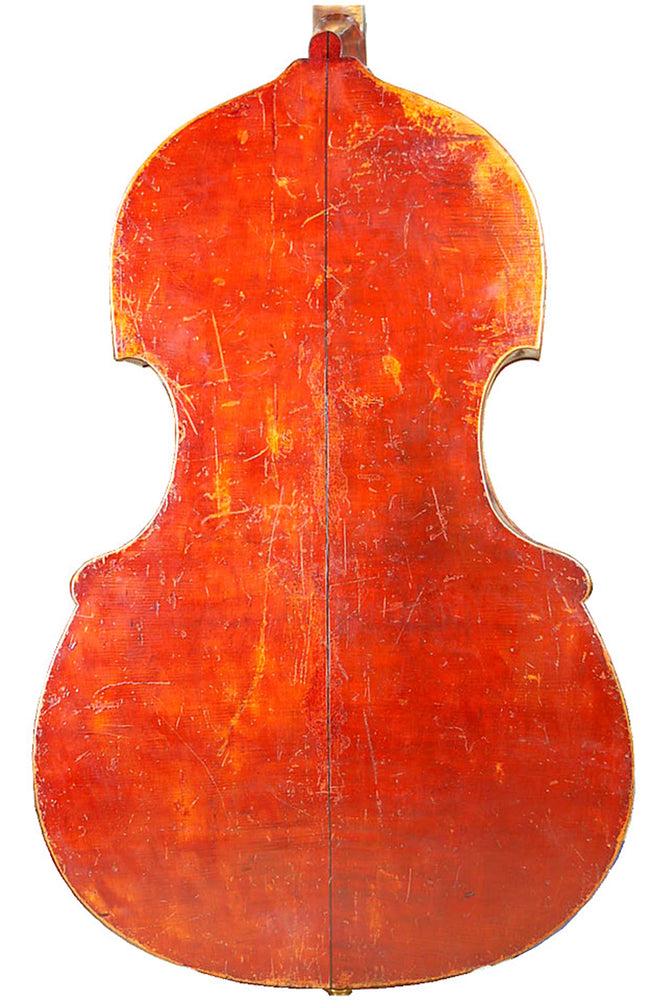
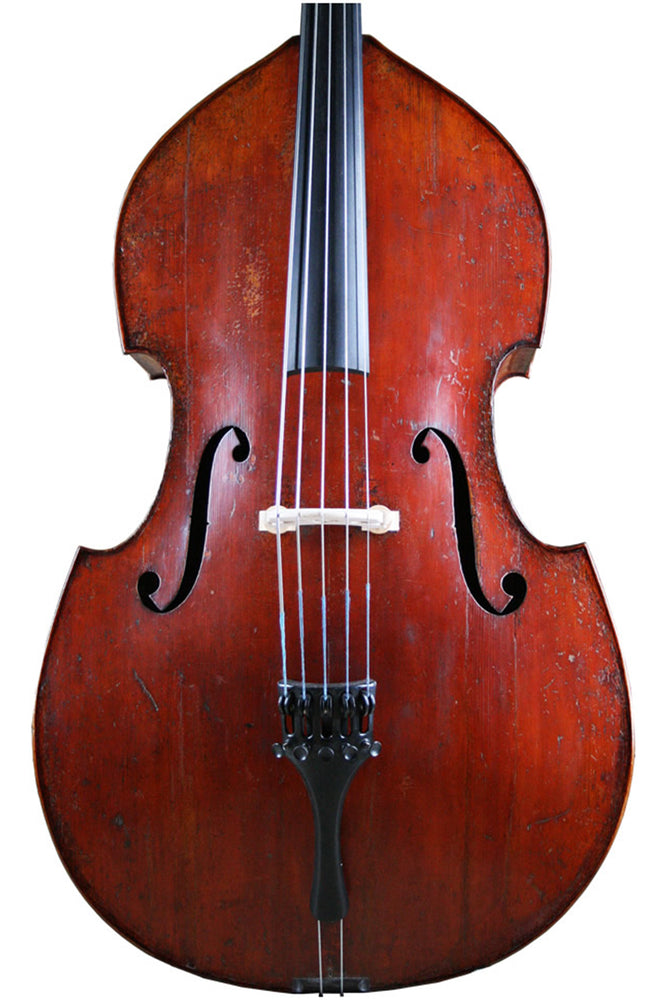
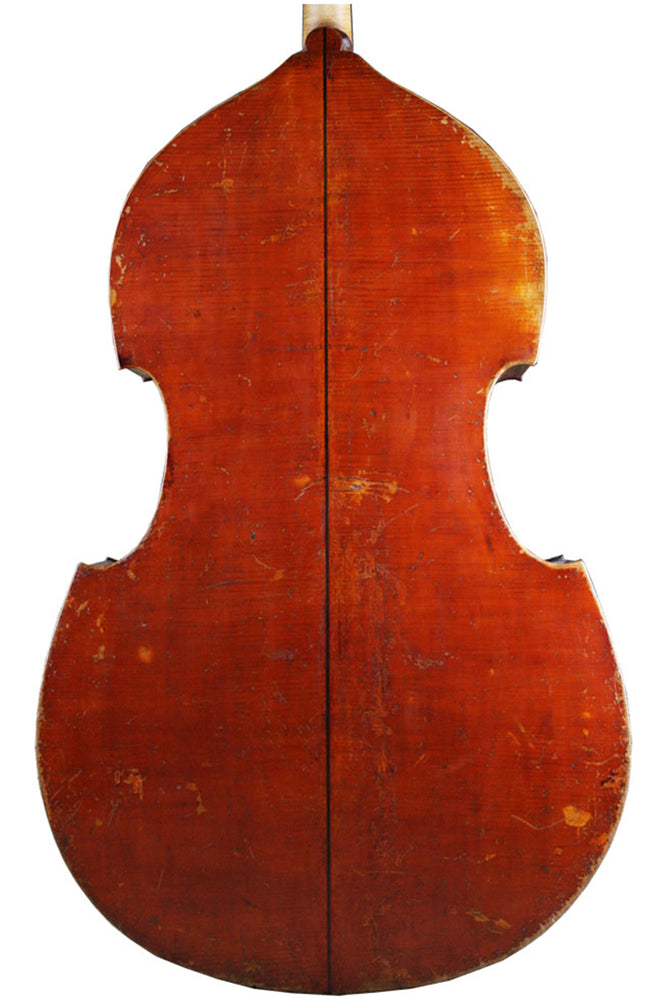
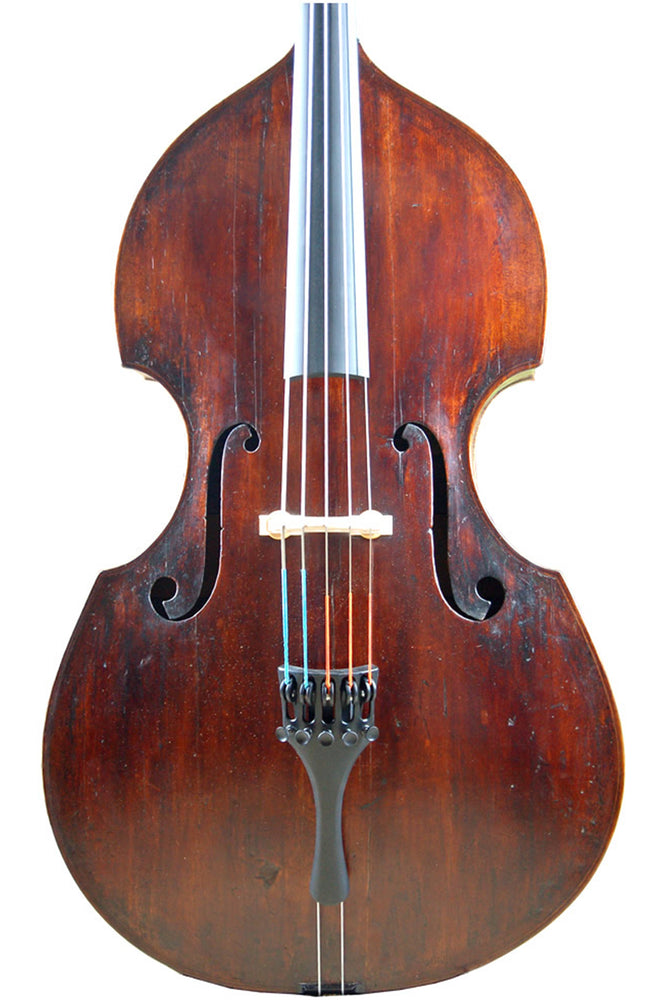
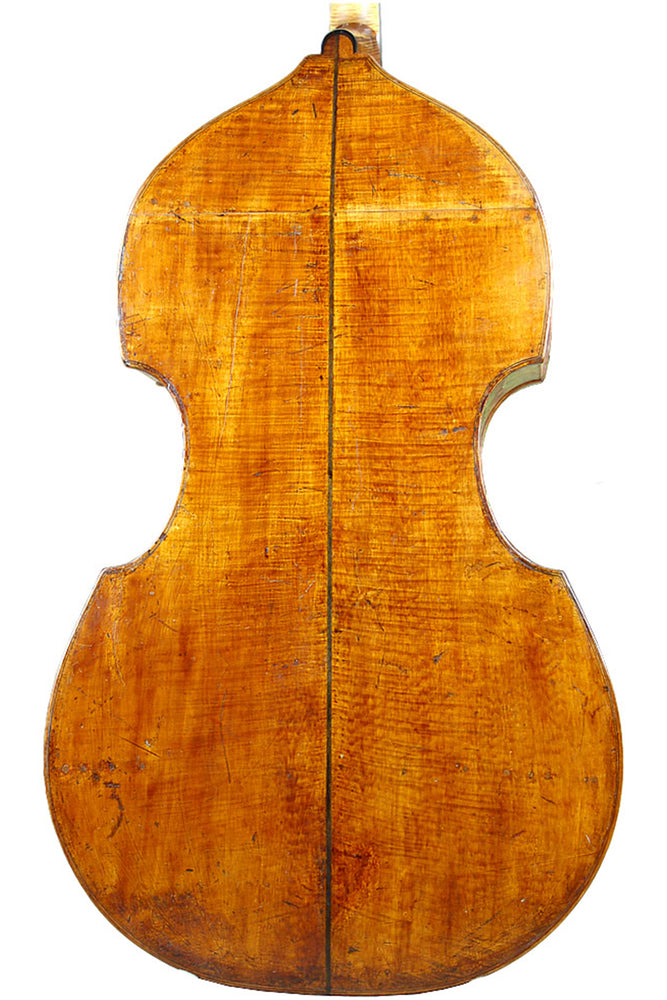
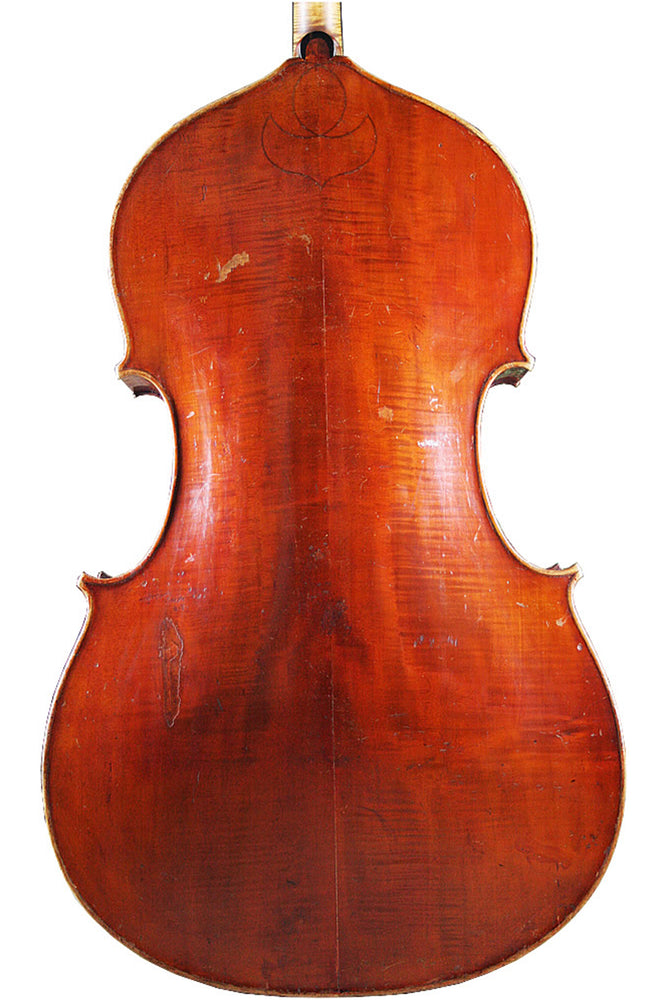
well-proportioned viol outline instrument. Of note is the use of
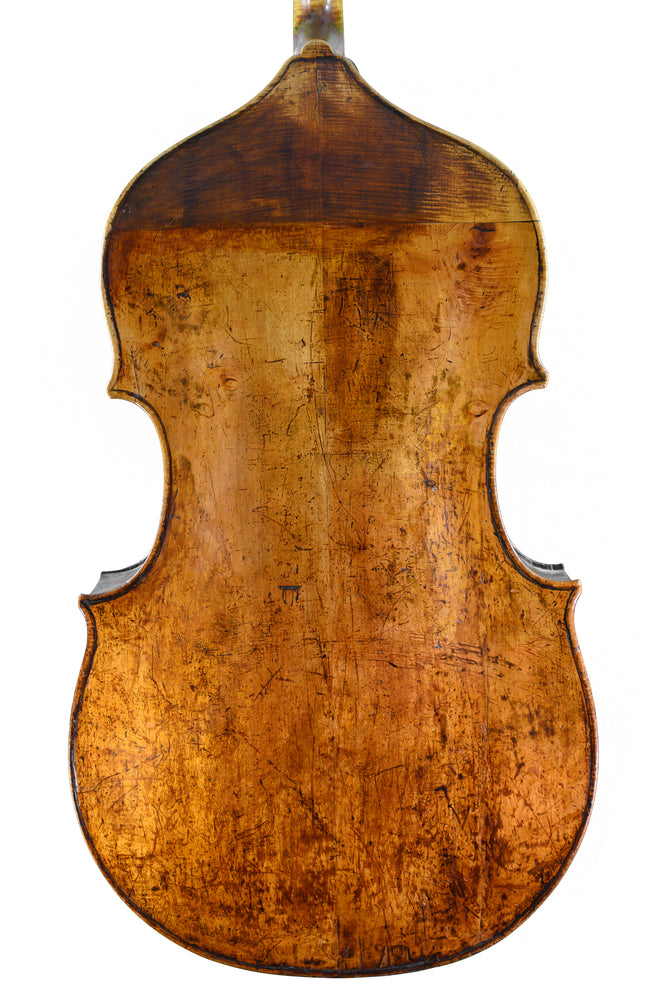
spectacularly flamed maple in the back, ribs and scroll and the
subtle use of scalloped linings on the rib-plate join is original.
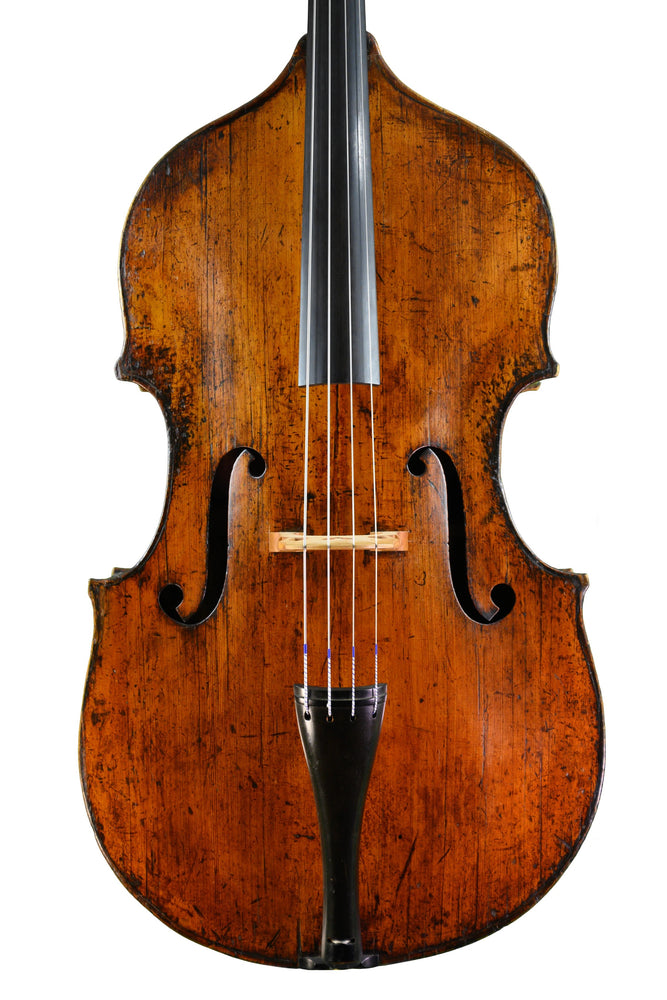
The original spirit varnish is particularly well preserved and is
of an appealing golden brown in colour.
That's a very good question for the instrument's
appearance is deceptive and besides one does tend to make a later
date assumption due to the fact that early nineteenth century German
instruments are infrequently found these days. So - in answer to
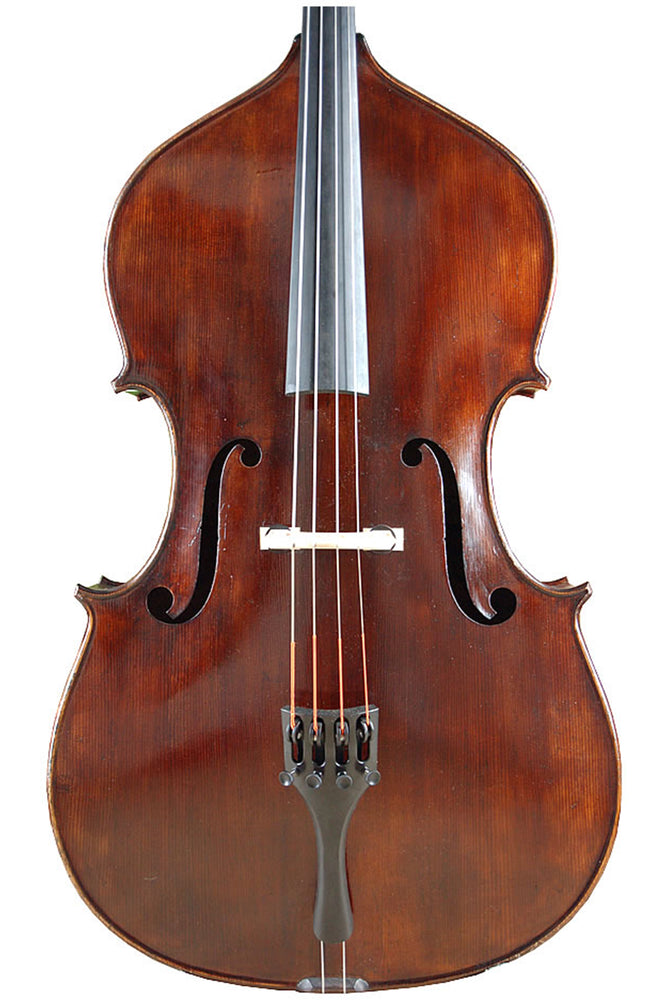
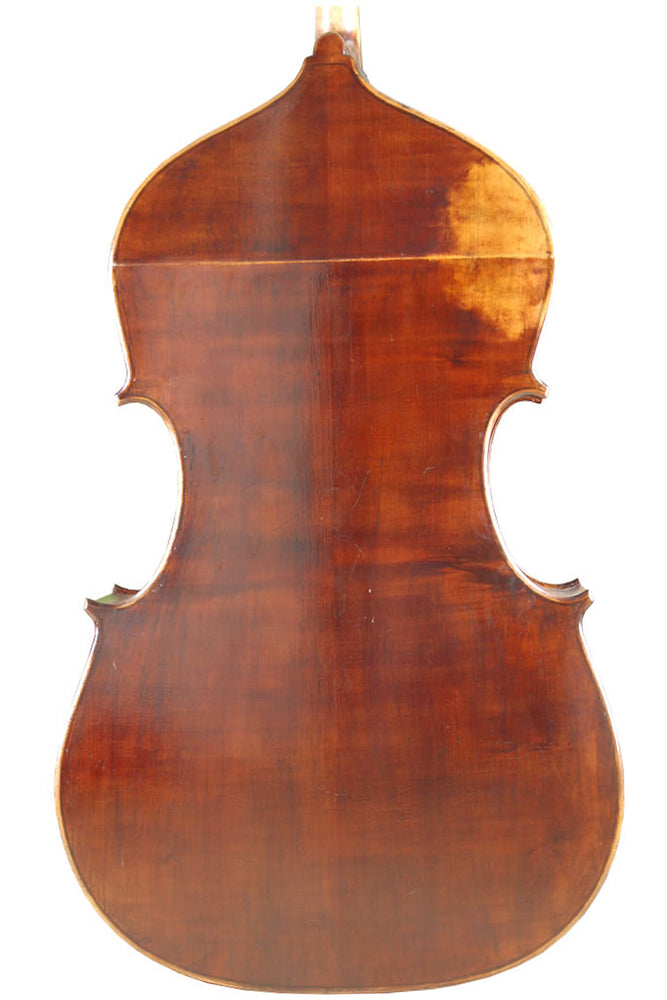
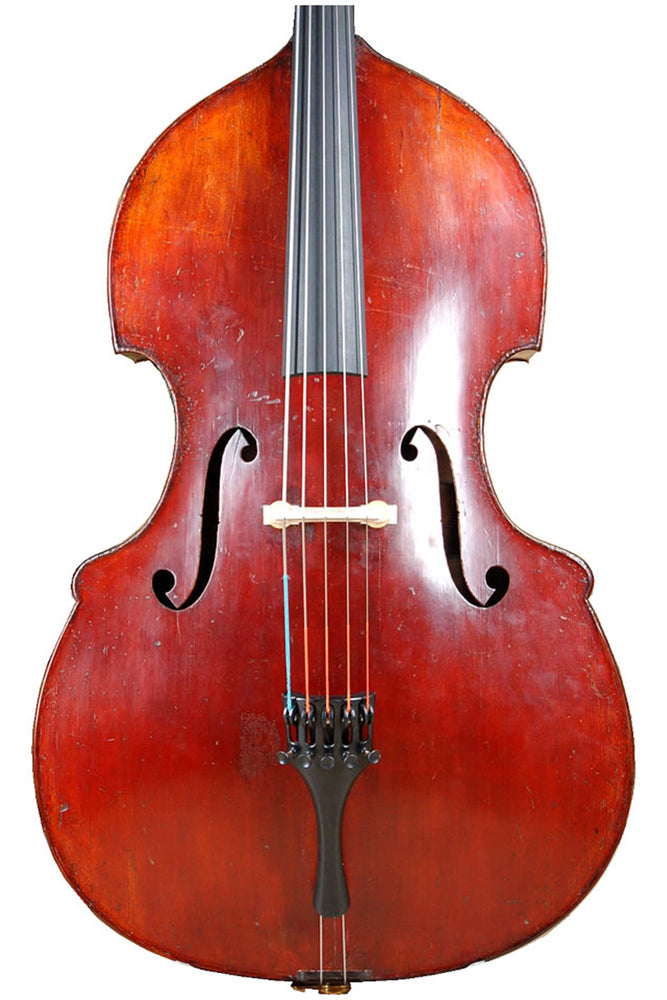
the question - we at The Contrabass Shoppe were fortunate to see
- shortly after purchasing this instrument - a near identical instrument
by Herold.
In addition to a date of 1840 on the label
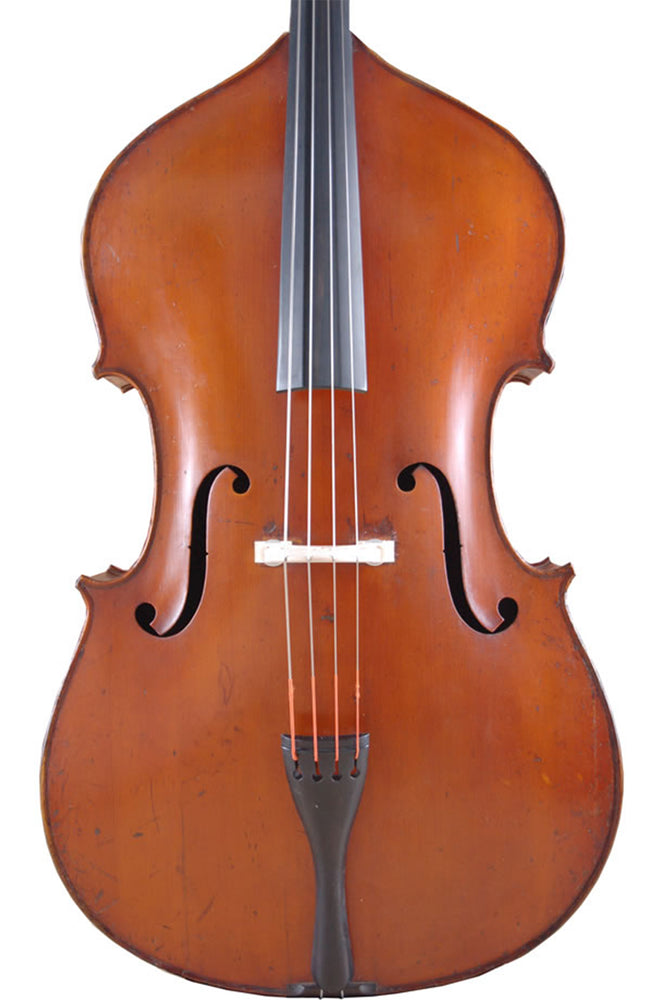
there was also an 1840 date accompanied by the makers signature
on the inside table.
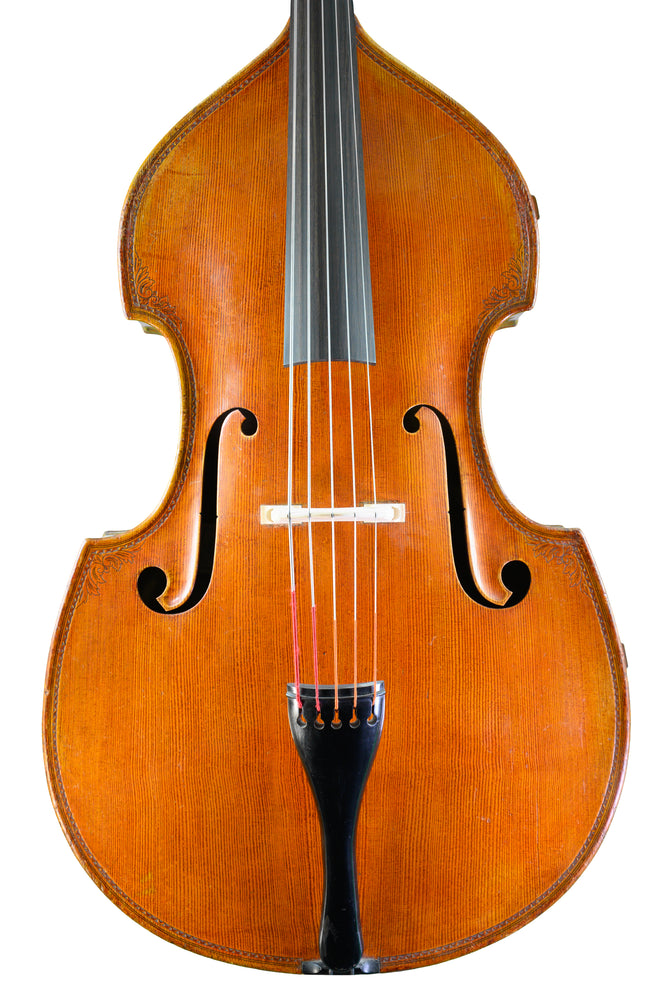
Yes it is. The Contrabass Shoppe has really
gone to town to put this instrument into the really tip top condition
that you now find it. In addition to badly torn edges and cracks
being sorted out we've replaced the old bass bar and we've secured
the critical post area with a patch of the right size and shape.
So as to complement the beautifully flamed wood of the back and
ribs we've put in (specially selected out of a number of neck-blocks
that we imported some two years ago from Bosnia) a highly figured
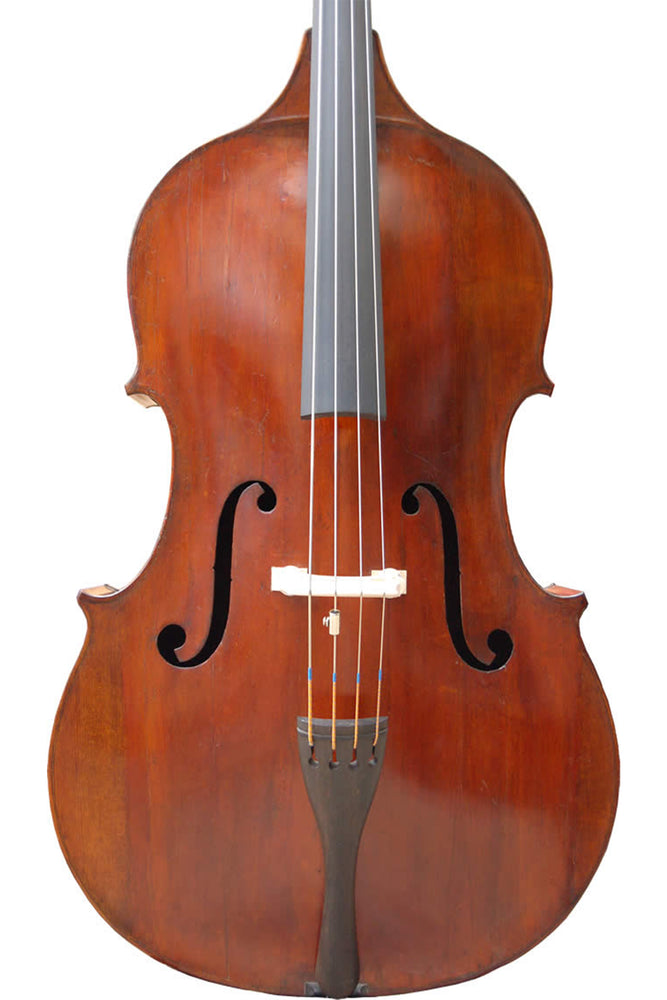
maple neck. In addition - and as you'd expect - we've fitted a superb
quality fingerboard imported from India, a top quality bridge imported
from Mirecourt and a brilliantly engineered endpin unit that was
made to our own specifications - here in England. In total nearly
four months of work have been lavished on this one instrument by
our repairer M.J.Bailey. It is now well ready to see out it's next
164 years plus of music making.
This instrument has all the right sound qualities
(tonally rich with plenty of volume) suitable for a life in the
symphony or chamber orchestra. The dimensions are smallish, so for
those player who are of a slightly smaller stature this instrument
should be placed high up on your list of worthy contenders.
As estate agents say - "an early viewing
is highly recommended".
Stats:
Width at the upper bout 20.25in (51.3cm)
Width at the centre bout 14.0in (35.6cm)
Width at the lower bout 25.25in (64.1cm)
LOB 43.5in (110.5cm)
St length 41.35in (105.3cm).
|