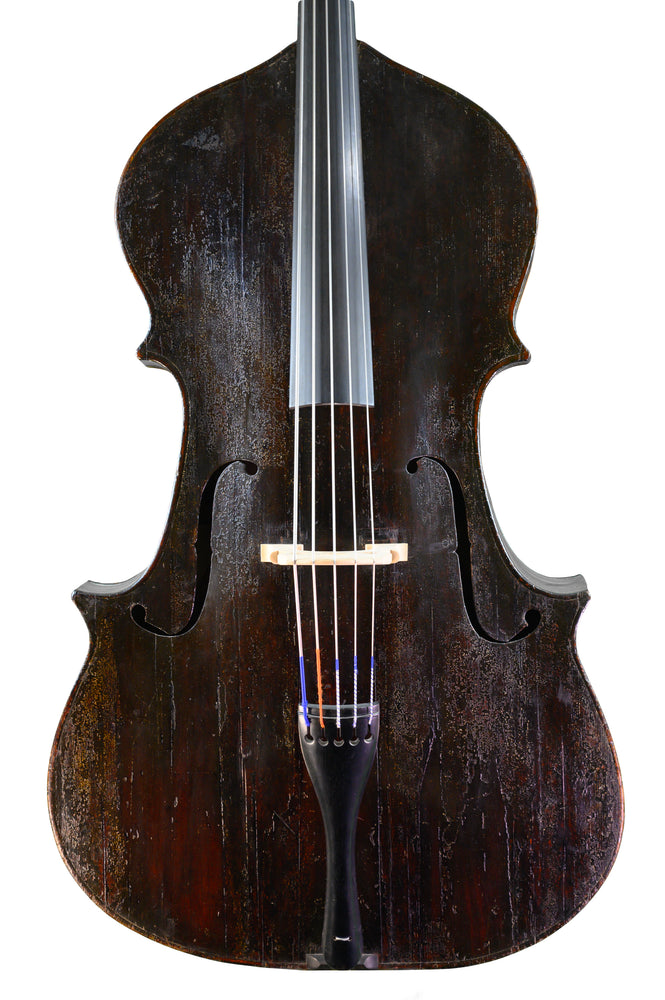
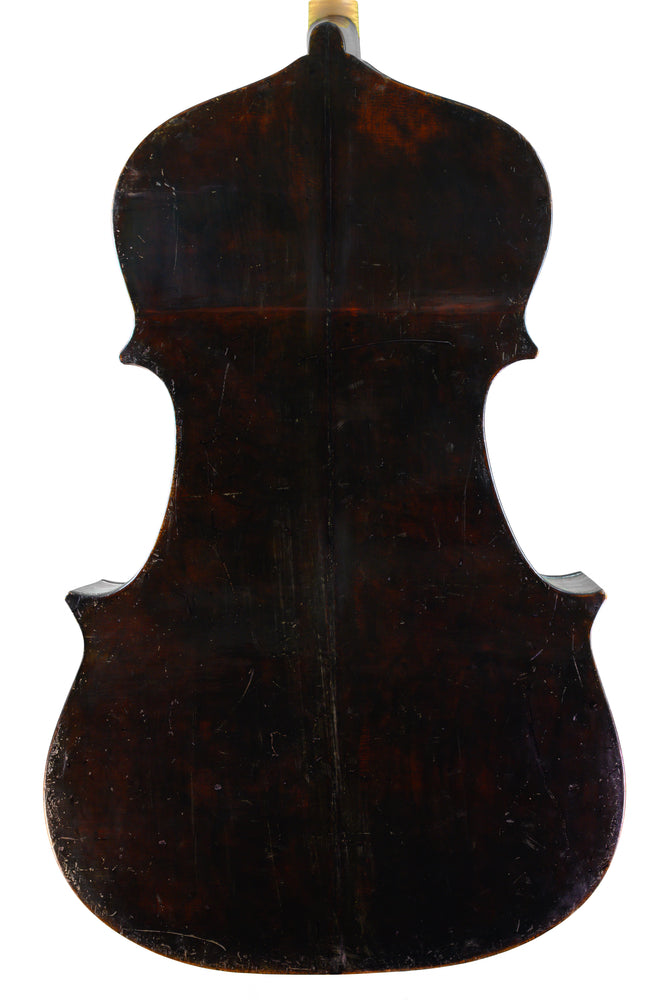
|
Yes - agreed.
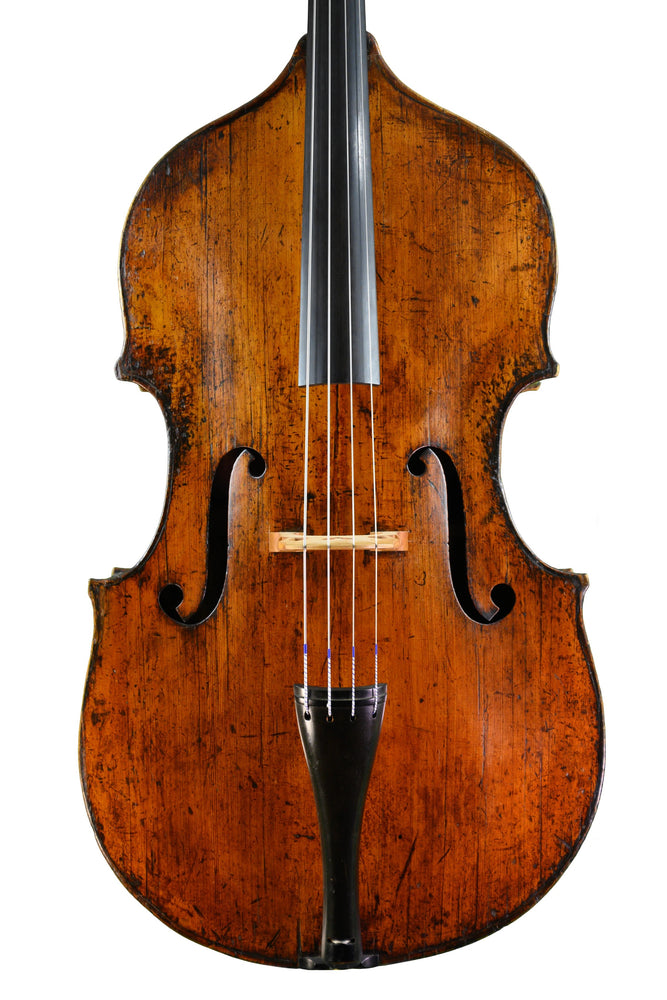
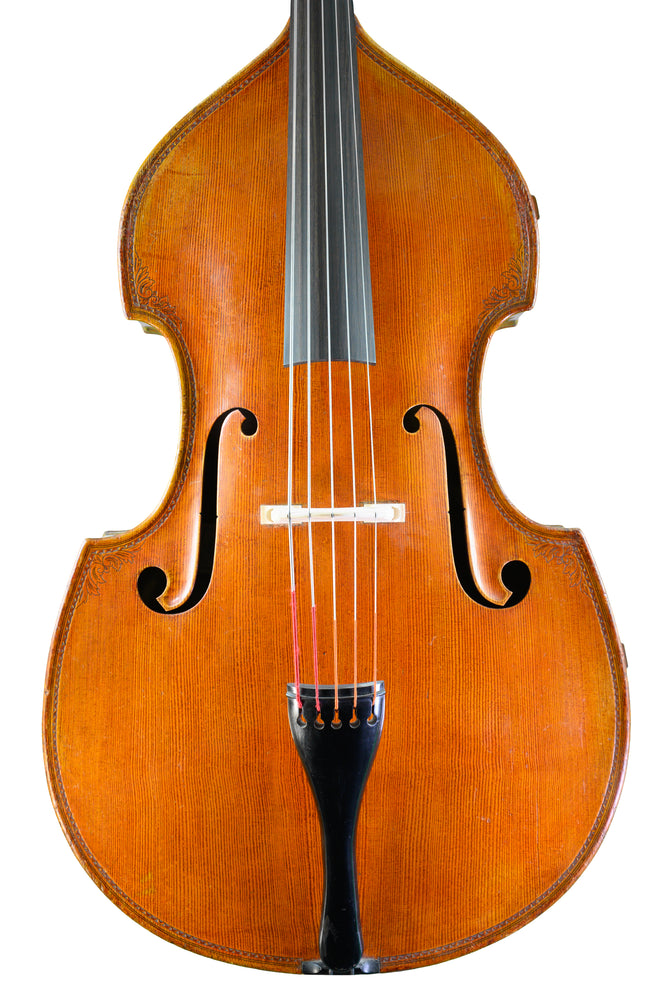
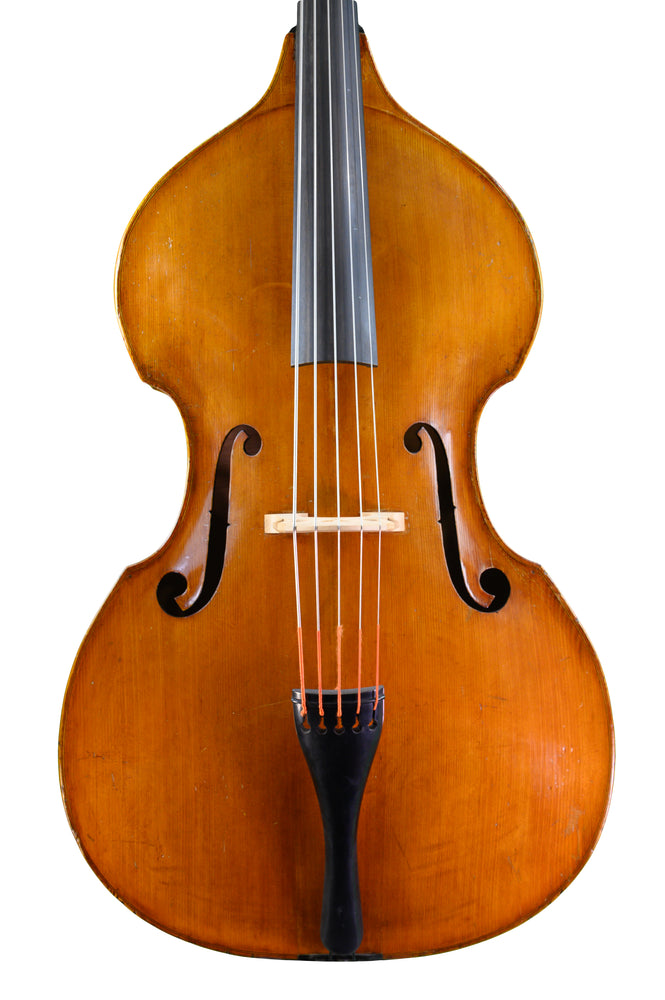
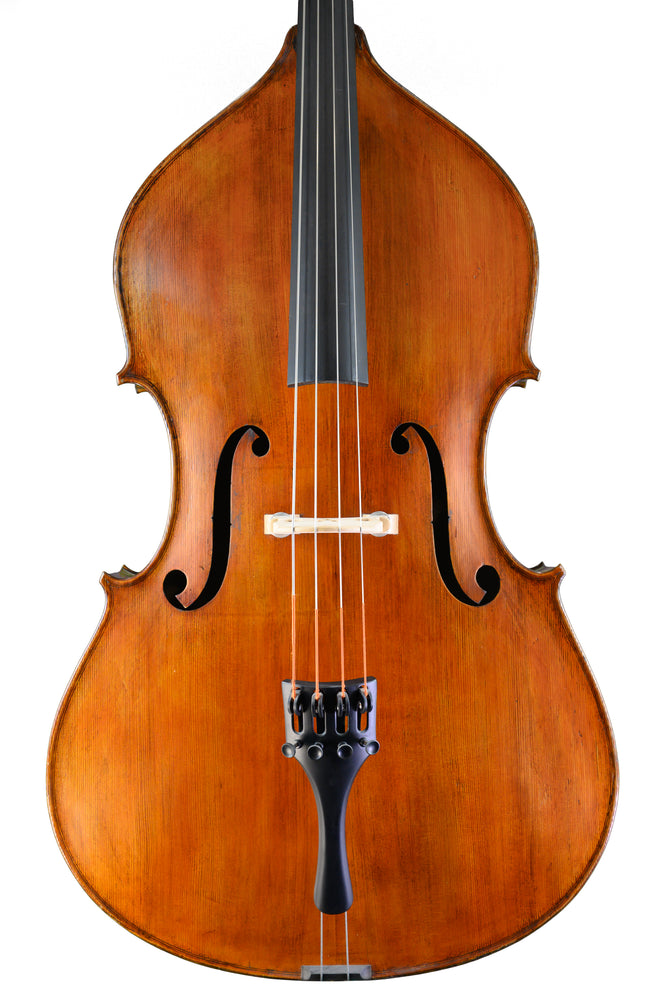
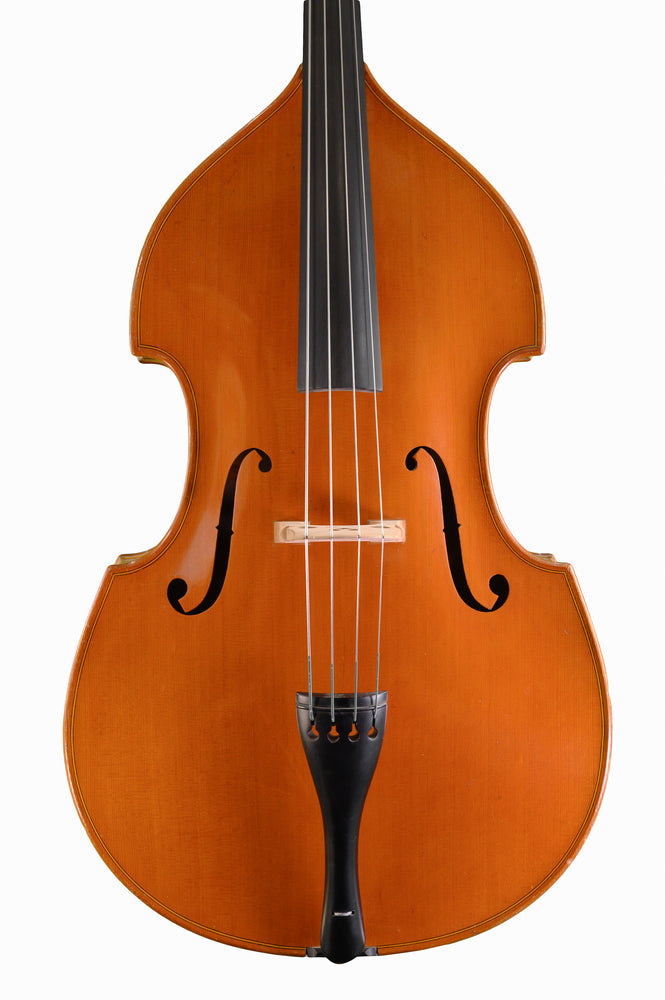
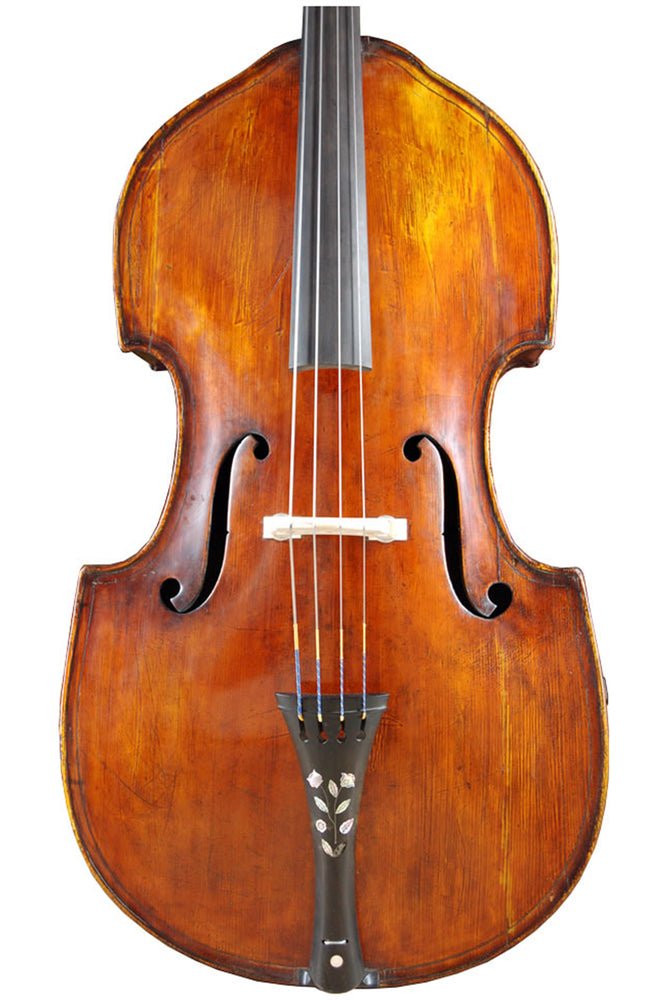
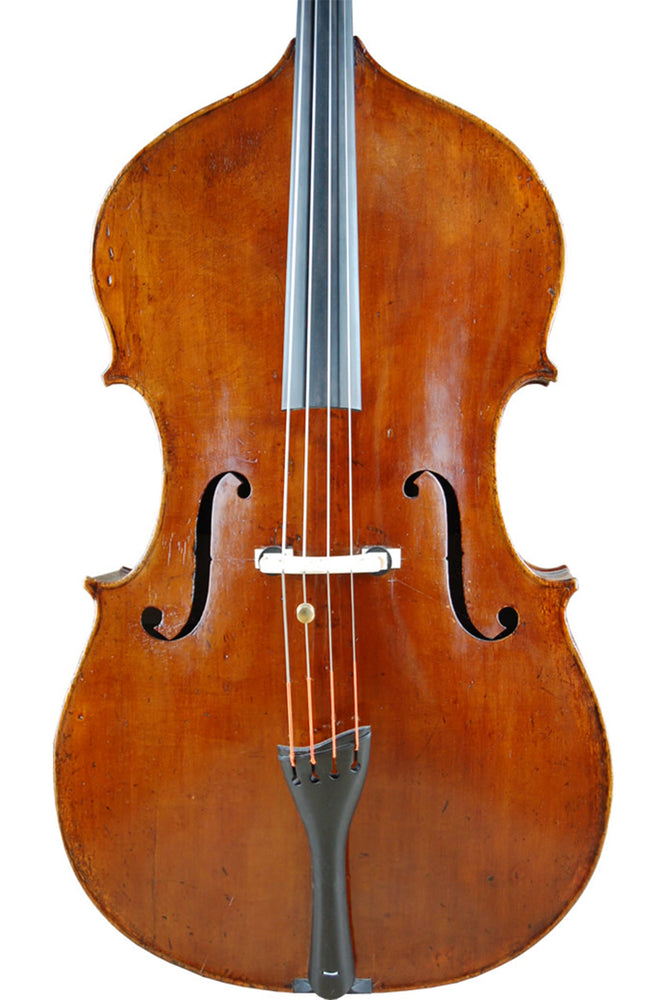
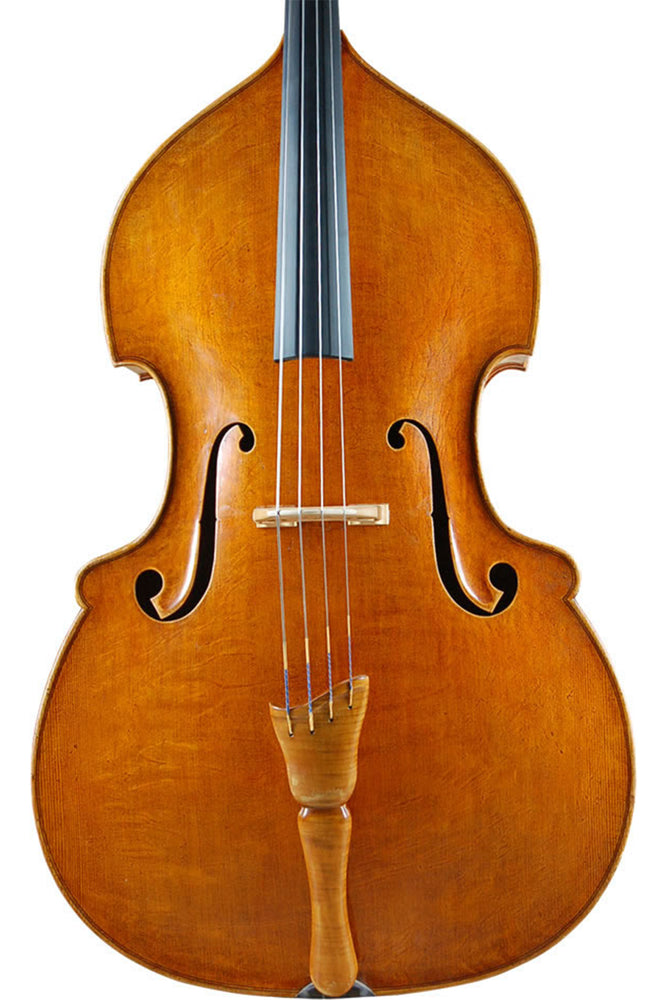
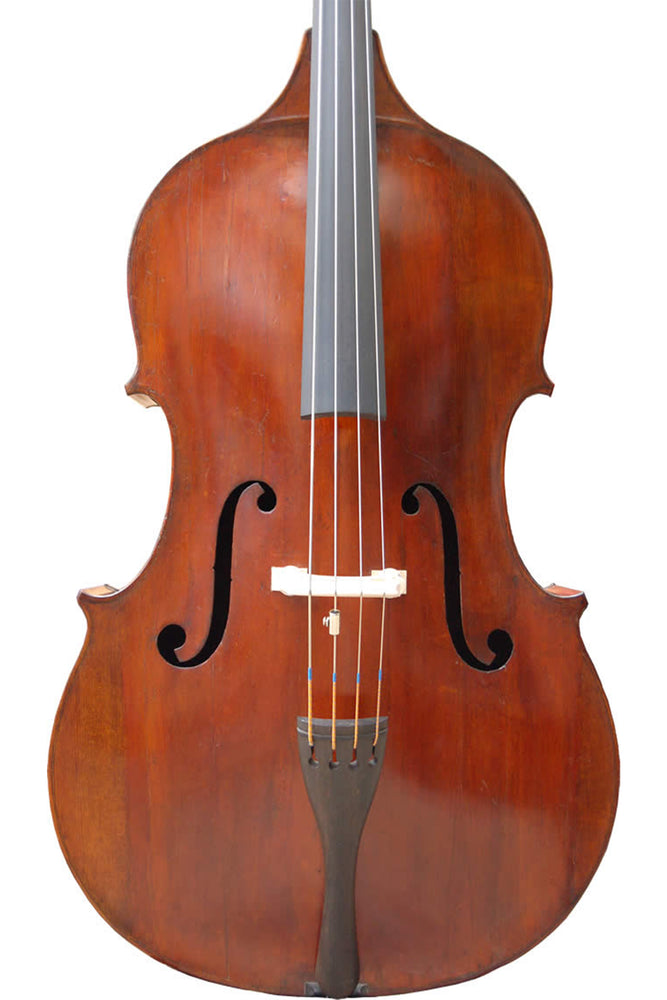
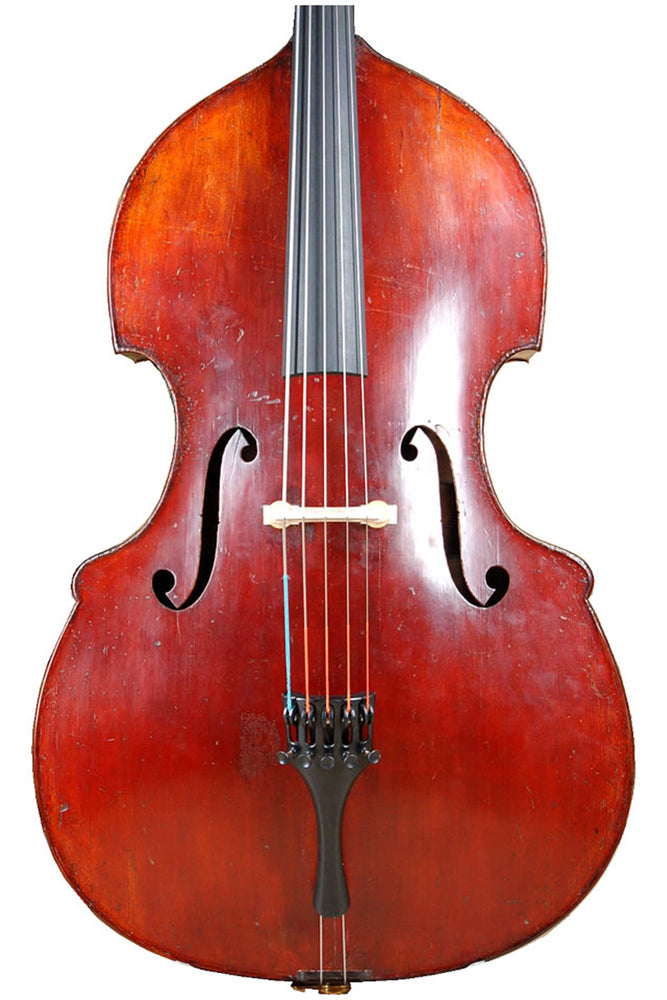
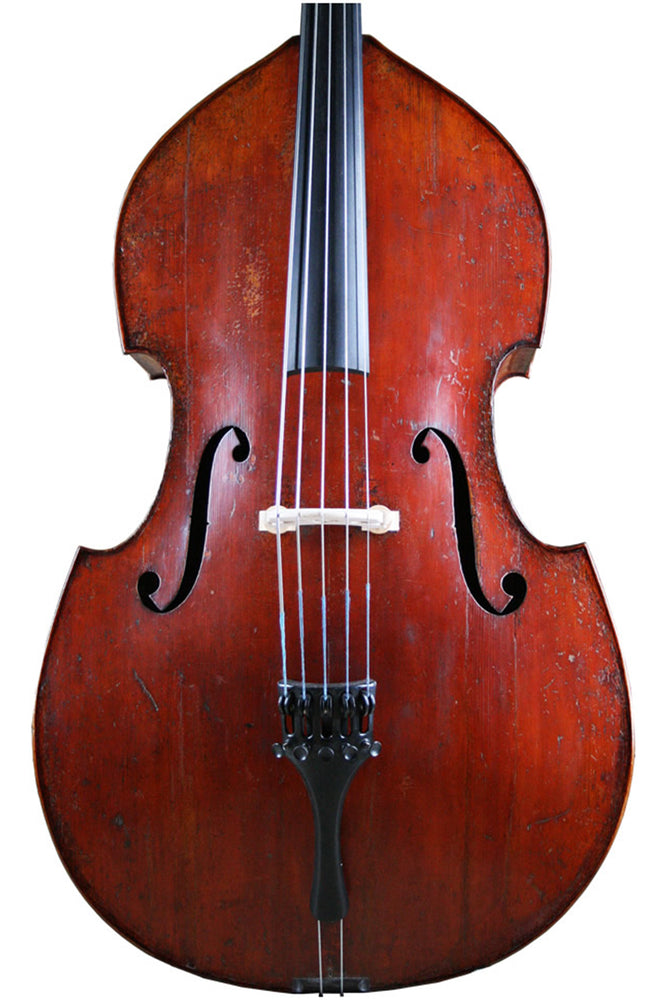
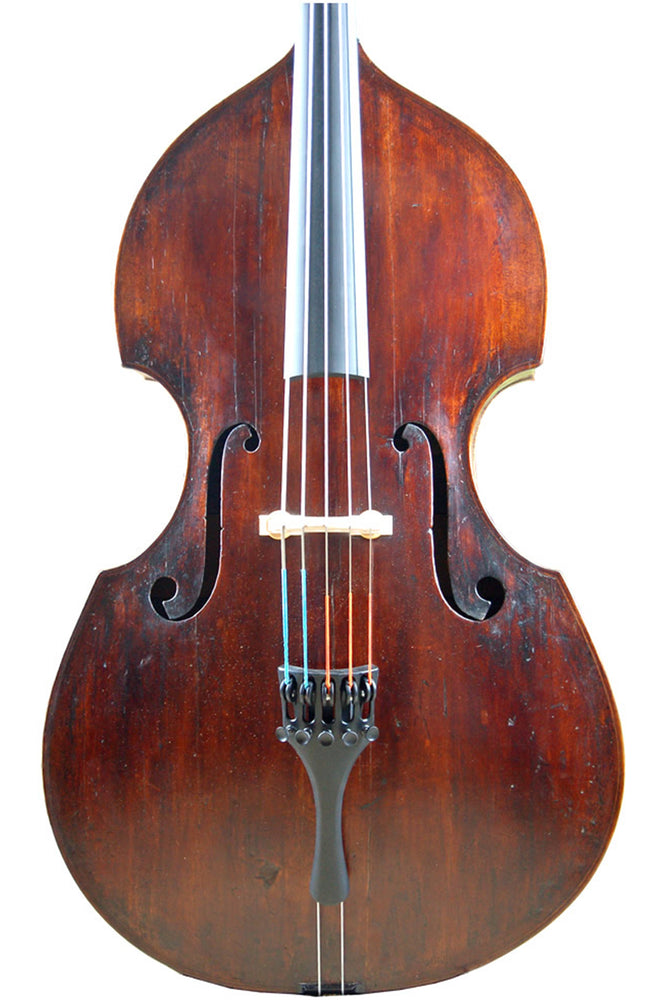
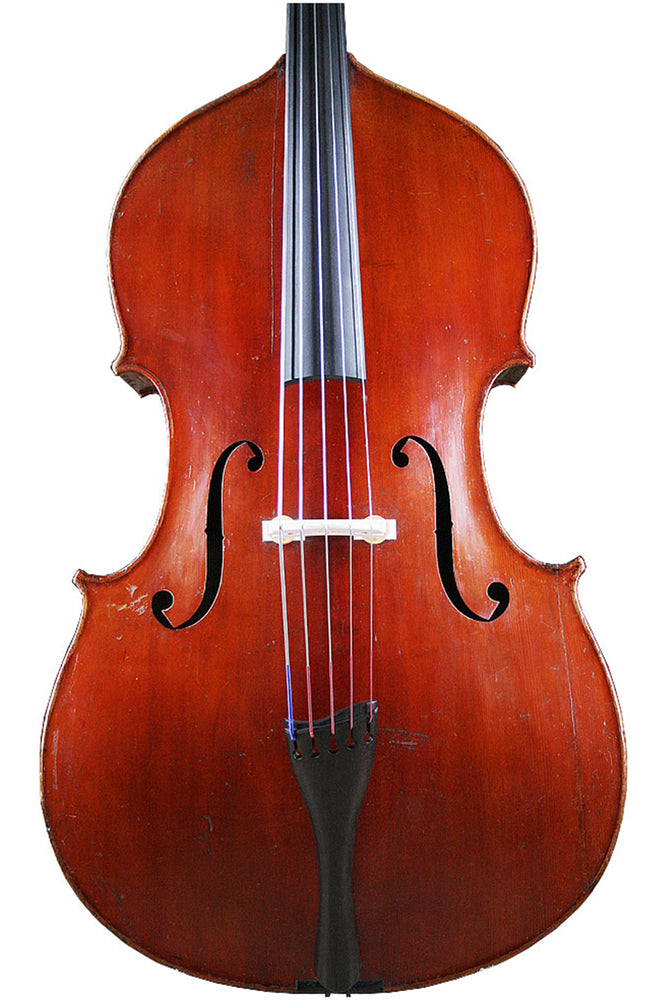
Yes - the model of this instrument looks every bit
as if it were an enlarged Strad model violin. Both the outline
and arching are near perfect in symmetry.
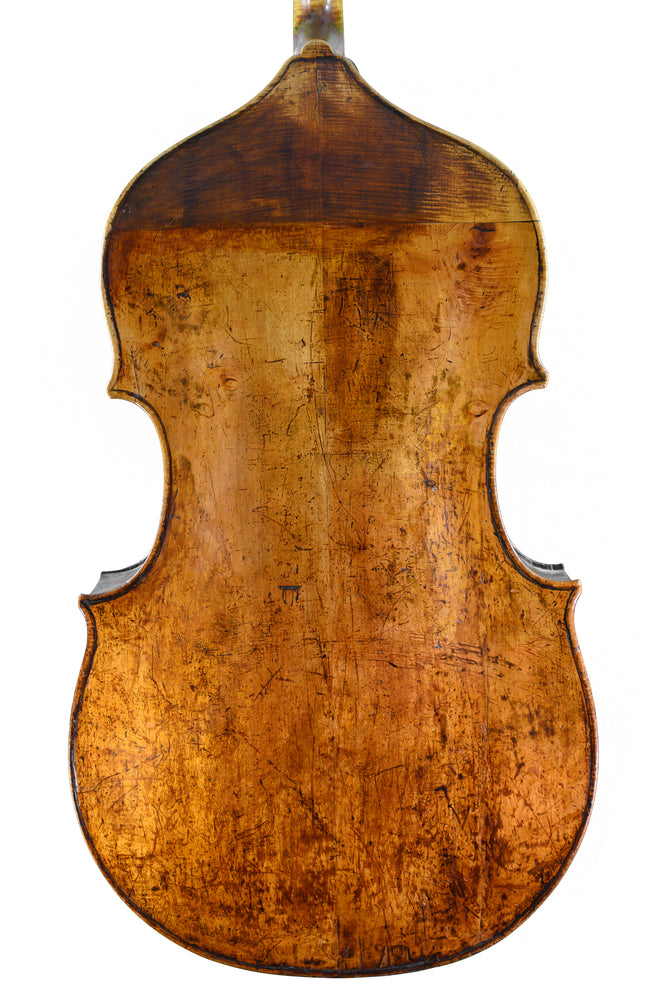
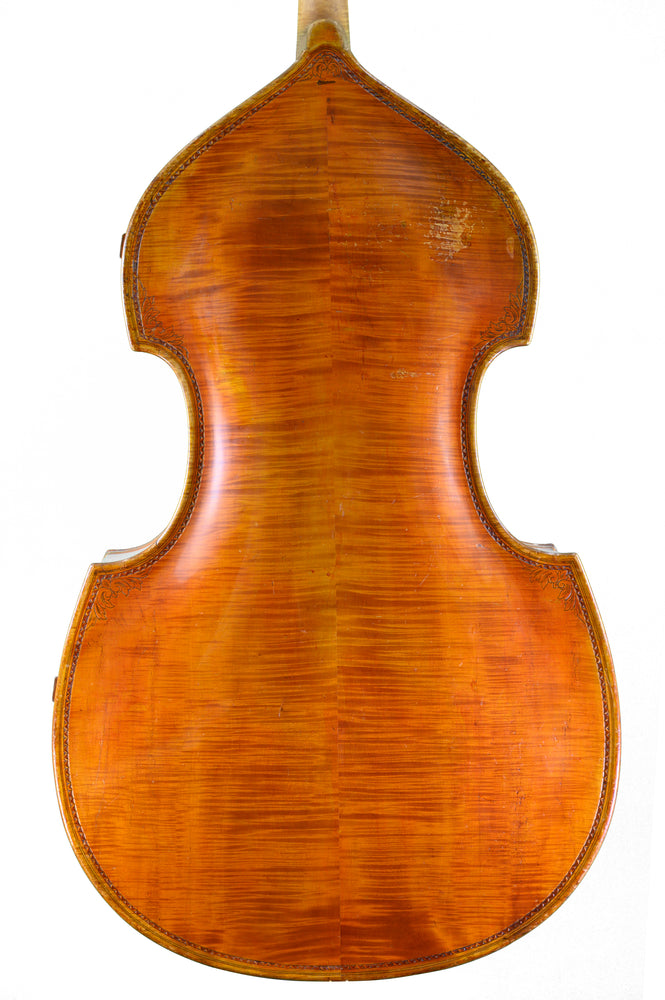
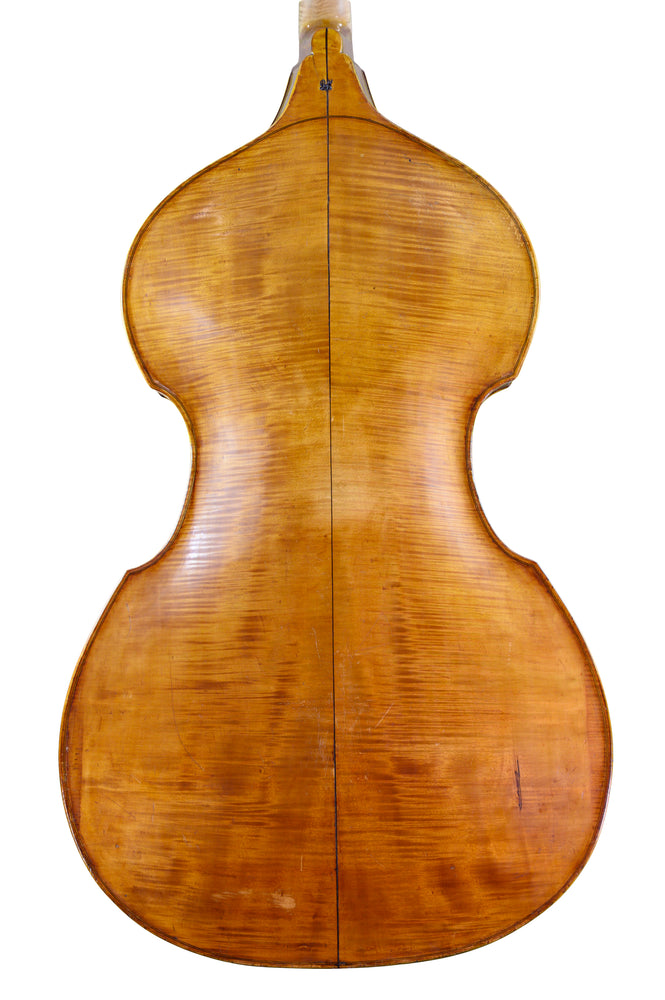
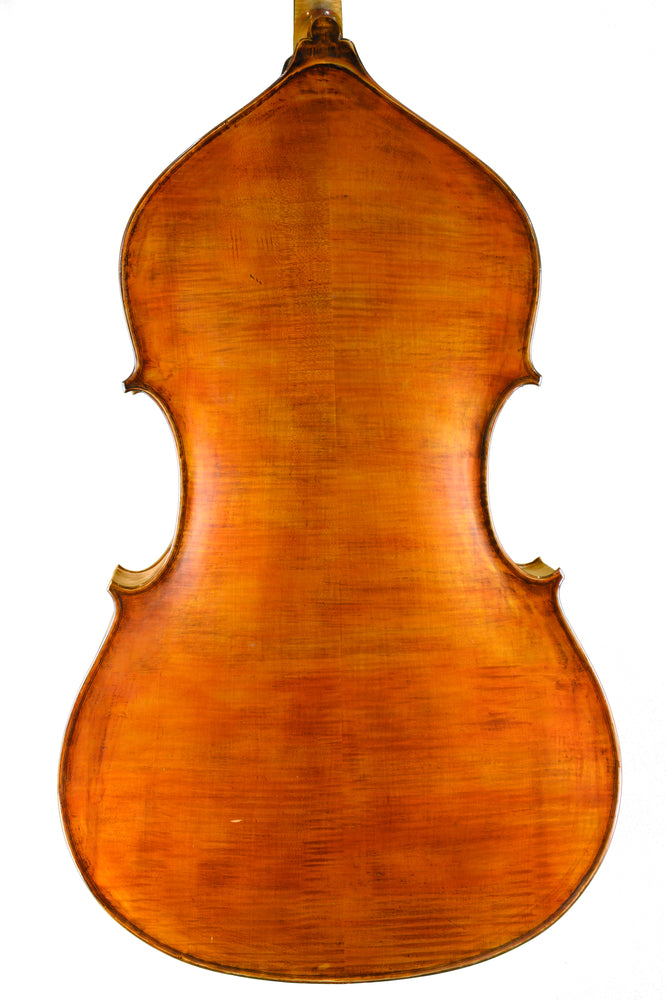
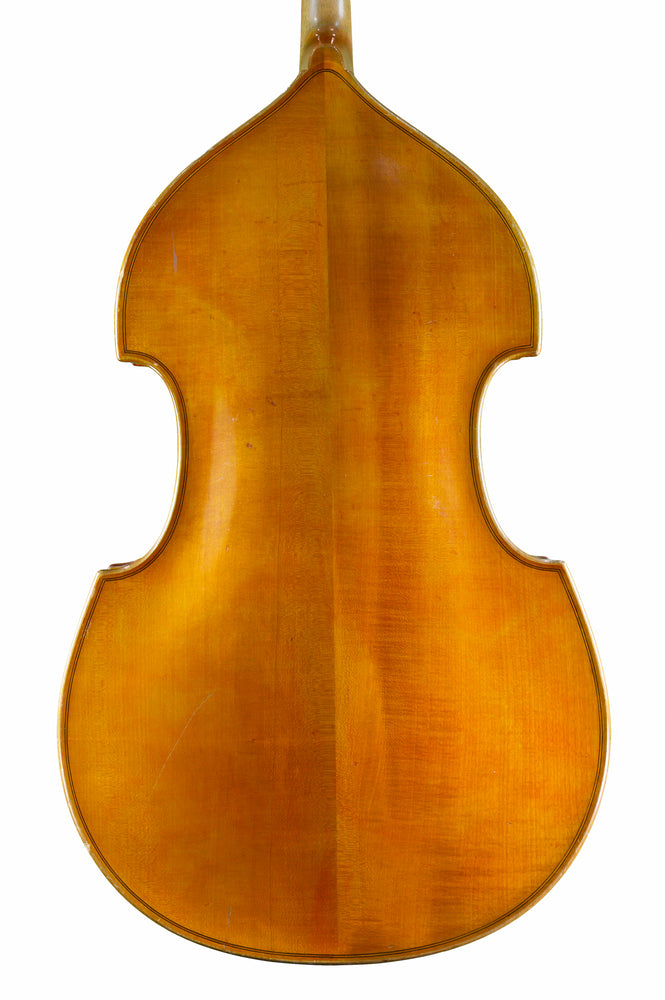
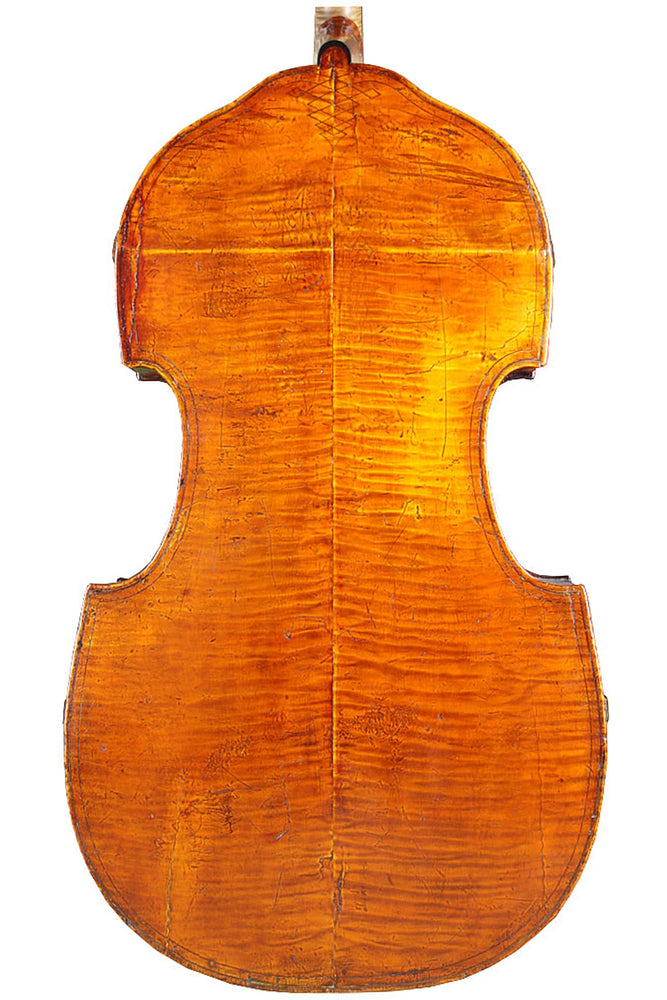
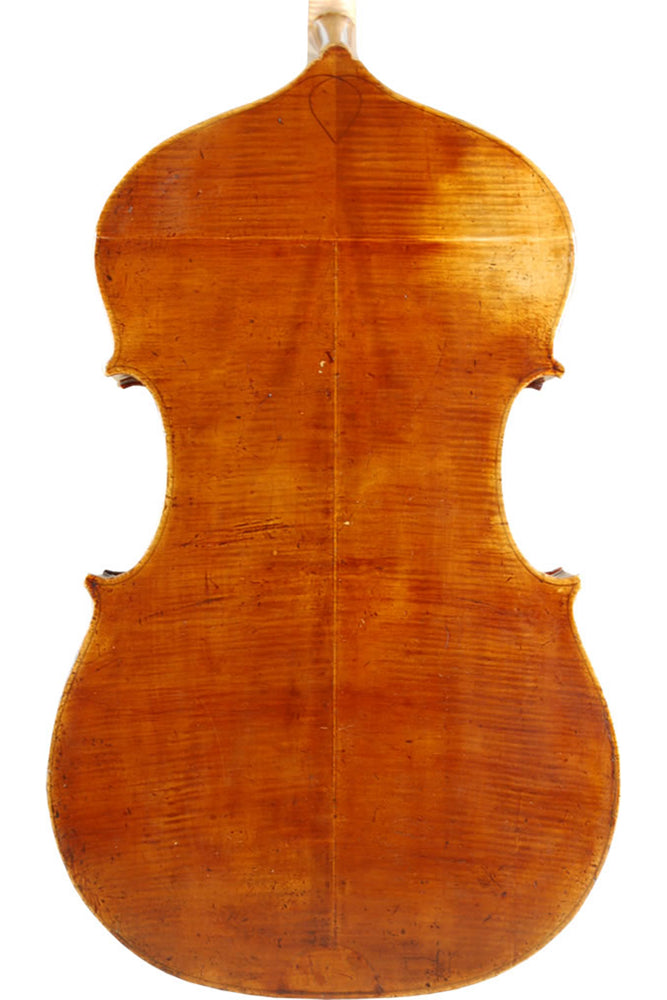
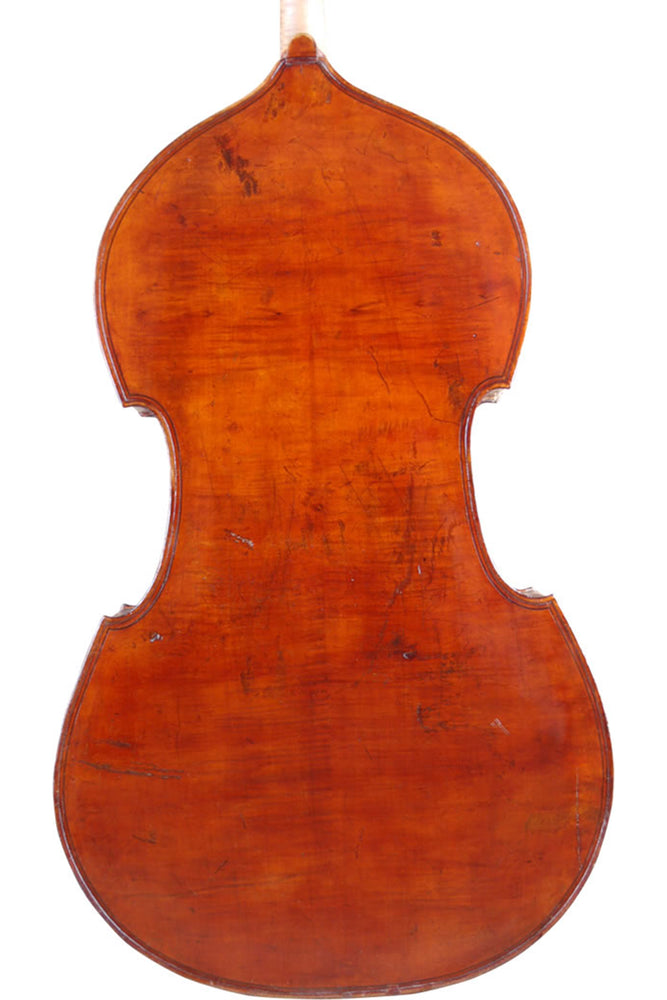
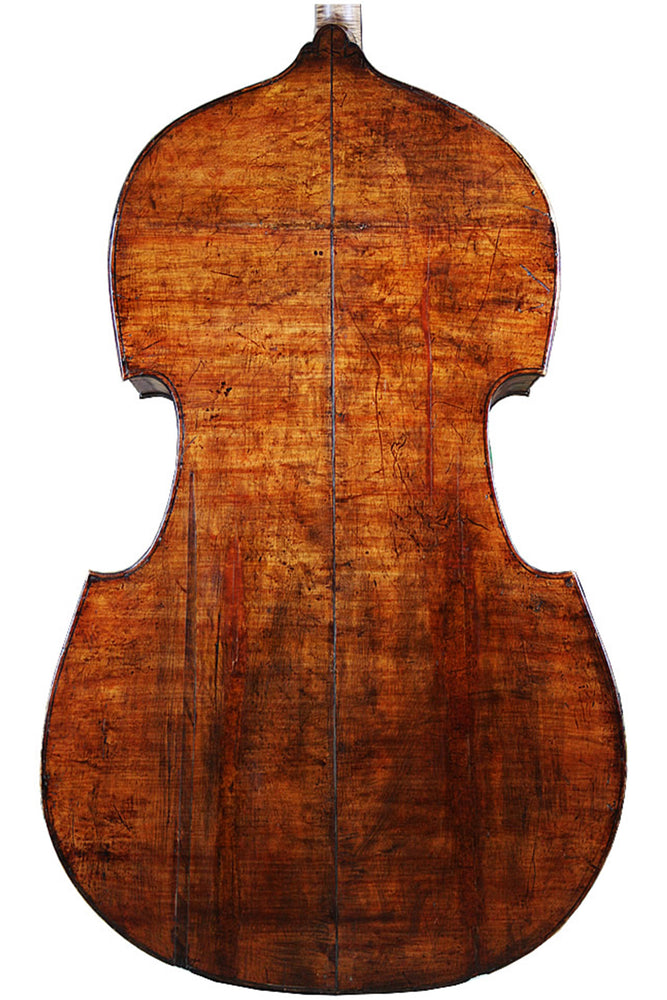
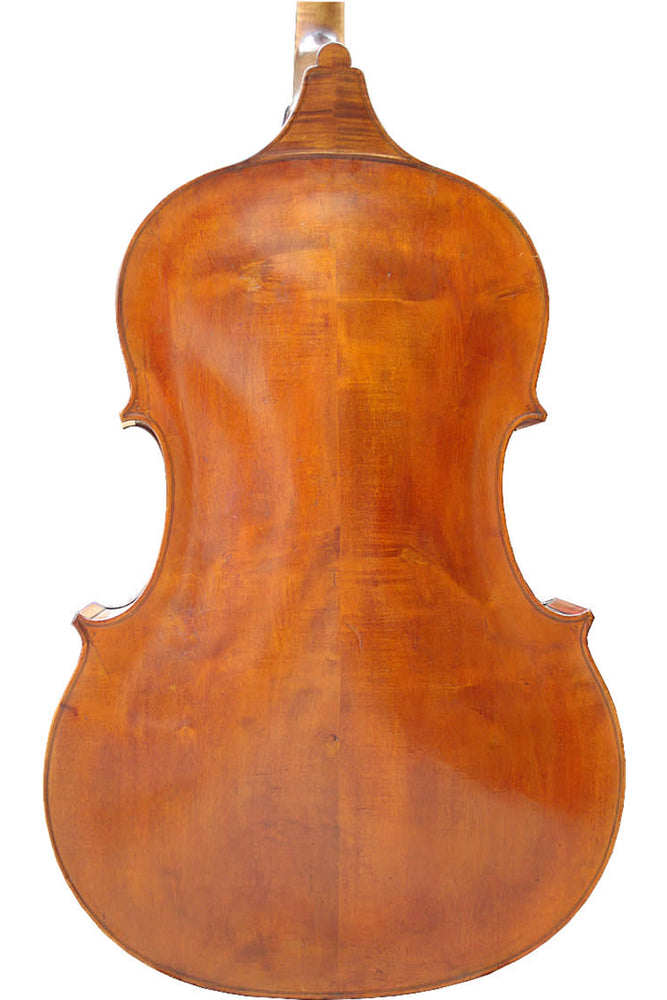
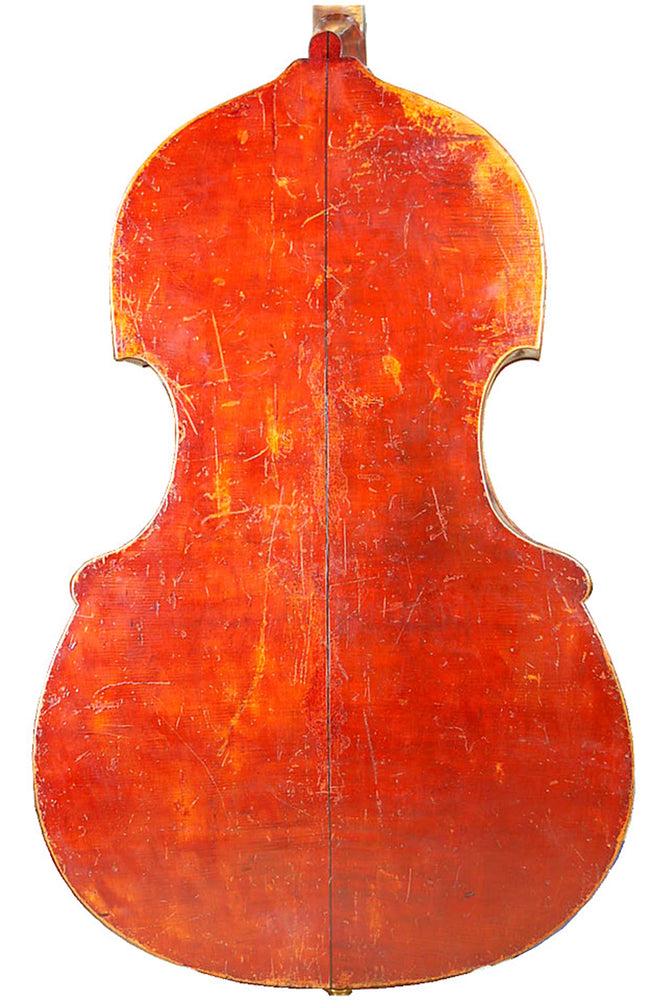
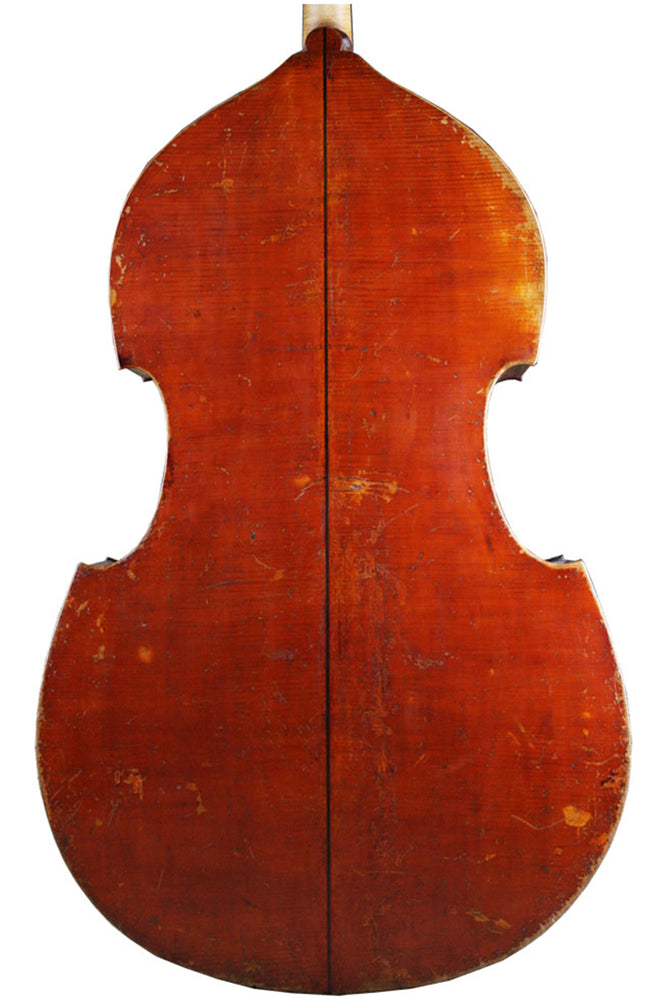
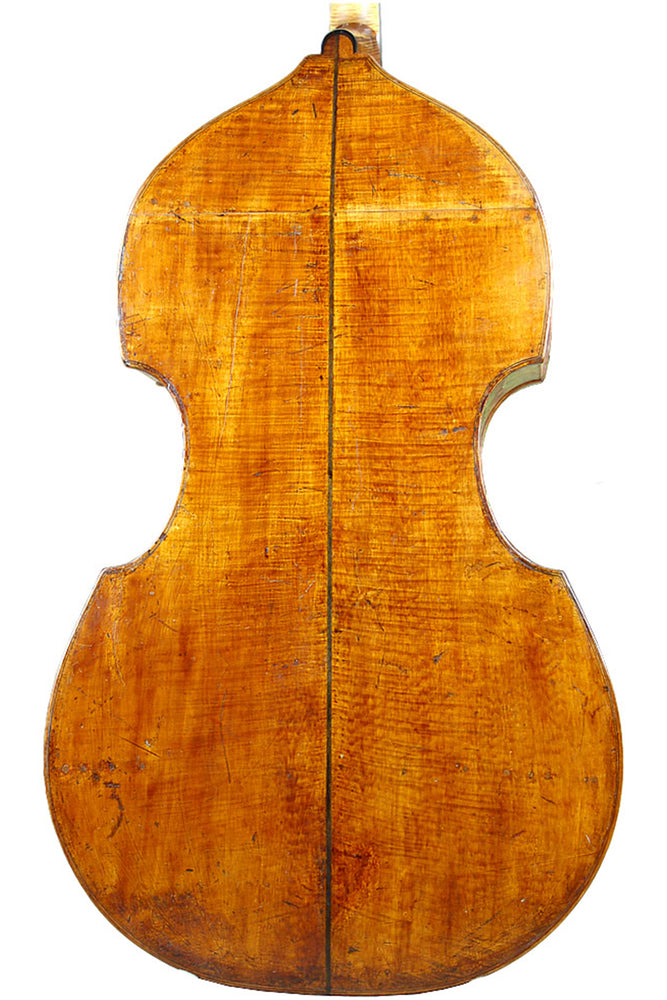
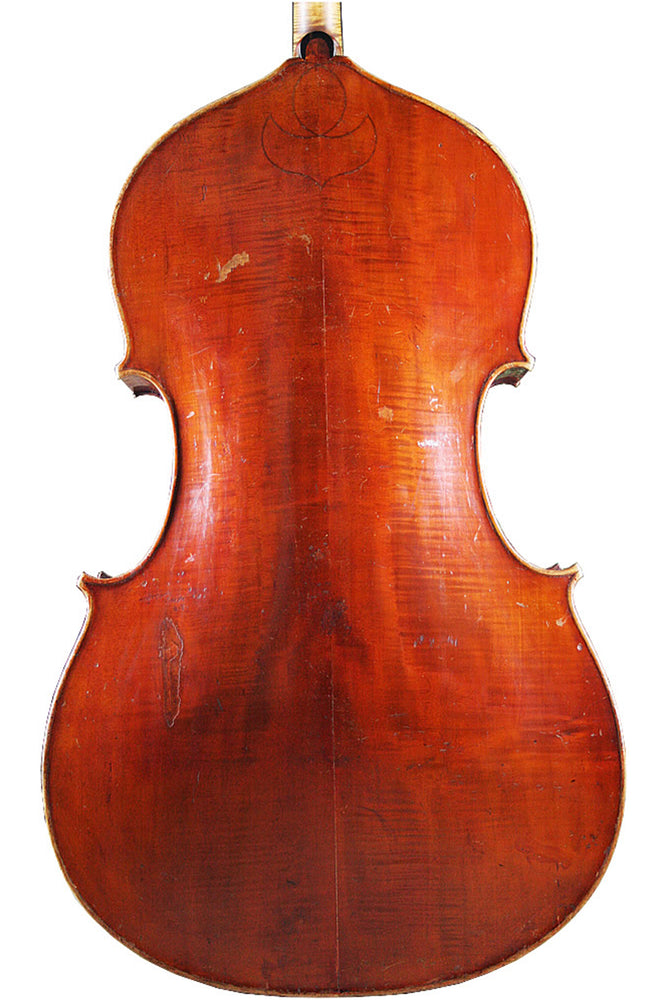
On the upper back - immediately below the back button
is a feature carved into the wood -that can be termed a "secondary-button".
The secondary button is a highly decorative feature that mimics
the shape of the actual back button. In so doing it allows (in
addition to standard purfilling line that follows the upward contours
of the neck-block) a purfilling line to follow the arc-like shape
of the shoulders. This creates the aesetically pleasing illusion
that one is looking at the outline of a large violin or cello rather
than that of a double bass.
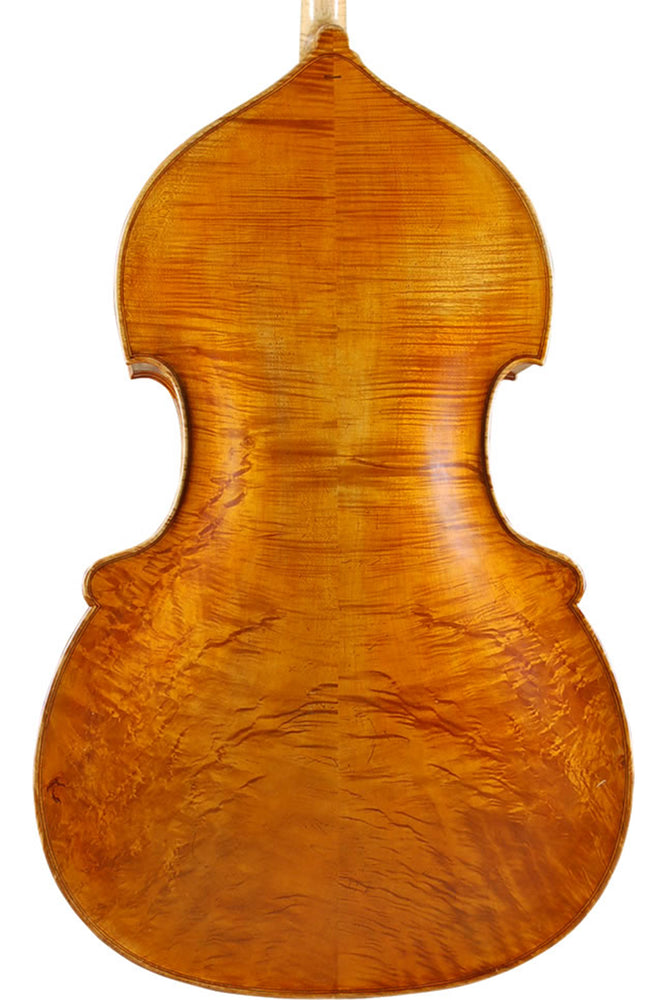
The highly figured timber used for the two-piece
back, ribs and scroll shows a flaming that runs almost horizontally.
The spruce table shows a wonderful straight grain that narrows
from a medium width at the edges to fine at the table centre.
The way the purfilling has been inlaid in both meticulous
and precise.
The translucent orange-brown varnish over a yellow
ground has a slight craquelure to it's surface that is absolutely
exquisite.
Yes - in terms of its form, proportions, detail and
execution it is most pleasing.
No - unfortunately not.
The Universal Dictionary of Violin & Bow Makers by William
Henley (Amati Publishing Ltd 1971) has a short entry as follows: "Worked
at Mirecourt. Successor to Darte and Cunin, 1891. Stradivarian
modelling."
Yes - The Encyclopedia of Violin-Makers by Karl Jalovec
(Published by Paul Hamlyn 1968) also has a short entry as follows: "Mirecourt,
20th cent. Successor of the firm Vuillaume-Darte. Stradivarian
model."
Yes. Henley writes: "Auguste Darte. Worked at Mirecourt from
1865. Died 1892. Pupil, son-in-law, and successor of N. Vuillaume.
Entitled to a conspicuous place among the many productions from
that town. Worked several years with J.B. Vuillaume."
Yes. Henley writes: "Nicolas Vuillaume. Second son of Caude
François (2). Born 1800. Died 1871. First worked with father
in Mirecourt, afterwards in Paris with brother Jean Baptiste 1832-1841
and returned to Mirecourt 1842. Busied himself chiefly with production
of superior class "trade" instruments ....".
Yes. Henley writes: "Born 1865. Pupil of Paul Bailley. Worked
for several firms at Mirecourt. Died 1890."
Yes indeed.
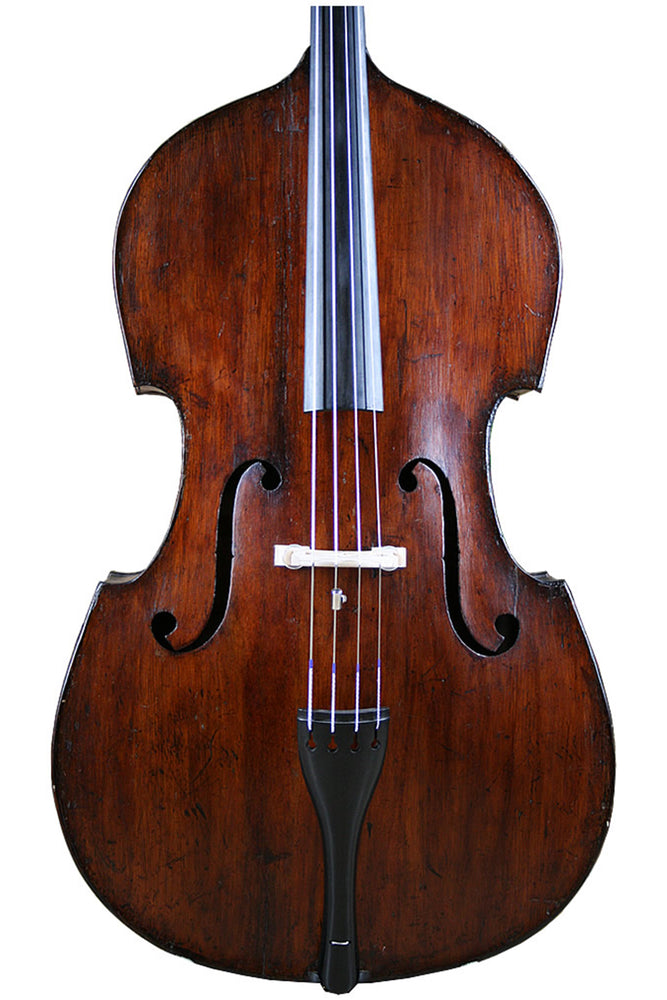
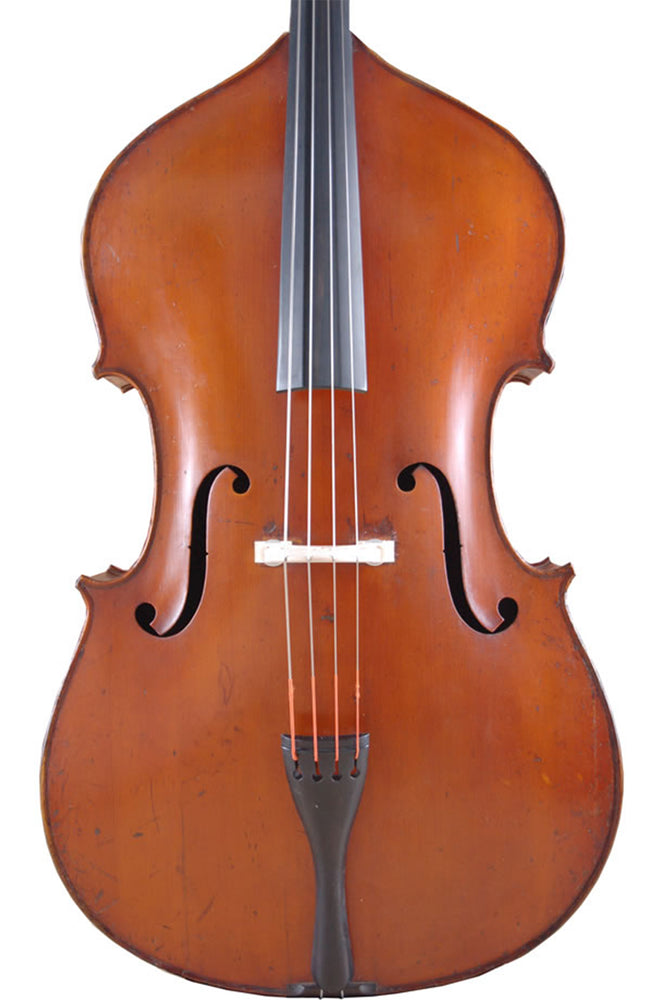
By 1865 the use of the three string instrument in
France had almost completely faded away. If we examine the peg
box of this instrument it is clear that it was made for four-strings.
Yes - the original tuner-heads are made from an early
form of brittle plastic called Bakelite which was first invented
around 1905.
Yes - at some stage of the instrument's life it received
a neck graft by a member of the Calow family of Nottingham, England.
We know this for sure - because inside the peg box - just behind
the top nut - was the brand Calow, Nottingham.
According to Henley there were three members of the
Calow family strongly associated with bass making that lived and
worked in Nottingham as follows:
1. William Calow (1847-1910) - collected basses and
specialized in making them.
2. Thomas Calow (1868-1905) - son and pupil of William. Assisted
father in repairing. Committed suicide at 37 by hanging himself
with a bass string.
3. Francis William Calow (1884-1925) - son, pupil and successor
of William. Many instruments stamped 'Calow Nottingham'
The use of a name brand and the extremely fine condition
of the instrument - favour the work as being down to Francis William.
The common usage of Bakelite between 1910 and 1920 additionally
supports this theory.
Only that we purchased it in England from an excellent
jazz bassist.
Understated - the model is good, the arching is good,
the thicknesses are good and by golly the sound is good too. Projection
and purity of sound with distinct tonal qualities are definitely
what this instrument is all about.
A new neck and full set-up courtesy of Belgian restorer
Jeroen Bruynooghe is sure to put a large smile on your face.
Fortunately before the graft was fitted - Jeroen
managed to cut the brand out on a small block of wood. It is offered
with the instrument as part of its history.
In terms of making, looks, condition and sound there
is a certain whiff of quality about this instrument. If you are
an orchestral player, a jazz player, a soloist, a collector or
an investor seeking an instrument of merit then look no further
than this fine French instrument.
Width at the upper bout 19.85in (50.6cm)
Width at the centre bout 14.85in (37.8cm)
Width at the lower bout 25.85in (65.8cm)
LOB 44.35in (112.5cm)
St length 41.65in (105.6cm)
|