|
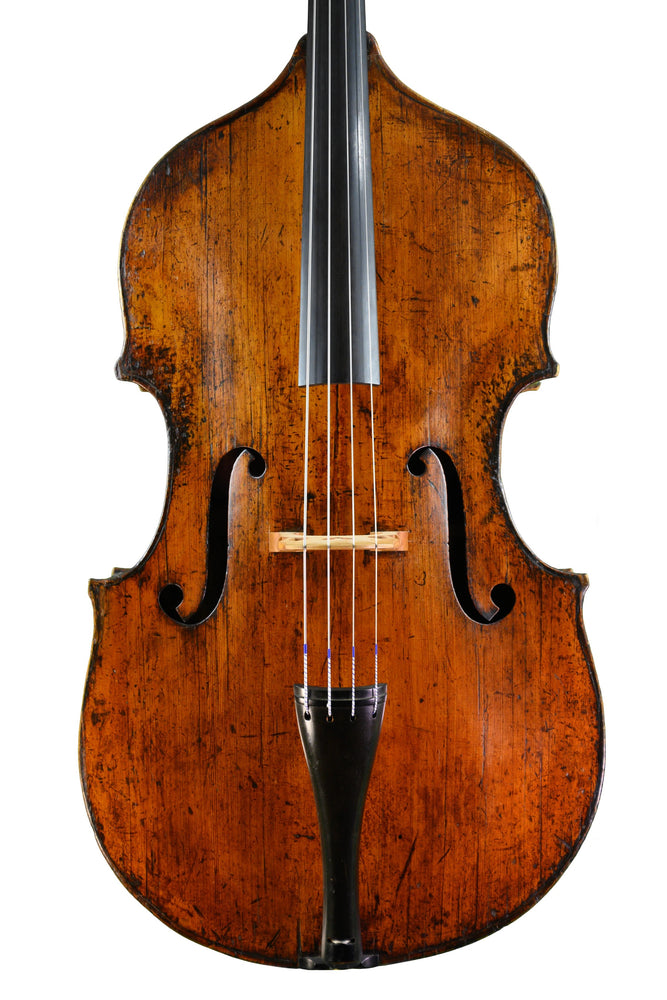
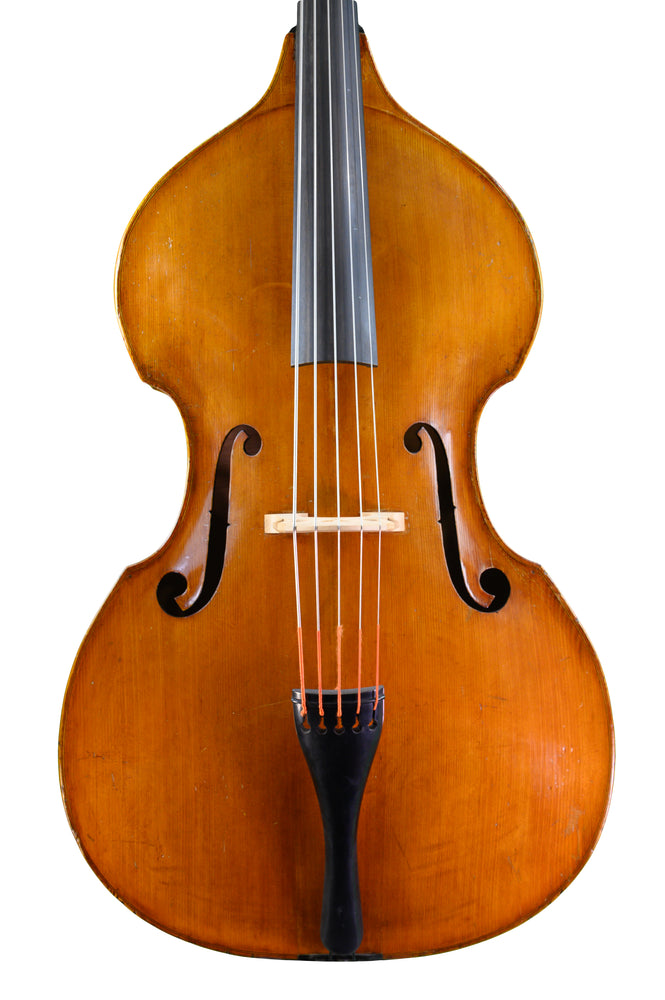
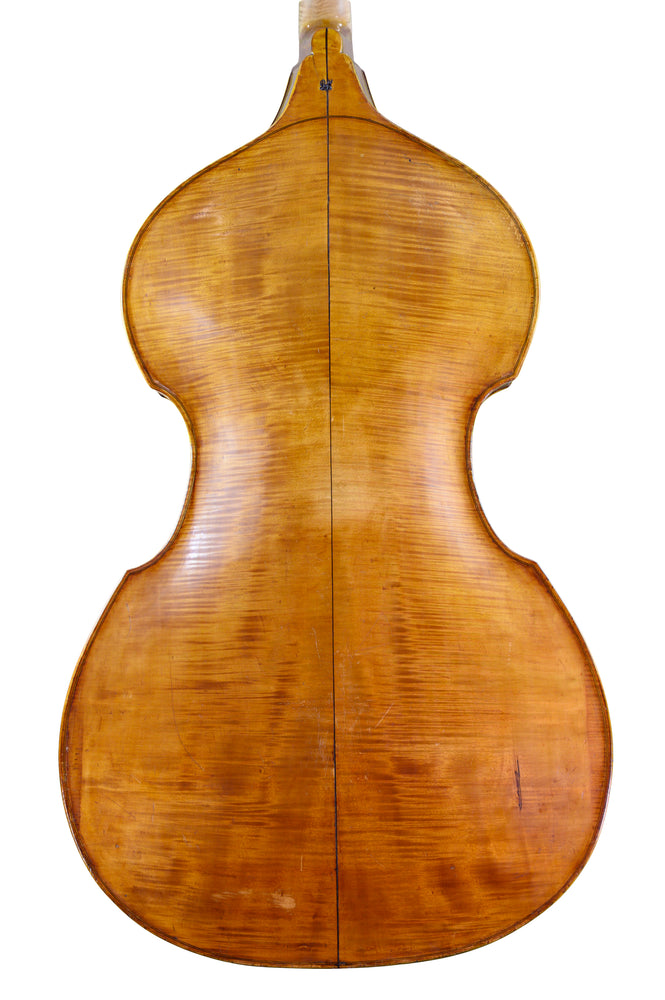
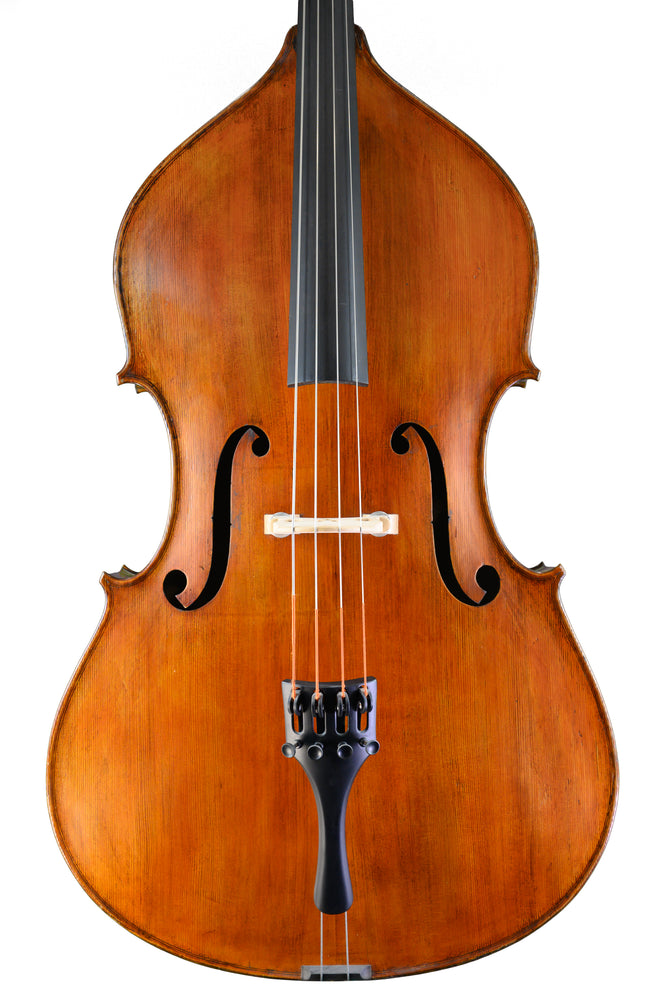
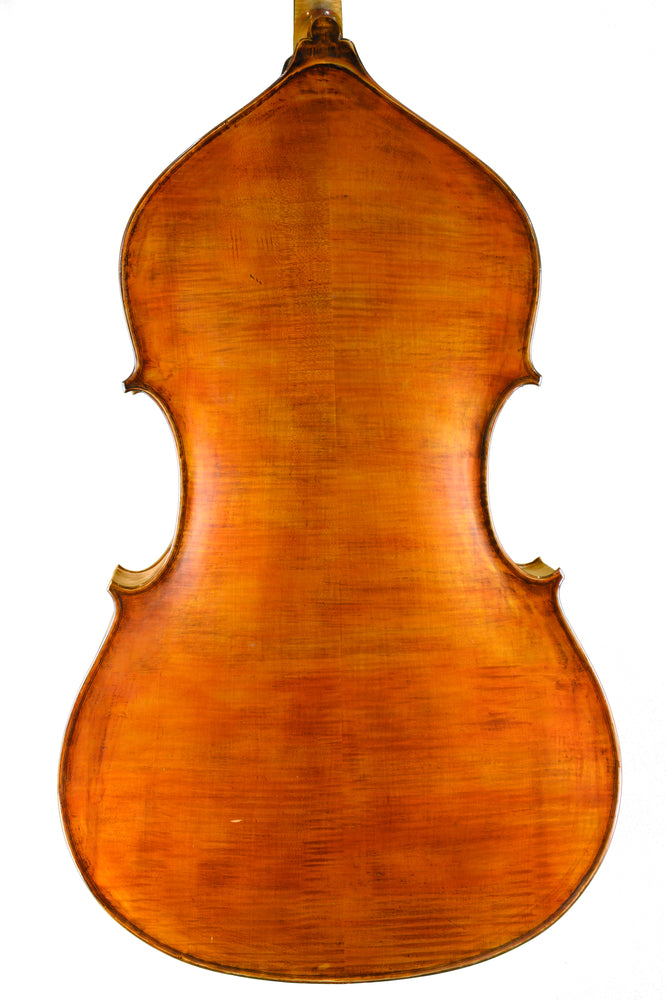
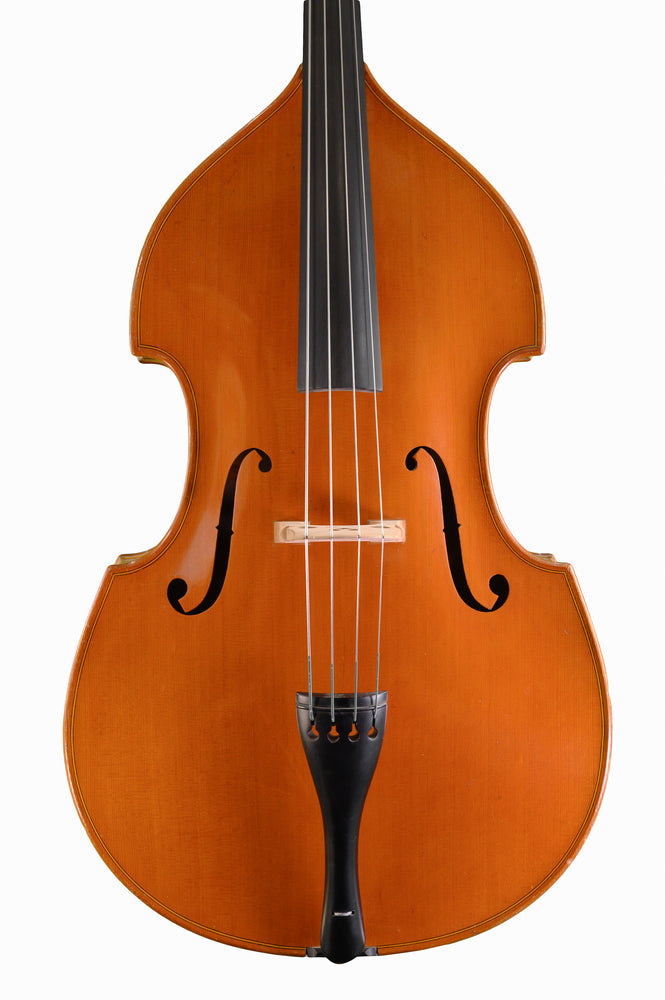
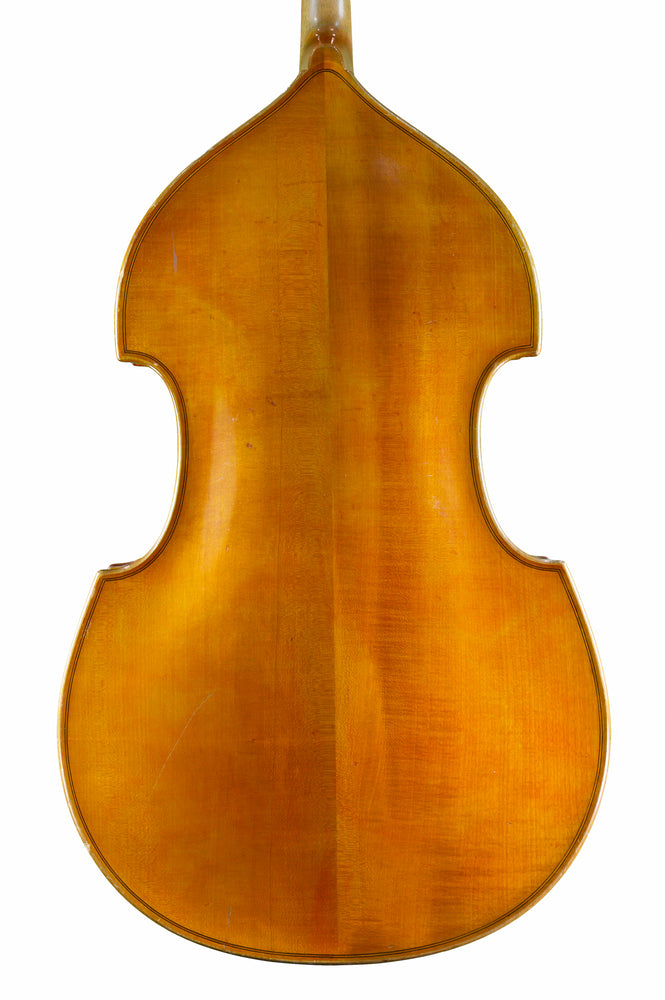
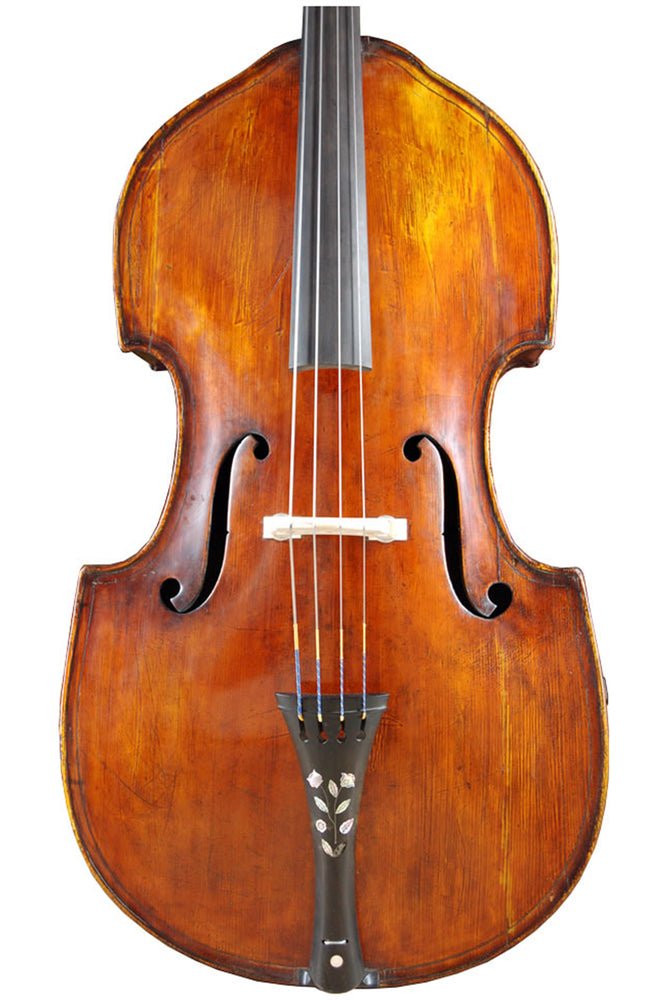
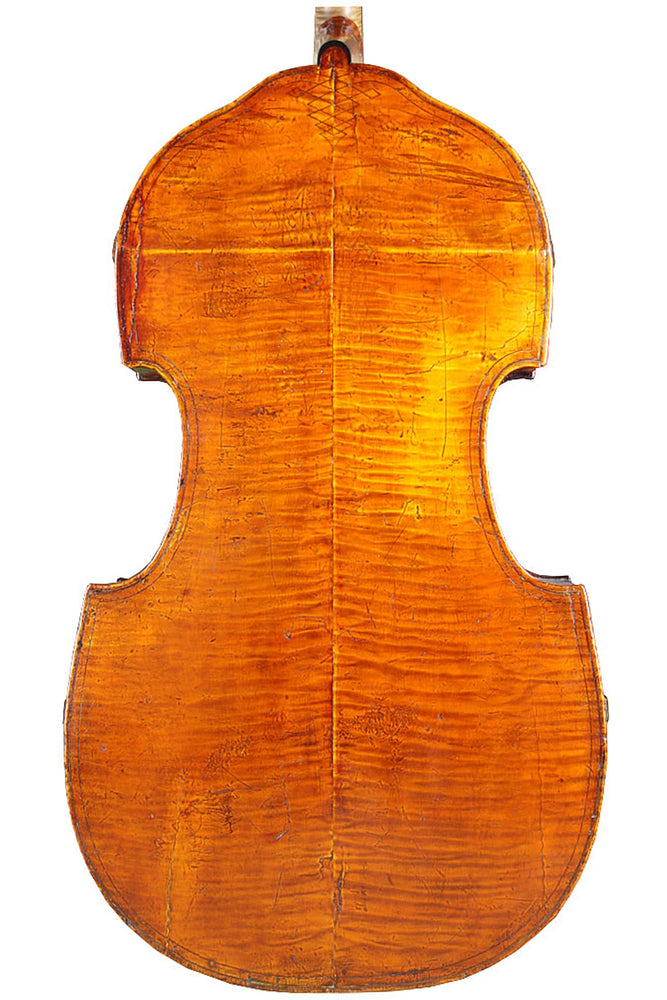
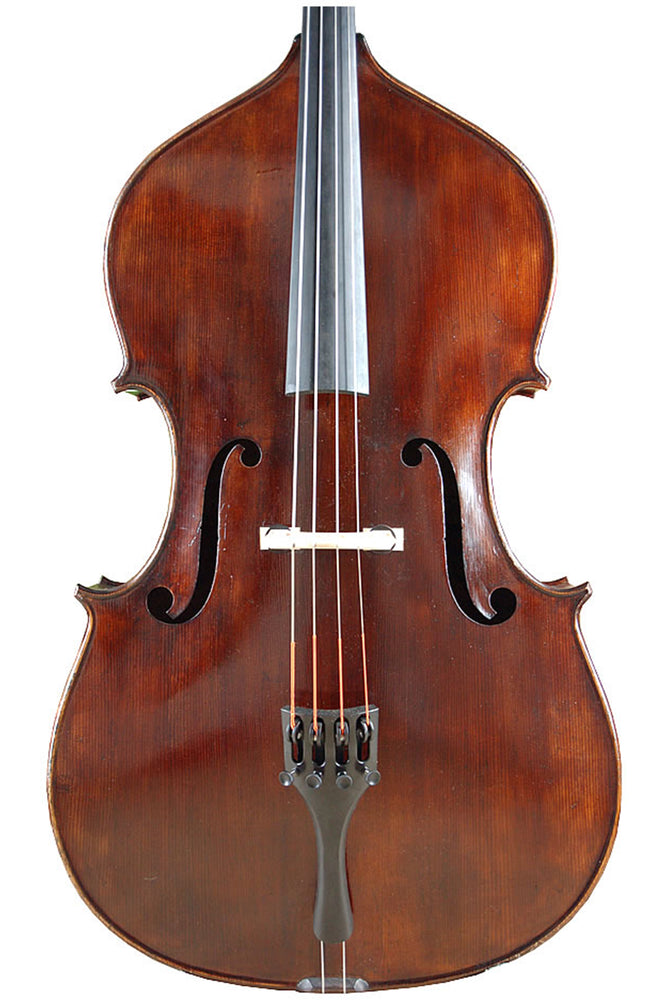
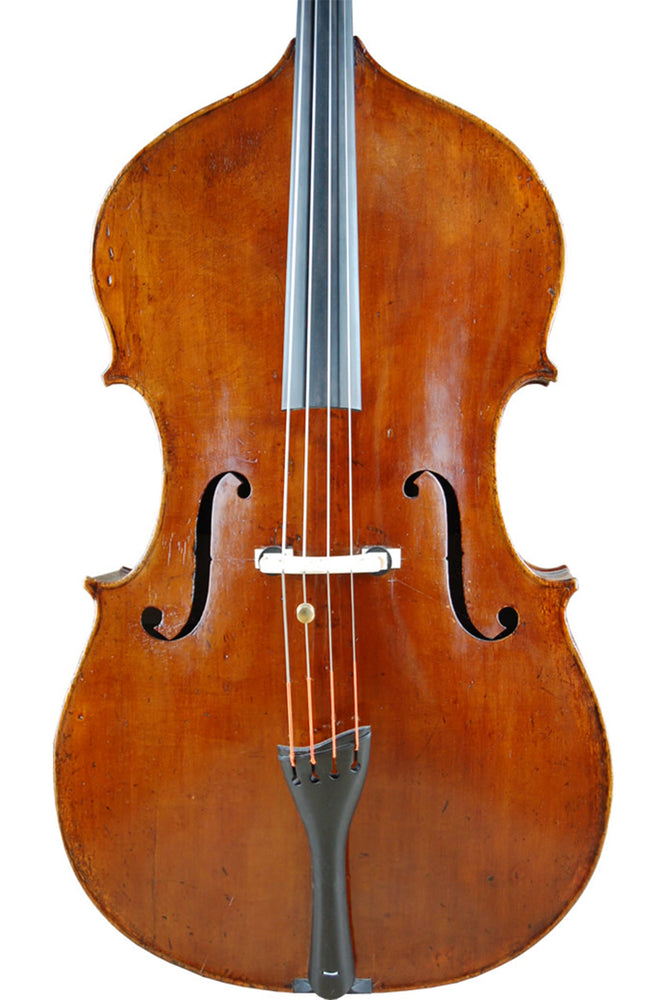
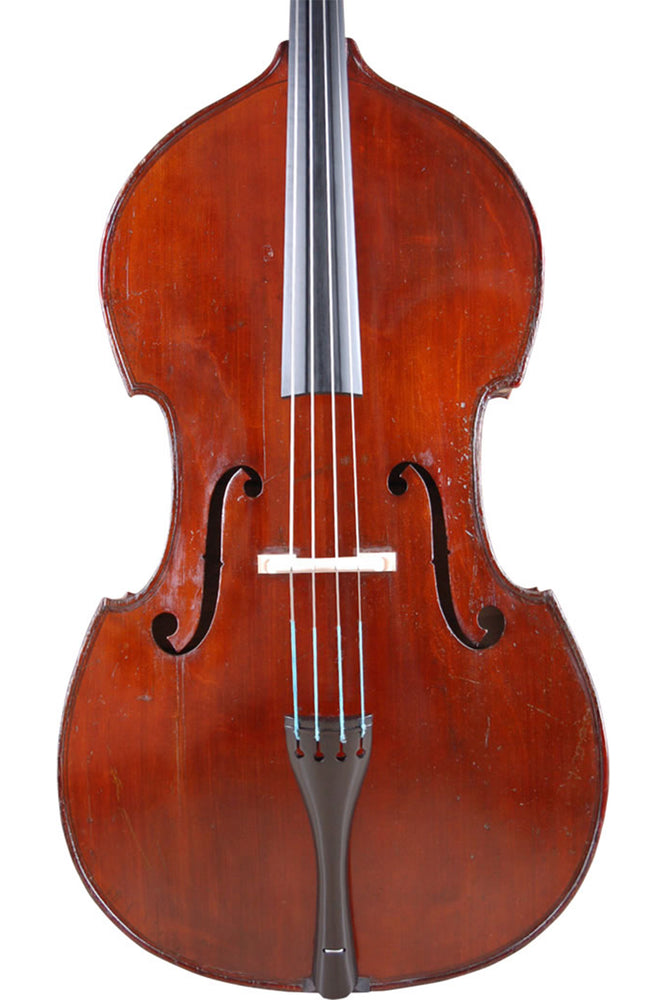
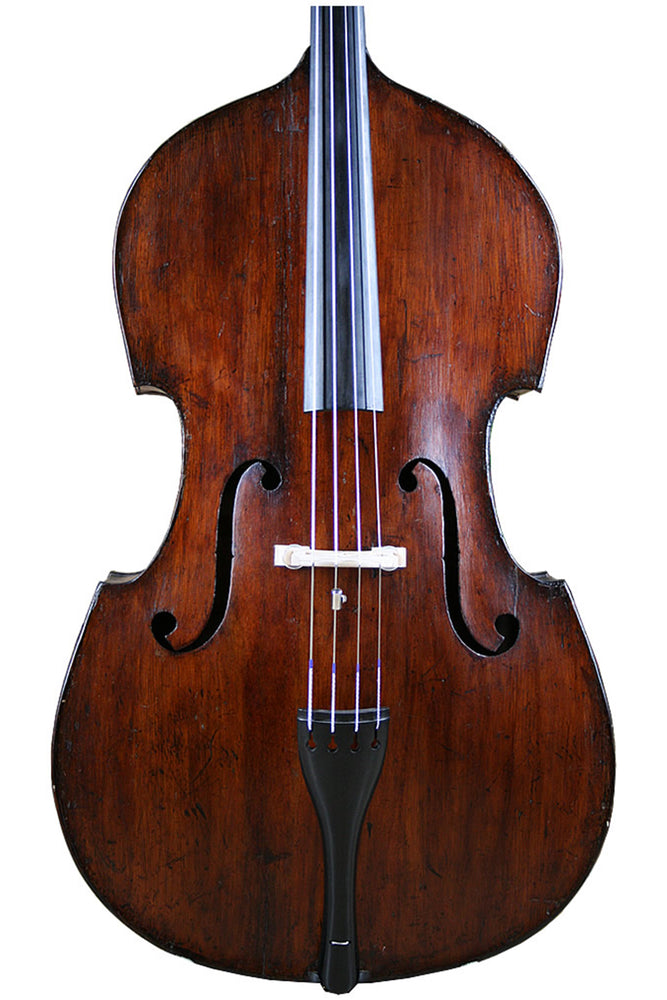
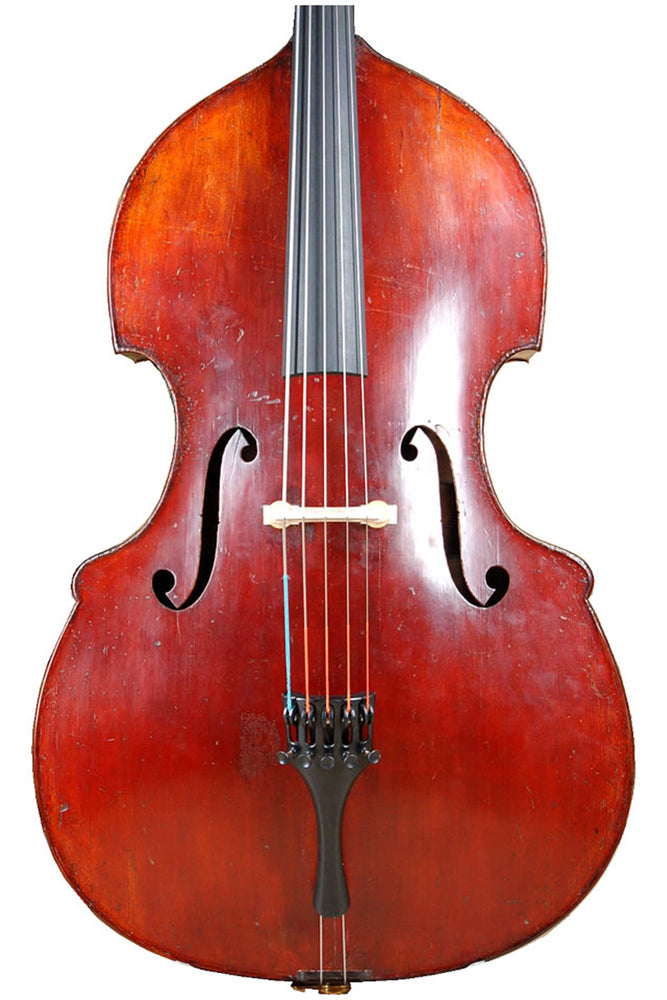
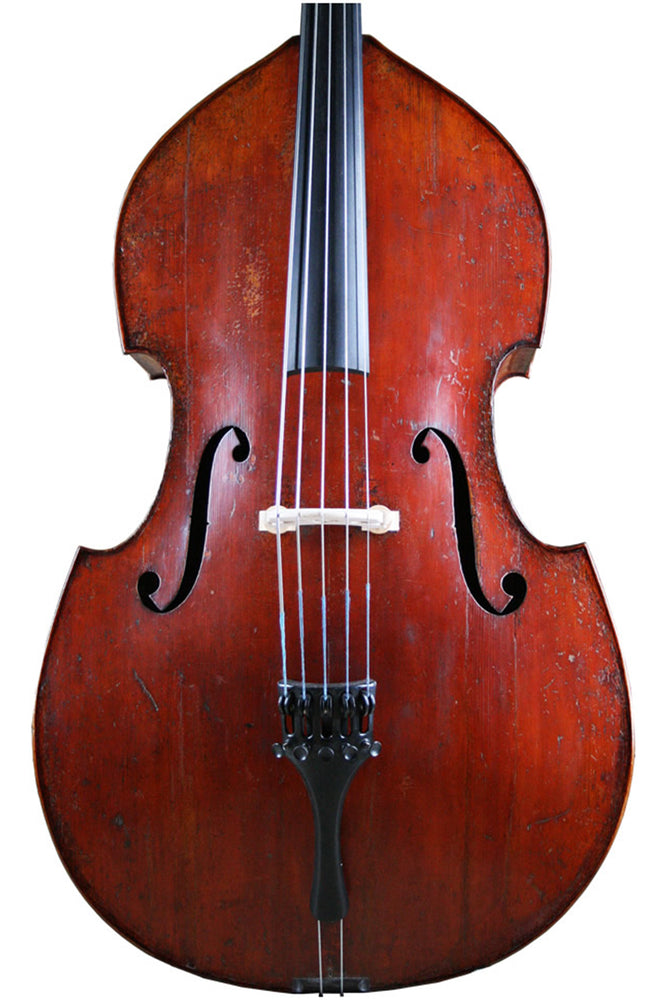
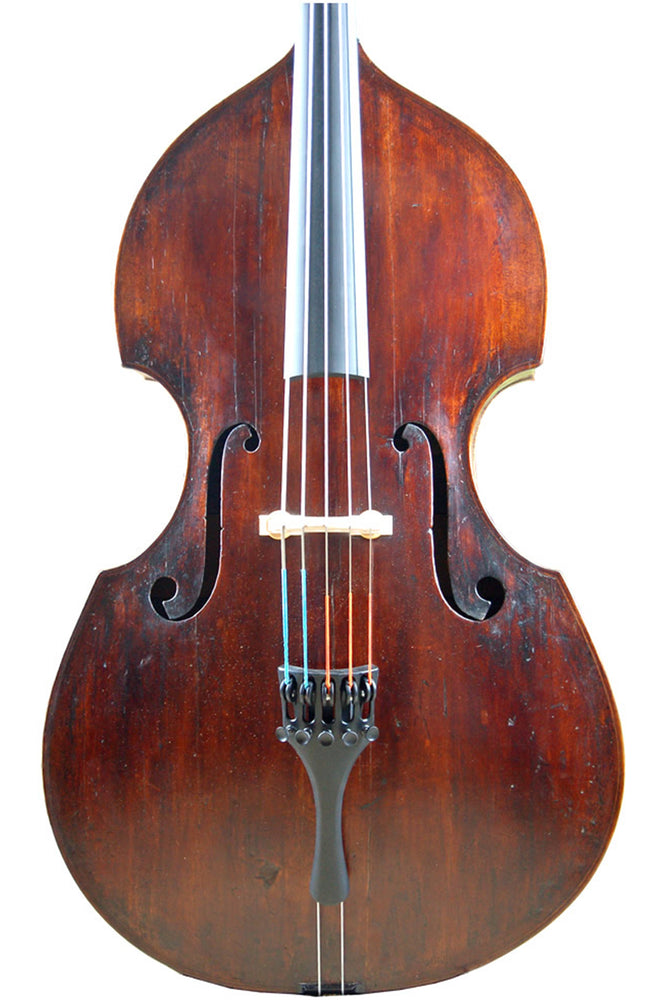
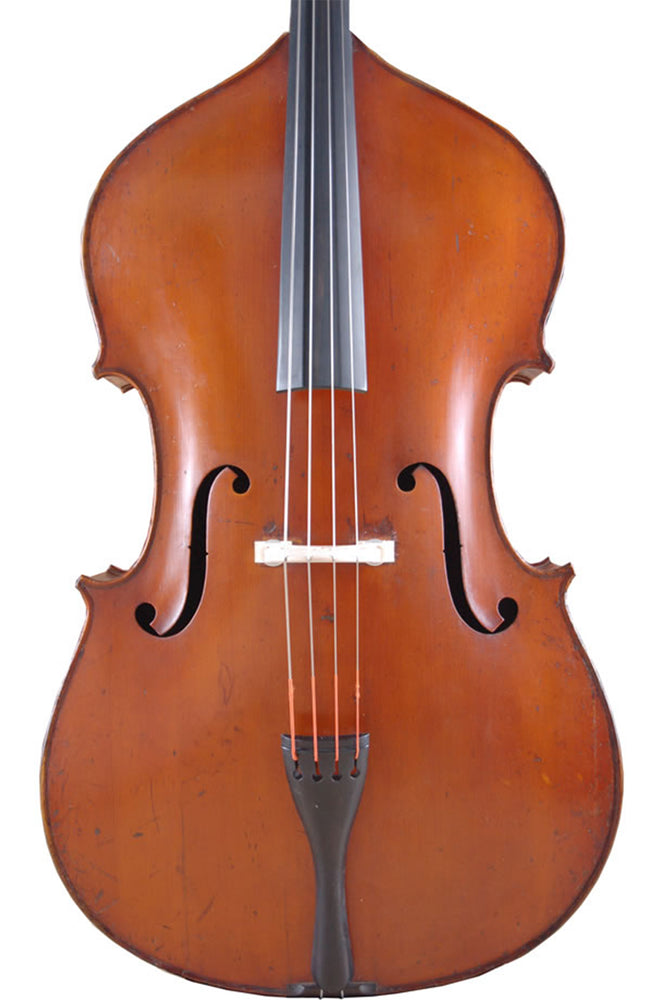
In a word I'd describe this Hawkes as an imposing
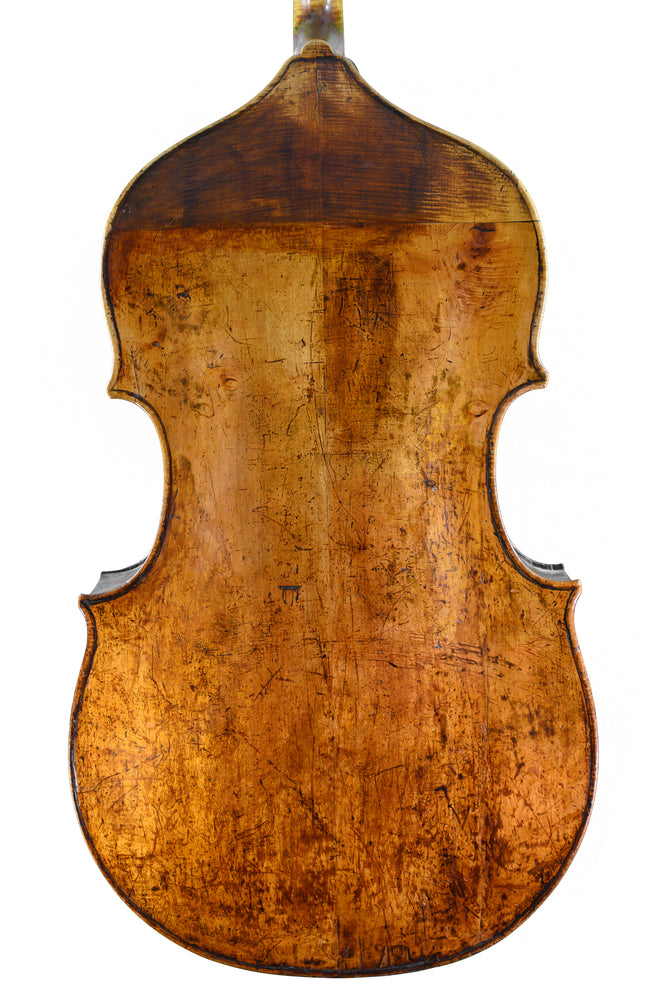
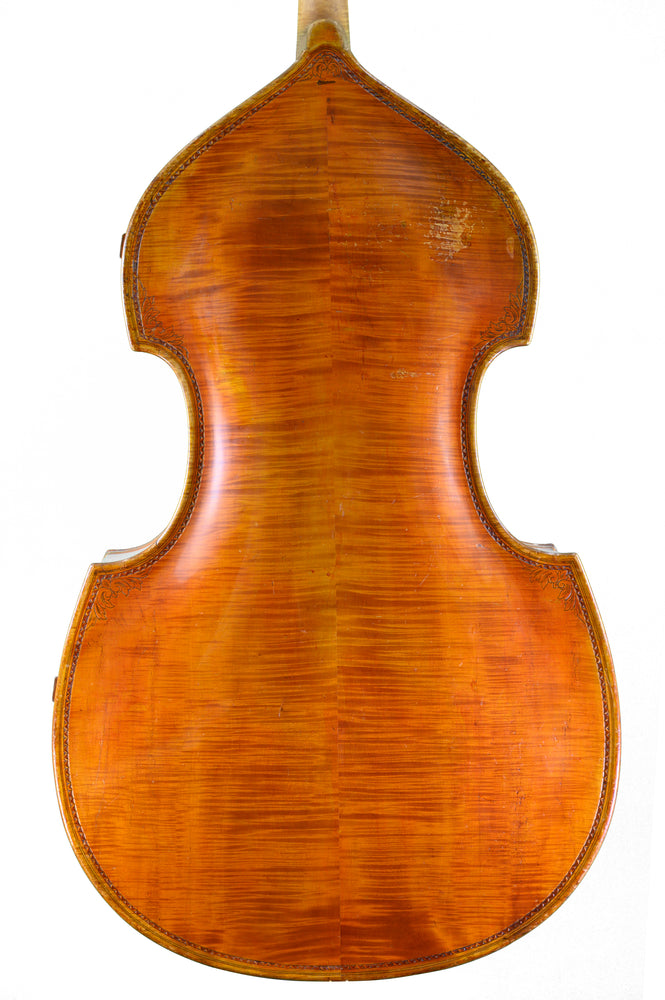
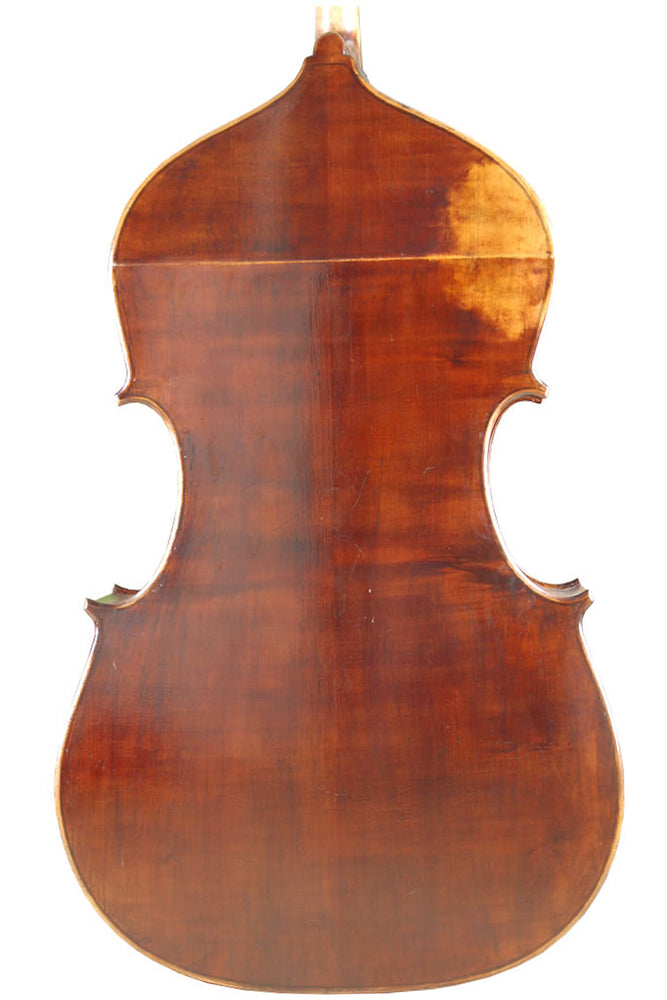
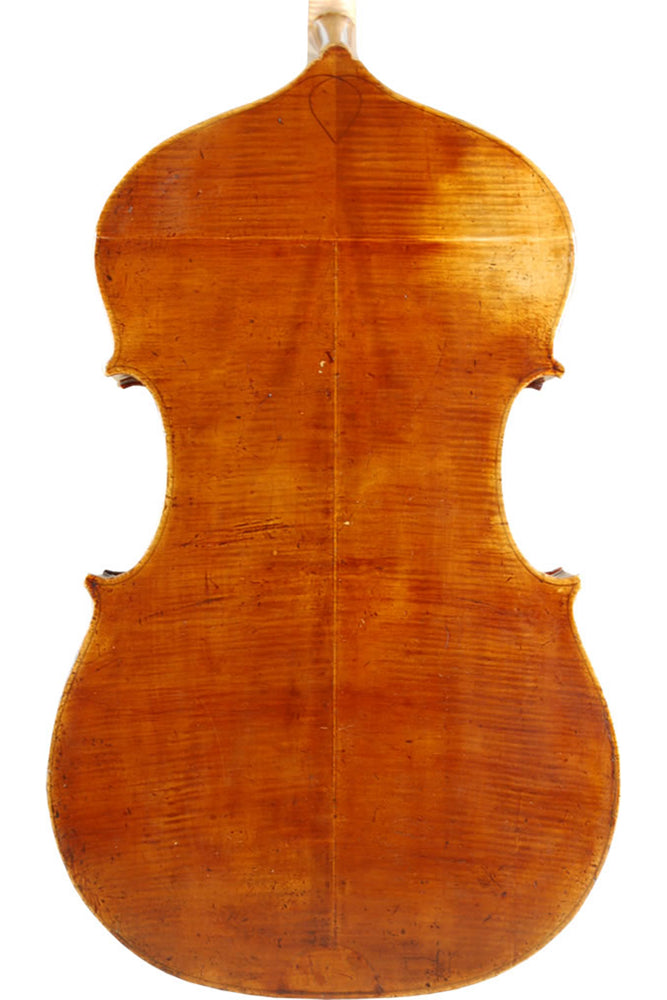
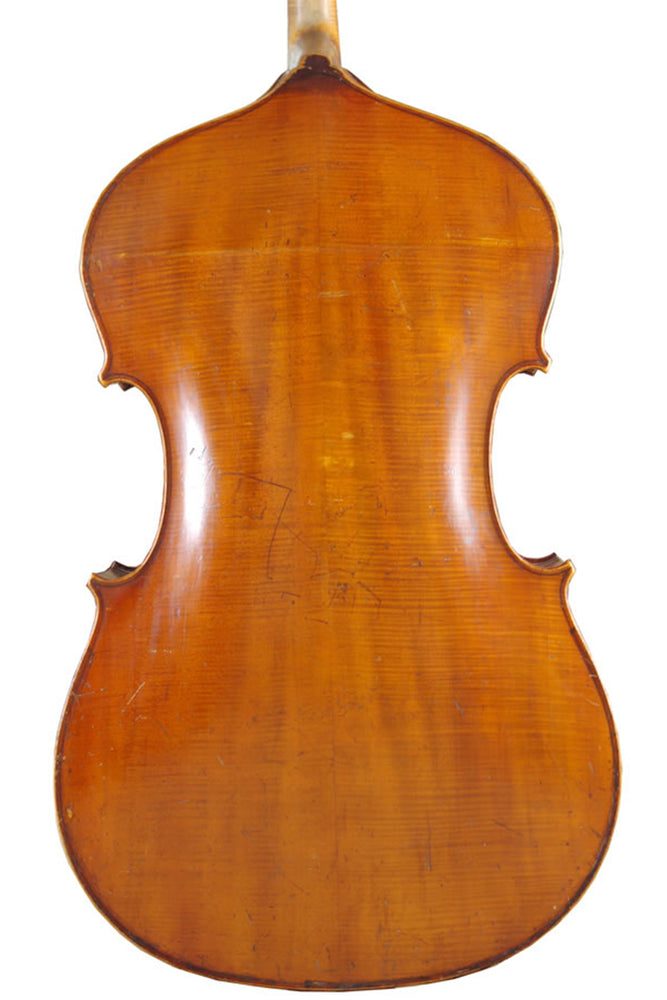
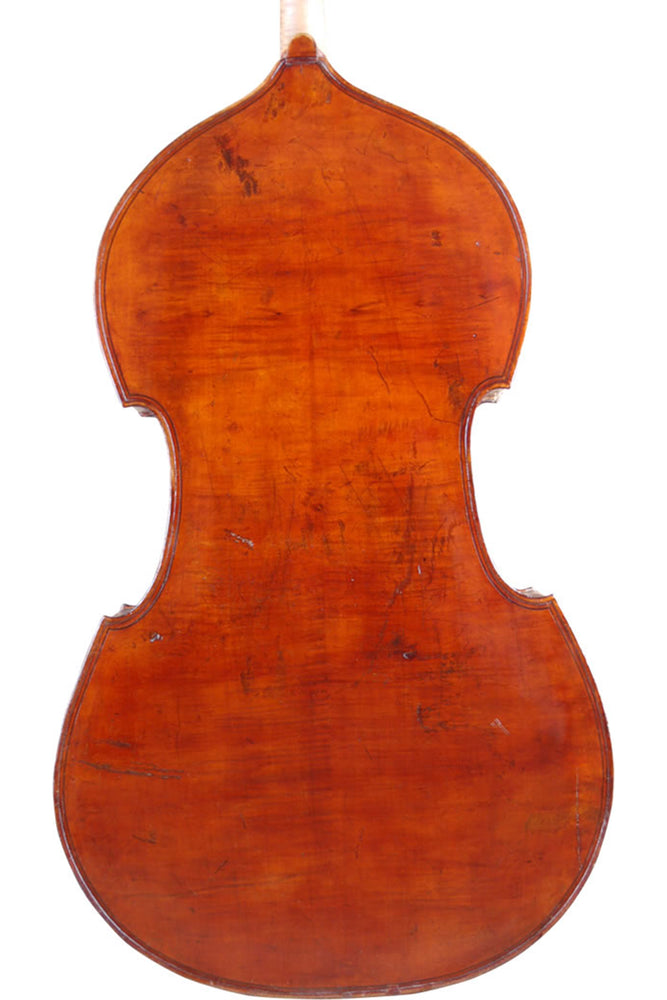
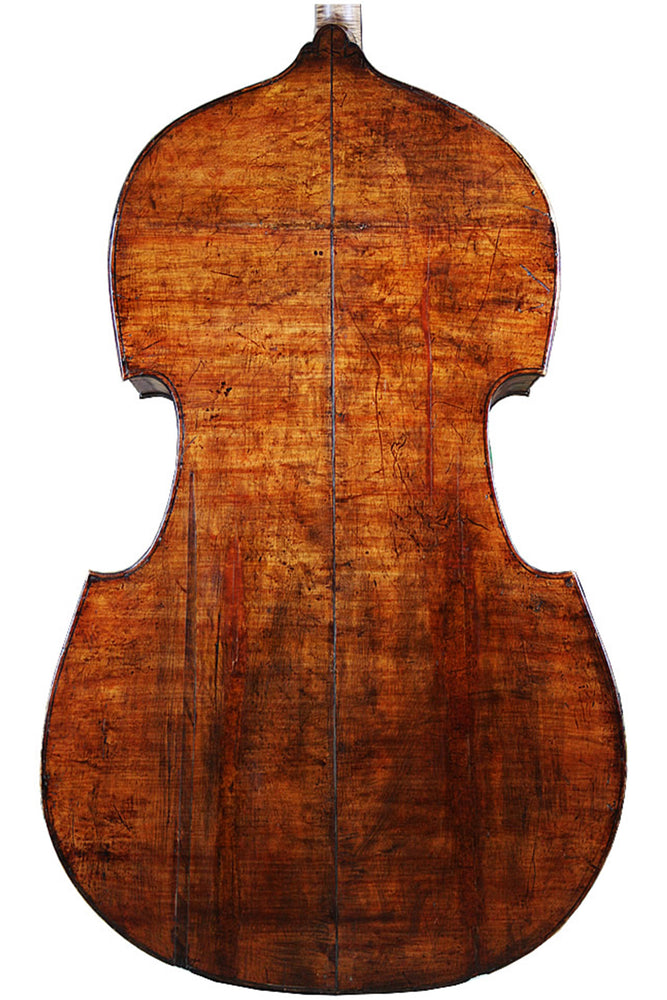
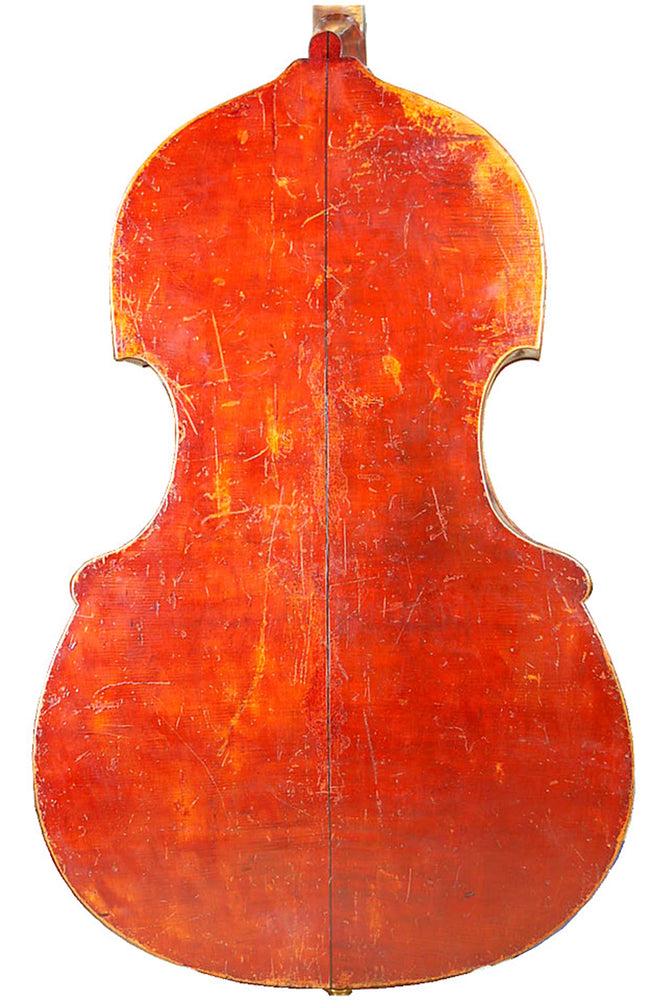
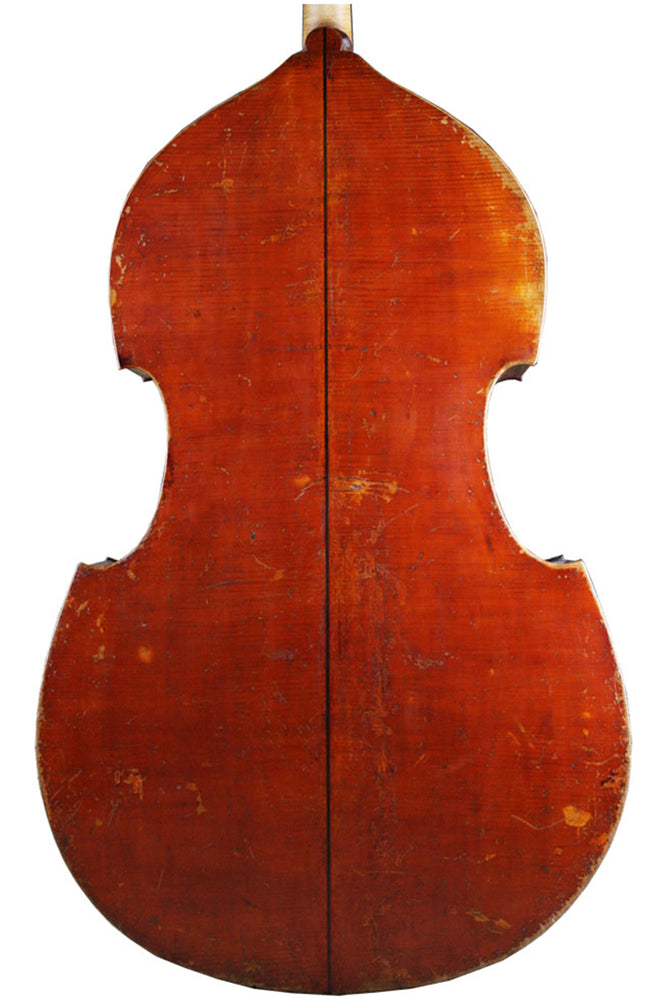
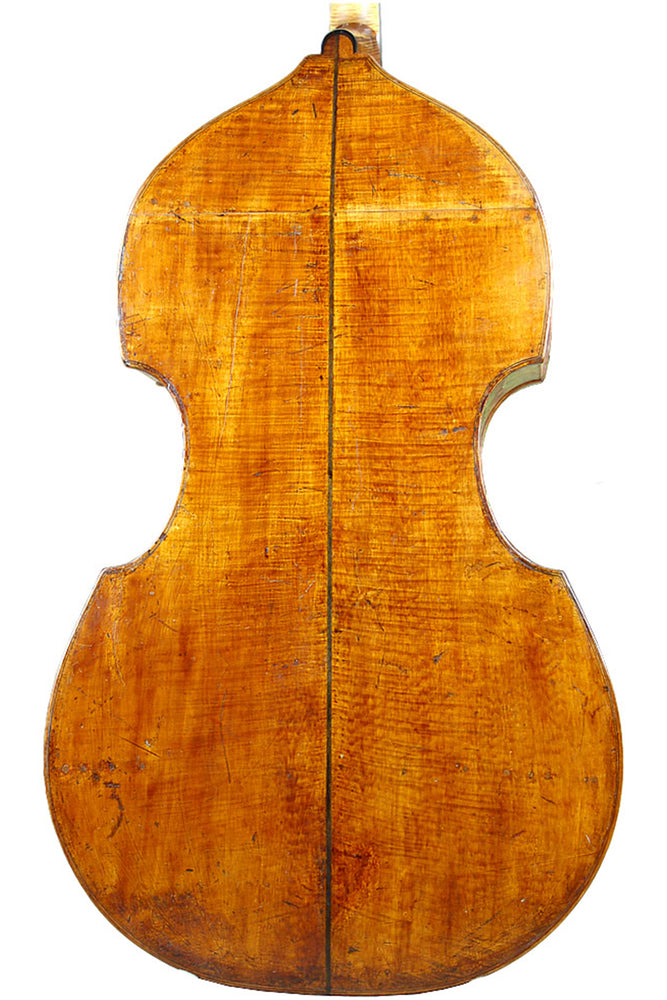
instrument. With it's violin outline and full swell back the model
is grand and impressive.
Simply huge - on top of which there are lush-dark
tonal qualities.
That's great. You'll absolutely love this instrument.
In terms of structure this is a beautifully presented
instrument. Restorer Martyn J Bailey never disappoints us in his
work. Internally the instrument sports a new bass bar of the correct
length and depth while externally we've fitted a beautiful new neck
and board. Complementing this work is a set-up par-excellence.
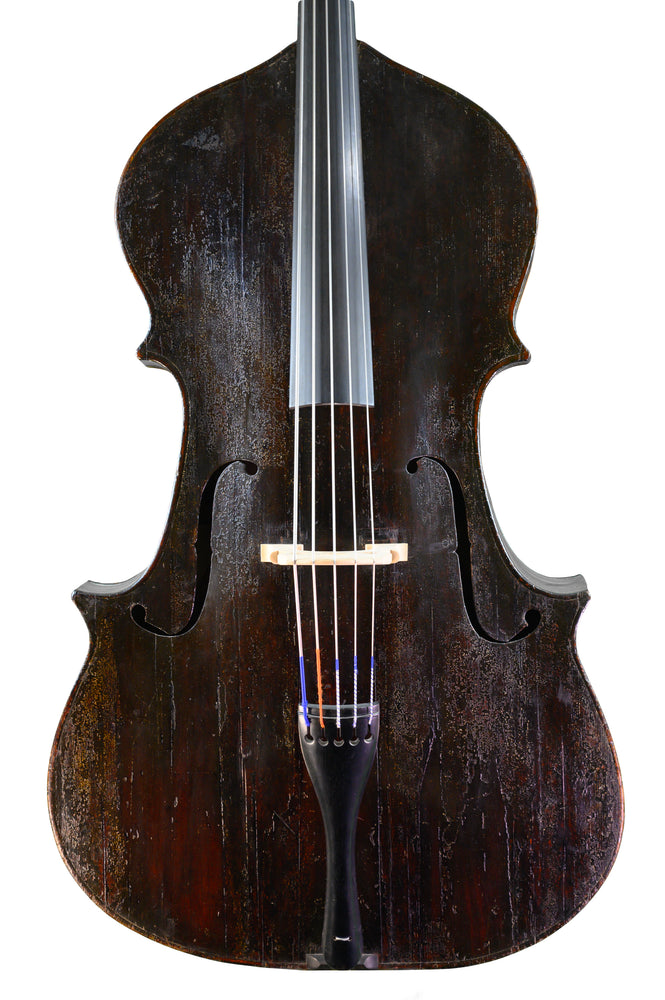
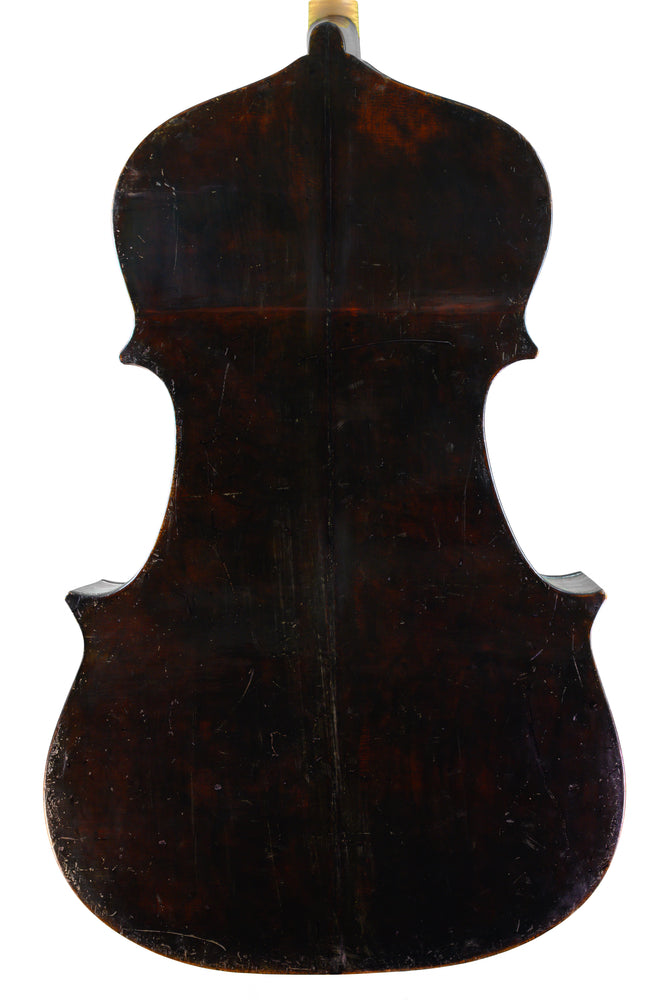
Unfortunately we must say no to this question. The
good news is that the varnish does have a fair amount of age and
it is aesthetically appealing. Another bit of good news is that
this varnish aspect of the instrument is reflected in the asking
price. At only 13K - we think that you'll agree this is a pretty
reasonable price for such a fashionable piece of bass making history.
Yes - the instrument has what we call “pins”
- in the corners and at both top and bottom blocks. These were fitted
to instruments - that were destined for use in tropical countries.
In glue-softening high humidity's - the pins would help maintain
the position of the table and back onto the blocks.
Yes. It bears it's origional label which states:
The Concert Double Bass, (Registered), 1910 - 3414, Hawkes &
Son, Denmark Street, Piccadilly Circus, London.
Yes: The instruments manufactured by Hawkes &
Son during the latter quarter of the nineteenth century and the
first half of the twentieth century were often supplied to the many
army and military bands that existed especially in England. There
were three grades of instruments, namely Professor, Concert and
Panormo, that were based on the unsurpassable form of Vincenzo Panormo's
instruments.
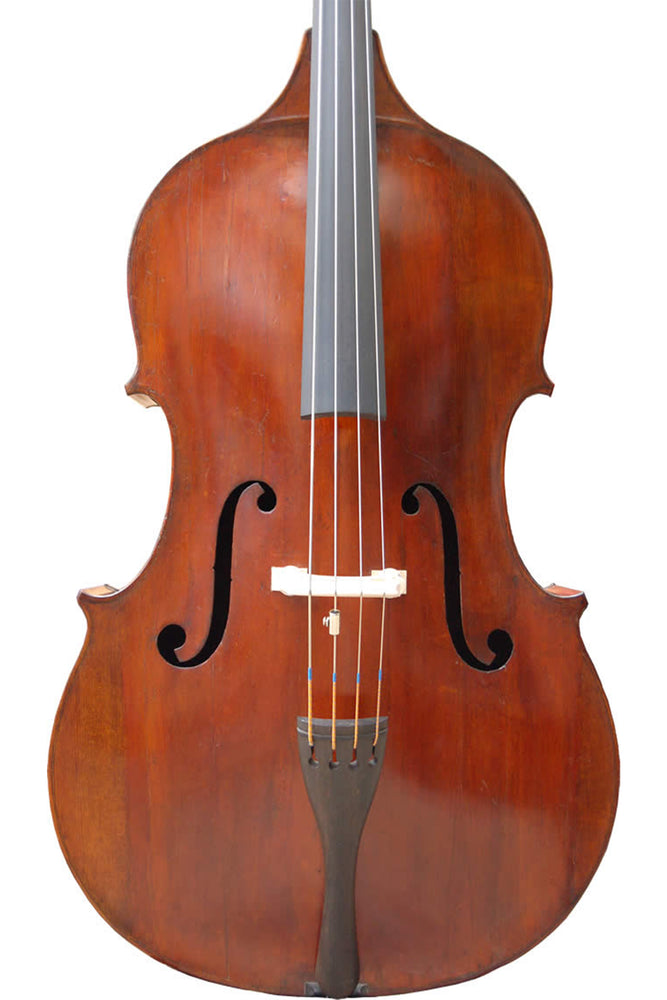
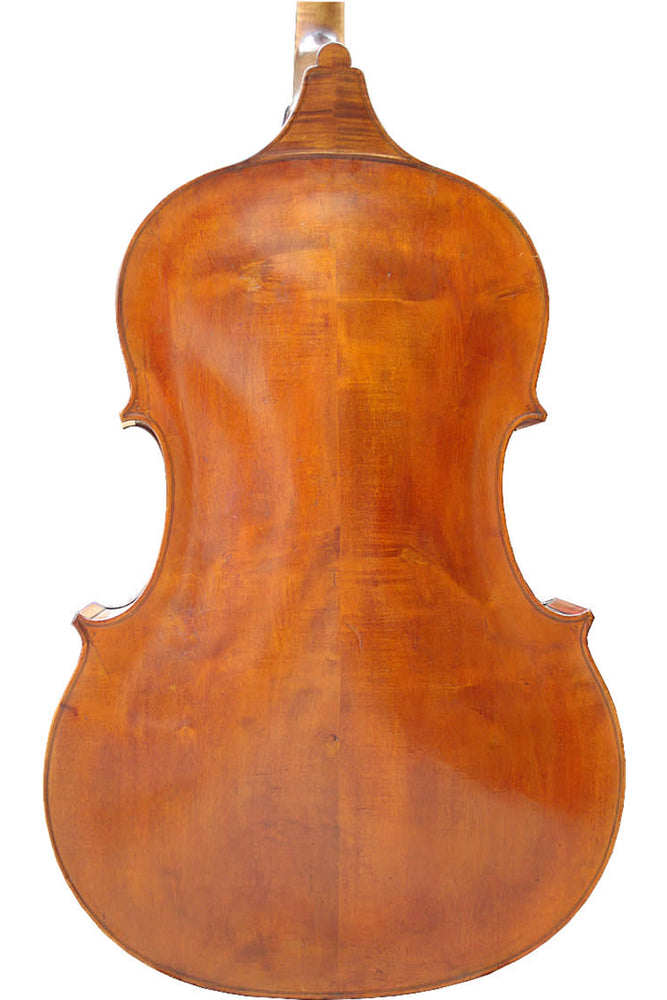
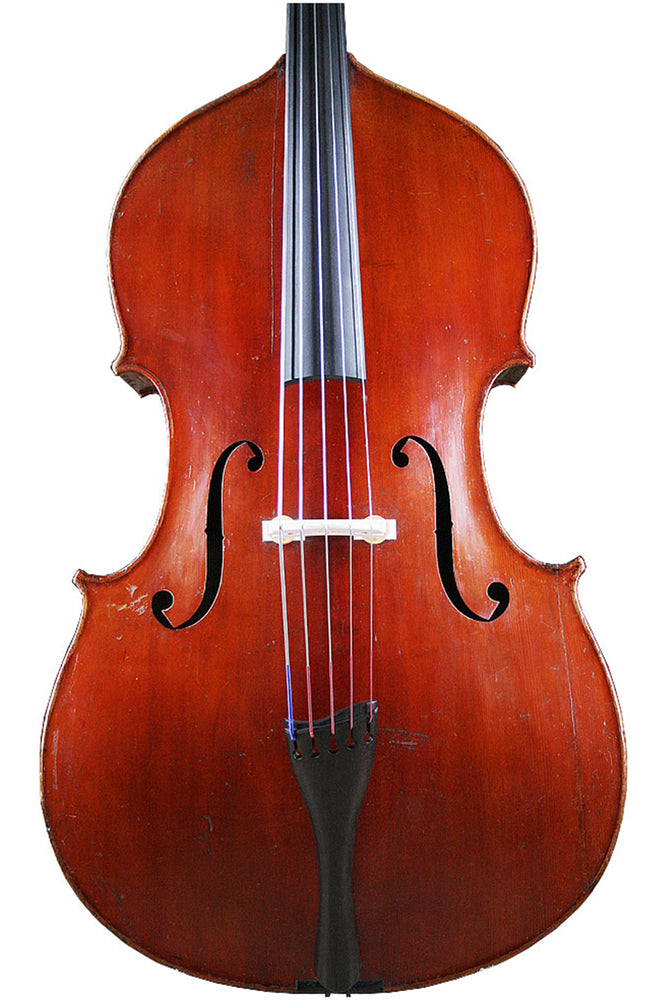
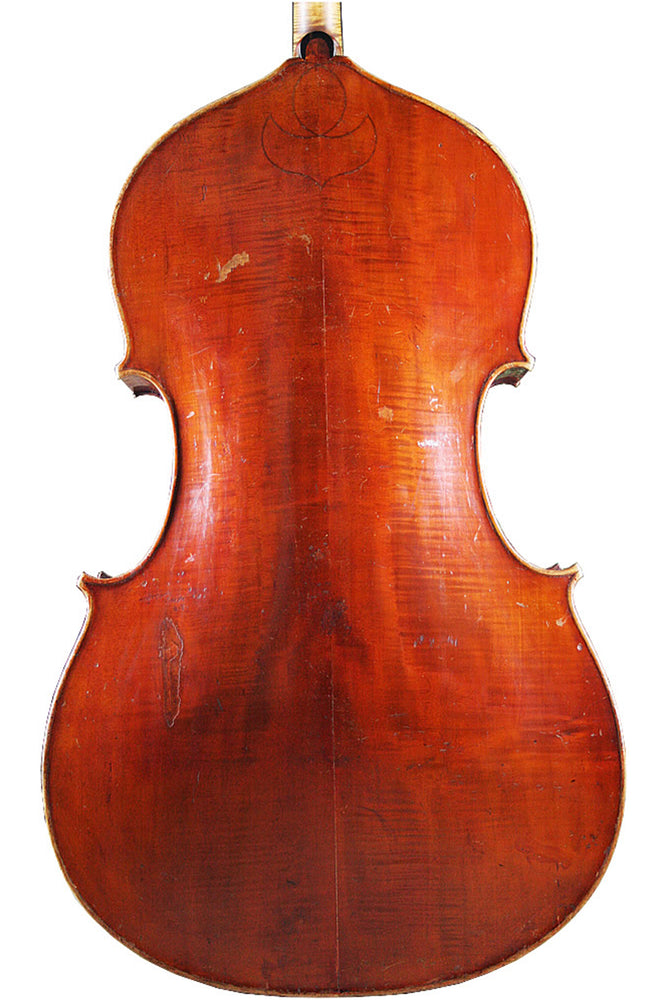
All the models are characterized by their violin
outline, deep ribs and generous proportions which are by no means
too large to play easily. The Professor was a flat back model with
upper angle break, and often outside linings, while the Concert
and Panormo were produced with full swell backs.
To meet the demand for these robust and well-constructed
instruments a great majority were imported from Germany and France,
the Concert and Panormo models being superior in their choice of
timber, workmanship and finish than those of the Professor. In 1924
the four string Professor instruments were being advertised at £22,
the four string Concert at £26 and the four string Panormo
model was £36. For the three string versions of these same
models prices were £20, £24 and £32 respectively.
The advert aptly proving that in England there was still some demand
for the three stringed instrument even at this late date.
This fine sounding Concert model has probably had
quite a few different players using it over the past 95 years of
it is life. If only instruments could talk! Now after all necessary
restoration work has been executed to the highest standard possible
- it is well up to the task of seeing through many more decades.
With it is massive sound and full-tone this really is an attractive
option for an upwardly-mobile, budget-conscious orchestral professional.
Fitted with a set of Thomastic Spirocore meds or softs - it really
does produce the kind of juicy-groove sounds that you jazz guys
& chicks are all after.
Width at the upper bout 21.90in (55.8cm)
Width at the centre bout 15.50in (39.4cm)
Width at the lower bout 26.25in (66.7cm)
LOB 44.35in (112.7cm)
St length 42.25in (107.3cm)
|