
|
The Dictionary of Twentieth Century
Italian Violin Makers by Marlin Brinser lists Mario Bandini as a
one-star (good) rating out of a possible zero - three for the importance
of his work. The brief entry states 'Good late modern. Won medals.
Won medal at Bagnacavallo for Double Bass'.
No dates are given for the maker
but we are reliably informed that the instruments made in the early
80s are amongst the last that he produced in what was a long professional
career. Our source estimated that Bandini was born around 1915 but
was unsure if he is still alive and well.
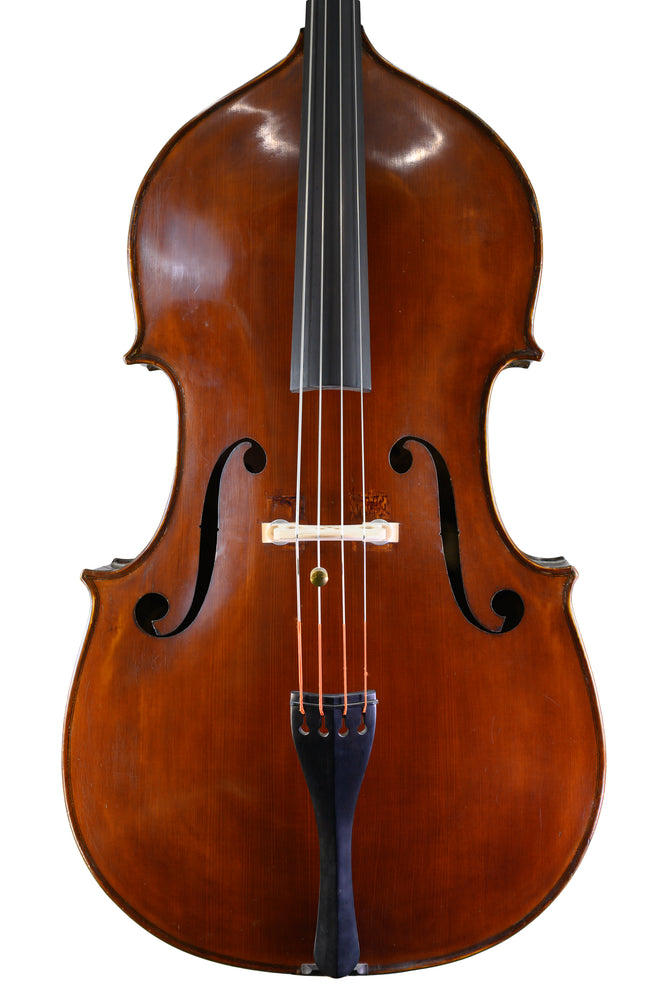
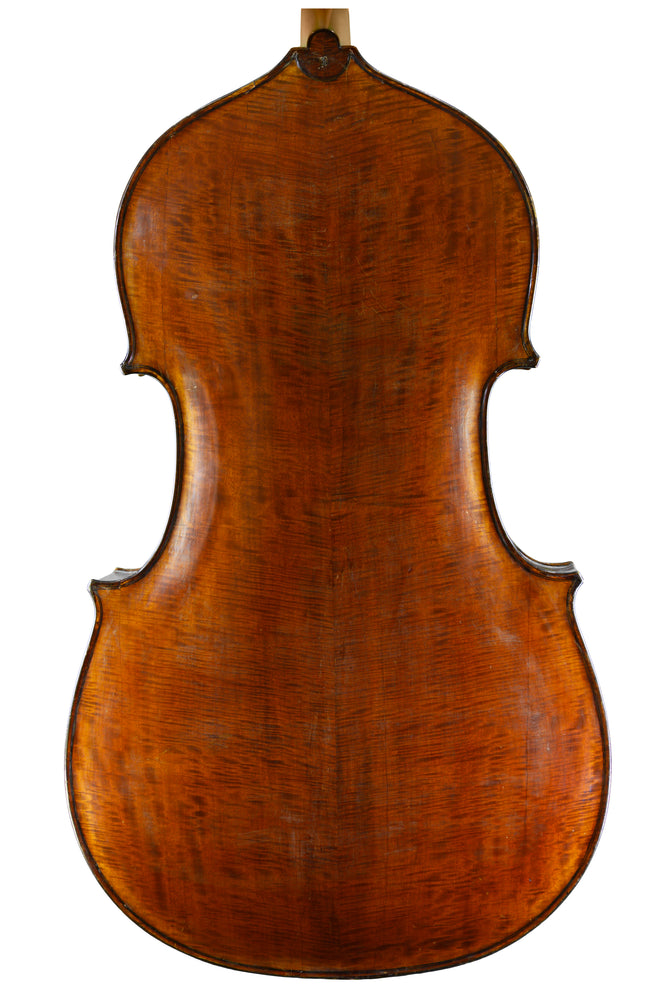
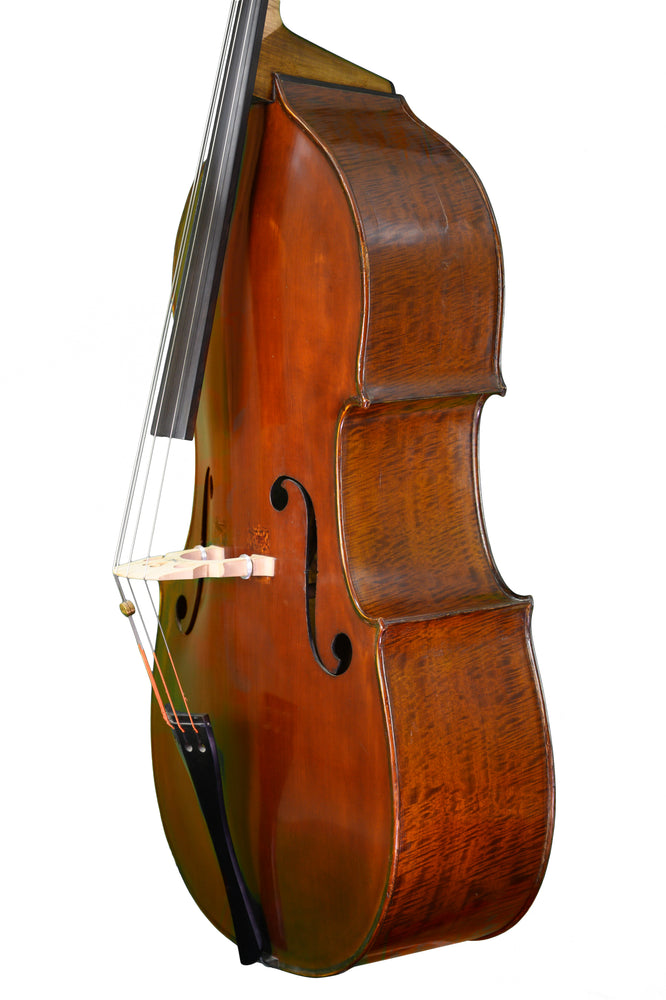
Yes it certainly does and that
is because the back and ribs have been made out of figured Anigre
(Aningeria spp.) - which is a hardwood that comes from West and
East Africa and Tanzania.
Anigre - sometimes called Anegre,
Aniegre or Agnegre as well as Tasmanian Walnut - is creamy in colour
with a light pink tinge and is predominantly used in high-end furniture
and cabinet making due to its stunning rippled or mottled appearance
and natural lustrous qualities.
Yes, Bandini seems to have taken
extra care and pride over this instrument. Internally it can be
seen that Bandini has been totally diligent in securing some natural
stress or "shake" lines in the relatively brittle Anigre
back of the instrument by means of circular inlaid studs finished
off to fit flush.
The work has been beautifully
done and without compromise. Bandini shows his obvious pride in
the instrument by branding the internal top and bottom blocks and
the four corner blocks with his logo which consists of a B in the
middle of a M - the legs of which each terminate in a note - effectively
looking like a rising triplet. The brand can also be seen just below
the back button and again below the endpin-unit.
Yes, the instrument bears Bandini's
yellow label which is pre-printed Mario Bandini fecit Ravenna anno
1980. The decade and year 80 - are written in hand as is Mario Bandini's
signature and at the label top the name that he has given to the
instrument 'ANNIBALE'.
We do know that Bandini instruments
are highly regarded in Italy where currently there are several in
use by top professionals players. Indeed this particular instrument
was sourced in Milan from a player who works at the Teatro La Scala.
During the 60's and 70s we know that several instruments were purchased
and prized by professional players here in the UK.
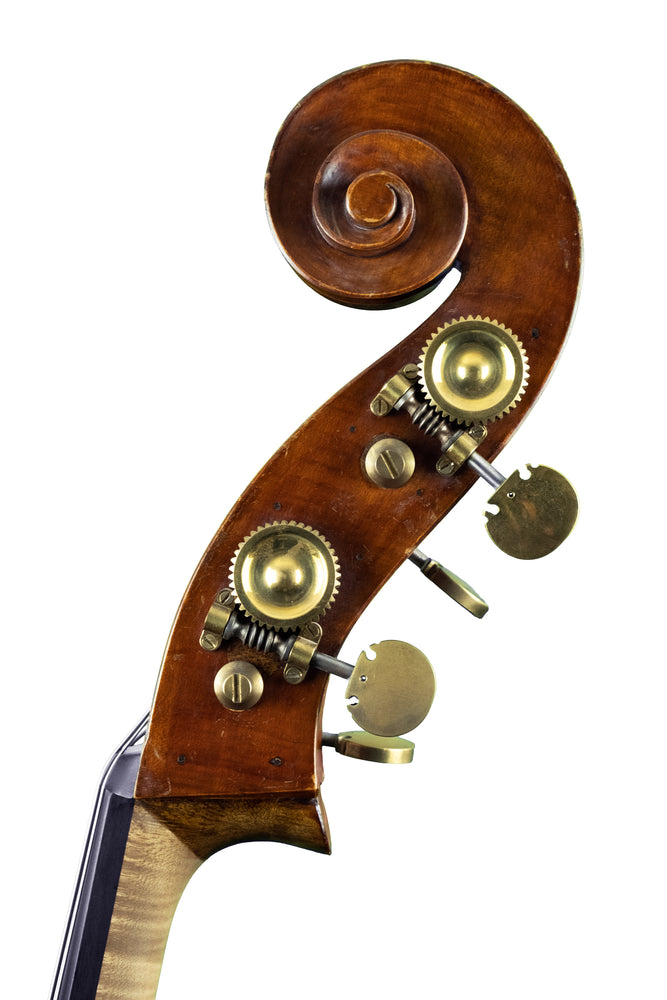
It was certainly time to give
the instrument a major service. The work included selective regraduation
of the table, fit new bass bar, stud centre joint, repair ribs as
necessary, neck graft with ebony strips and crown, fit new tuners,
fit new high ebony, fit new bridge with adjusters, fit new soundpost,
fit new endpin, clean and touch in varnish.
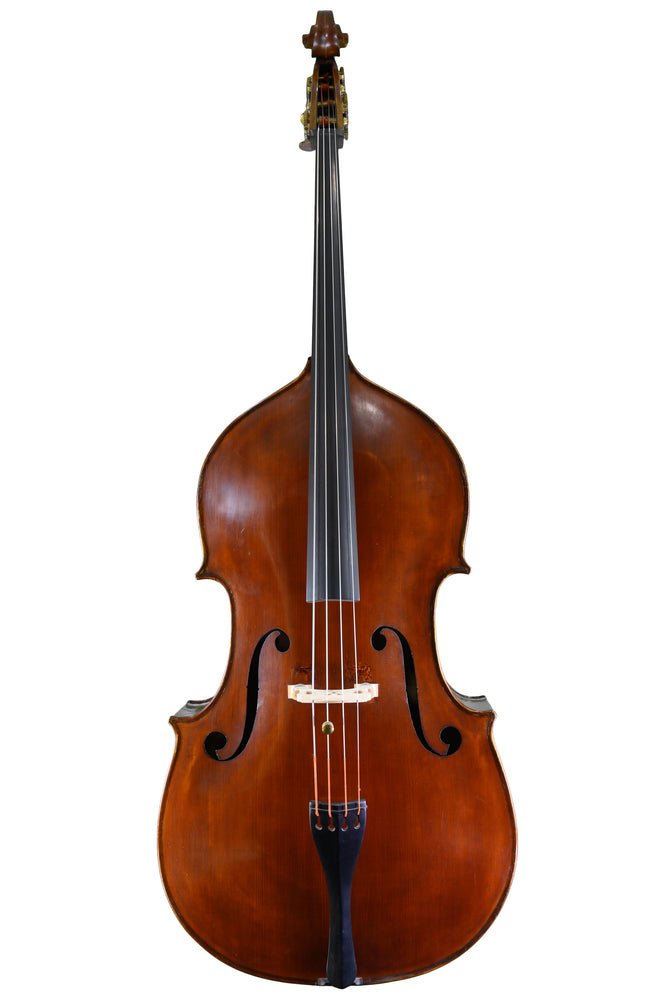
Like the Italian-stallion that
this instrument is - the sound is well rounded with good depth and
quality. A good evenness right across the four strings is also of
benefit.
We would like to think so. The
instrument has all the right qualities. It has a well-recognized
name, the instrument has the most glorious looks and sound and with
over a quarter of a century of quality opera performance and music
making to its credit - it is now coming of age. If your budget is
under 20K - then this instrument is well worth considering.
LOB (length of back) - 110.3cm
(43.45in)
Width across upper bouts - 50.2cm (19.75in)
Width across middle bouts - 38.0cm (15.00in)
Width across lower bouts - 64.7cm (25.50in)
Depth of lower ribs inc both plates- 23.8cm (9.35in)
Body Stop - 61.3cm (24.15in)
String length - 106.5cm (41.85in)
|