
|
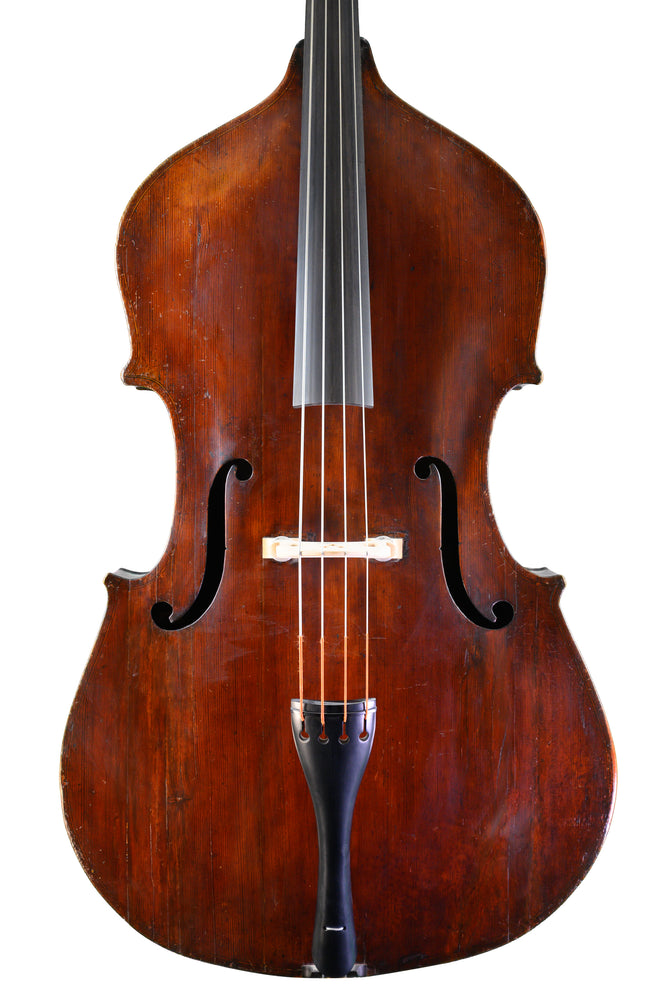
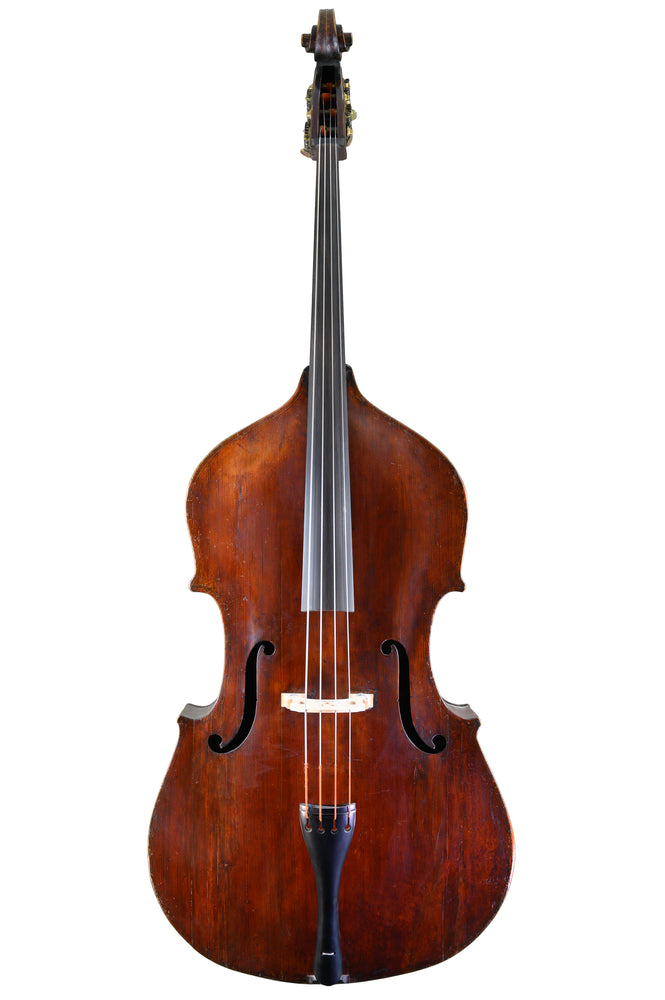
Yes - this classic English instrument with its glorious
Brecian features certainly does look near-identical to those magnificent
double purfilled - Maggini inspired instruments that B.S. Fendt
is well renowned for.
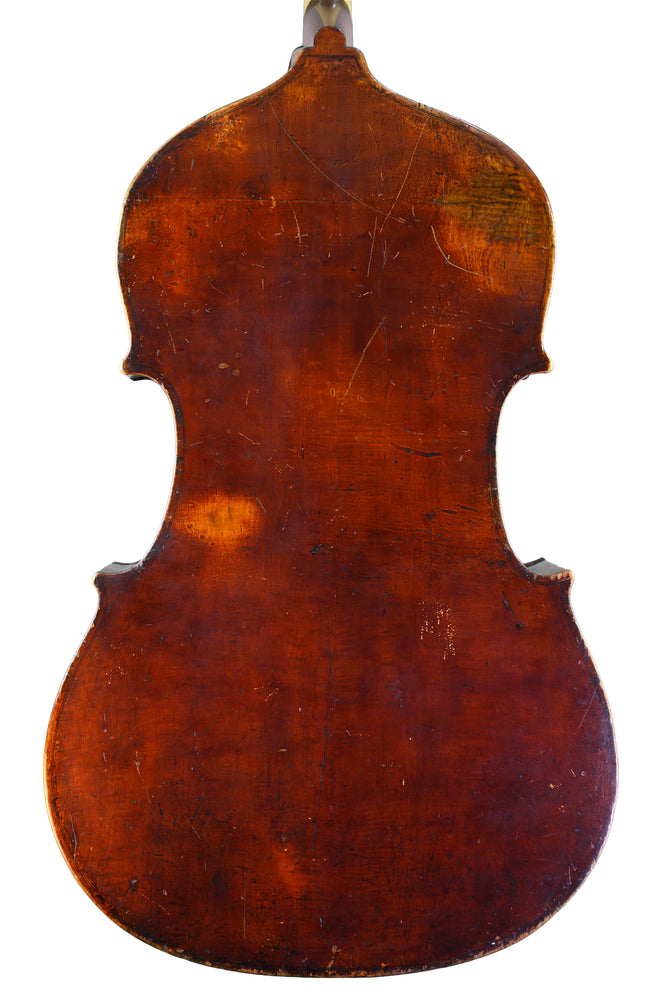
On the inside back - treble side - below the central
brace there is a very faint pencil inscription - J. Walker,
Maker 1884. Because the inscription is so faint a past restorer
has circled and copied it - again in pencil - for all
to read clearly. Without this positive identification it would
be quite easy to assume that this instrument is the work of Fendt.
Unfortunately there is not a huge amount
of info recorded about him apart from a one-line reference in the
Dictionary of British Violin and Bow Makers by Dennis G. Plowright
-1994 (ISBN No. 0 9523081 0 X) which provides a plausible explanation
for Walker's lack of recognition in the major violin dictionaries.
The entry reads, "Worked at 370 Kennington Road, London -
principally a restorer." The listing
is under J. Walker - the Christian name isn't given.
Yes it does. The instrument is clearly the work of a London maker
and the year in which the instrument was made rules out the possibility
of it being made by a different Walker.
Well as can be seen - the making is inspired by
Fendt's work. Although we do not know what Walker's dates are -
from the date of the instrument and the fact that B.S Fendt died
in 1852 it is feasible that the two could have met - Walker most likely being an apprentice
at the time. Carrying this line of thought on a little further - it
is of course entirely possible that Walker could have been apprenticed
to Fendt. What is the more likely however - is that as a good London
restorer - Walker would easily have had the opportunity to work
on fine instruments that had come in for repair or adjustment.
What better opportunity could anybody possibly have than to copy
a master instrument, as it was open on the workbench?
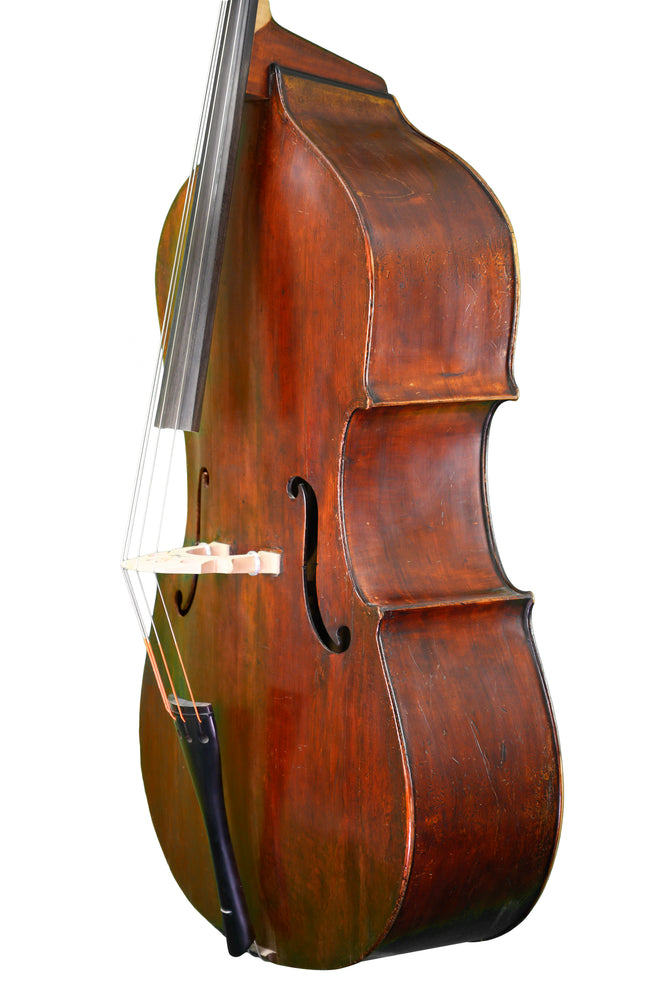
Well you need to look quite closely and have studied
Fendt's work to see that there are slight differences. They are
quite subtle. For instance the edging of the plates (the back and
front) is a little flat, the purfilling a little less flexible
and the carving of the scroll a little on the heavy side. That's
it - in
most other respects the instrument is a stunning Fendt look alike.
The table - made of pitch pine shows a strong even-medium grain.
The timber used for the back, ribs and scroll is English sycamore.
As with many of the Classic English instruments of the mid-twentieth
century it has just the right amount of figure to provide an air
of understated elegance.
Yes exactly - what about the varnish? Isn't it simply glorious?
Layers of deep dark blood-red over a yellow ground that have oxidised
and on the table - craquelled very, very slightly. The stuff is
so rich and warm in colour and texture it could almost be from
the very same bottle that Fendt used himself.
Yes - to get the instrument into this exemplary condition
a huge amount of correctional work was required. Most particularly
was the work required to the table area - which had been glued
and studded in the most poor and inconsistent manner imaginable
- presumably by a number of different restorers over many years.
We took the decision to completely remove everything - wash
out all the cracks - and just do the job as it should be done -
properly and without compromise. So that you can see what we mean
- a printout of the inside table pre- restoration work and post
restoration work accompanies the instrument, as does a photocopy
of the final repair bill. Phew - it was a biggy. In addition the
instrument has been fitted with a new bass bar and a stunning new
neck. Needless to say the instrument is now in absolutely A1 structural
condition.
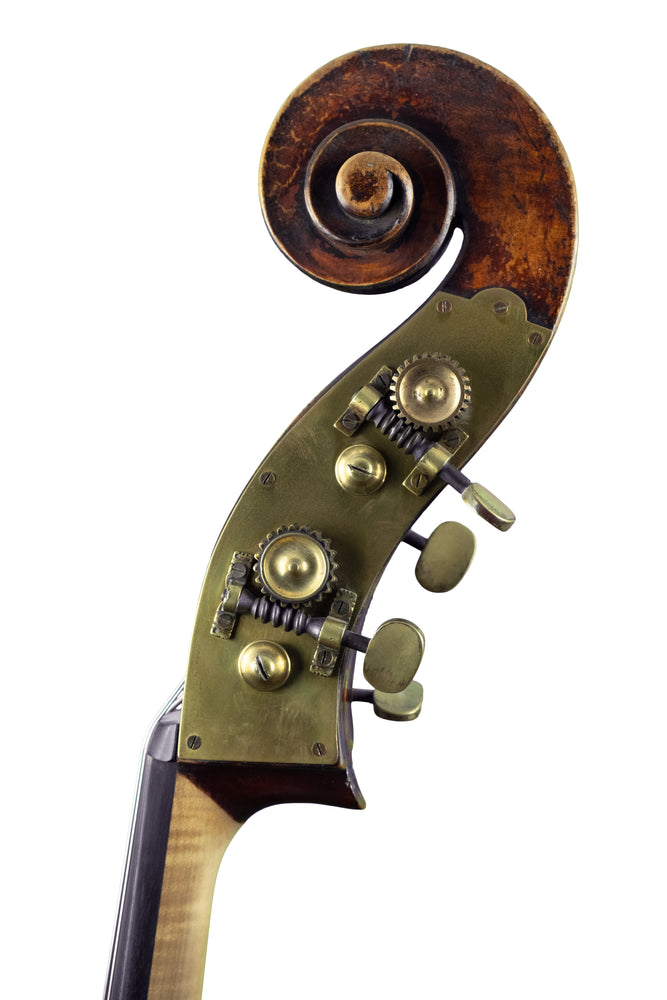
Yes - take a look at the tuning cogs and worms that adorn
the peg-box of the instrument - they are simply of the finest
quality imaginable and were presumably made by William Baker. Interestingly
the D-string cog and worm differs slightly from the other three
- which suggests that the instrument was originally made as a three
stringer. Rebushing work inside the peg-box confirms that it was
indeed originally made as a three-string instrument.
As is befitting a top quality English
instrument - the sound is unique, distinct and with great capacity.
Tonal qualities are complex, varied and multi-dimensional. In more
down to earth terms - it just sounds sooo... darned good.
Stunning looks, great sound and priced much lower than a BS Fendt.
What more can you ask for?
LOB (length of back) - 109.9cm (43.25in)
Width across upper bouts - 52.1cm (20.50in)
Width across middle bouts - 38.3cm (15.15in)
Width across lower bouts - 67.2cm (26.45in)
Depth of lower ribs inc both plates- 22.2cm (8.70in)
Body Stop - 61.9cm (24.35in)
String length - 105.3cm (41.40in)
|