|
If you are wanting to create a
very special sort of image for yourself with a combination of
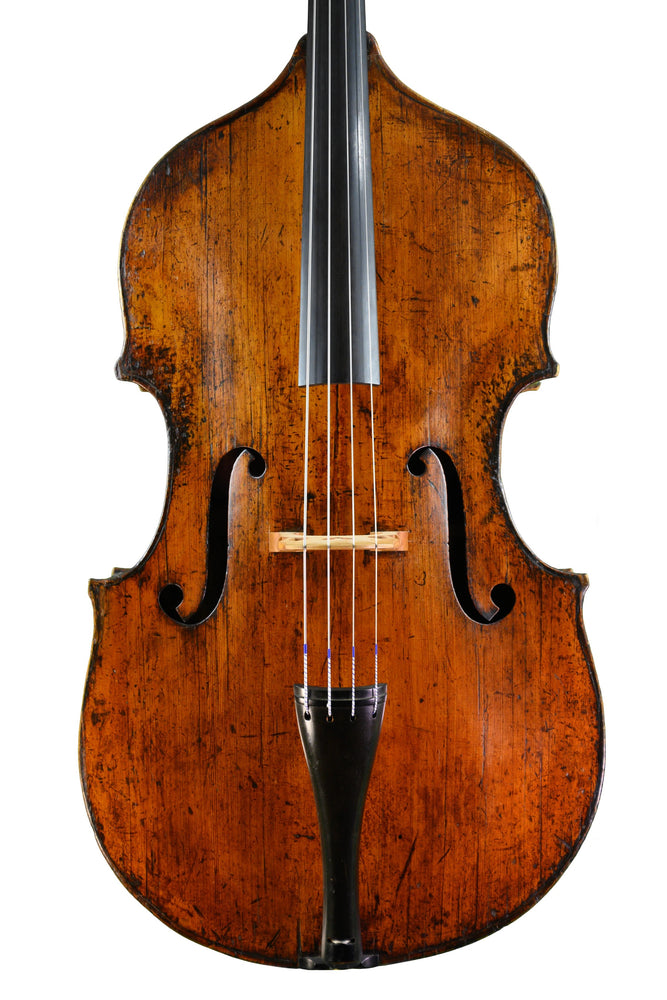
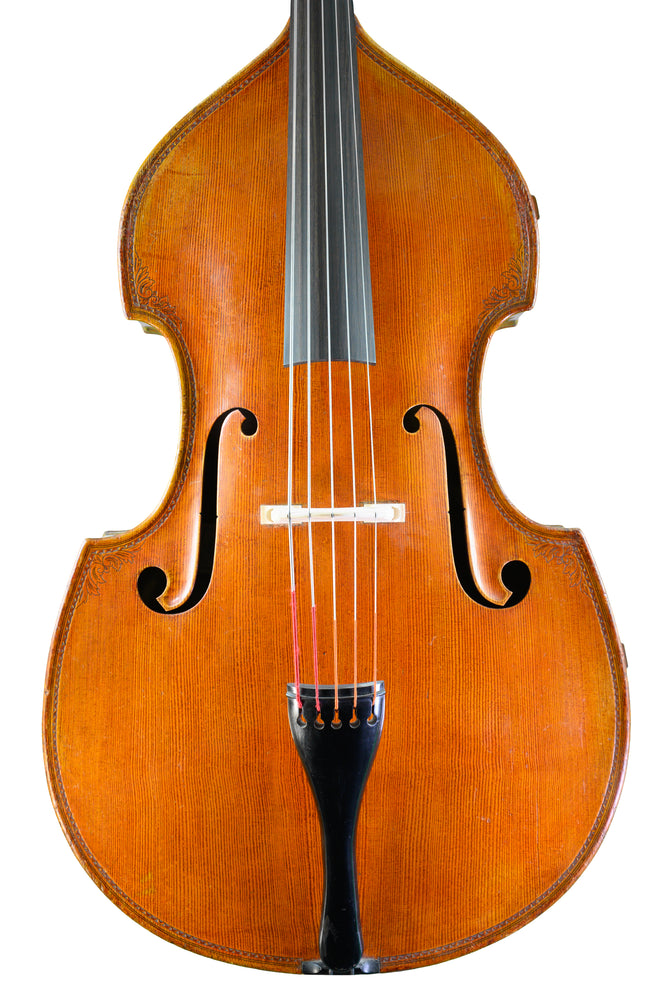
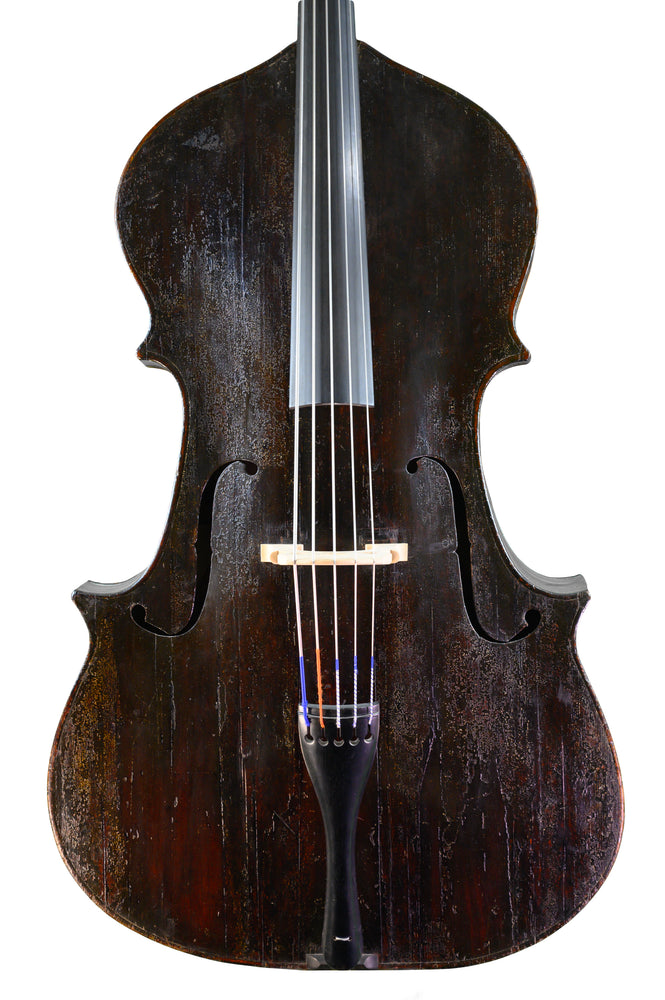
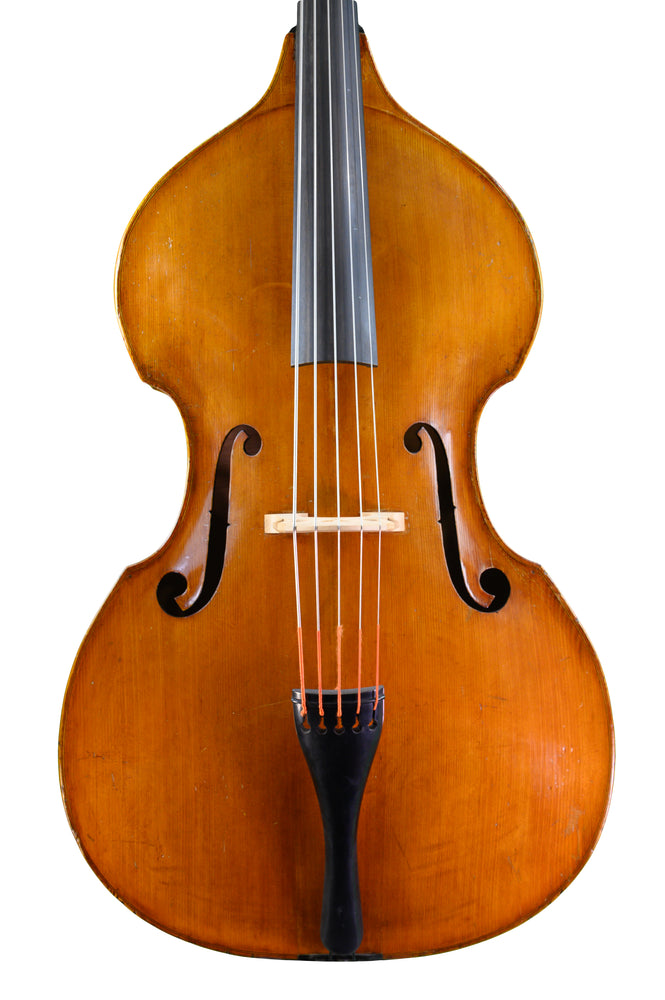
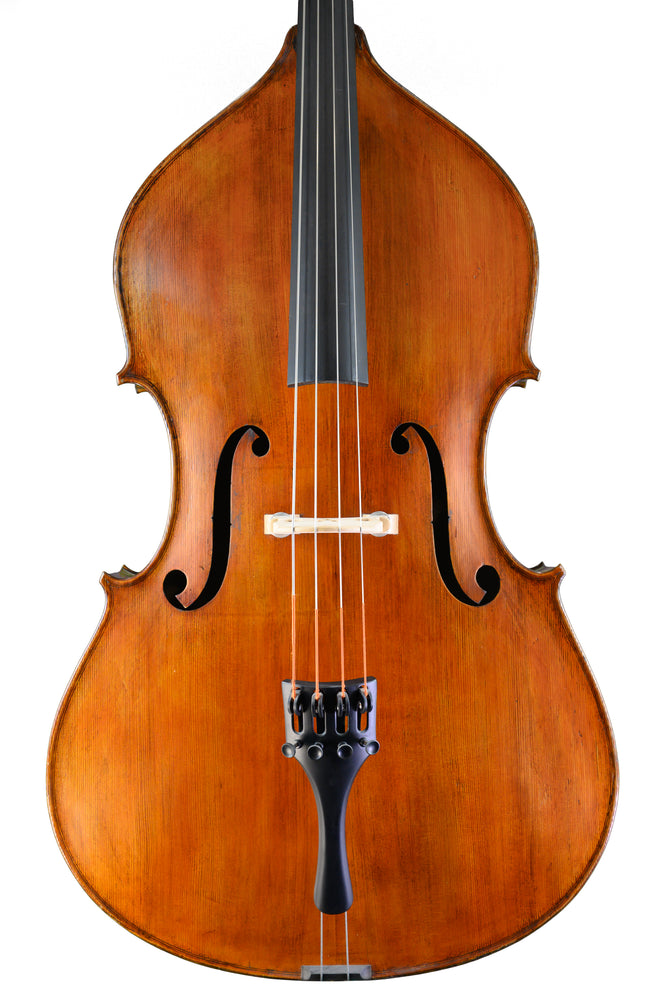
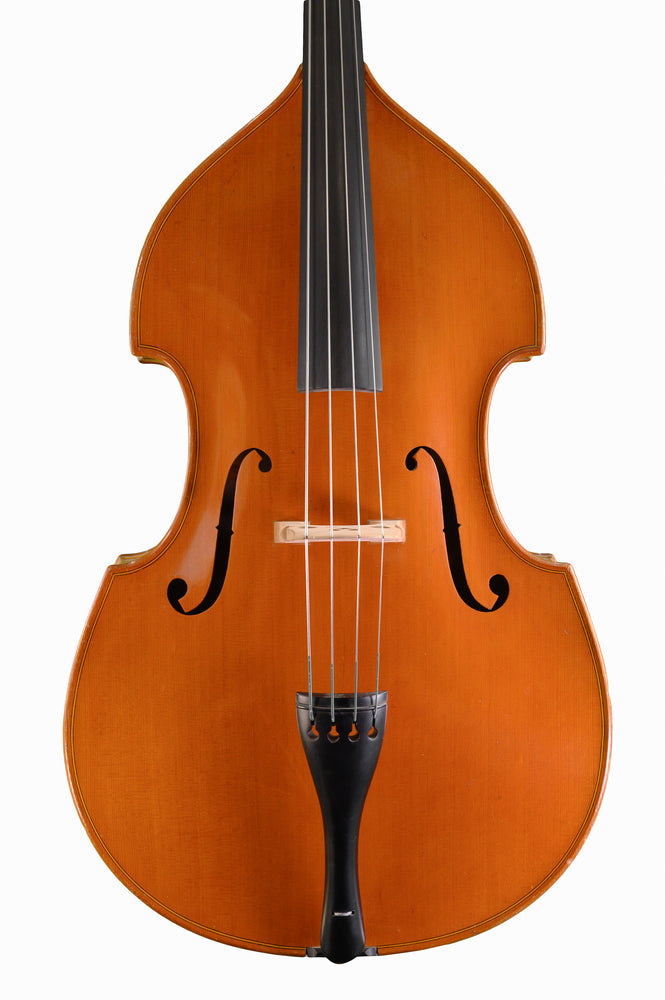
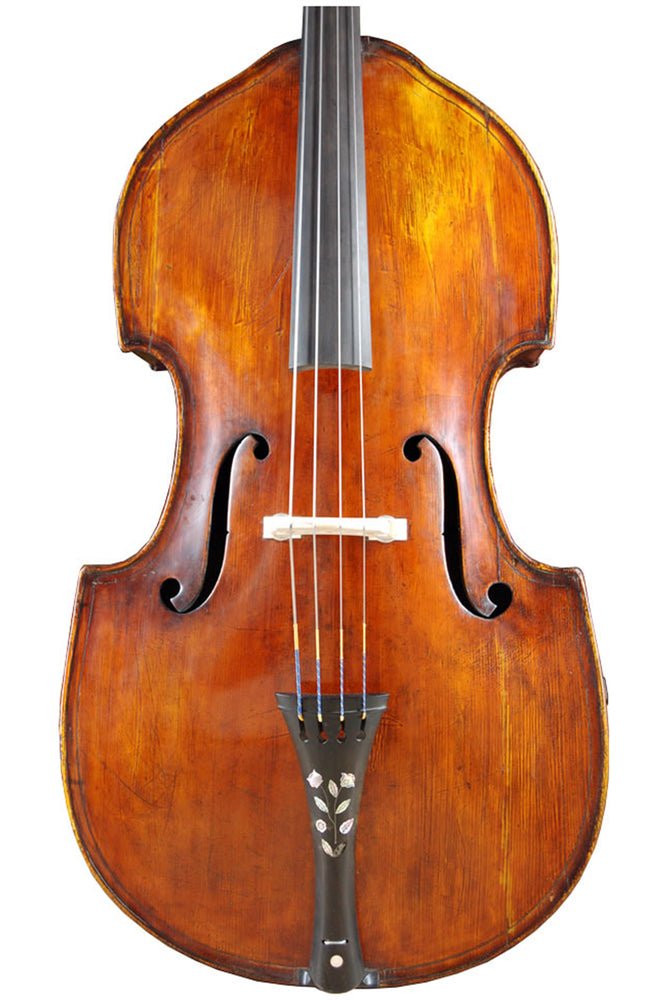
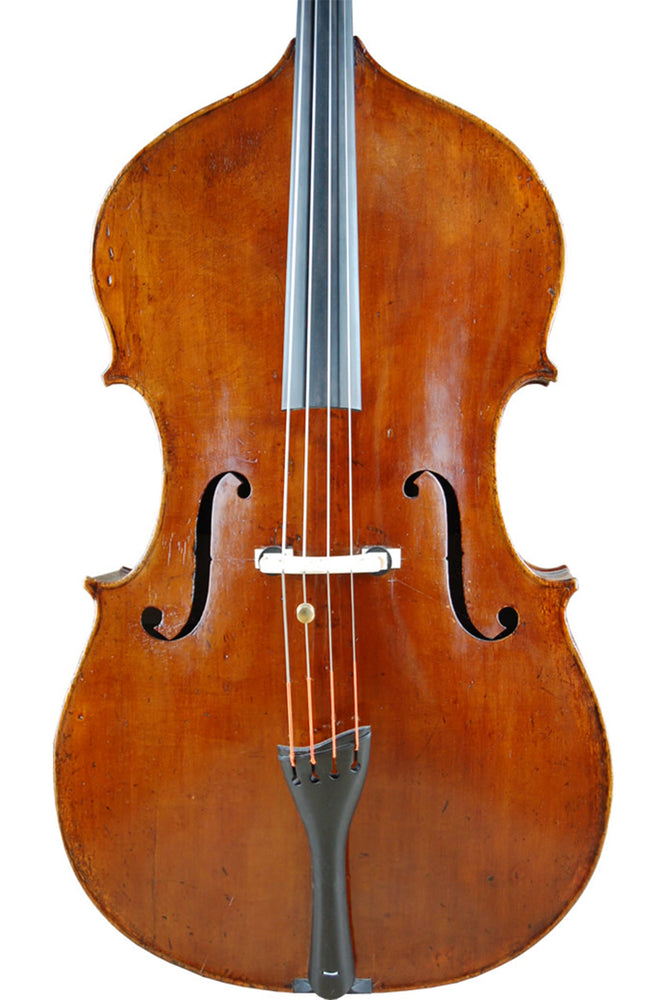
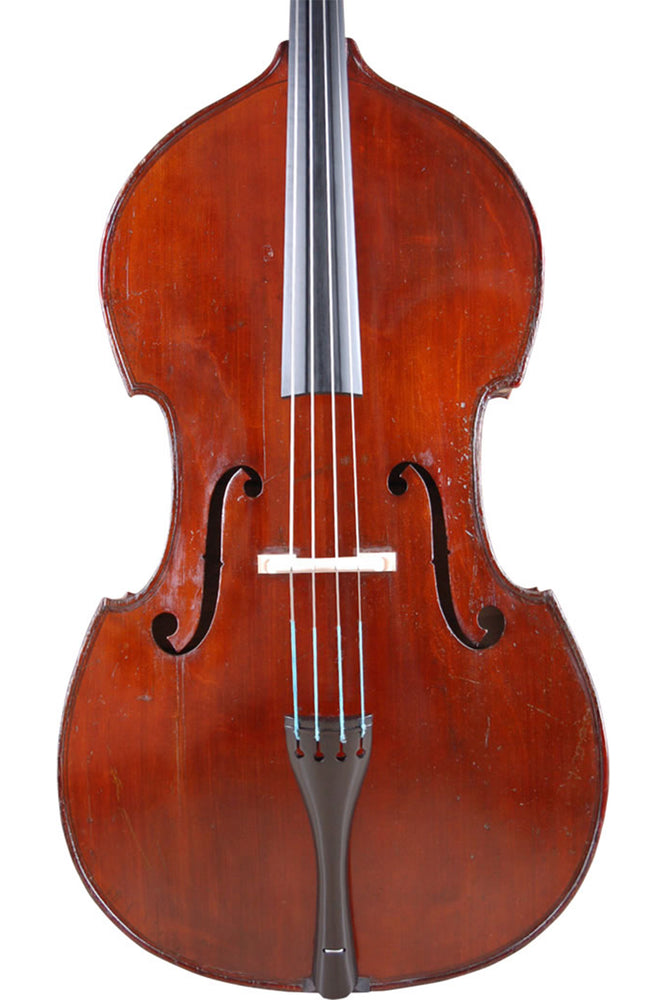
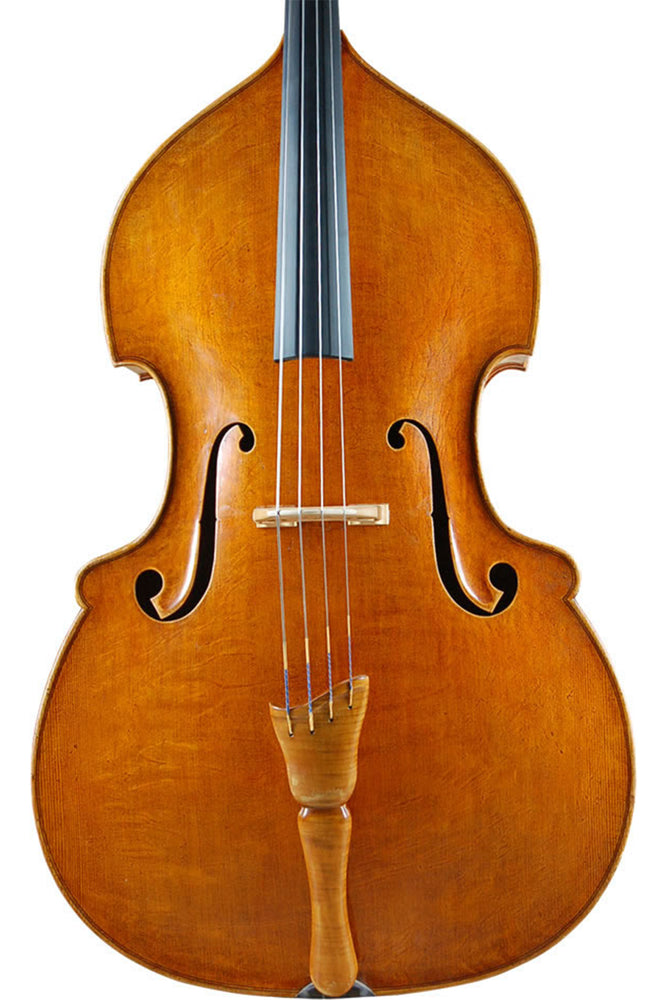
distinctive instrument and magical sound then you shouldn't hesitate too long before you come and try out this stunning looking "baby solo-jazz" bass. The compact body size, the sub 100cm string length and awesome pizzicato presence make this the ideal companion for any in-house or touring jazzer.
Yes, the instrument is modelled
on a BS Fendt instrument. In the tradition of that great London
maker the following can be observed;
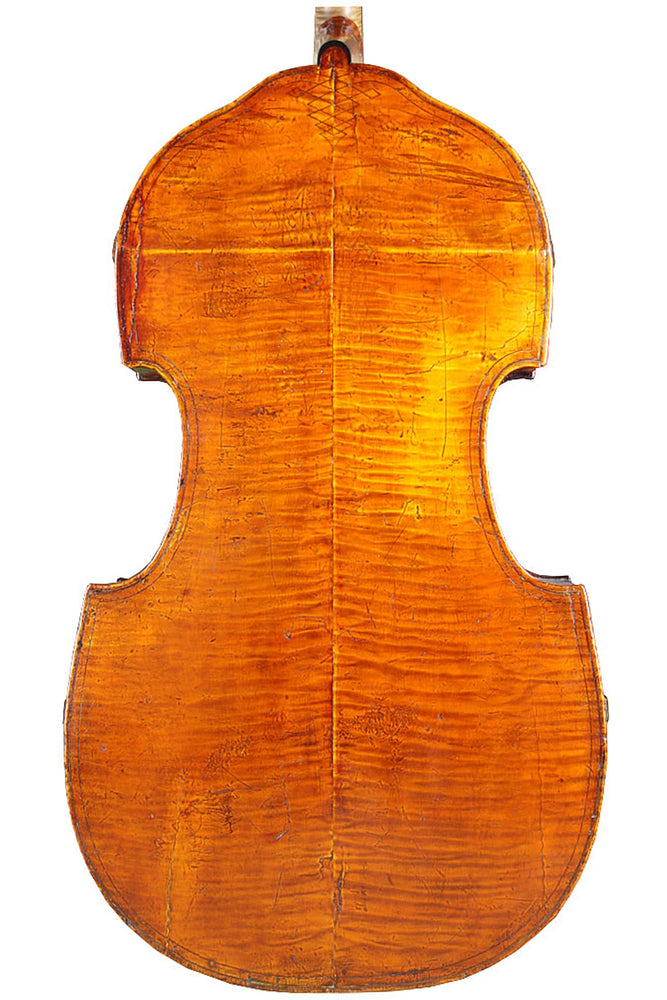
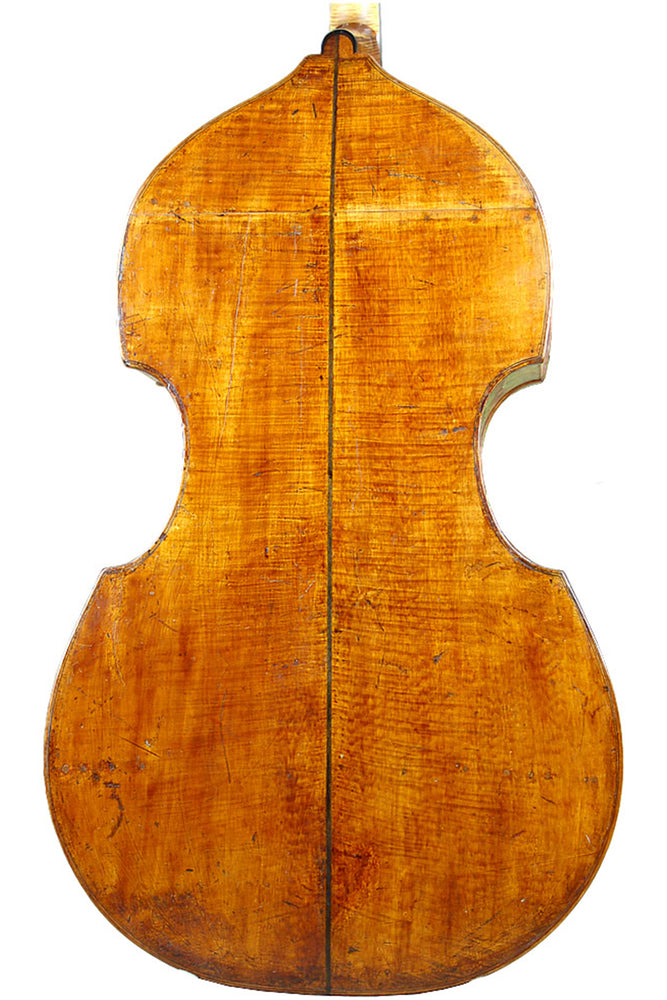
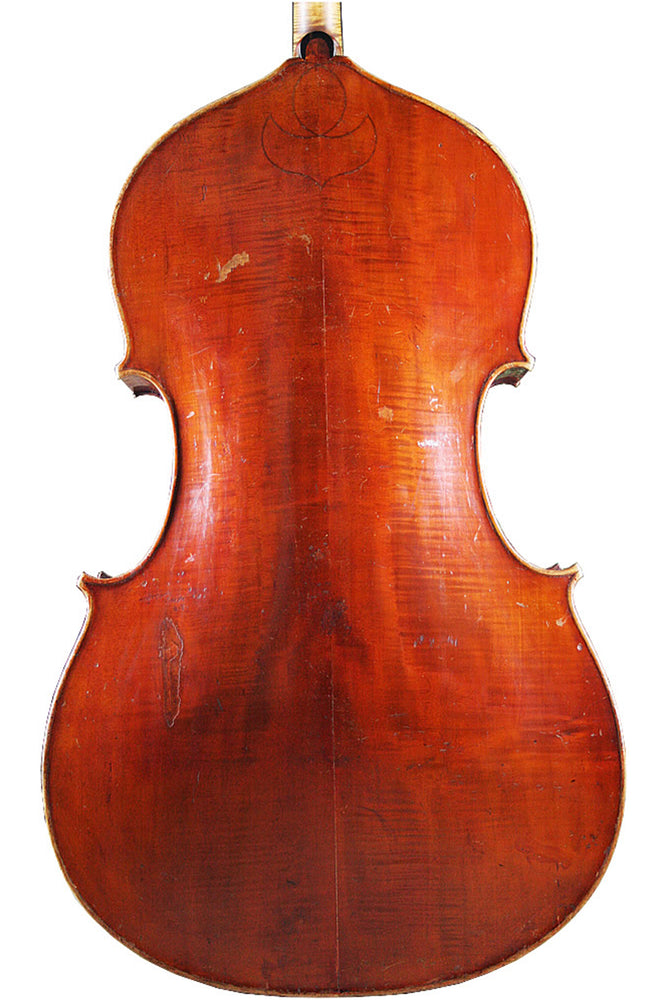
i) The instrument is of
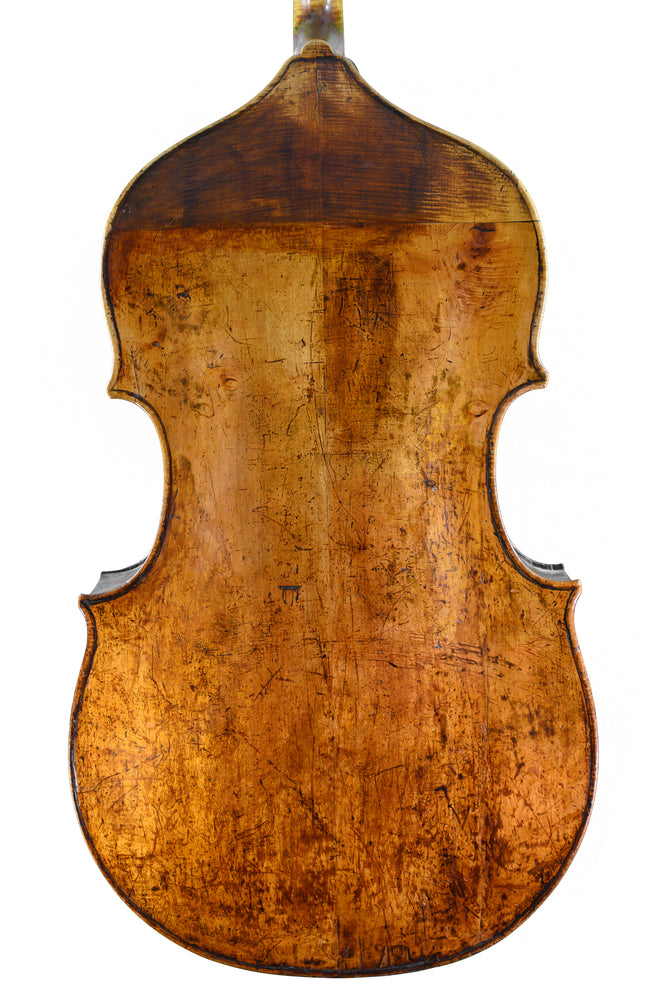
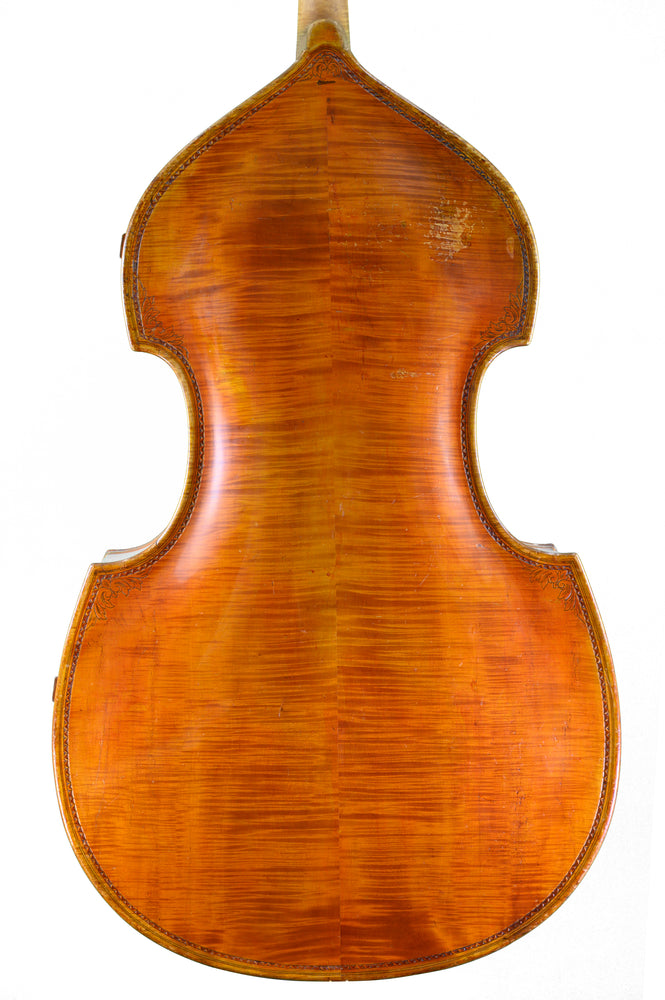
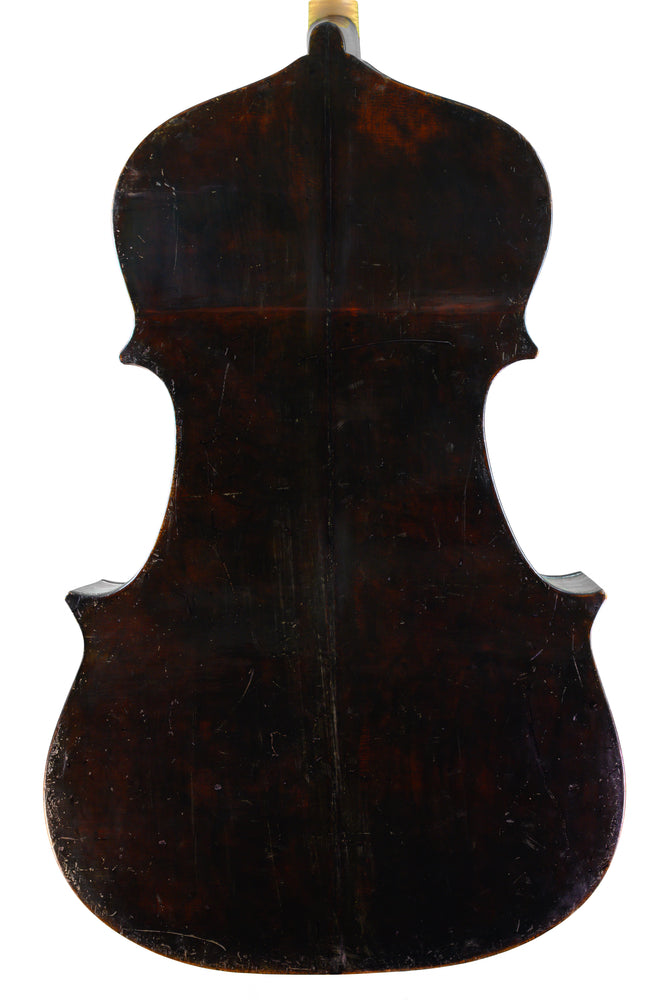
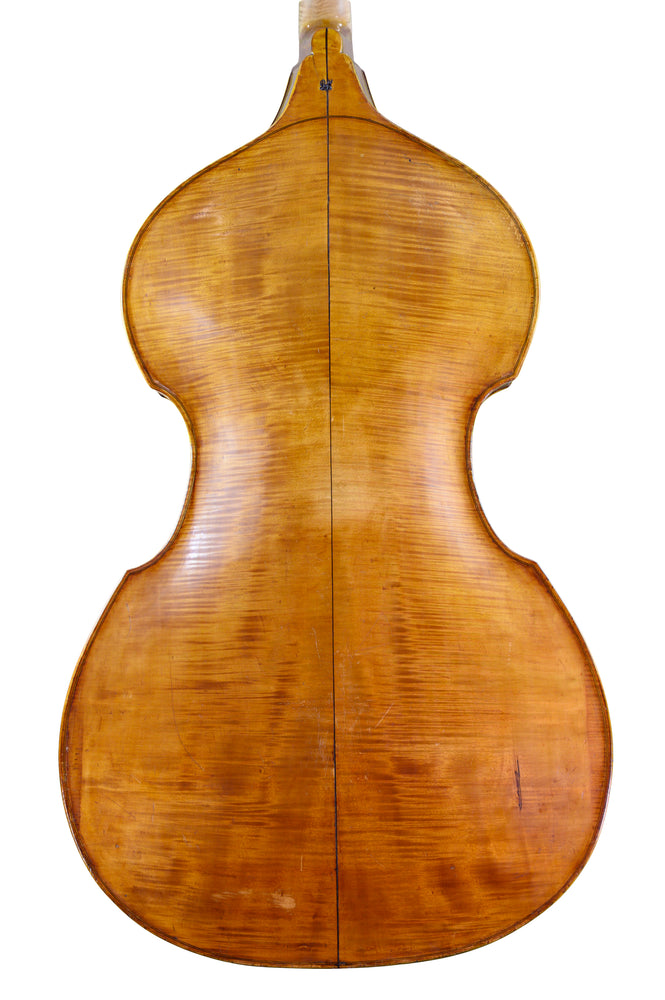
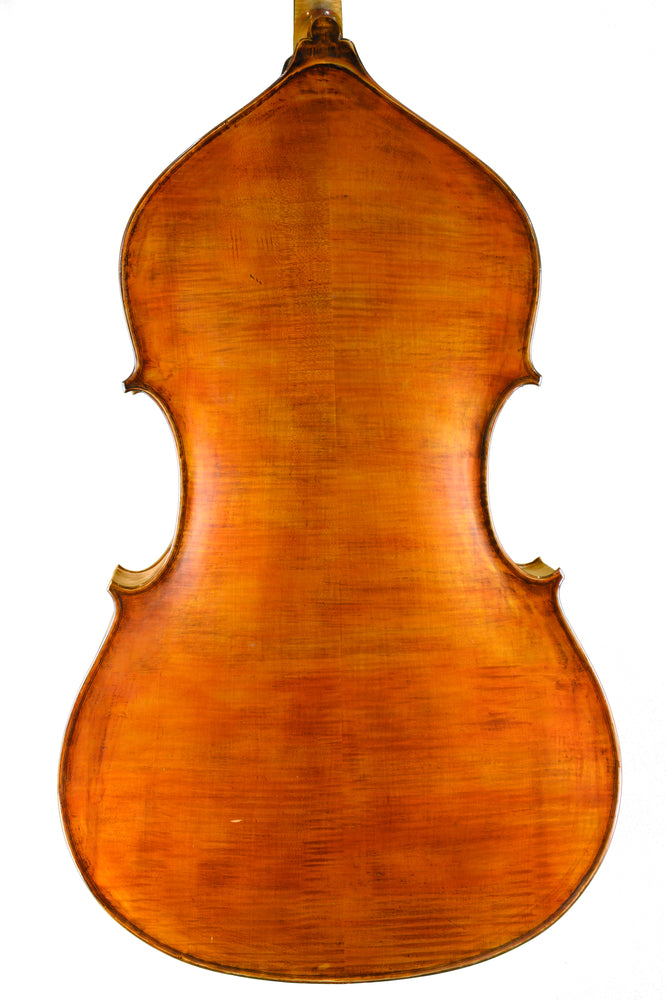
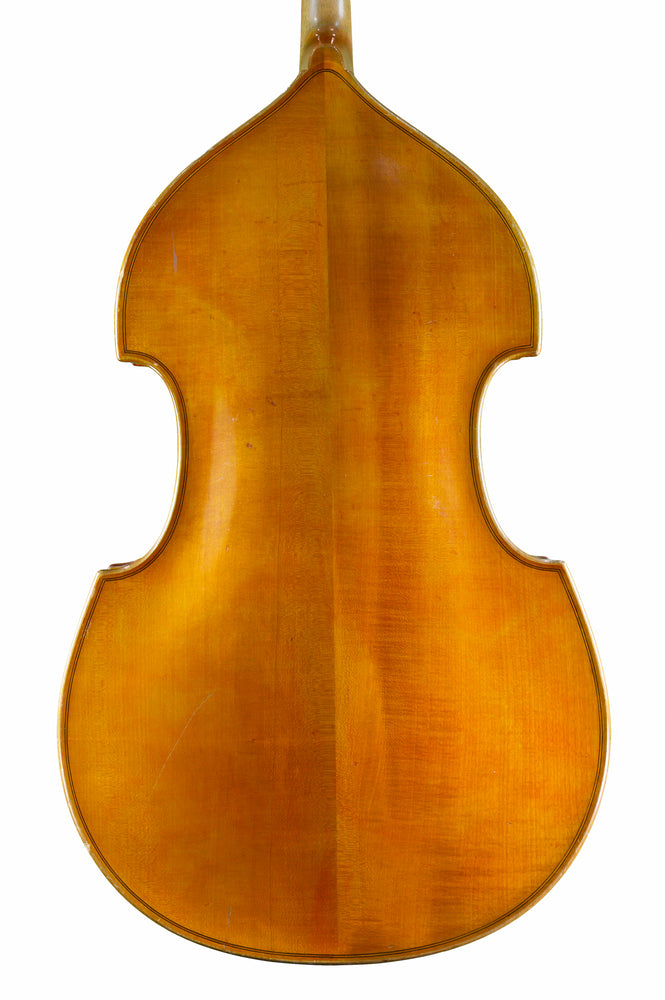
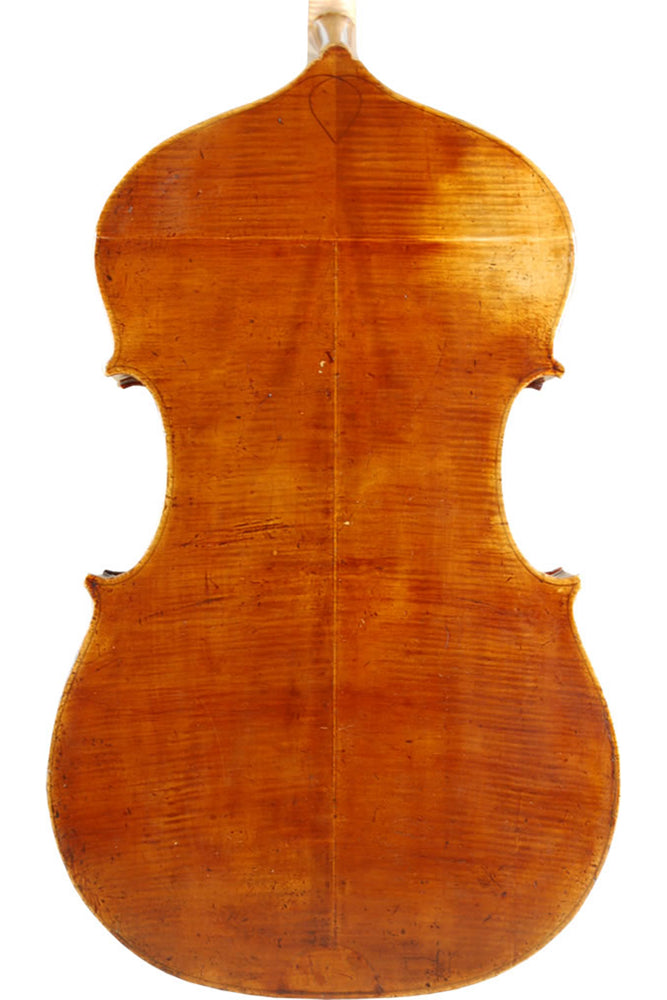
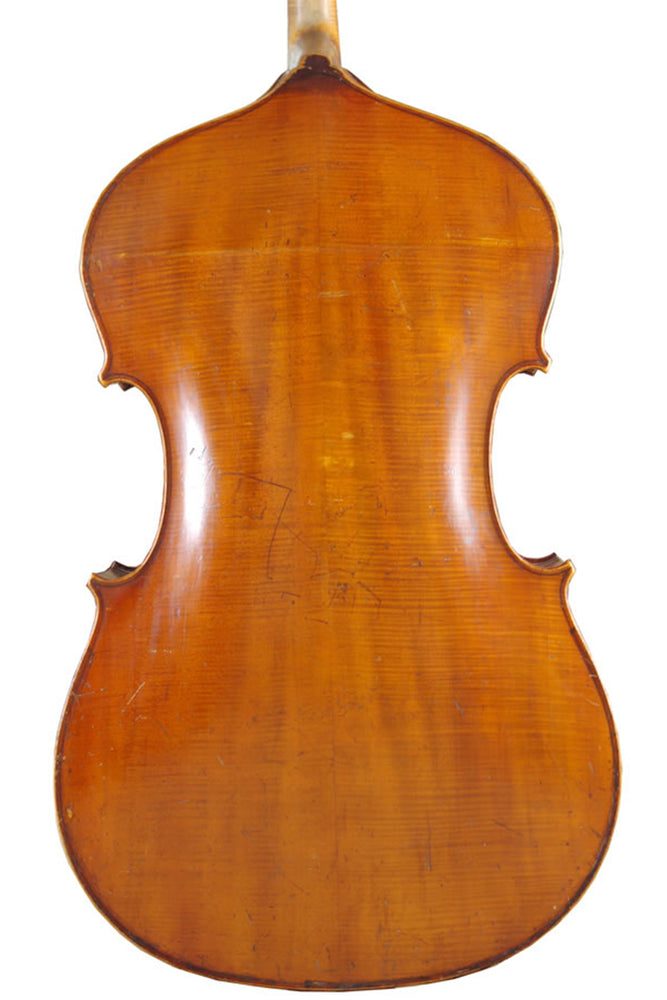
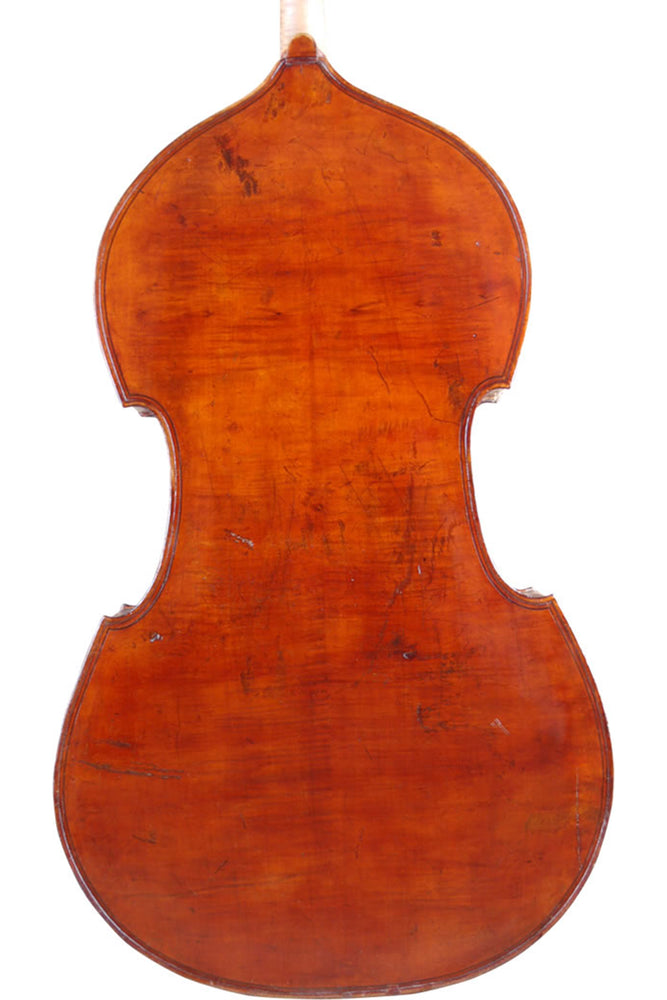
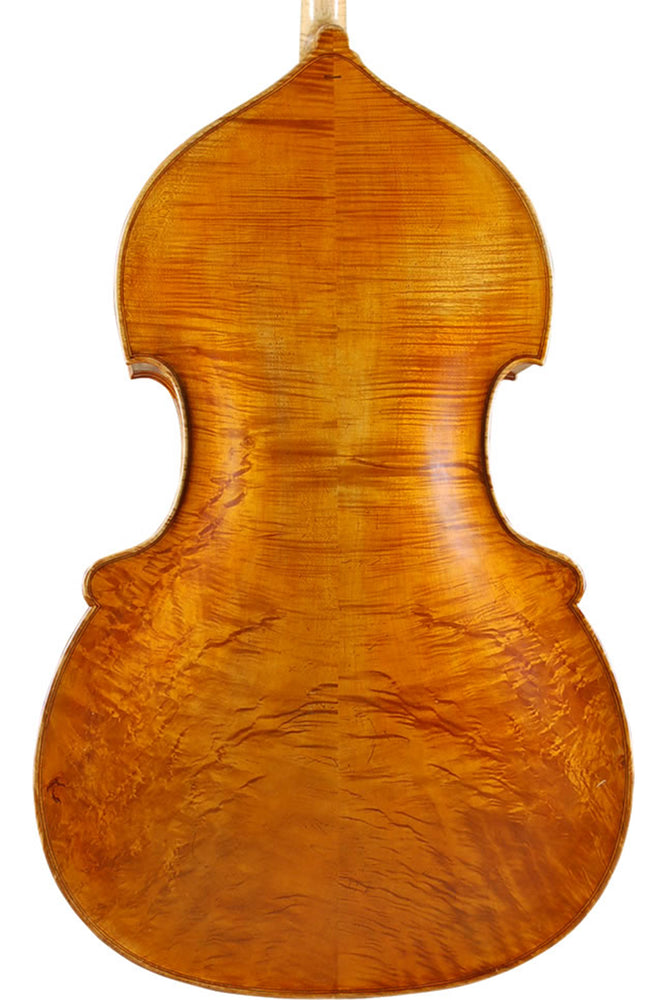
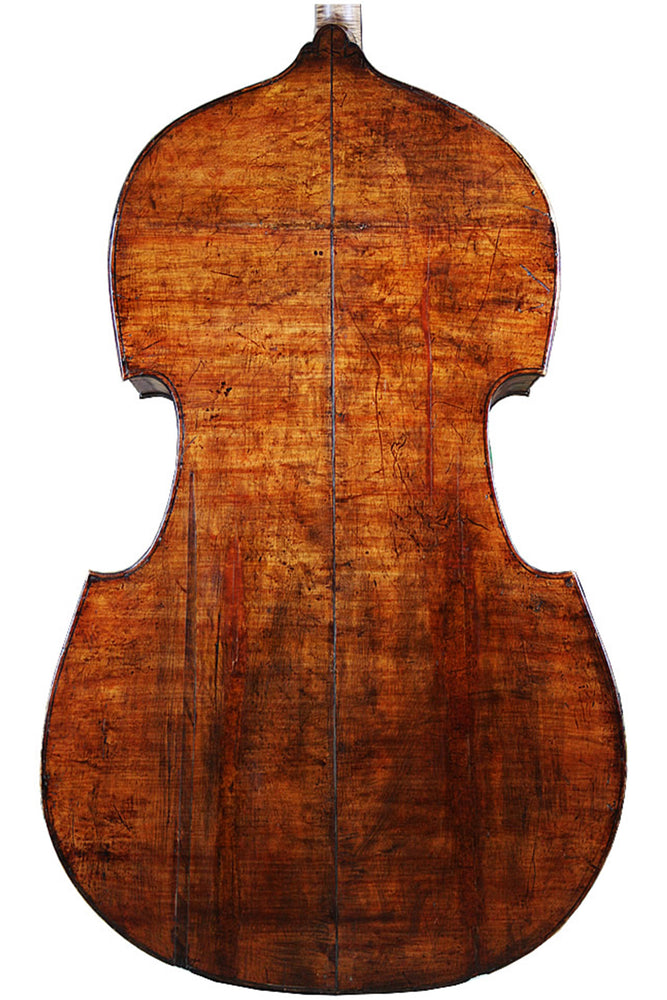
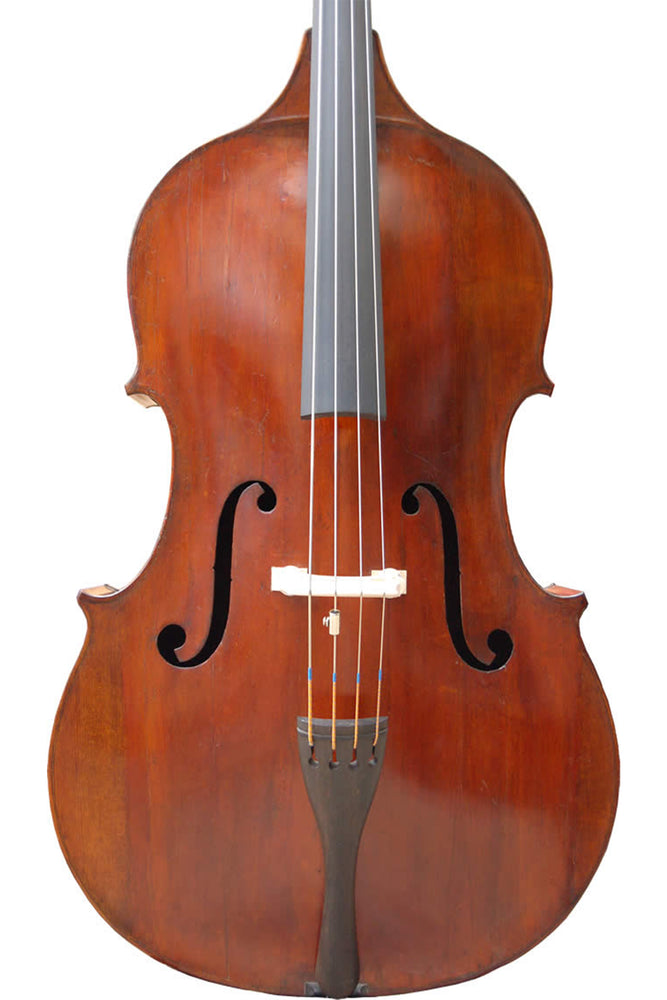
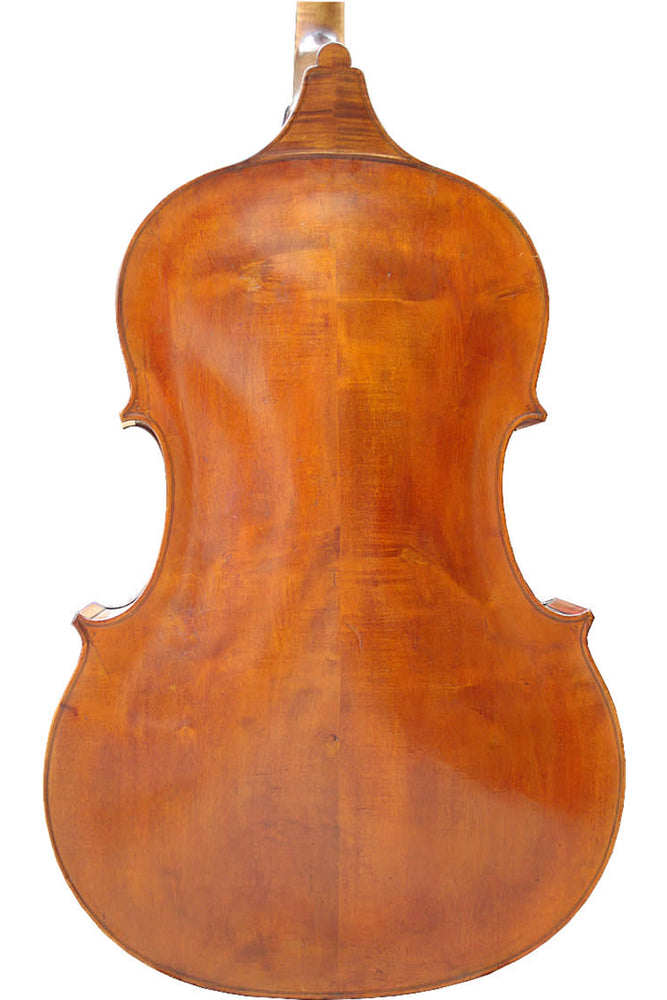
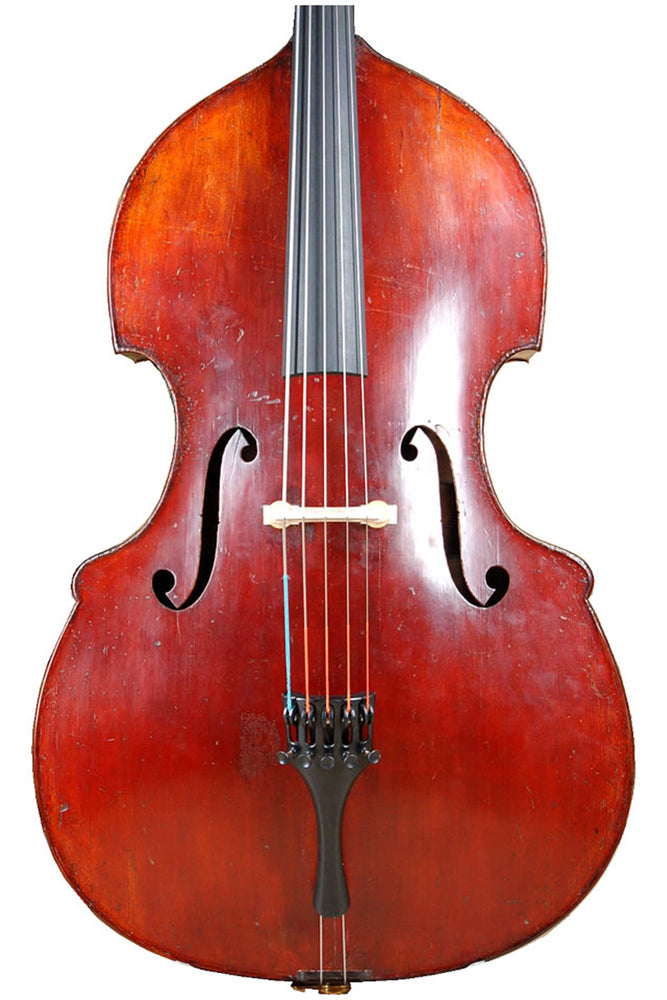
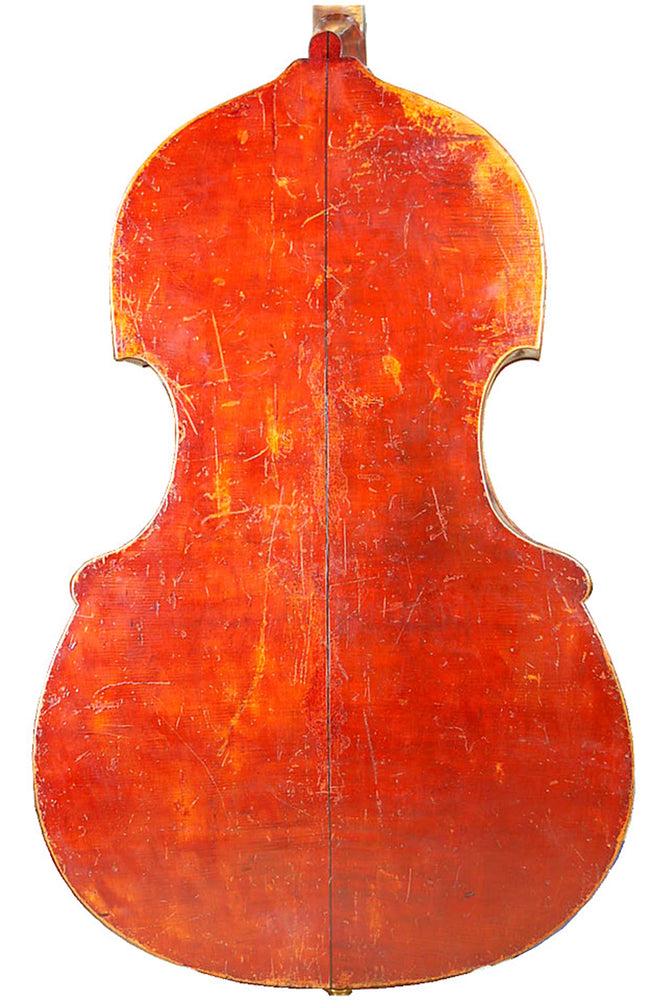
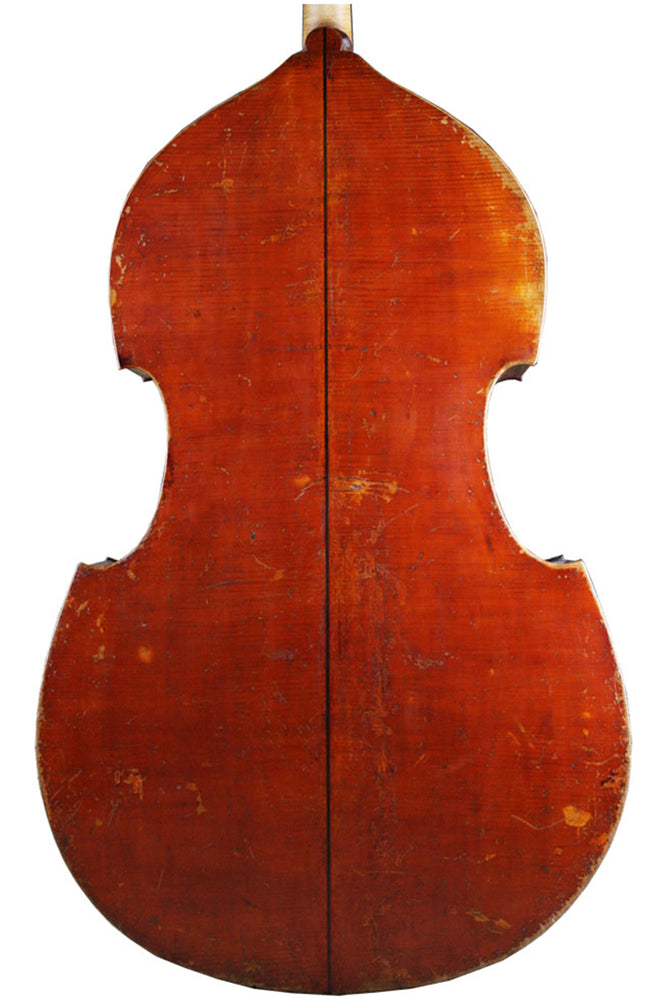
violin outline with a flat back and upper angle break.
ii) The
internal baring consists of a central brace with narrow upper
and a lower braces.
iii) The wood is nicely flamed
and well matched.
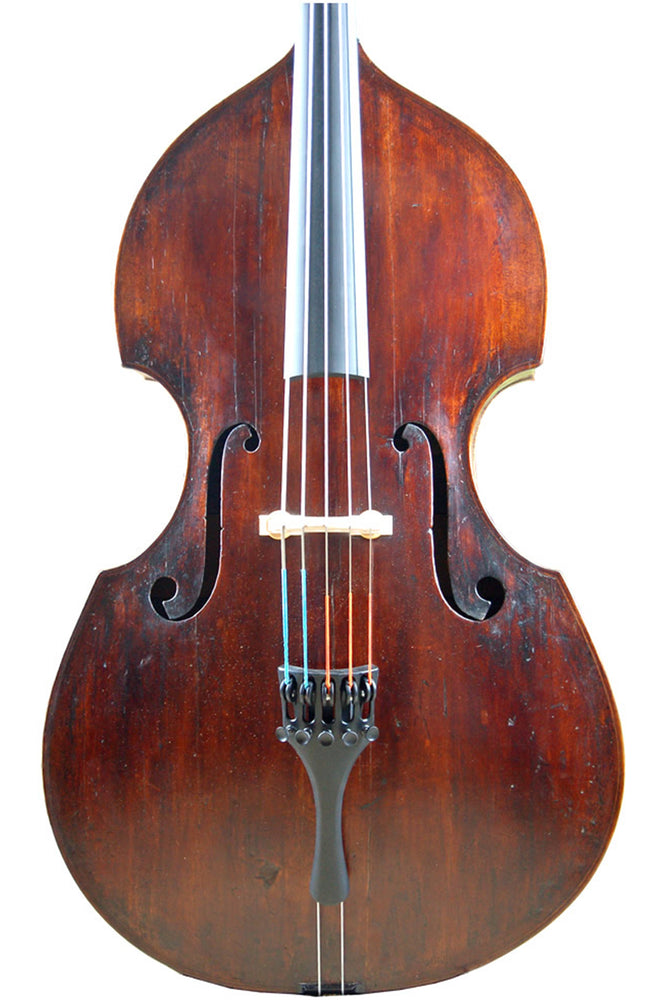
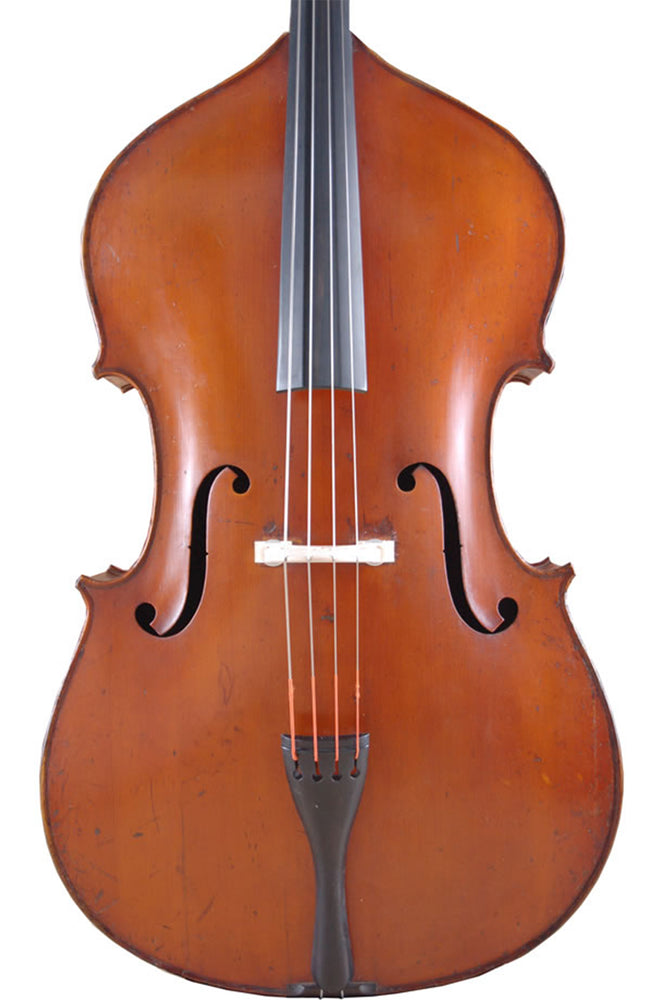
iv) There is nice arching to the
table, there is generous depth to the ribs.
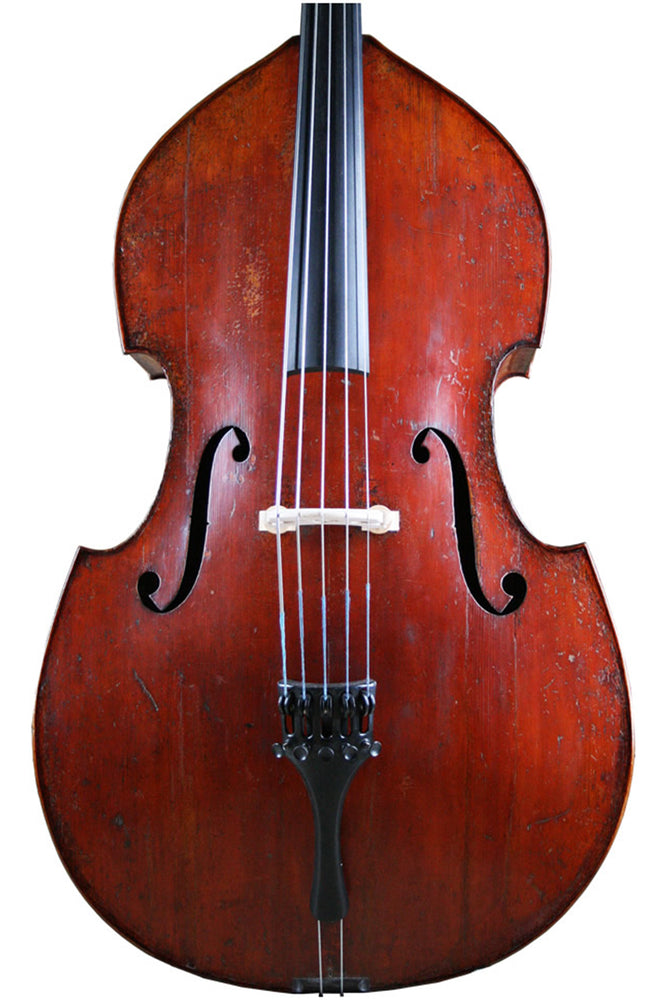
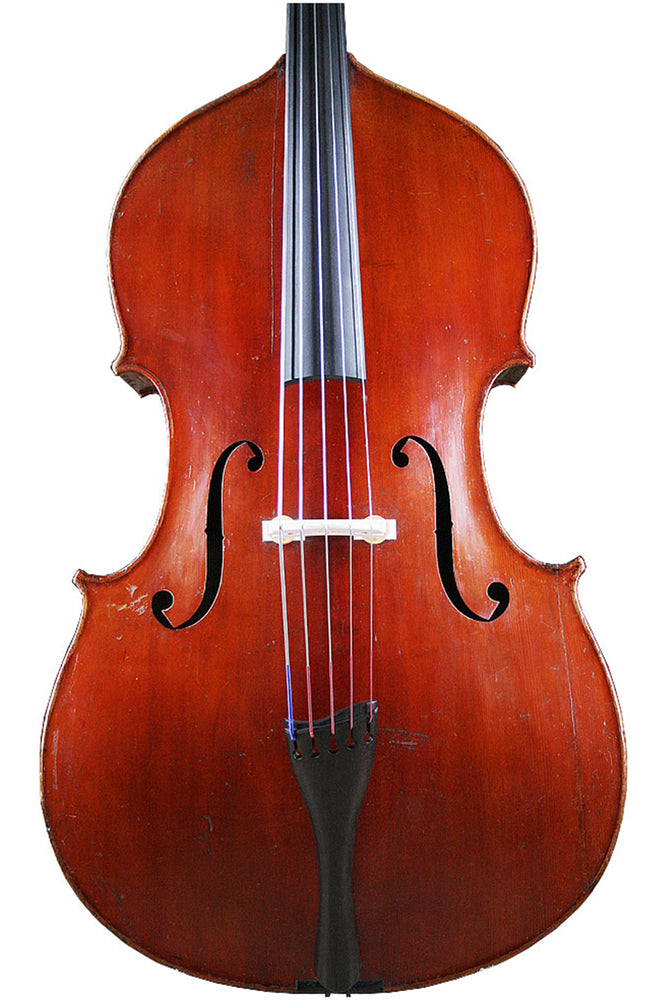
v) The instrument is nicely decorated
in the Brecian manner with a double purfilling to both the front
and back.
vi)
There is a nicely proportioned scroll that has been well carved.
vii) The peg box is fitted with
quality Baker-style machines and plates.
viii) The instrument is covered
in a warm orange-red spirit varnish.
Yes, Ron Prentice was born in
1932 in Taunton, Somerset. He is now retired. Ron studied making
with Karl Roy at the Mittenwald School of Violin making. He first
started making viols - but then began to make more modern instruments when his work found favour with players in the London orchestras. After having a shop in London for a few years where he made and restored instruments he moved back down to Taunton so as to concentrate on his making without too much disturbance.
During the 70s-80s Ron became
recognised as a specialist bass maker and regularly had a two-year
waiting list for his orders. Ron is credited with a total output
of 50 double basses. Most were produced using the inside mould
and using excellent Sitka Spruce from Germany and English Sycamore
which originated from a huge tree that he found in Perth, Scotland.
When felled and trimmed the log measured 5.5m x 1.22m.
Ron was featured in the book about
professional violin makers in Britain entitled "The Violin Makers - Portrait of a Living Craft" by Mary Anne Alburger, published 1979 by Victor Gollancz Ltd, London. ISBN 0 575 02442 9
Yes - the maker's original label is located on the bass side central brace and states ėMade by Ronald Prentice, Ash Priors, March 1983'. In addition there is a pencil inscription located just below the central brace on the bass-side back that states, ėMade by Ronald Prentice, Ash Priors, Taunton, Somerset, Feb 1983 for Jane Mc Dermott, 24 London Street, Edinburgh'.
All that was required was the
fitting of a slightly lighter bass bar, some judicious regraduation
of the inside table and a completely new fit-up using a top quality
fingerboard and a custom made adjustable-bridge. Lets just say
that we've "tweaked" the instrument to get the best possible sound out of it.
This is a good quality instrument
made by a maker whose name is well recognised and respected in
the annals of more recent English bass making history. In terms
of sound it really is quite difficult to comprehend how it is
possible that such a volume and quality of sound can be emitted
from such a small instrument. In terms of manageability we think
that you'll find this instrument simply inspiring.
Ultimately - if you really do have a desire to build a unique and
distinctive image for your solo-jazz career - then this "neat" little instrument could just be the right one for you. For an additional fee I could become your PR-agent too.
LOB (length of back) - 101.6cm (40.00in)
Width across upper bouts - 47.8cm (18.75in)
Width across middle bouts - 34.10cm (13.45in)
Width across lower bouts - 60.03cm (23.65in)
Depth of lower ribs inc both plates- 21.2cm (8.65in)
Body Stop - 56.0cm (22.00in)
String length - 97.7cm (38.48in)
|