|
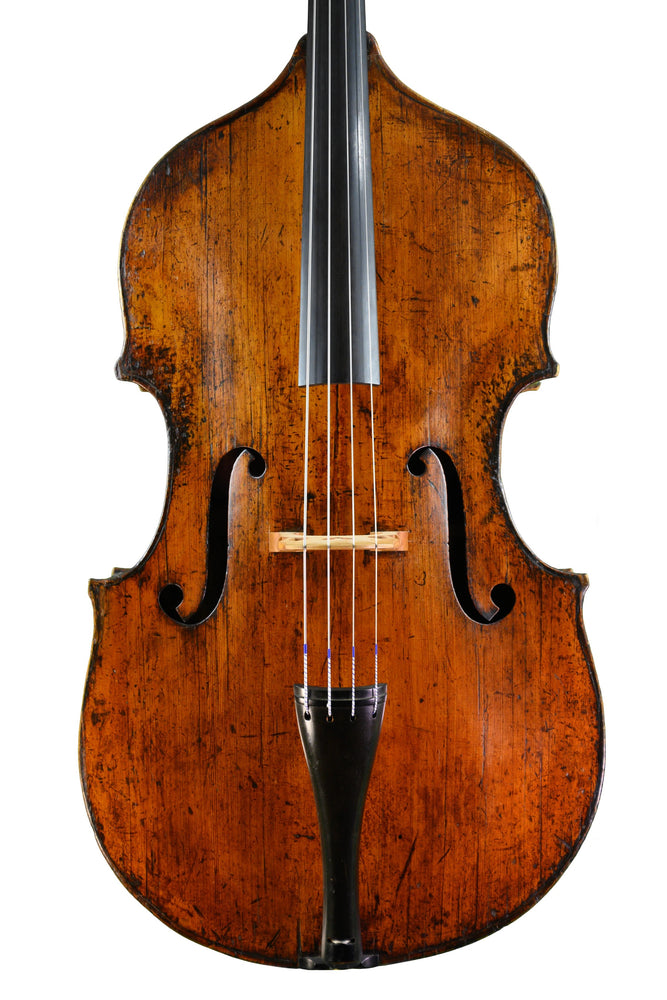
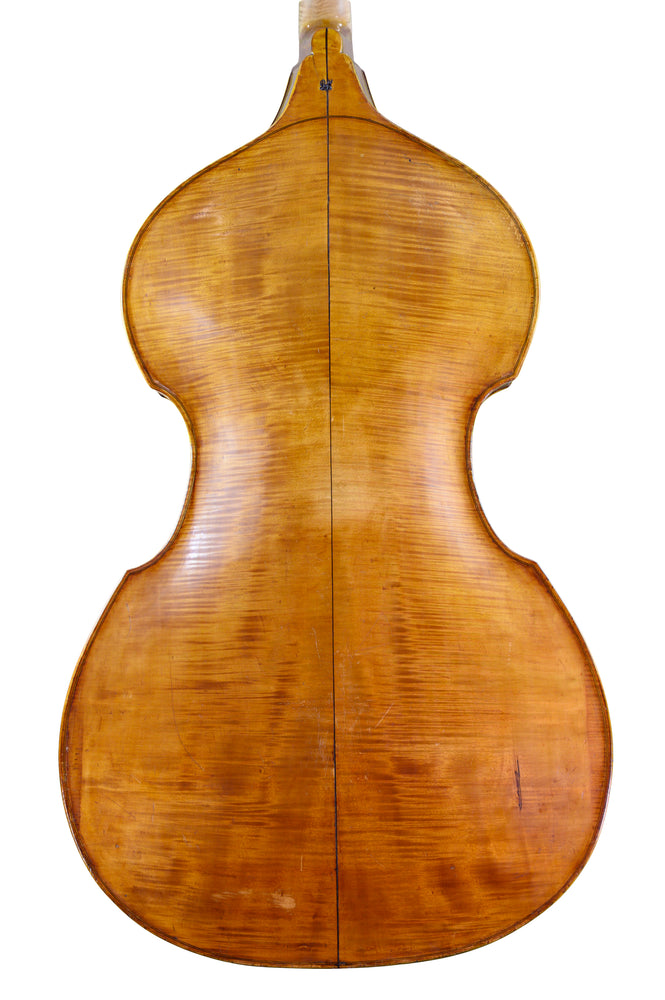
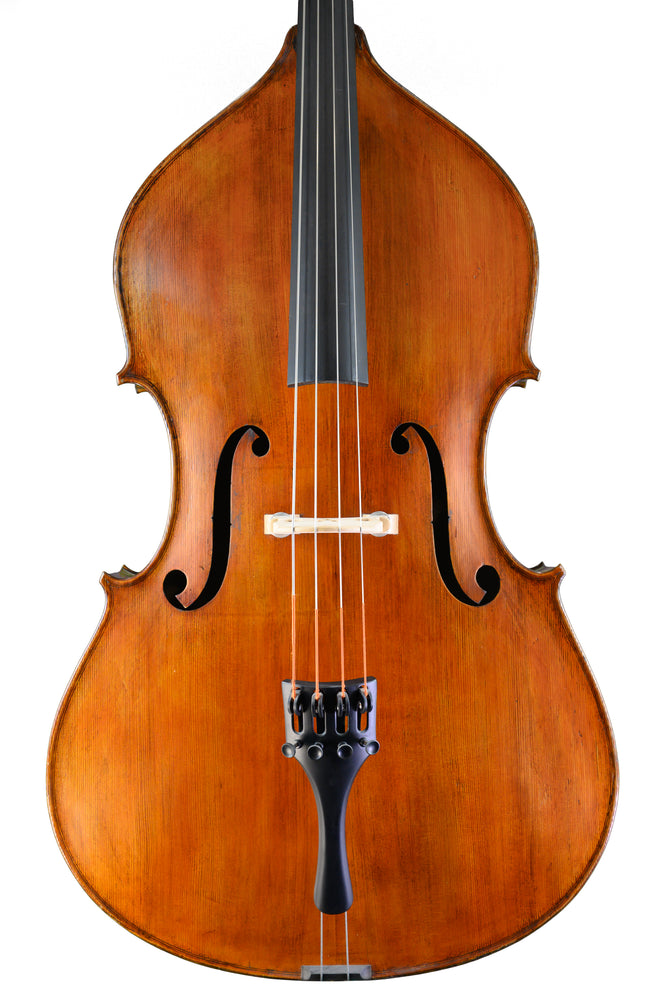
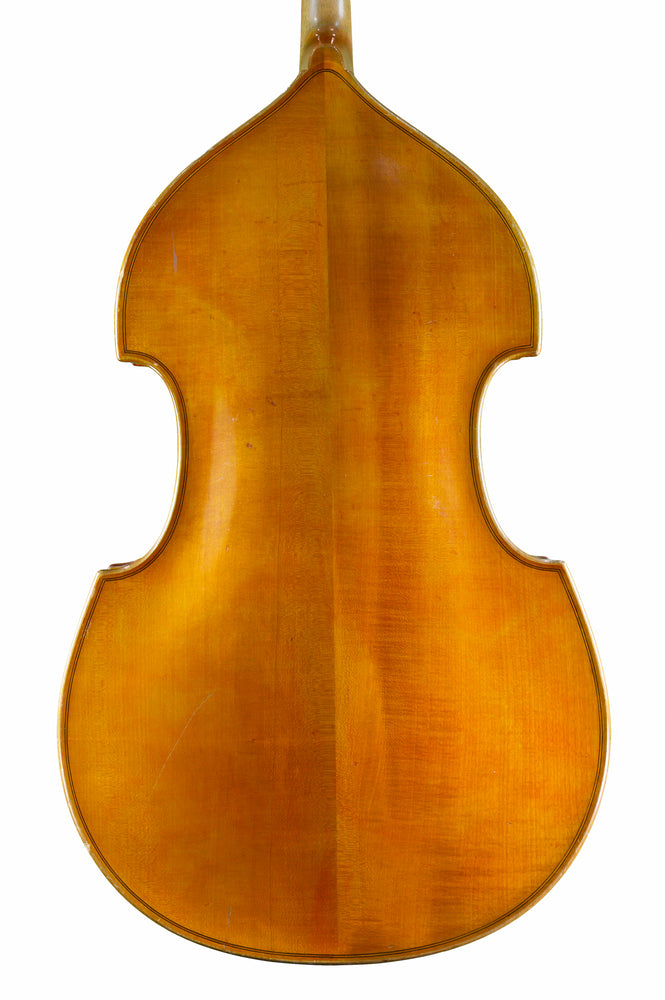
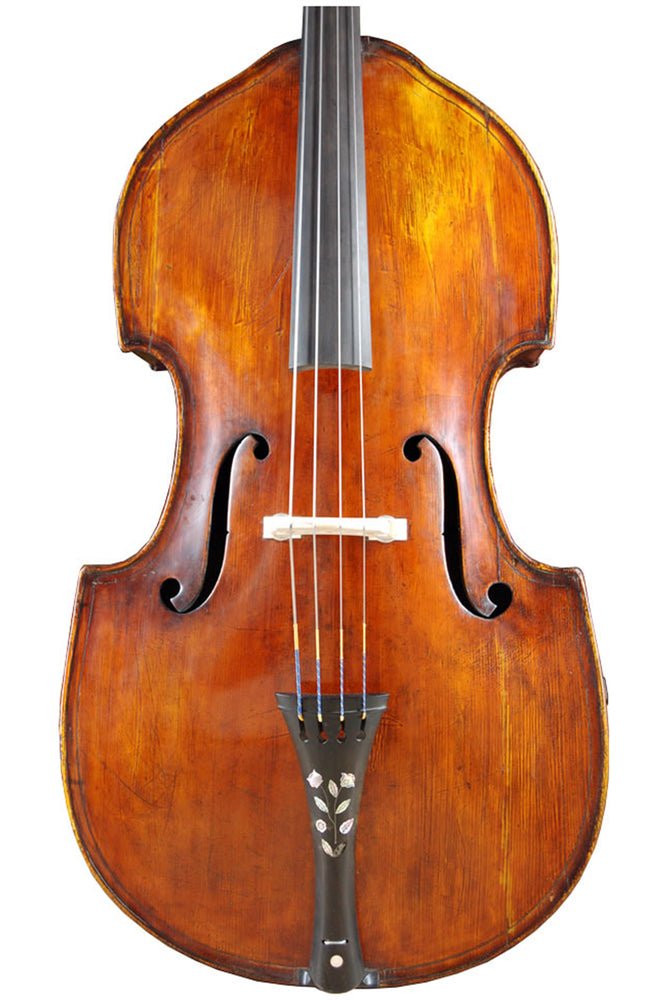
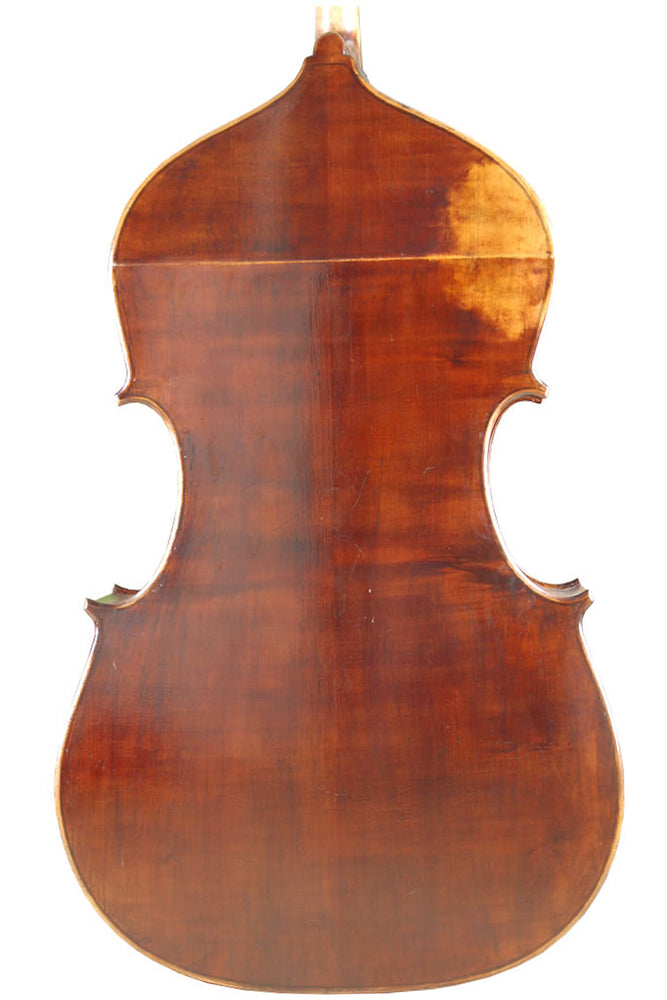
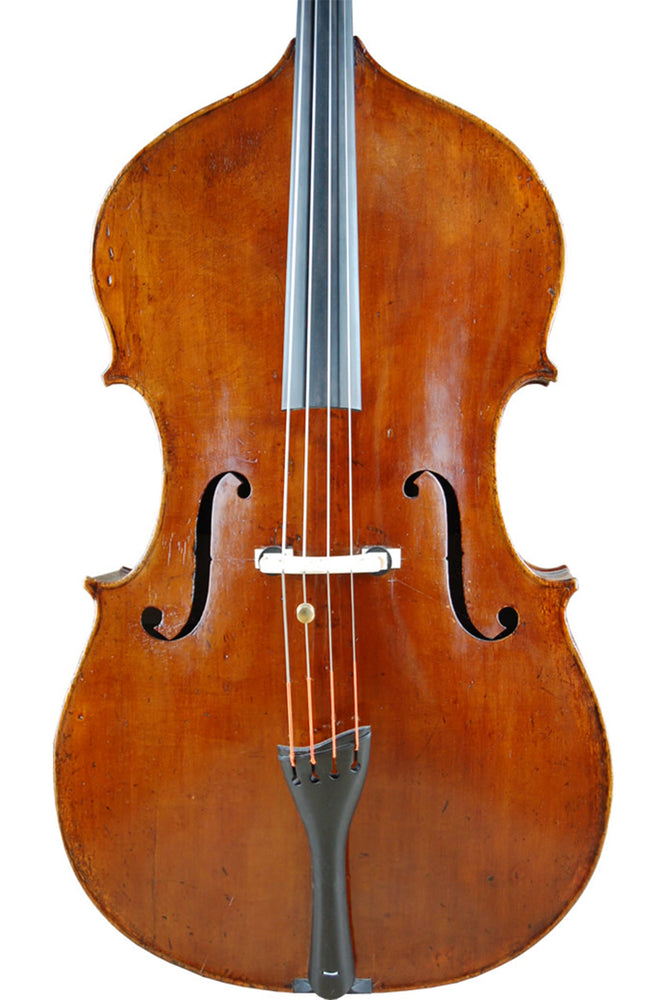
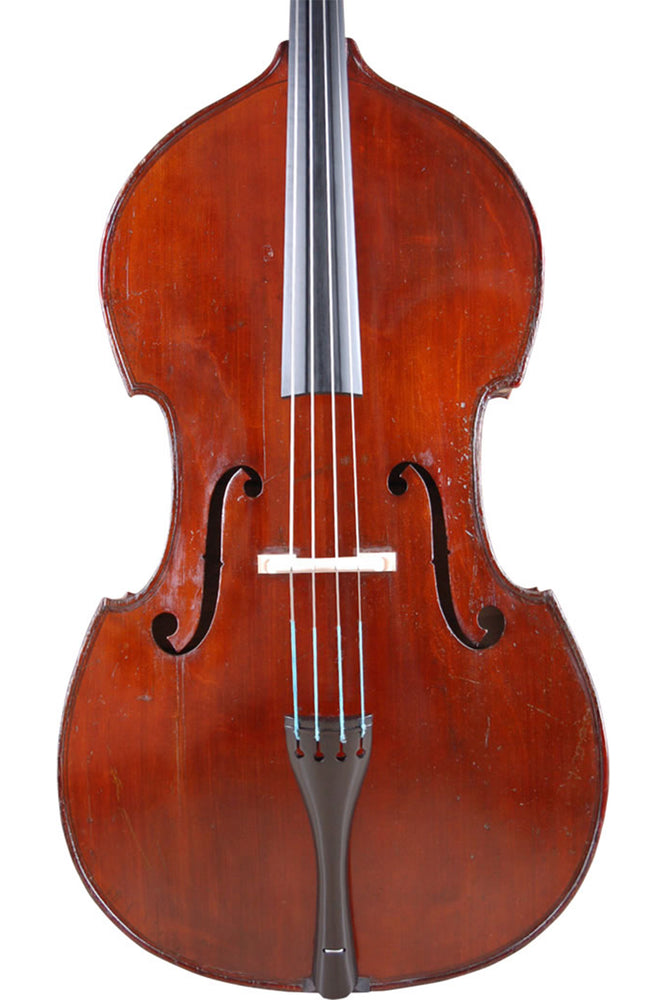
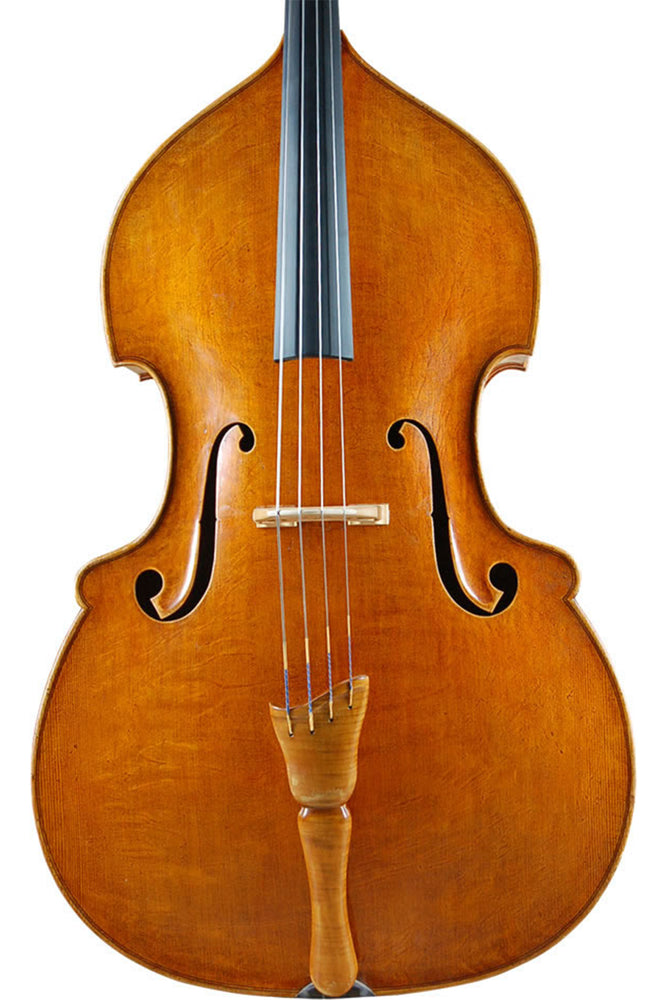
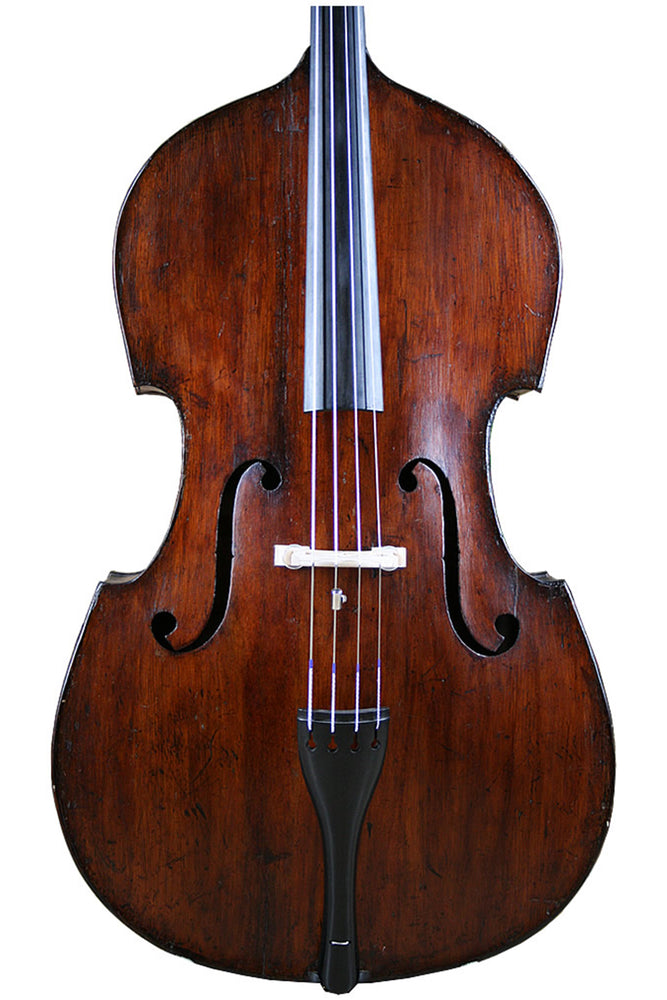
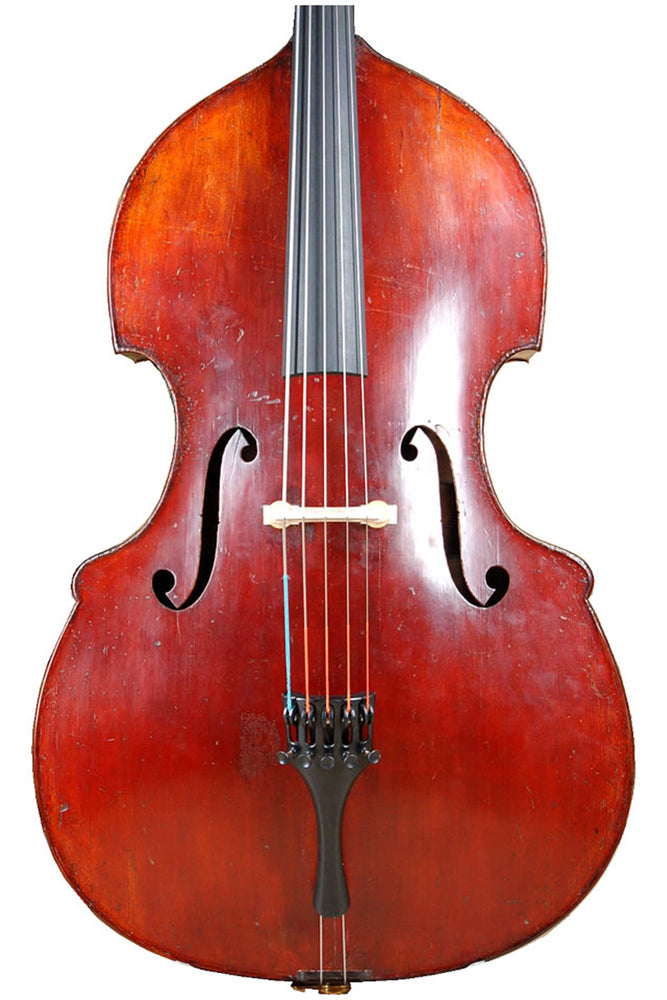
Yes - you are absolutely right in thinking
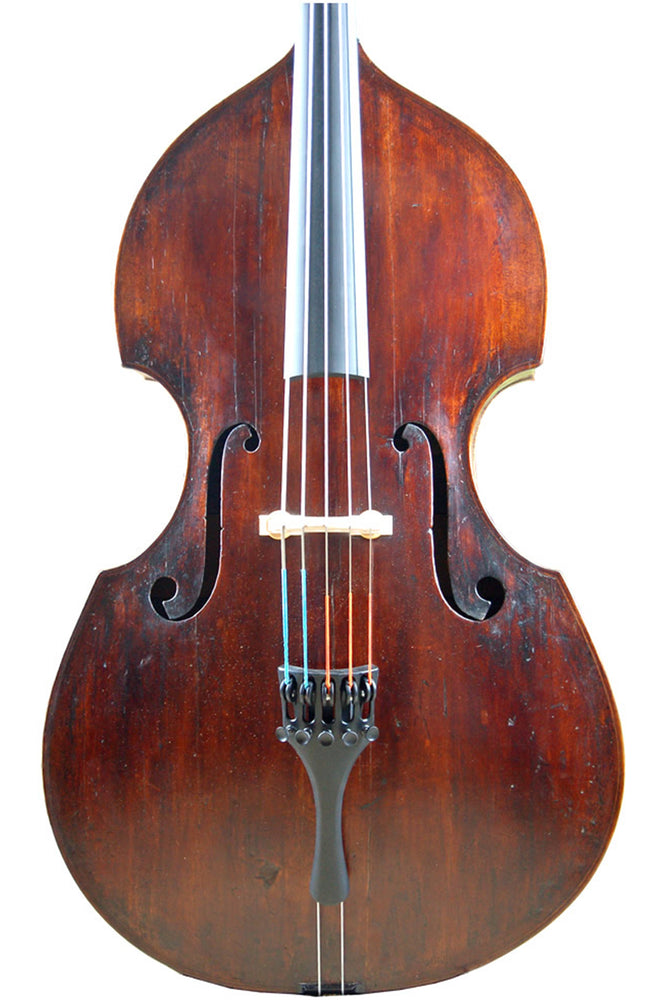
that this instrument appears to be slightly smaller than the
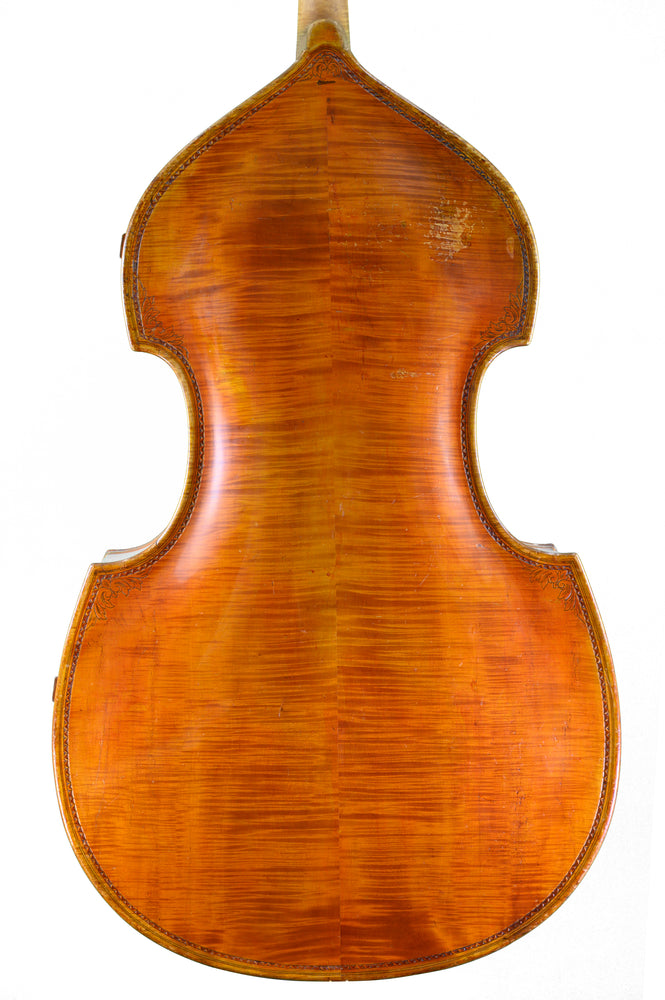
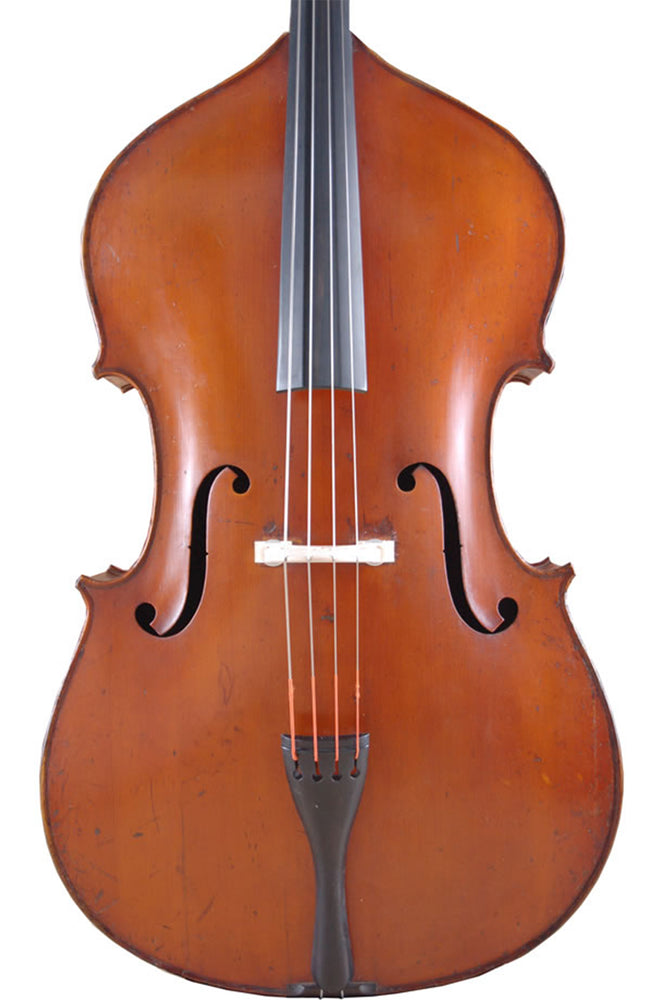
standard Hawkes Panormo. In fact with a length of back (LOB)
measurement of 110.5cm it is exactly 2.0cm shorter than the ever-so-familiar,
generously-proportioned standard instrument. When examining the
widths across the table it can be observed that the middle bout
is 1.5cm narrower than the standard model while the measurements
for the upper and lower bouts at 56.0cm and 68.5cm respectively
are virtually identical to those of the standard model. With
widths across the ribs and a full arching also unchanged the
overall effect is somewhat similar to a sports car that - in
order to gain added performance - has had its suspension lowered
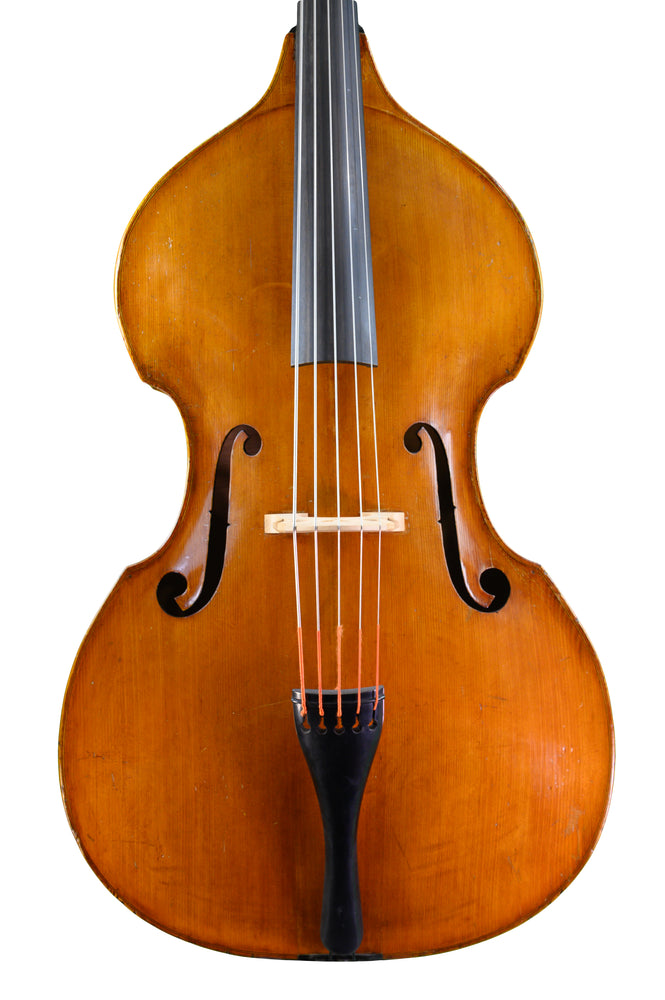
i.e. the instrument has a really commanding, muscular - "Squat" -
type of appearance.
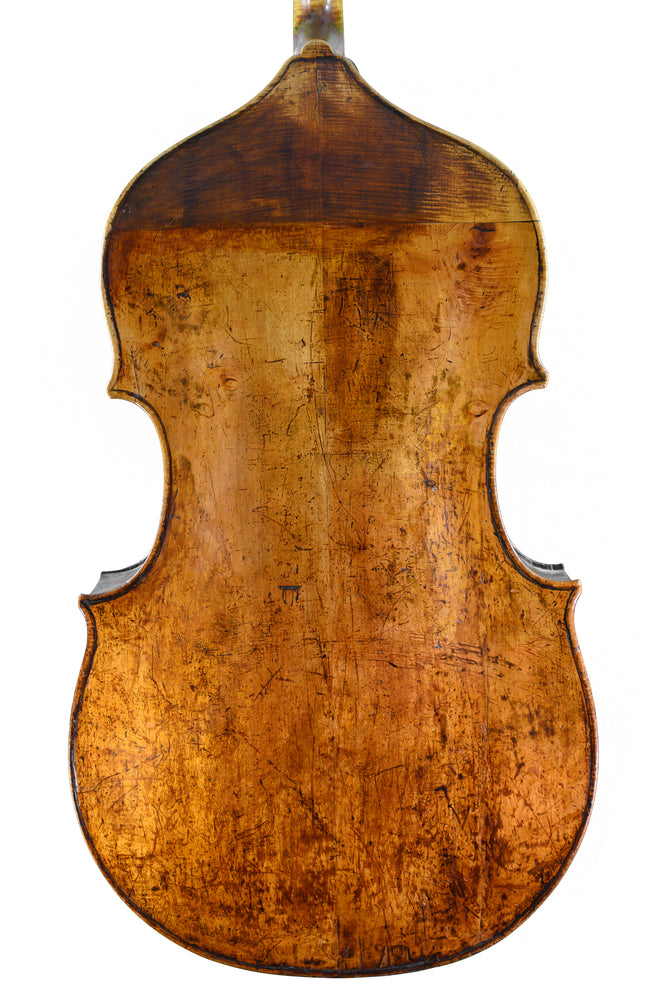
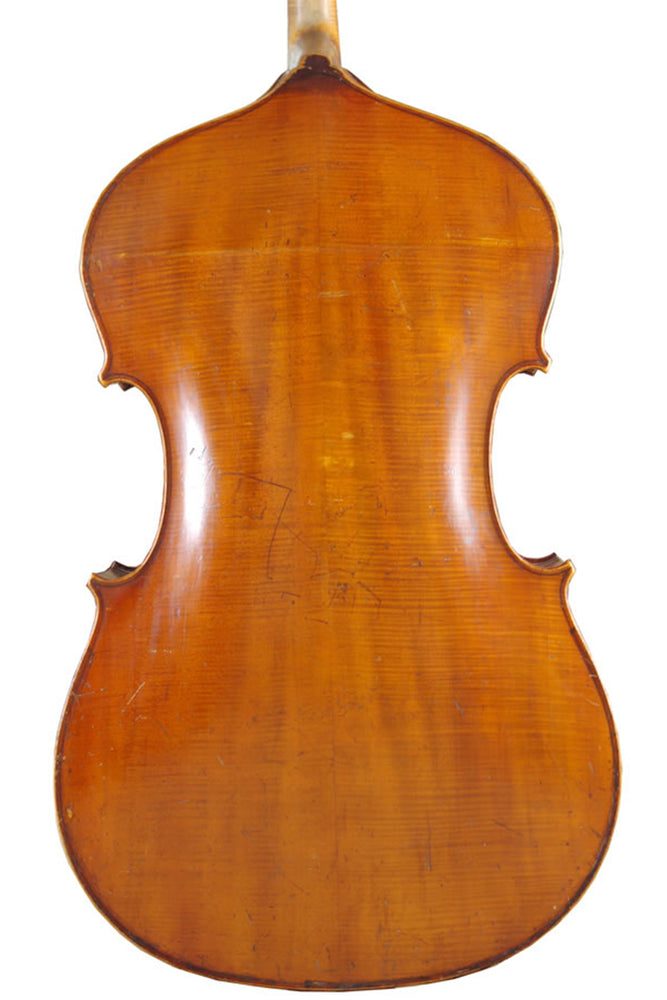
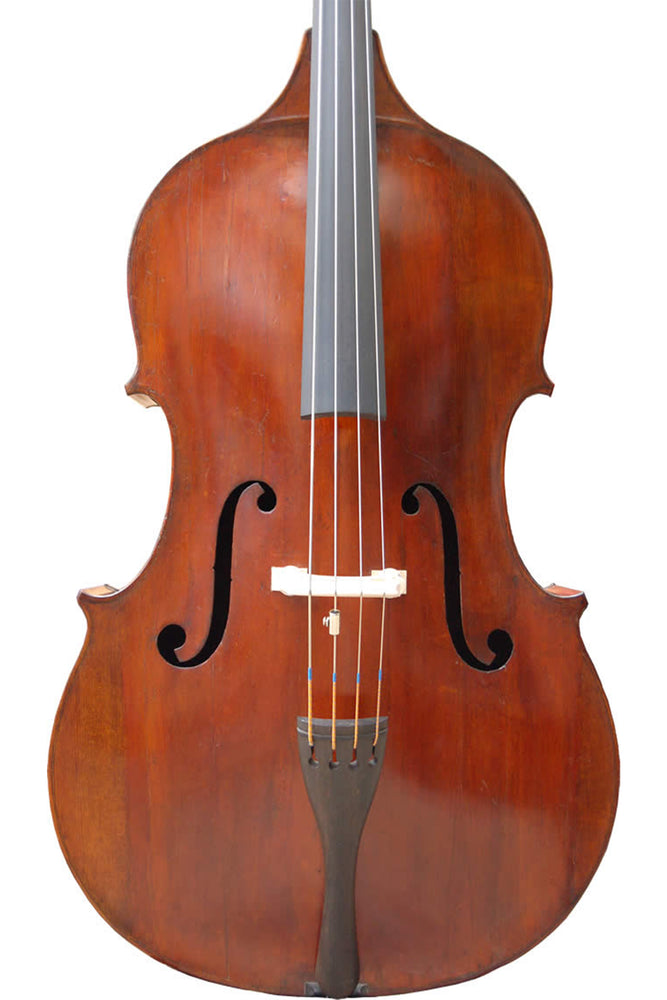
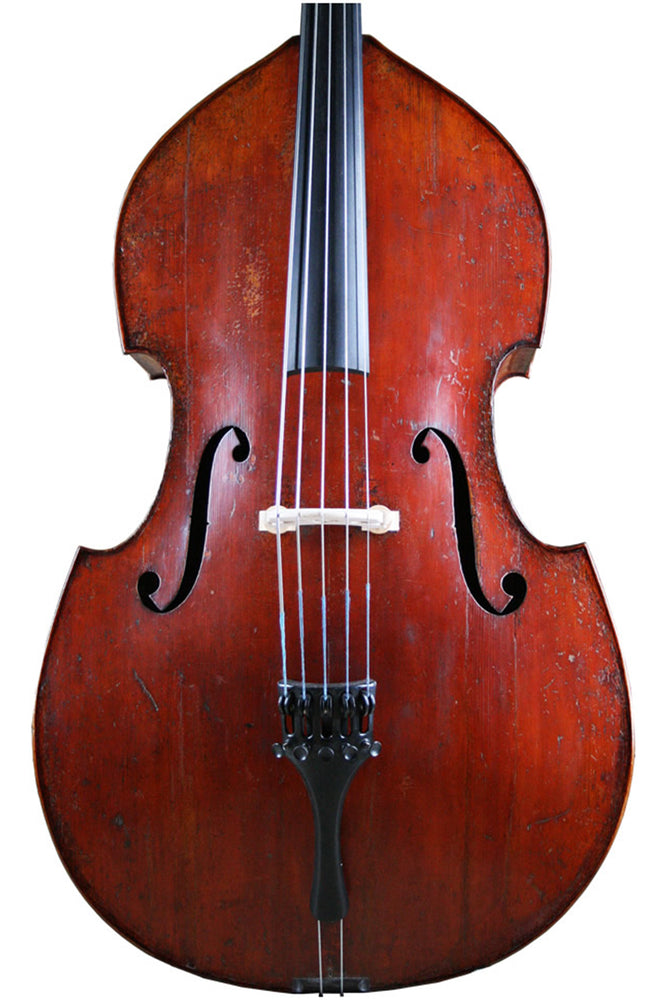
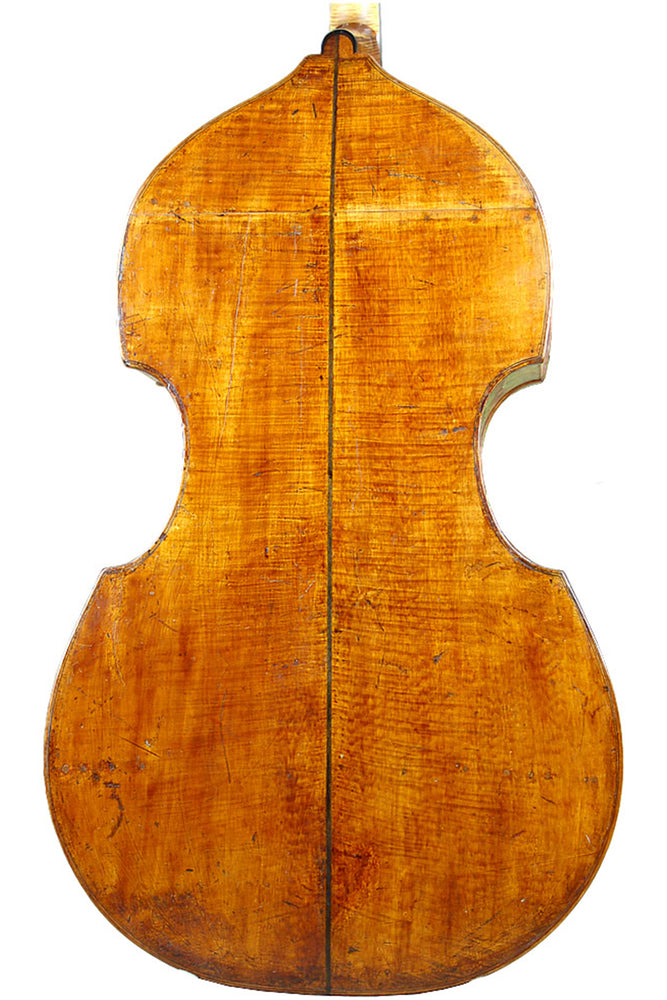
Well yes we have - but only one which bore a large
hand written label dated September 28th 1894.
Unfortunately it appears that for one reason or
another the original label has been removed. The slightly lighter
impression of where the original label once was is visible through
the F-hole. We are pretty certain however that this instrument
does date from the last decade of the twentieth century and that
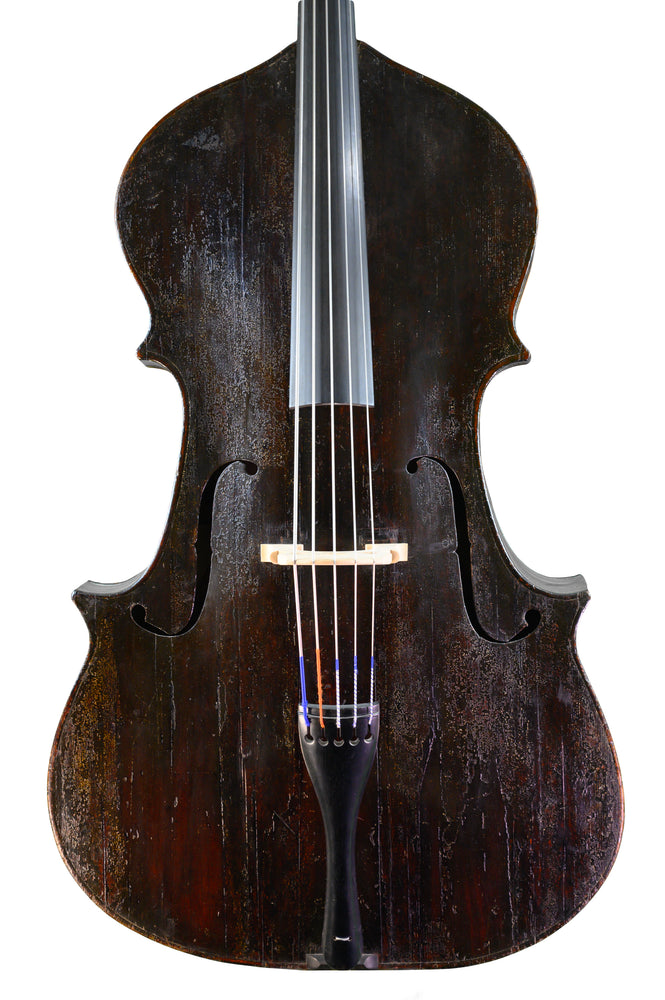
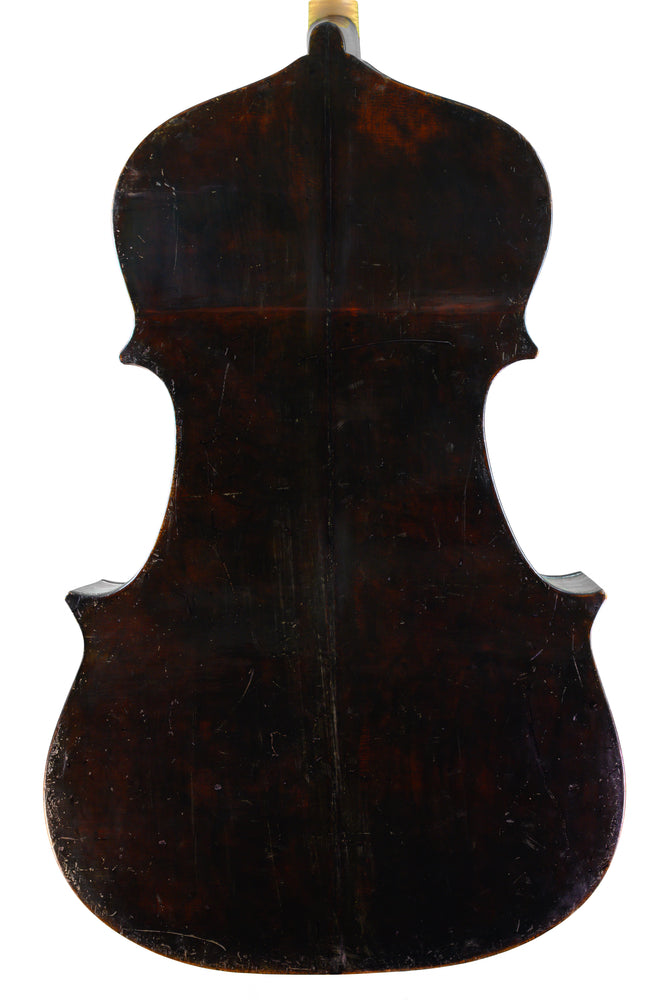
there is a high degree of probability that the two "Squat Model" instruments
were made to a special-order or orders in exactly the same year.
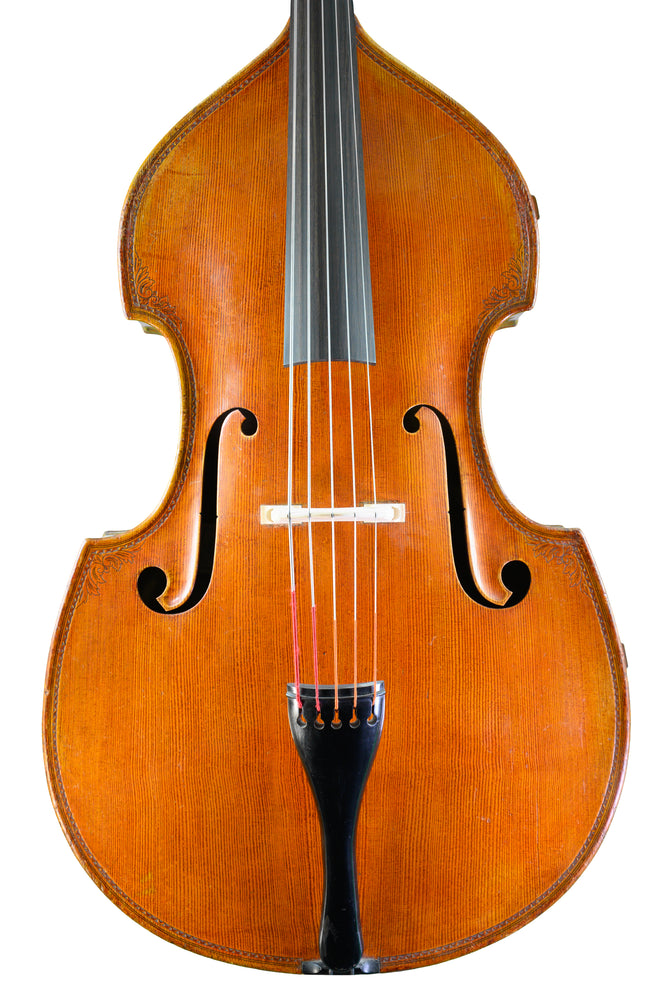
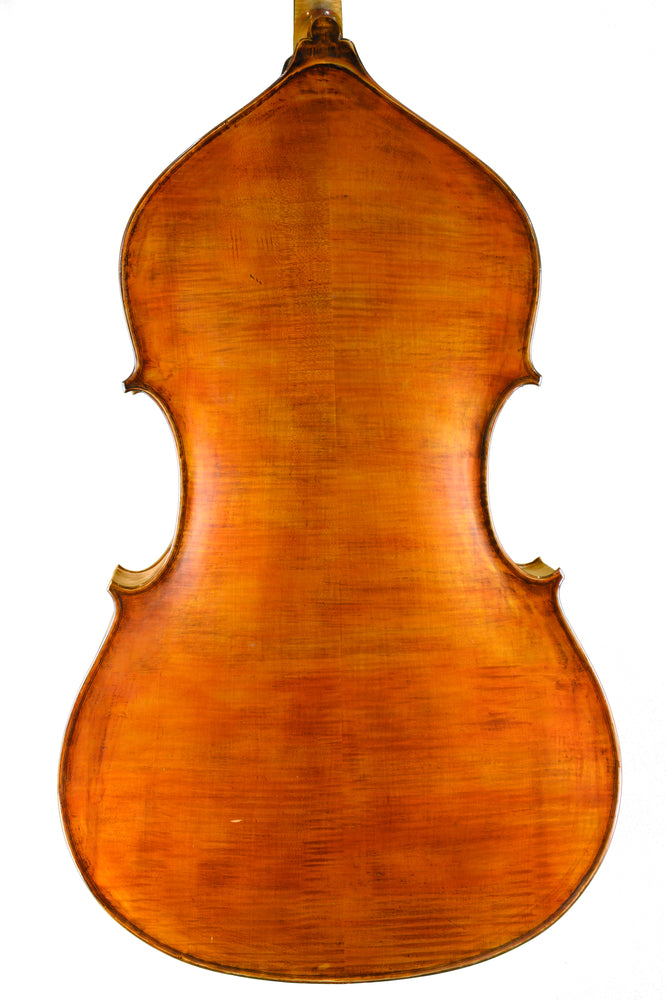
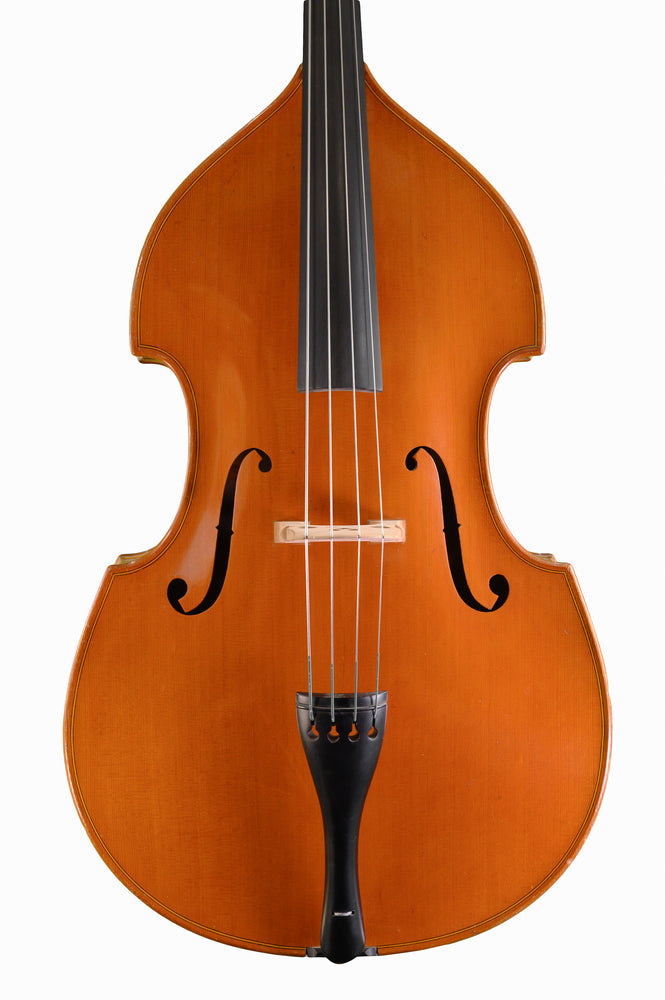
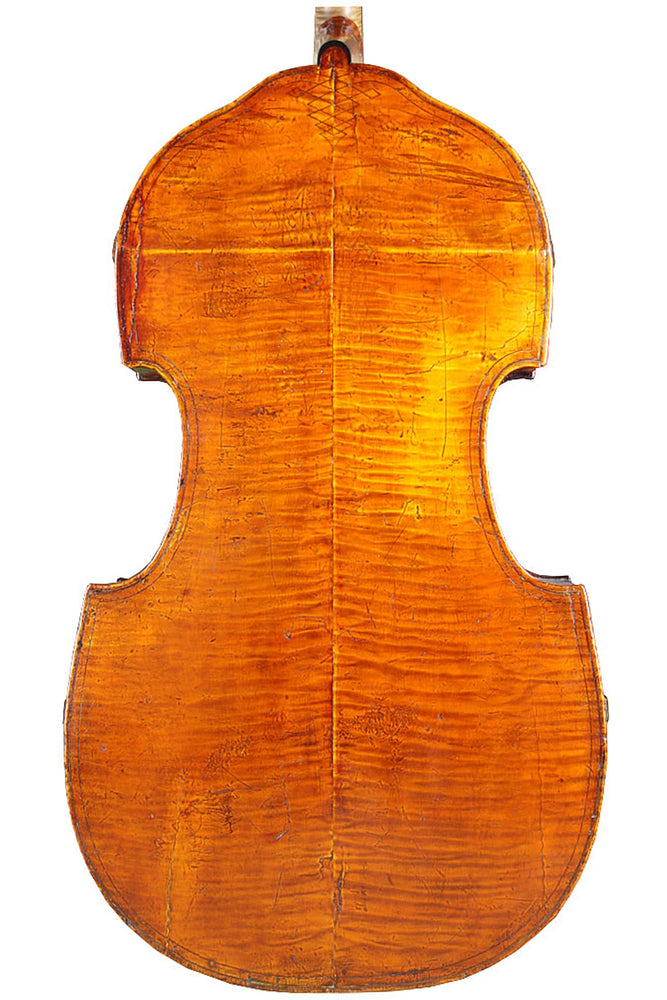
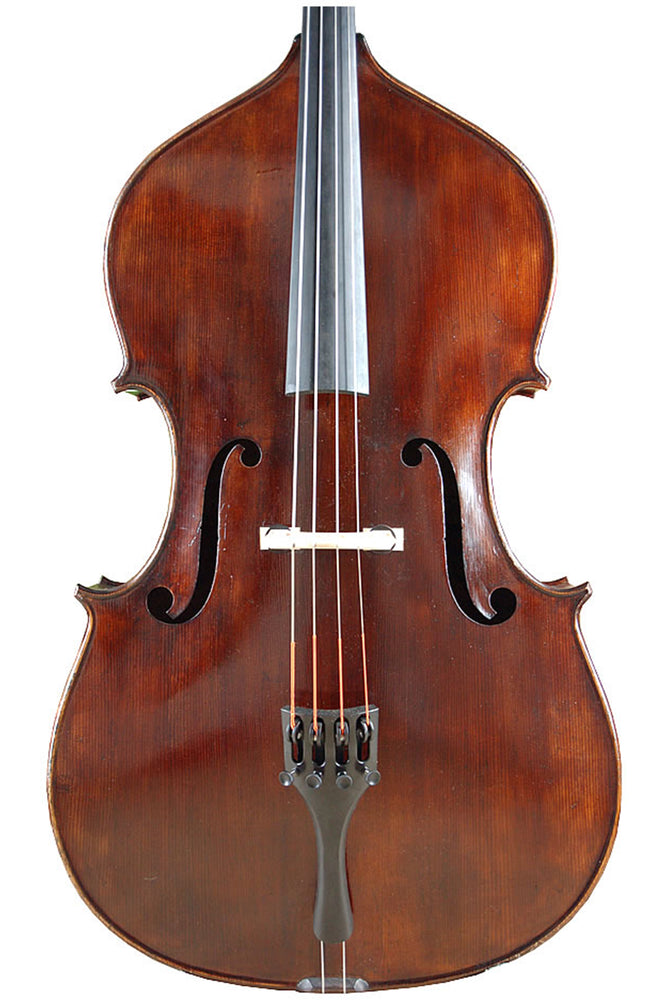
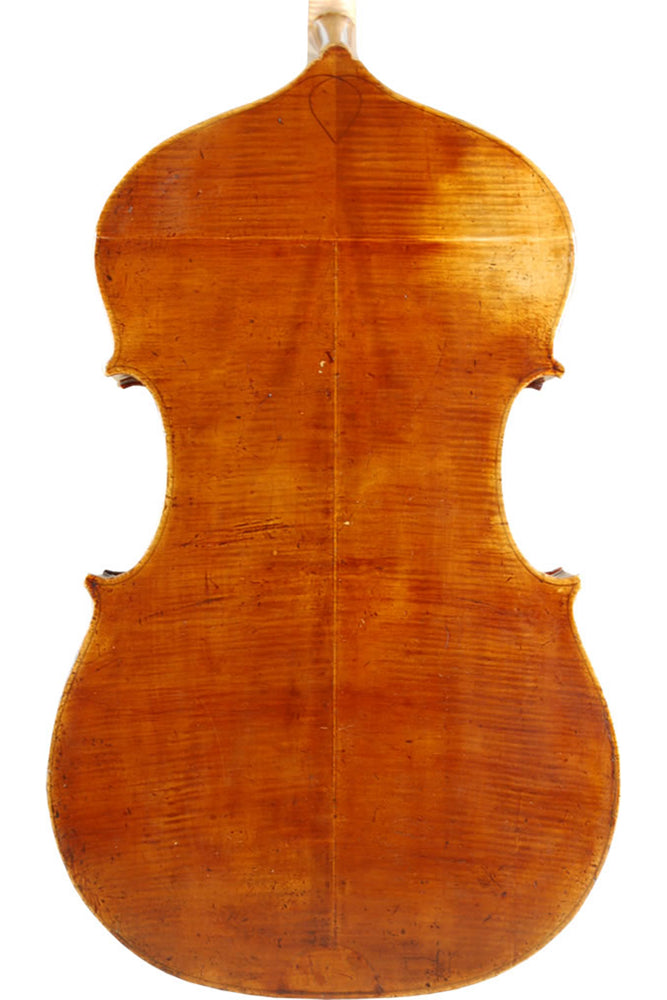
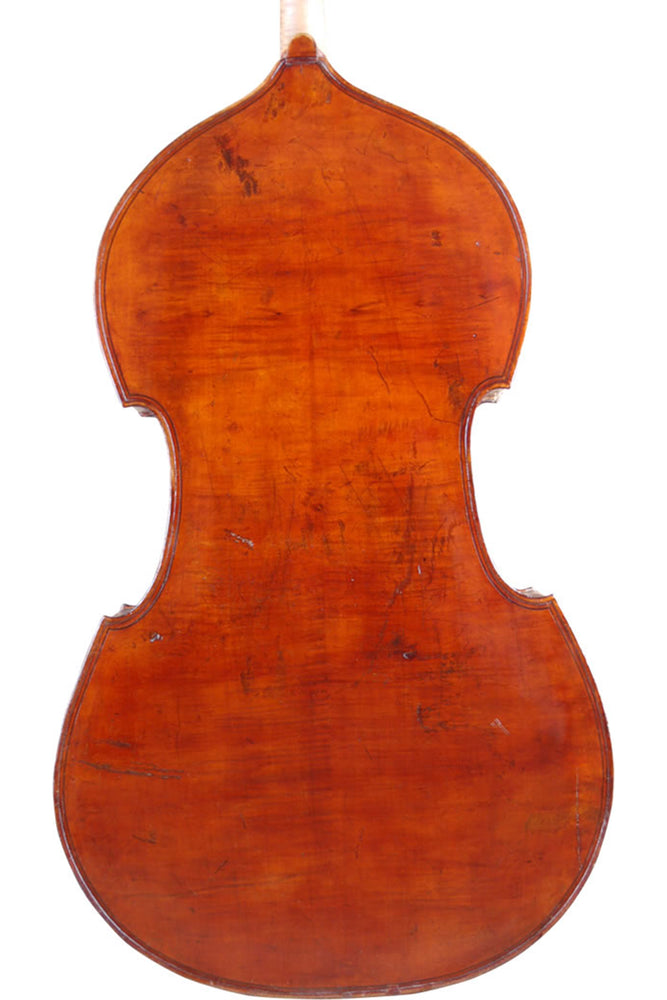
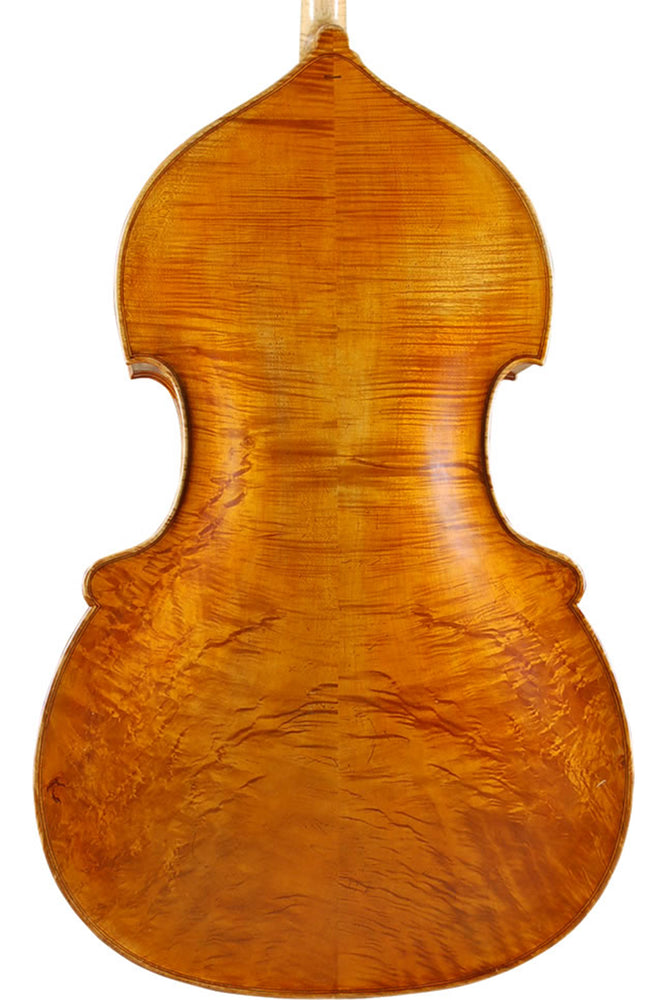
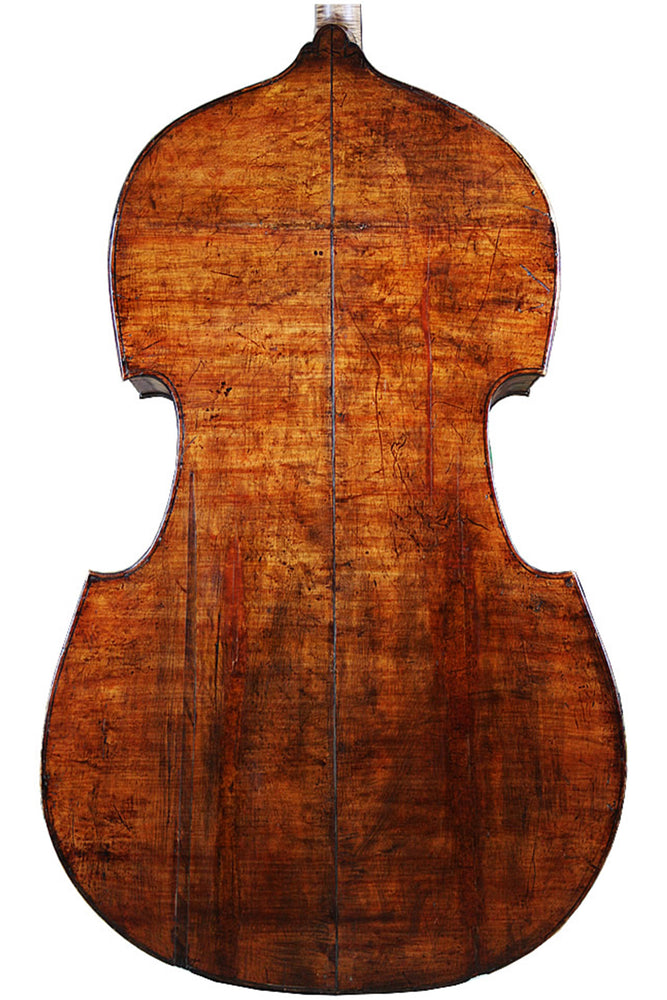
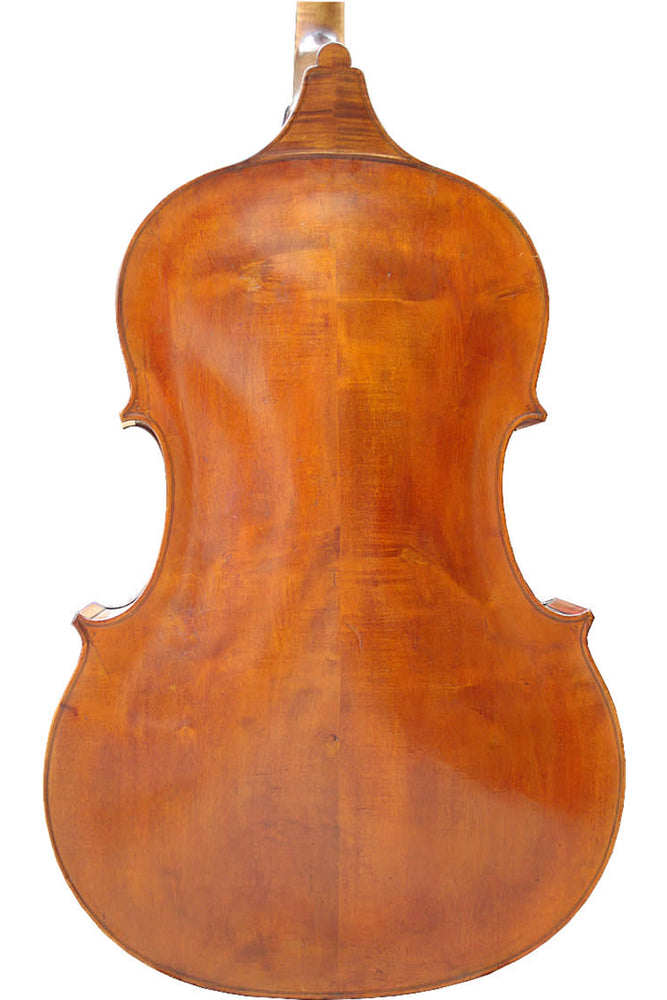
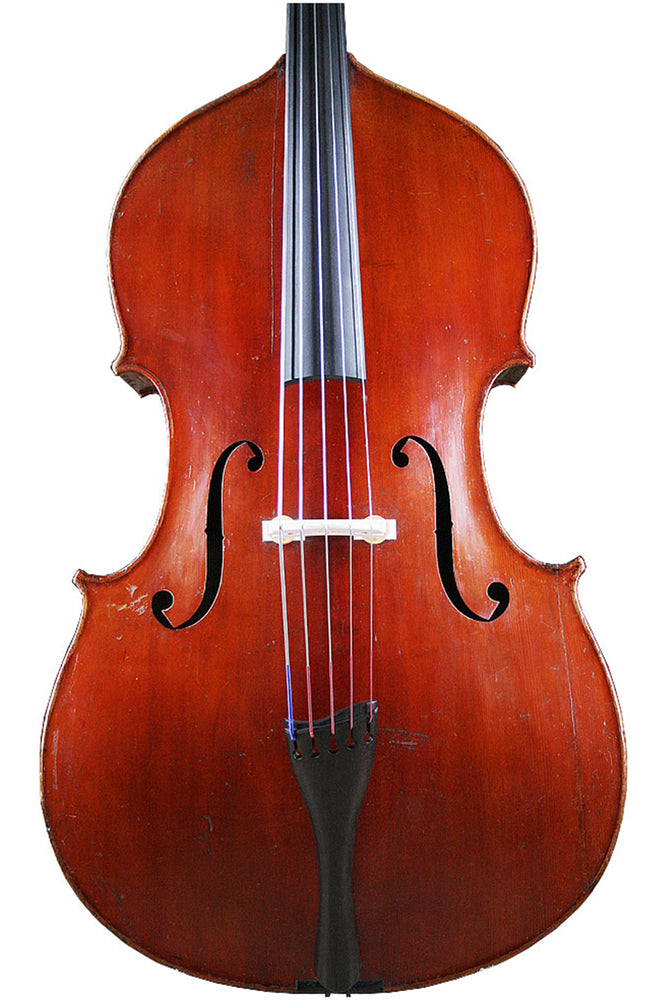
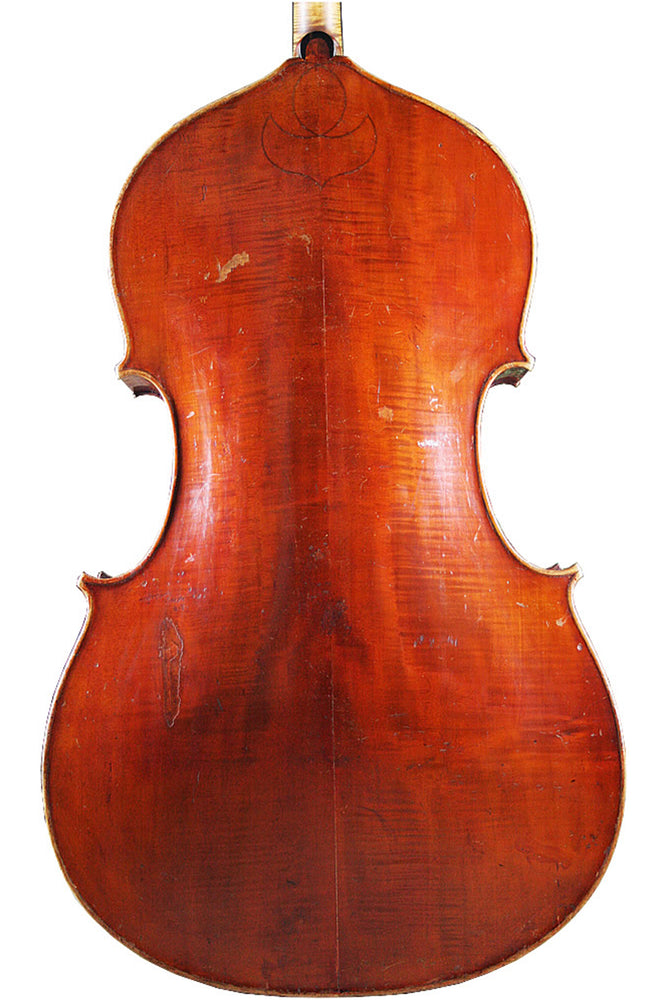
Yes. When you consider that the two instruments
have;
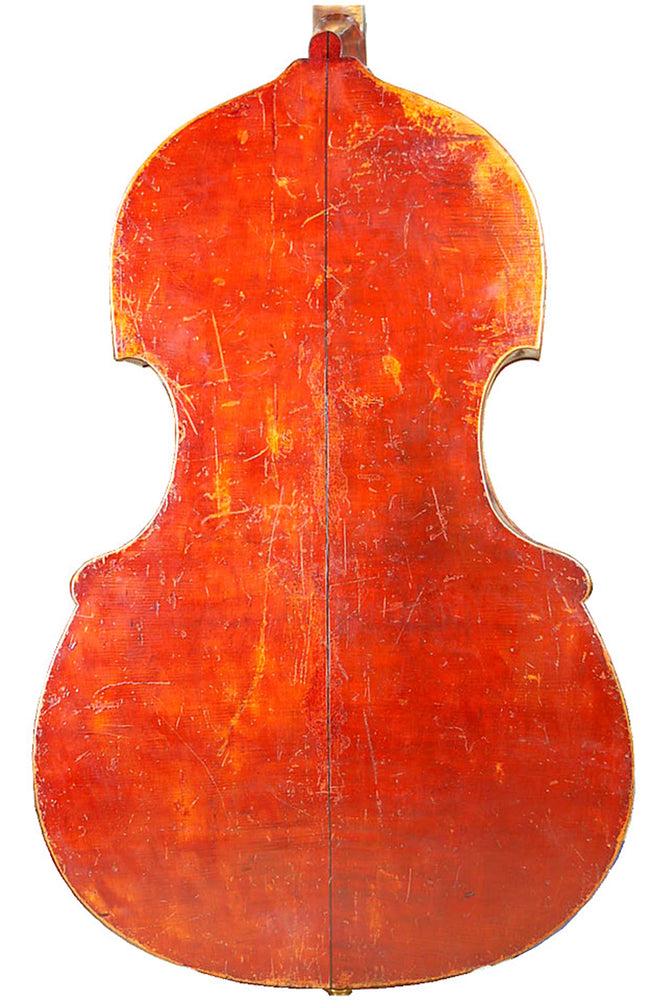
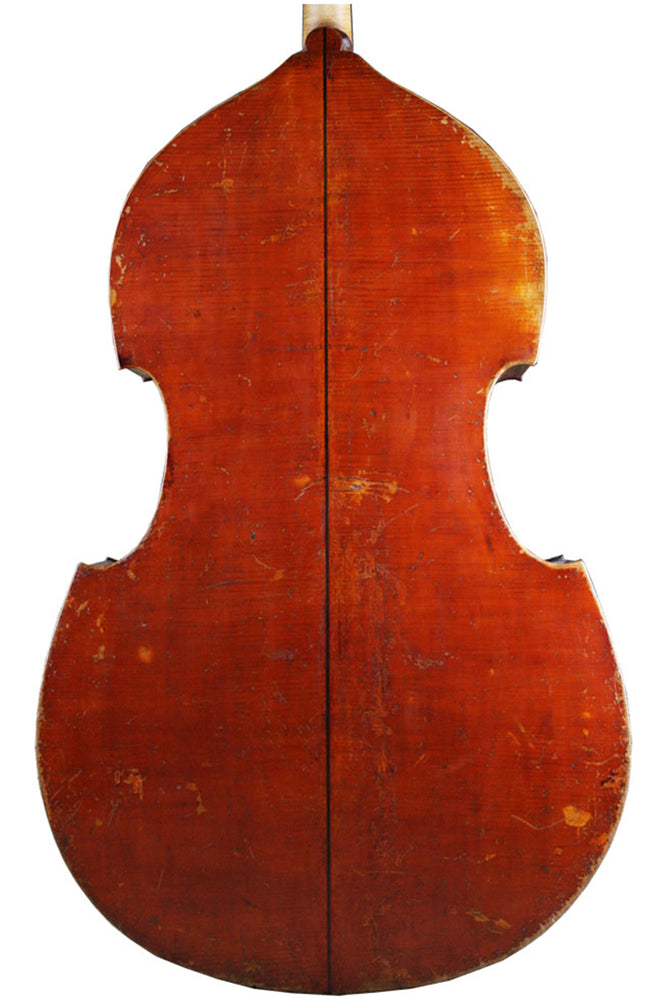
- Near identical measurements.
- Near identical flaming
to both the back and ribs.
- Near identical varnish type and colour.
- A slightly
darker colouration to the actual scroll and peg box.
- We believe that most people would support the theory.
Apart from the two smaller measurements - which
we have to say are highly unusual - this instrument just shouts
out that it is a Hawkes Panormo of the very best quality.
As for positive I.D it can easily be observed -
as indeed with all Panormo model instruments - that the words HAWKES & SON
LONDON are engraved at the bottom of each of the two brass half
plates on the pegbox. In addition - the large (3.0cm (h) x 2.1cm
(w)) capital purfilled letter "H" below the back button
confirms 100% that this is a top of the range Panormo Model instrument.
Yes we can. The instruments manufactured by Hawkes & Son during
the latter quarter of the nineteenth century and the first half
of the twentieth century were often supplied to the many army and
military bands that existed especially in England. There were three
grades of instruments, namely Professor, Concert and Panormo, that
were based on the unsurpassable form of Vincenzo Panormo's instruments.
All the models are characterized by their violin
outline, deep ribs and generous proportions. The Professor was
a flat back model with upper angle break, and often had outside
linings, while the Concert and Panormo were produced with full
swell backs. In addition there were some instruments that were
manufactured in France - Riviere & Hawkes - based on an entirely different model.
Some instruments were made here in England but so
as to meet the huge demand for these robust and well-constructed
instruments a great majority were imported from Germany and France
- the Concert and Panormo models being superior in their choice
of timber, workmanship and finish than those of the Professor.
In 1924 the four string Professor instruments were being advertised
at £22, the four
string Concert at £26 and the four string Panormo model was £36.
For the three string versions of these same models prices were £20, £24
and £32 respectively. The advert aptly proving that in England
there was still some demand three-stringed instruments even at
this late date.
Yes it is. The Panormo instruments were made entirely
in England reputedly by a man with the surname "Green" (Hawkes & Son
did a great job in keeping the names of their makers a closely
guarded secret) to an incredibly high standard. Just take a look
at this instrument - the choice of timber is absolutely superb,
the proportions are simply glorious, the scroll is masterful,
the peg box is generous, the brass machines are to the highest
standard of engineering (they are so, so smooth) imaginable and
as for the varnish is of quite an unsurpassable quality.
Unfortunately not a huge amount, but what we were
informed by the former owner is that he purchased it from Chas
E. Foote Ltd, 10 Golden Square, Piccadilly in 1972 for the sum
of £250-00.
Really the only things that were required to bring
this instrument into the great structural condition in which you
now find it were; fit new neck and fingerboard, fit new bass bar,
clean and fully set-up.
The advantages of the "Squat-Model" are obvious when
one takes note of the string length. At a stat of only 105.0cm
the playability of this instrument is almost as good as it gets.
In terms of sound stats - all that we can say is that this too
is almost as good as it gets. Obviously sound is a subjective matter
for each individual player to decide upon but our impression of
it is - full and rounded, yet with a superb punchy quality coupled
with an unbelievable evenness across all four strings.
Consistently the instruments that have been made
by Hawkes & Son
have proved to be quite an incredible investment. With the Panormo
model instruments being as desirable as they are - the investment
opportunity is sure to continue.
LOB (length of back) - 110.5cm (43.50in)
Width across upper bouts - 56.0cm (22.00in)
Width across middle bouts - 39.3cm (15.50in)
Width across lower bouts - 68.5cm (27.00in)
Depth of lower ribs inc both plates- 24.0cm (9.47in)
Body Stop - 59.8cm (23.50in)
String length - 105.0cm (41.30in)
|