|
Yes - good question. In November 2004 The Contrabass
Shoppe purchased a large quantity of English sycamore for the
construction of double basses and cellos from Ronald Prentice - a
retired English bass maker. Along with the wood and other various
items purchased were two partially completed double basses. In
2008 - Tony Houska - the Director of The Contrabass Shoppe commissioned
the young Hungarian maker Akos Balazs to finish the two instruments
off.
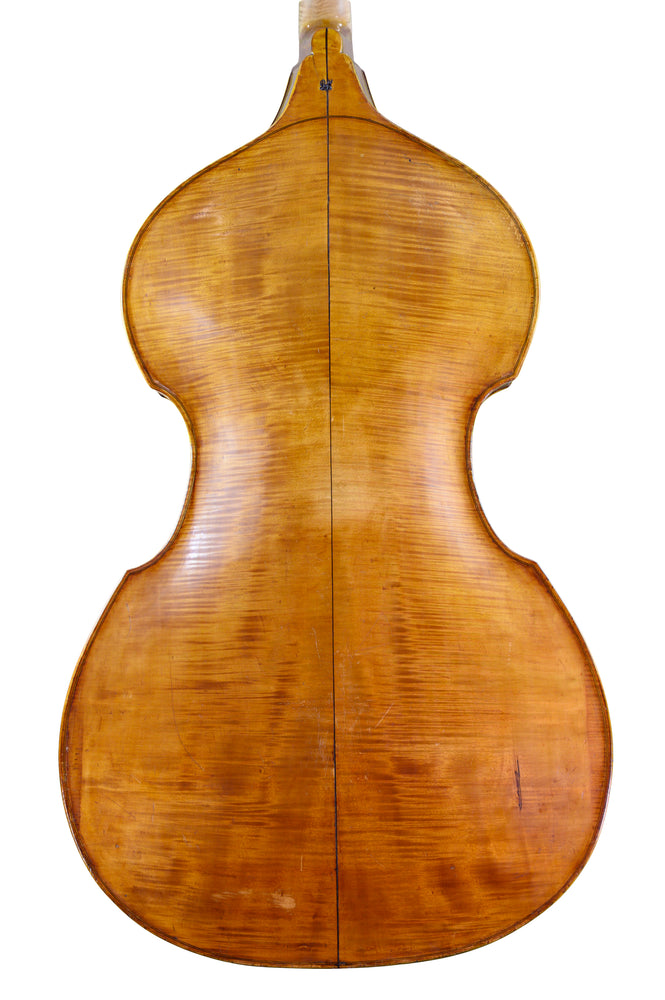
This particular instrument consisted of an entire rib assembly
complete with corner blocks, a two piece back and a pre-routed
neck assembly.
Yes indeed.
No. Unfortunately he had already sold off his remaining stock
of spruce sometime earlier.
In the same month that the sycamore was purchased from Ron we
were able to purchase several superb matching pairs of even-grained
spruce from some Hungarian wood traders. We were informed by the
merchants that the wood emanated from Bosnian and Herzegovina (former
Yugoslavia) and that it had already been naturally seasoned for
five years.
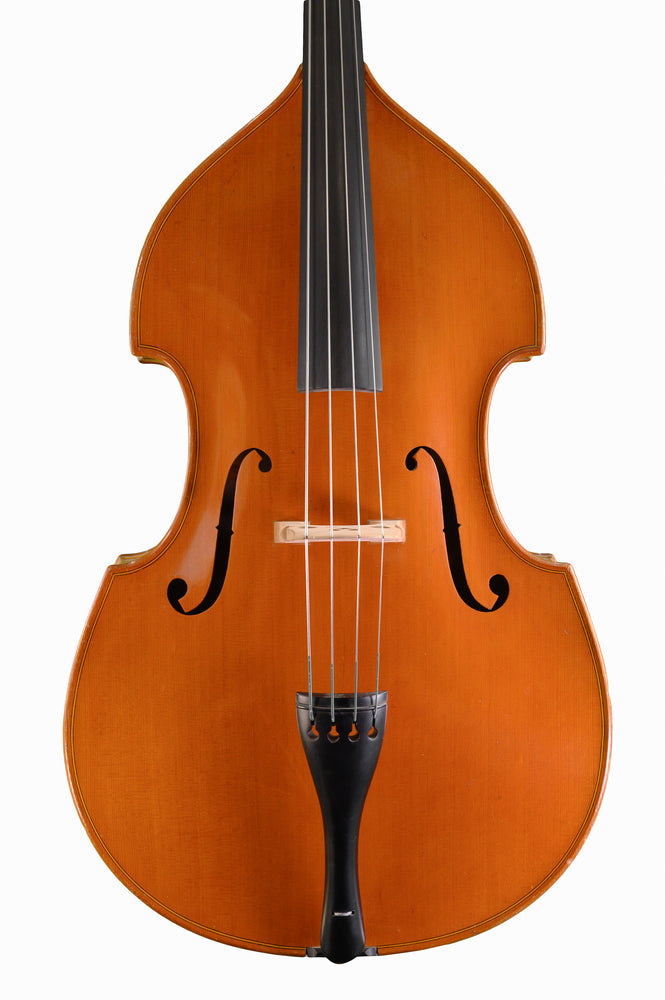
Well simply because we think that he is a good maker and that
his work represents excellent value for money. If you take a look
through our web site - you will see several of his instruments
that are either for sale or which have already been sold.
Yes - try these:
http://www.contrabass.co.uk/2737.htm
http://www.contrabass.co.uk/2774.htm
http://www.contrabass.co.uk/2772.htm
Yes, Ron Prentice was born in 1932 in Bishop's Lydeard, Near Taunton,
Somerset. He retired from making in 1998 and lives (Feb 2011) in
Taunton.
Ron studied making with Karl Roy at the Mittenwald School of Violin
making. He first started making viols - but then began to make
more modern instruments when his work found favour with players
in the London orchestras. After having a shop in London for a few
years where he made and restored instruments he moved back down
to the Taunton area so as to concentrate on his making without
too much disturbance.
During the 1970s-80s Ron became recognised as a specialist bass
maker and regularly had a two-year waiting list for his orders.
Ron is credited with a total output of 50 double basses. Most were
produced using the inside mould and using excellent Sitka Spruce
from Germany and English Sycamore.
Yes - if you are buying wood to make instruments it is one of
those questions that you do tend to ask.
"With regard the wood I bought a very large log from John
Boddy in Boroughbridge, North Yorkshire around 1975. When felled
and trimmed the log measured 5.5m long and 1.22m in diameter. This
was cut up for me at their saw mill and delivered to me in Somerset
by their transport".
Ron continued; "Yes - the following year somebody told me
of a dealer who had some good logs in Scotland so I drove all the
way up to somewhere near Inverness to see them. They were all felled
and lying in a field. I checked them all by taking off bark samples,
selected the best five and bought them. If I remember the logs
were around 80cm in diameter. They were then sent to a sawmill
in Norwich by train where they were cut up to my specifications.
I then hired a lorry in Taunton and drove up to collect all the
various blocks".
"I kept all the finest wood for basses and cellos. The smaller
pieces I used to make gambas, violins and violas. I sold off what
I didn't want and burnt all the offcuts in the wood burning stove
in the house. I made 50 double basses. Not all were swell back
- because there were pieces for flat backs as well".
Yes - in the annals of more recent English bass making history
Ron is a well recognised and respected maker.
Yes - Ron was featured in a well produced and
highly informative book about professional violin makers in Britain.
It was entitled "The
Violin Makers - Portrait of a Living Craft" and was written
by Mary Anne Alburger and first published in 1978 by Victor Gollancz
Ltd, London (ISBN 0 575 02442 9). The book is particularly engrossing
to read because the writing takes the form of actual interviews
with the various makers, restorers and dealers.
Yes - the paragraphs on Ron's bass playing
days, his association with Karl Roy and his methods of varnishing
are all really absorbing. However - if I had to pick out one
thing - it would have to be his sentence regarding the pricing
of his own instruments. This pricing would have been valid for
the year 1977 or 78 when compilation of the book would have taken
place prior to publishing in 1978. On page 111 Ron comments; "I charge about £920 plus
VAT for a violin, £1000 for a viola, £1600 for a cello,
and £2500 for an Italian-style double bass".
Yes - Contrabass Director Tony Houska has the catalogue
of a Phillips (now Bonhams) Musical Instrument sale that he attended
on the 21st April 1977. There were four double basses in the auction.
Buyers premium was not applicable at this sale so the prices shown
are the hammer price.
Lot 212 An Italian Bass by Pierguiseppe Esposti,
Cremona dated 1974 - fetched £550.
Lot 213 A Modern Chamber Bass - fetched £120.
Lot 214 A German Four-String Bass circa 1870 - fetched £200.
Lot 215 A Good Four-String Double Bass by Paul Claudot circa
1860 - fetched £620.
Yes - on the classified page at the back of
the January 1976 "The
Strad" magazine there are four double basses listed for sale
as follows;
1) Riviere & Hawkes Double-Bass Concert 1889. £375
ono.
2) Double Bass, threequarter size. Lott or Fendt. Excellent condition. £1000
ono.
3) Hawkes Concert D / Bass. Good sound. £550.
4) Pollmann, threequarter size, four string D/Bass 1972 model, £800.
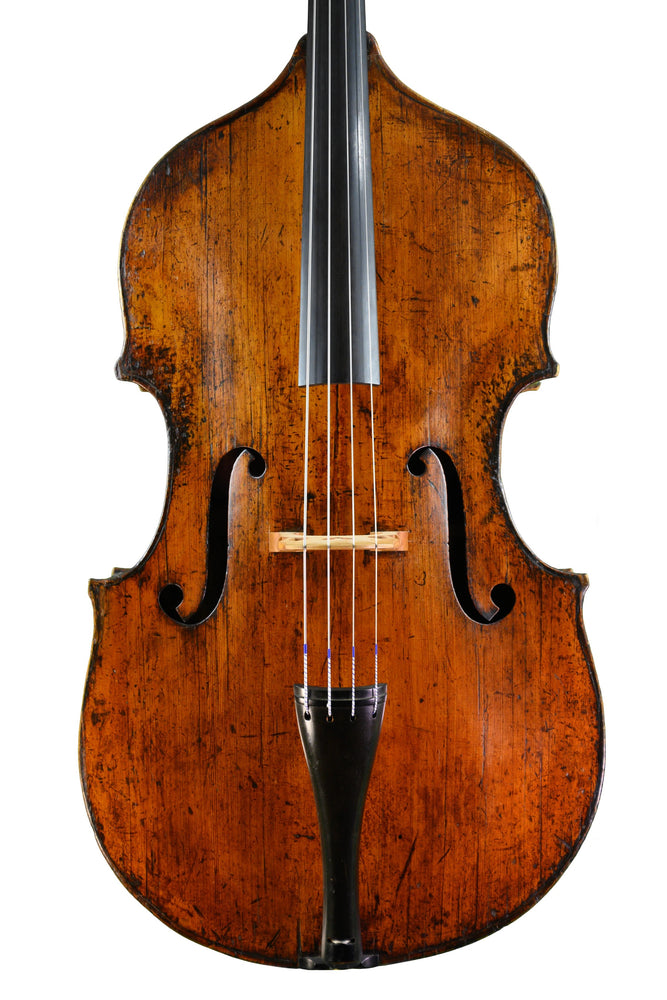
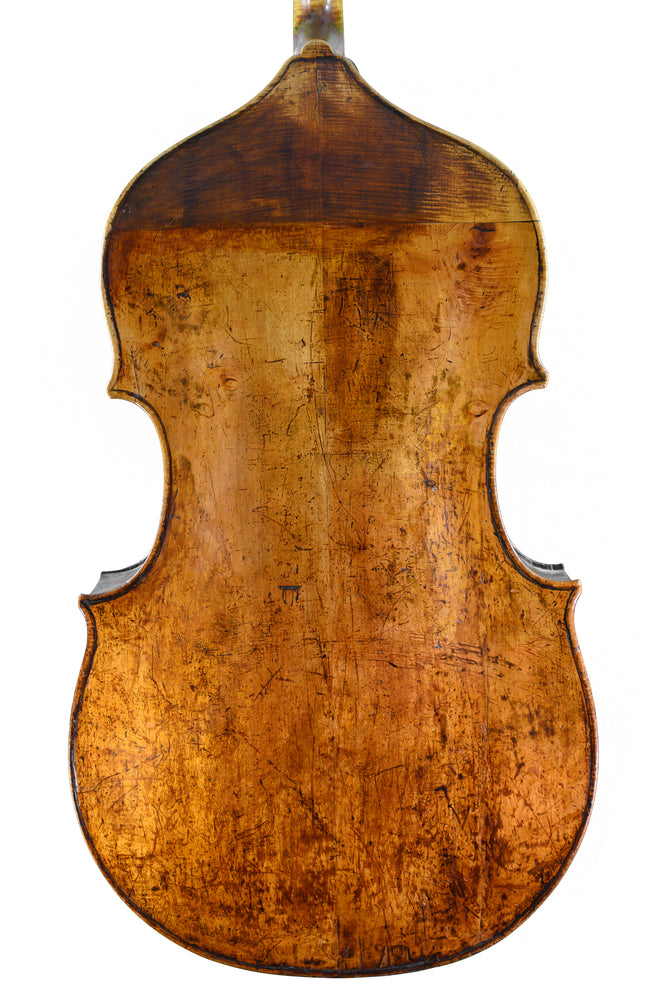
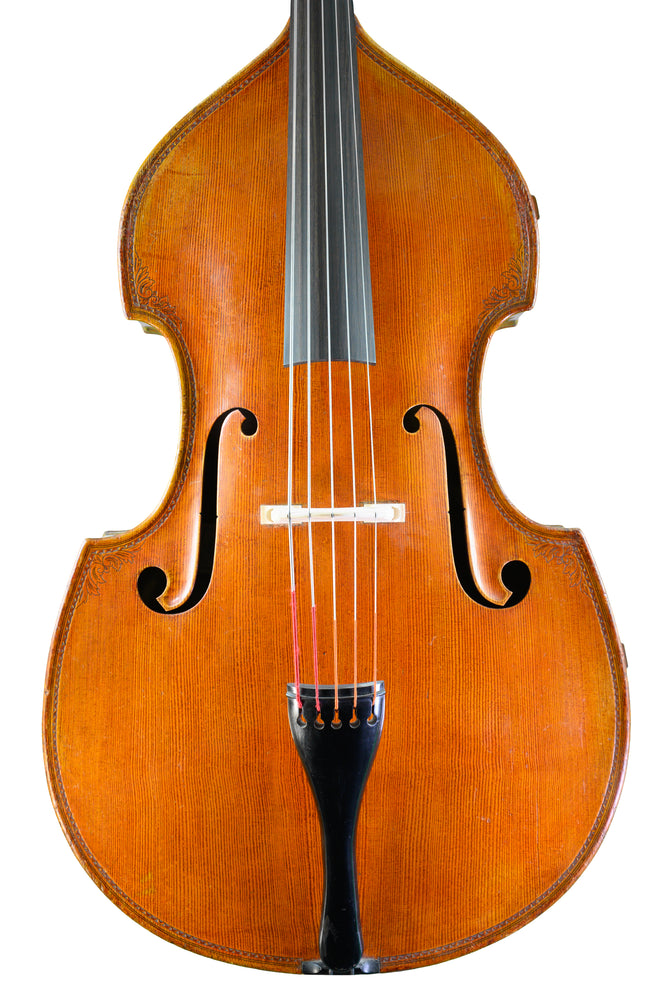
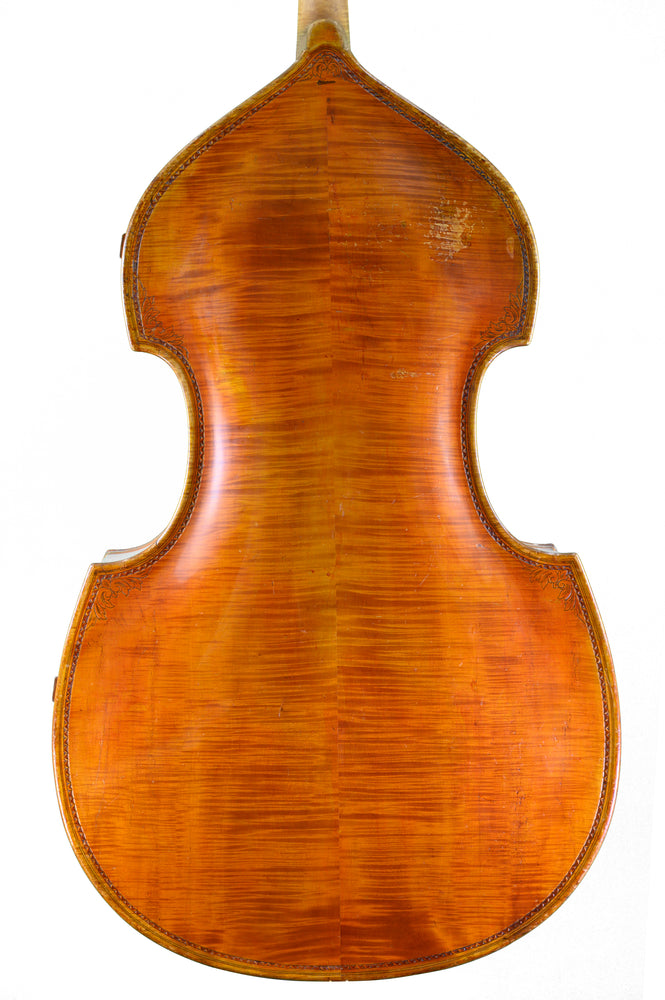
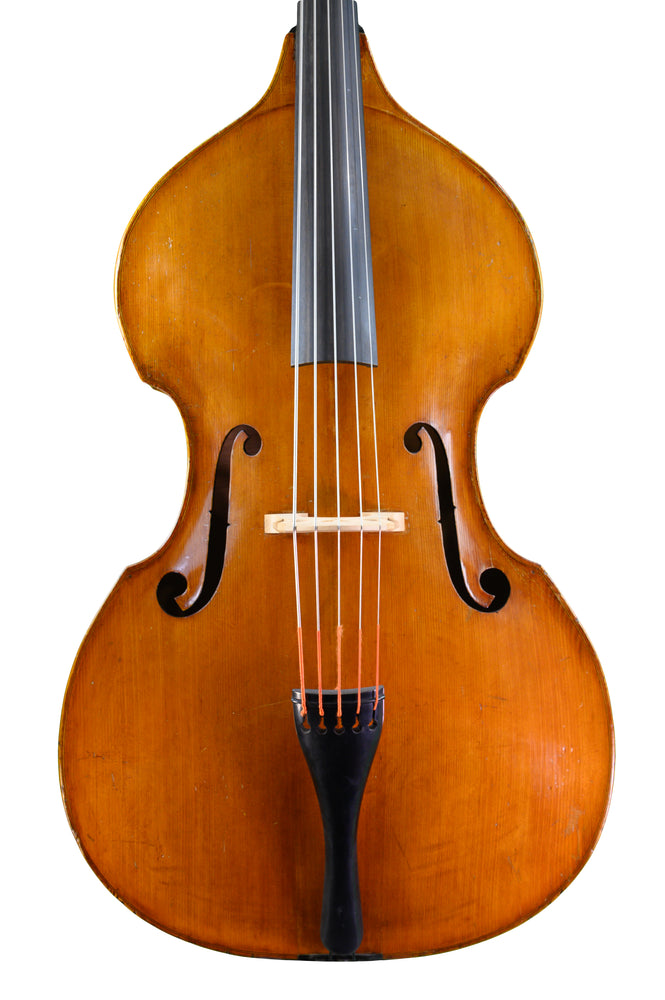
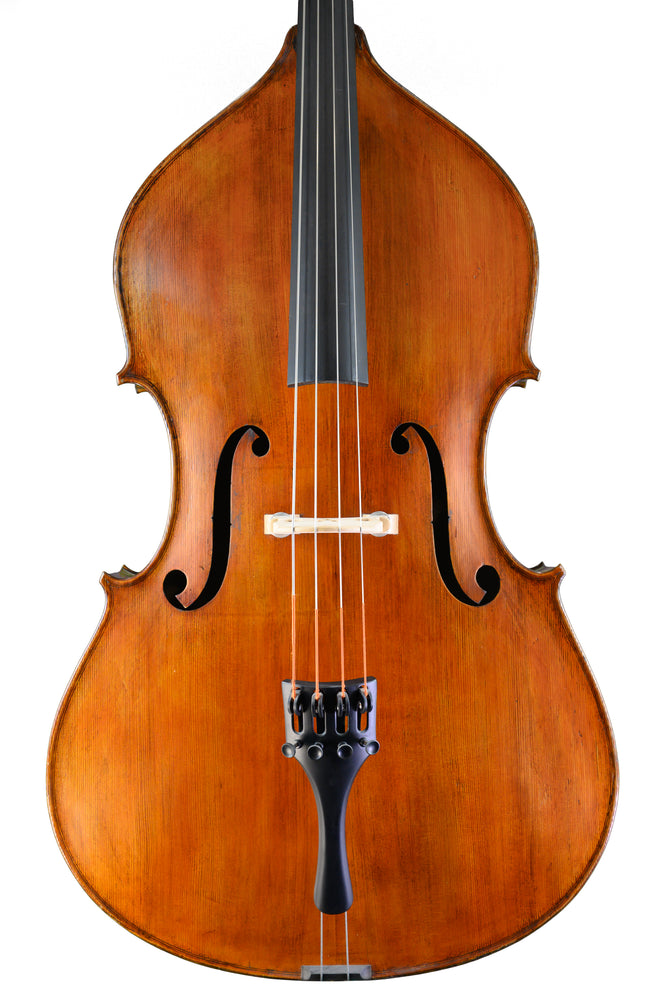
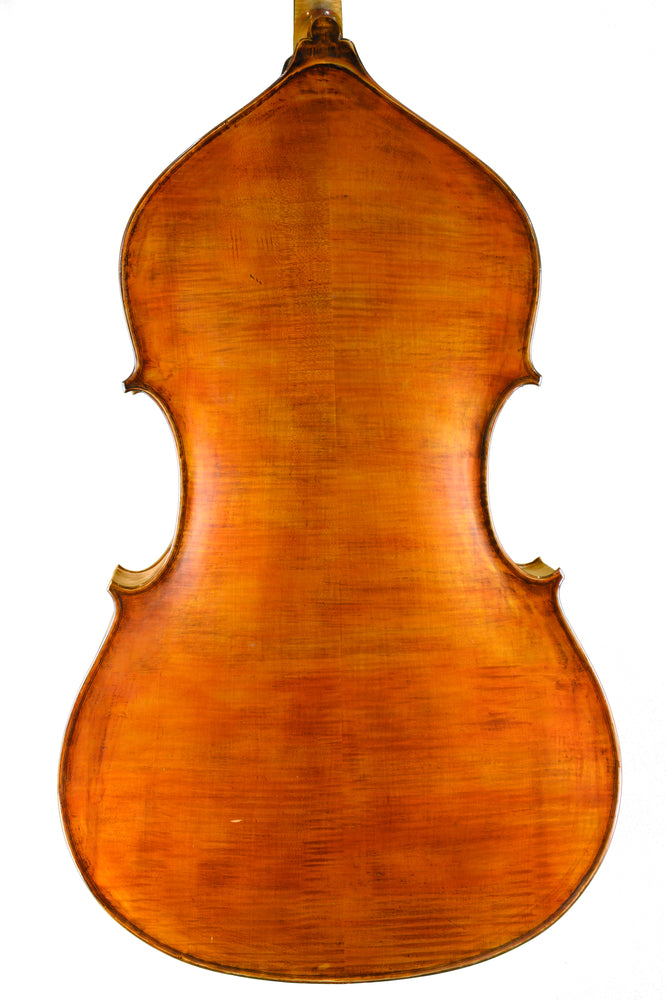
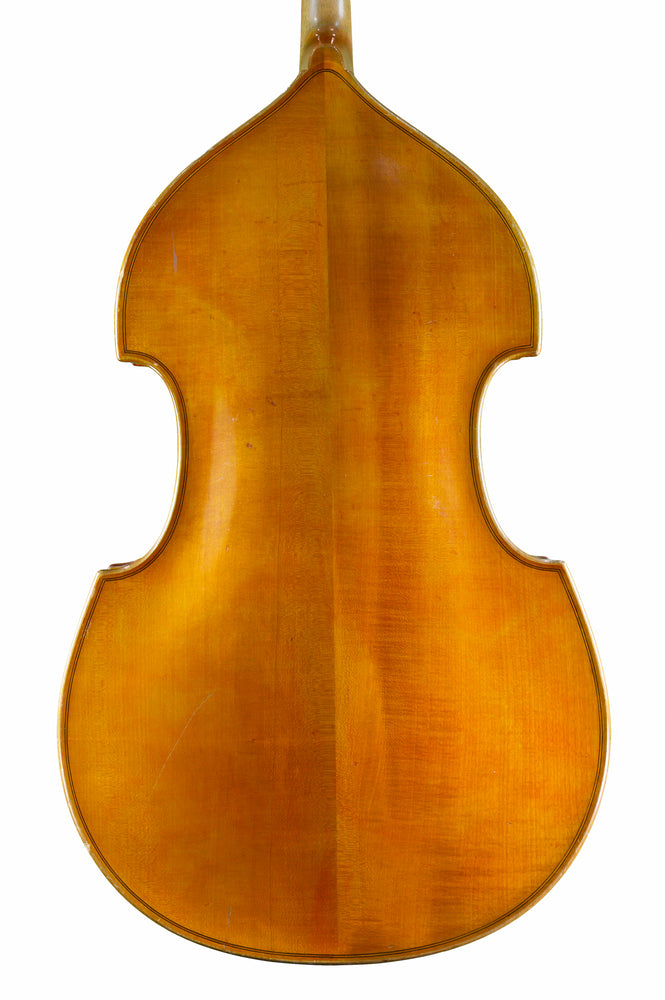
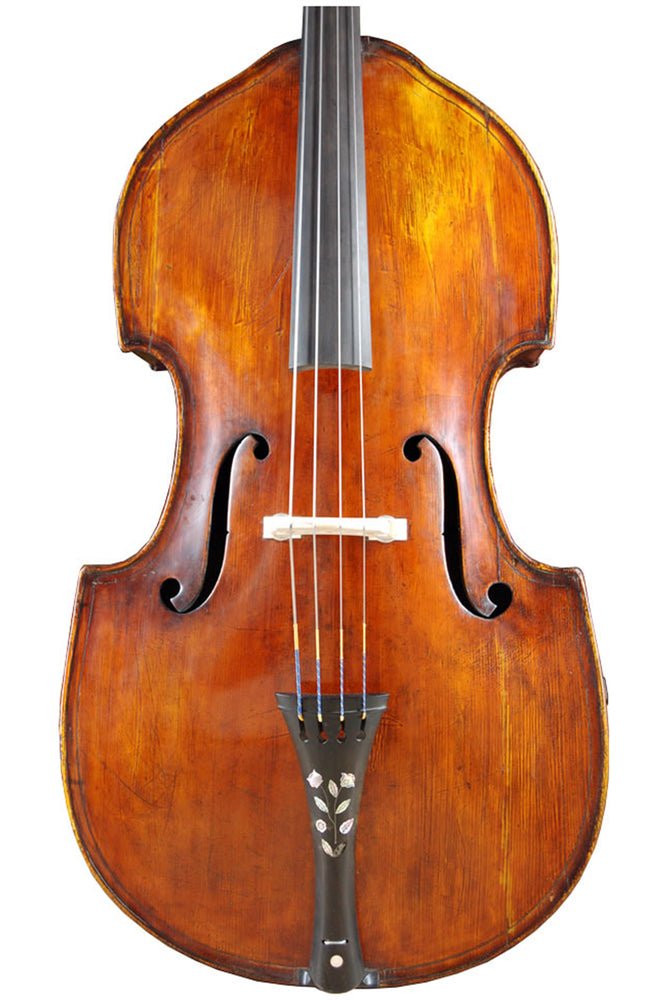
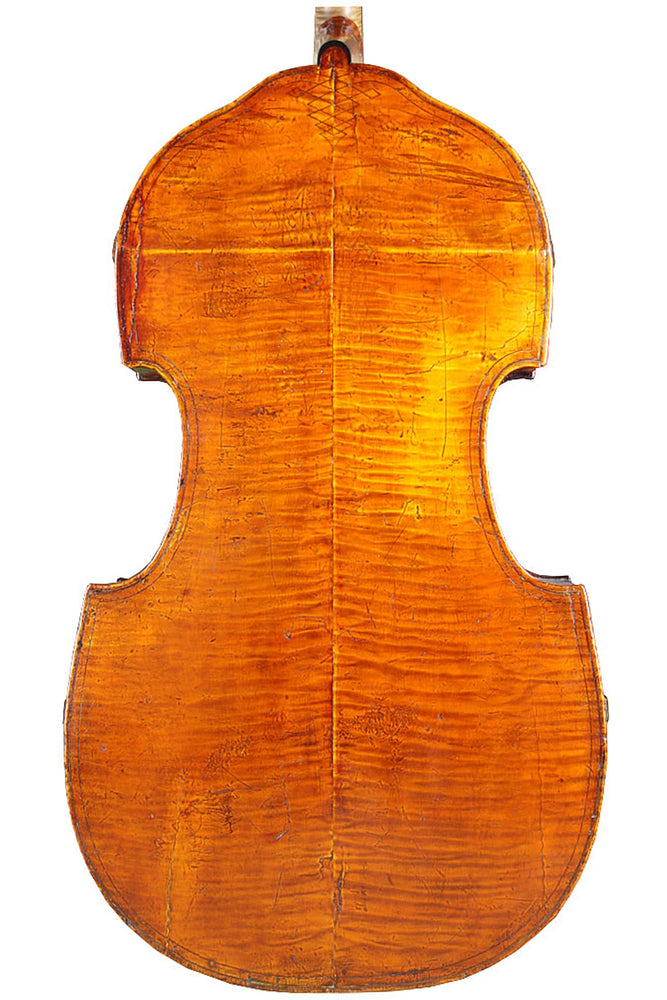
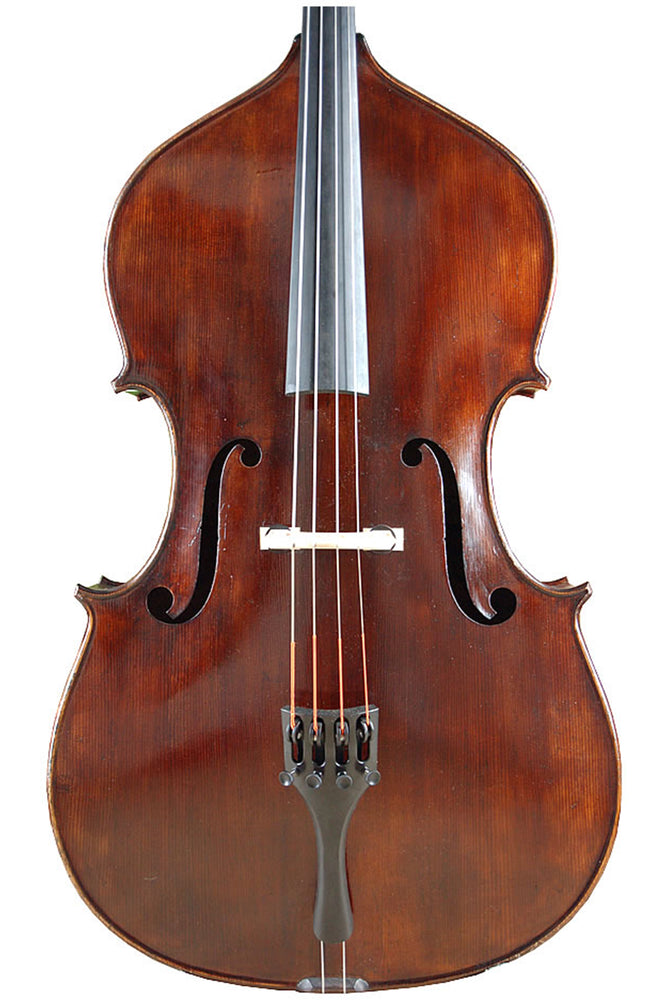
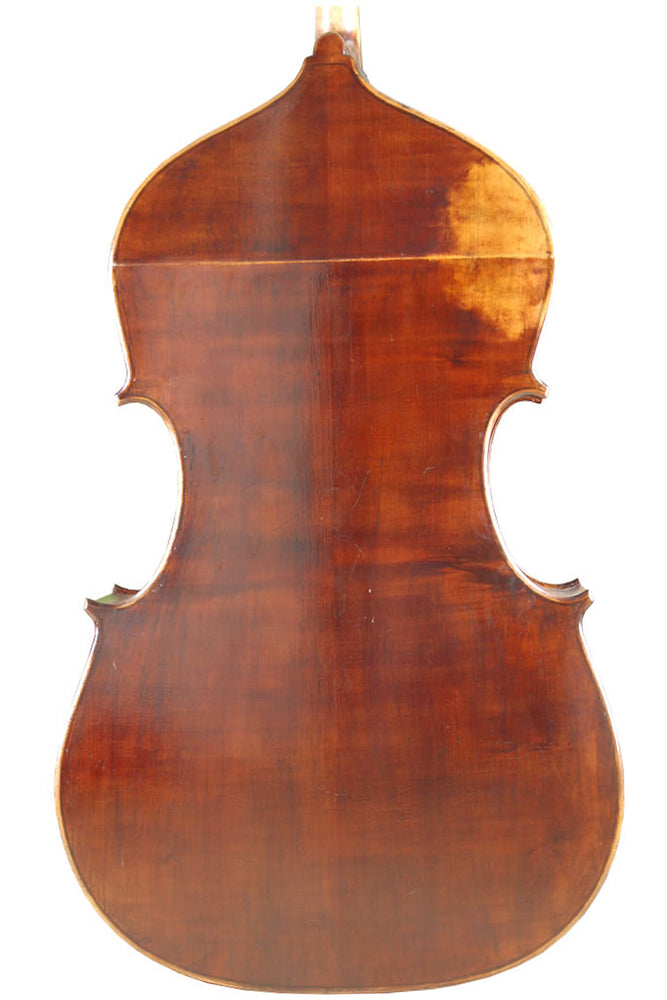
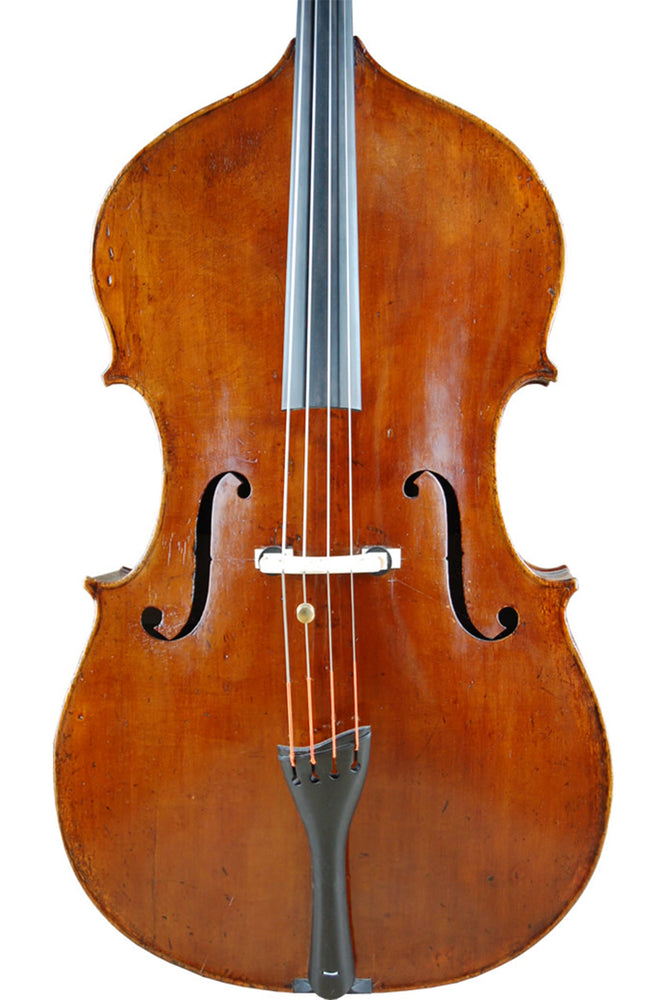
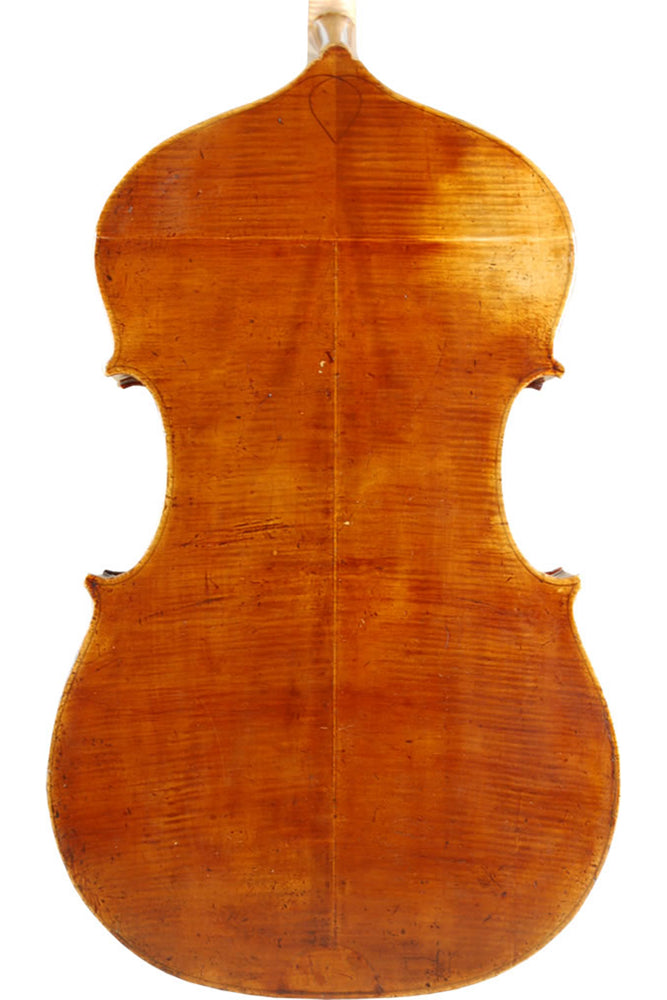
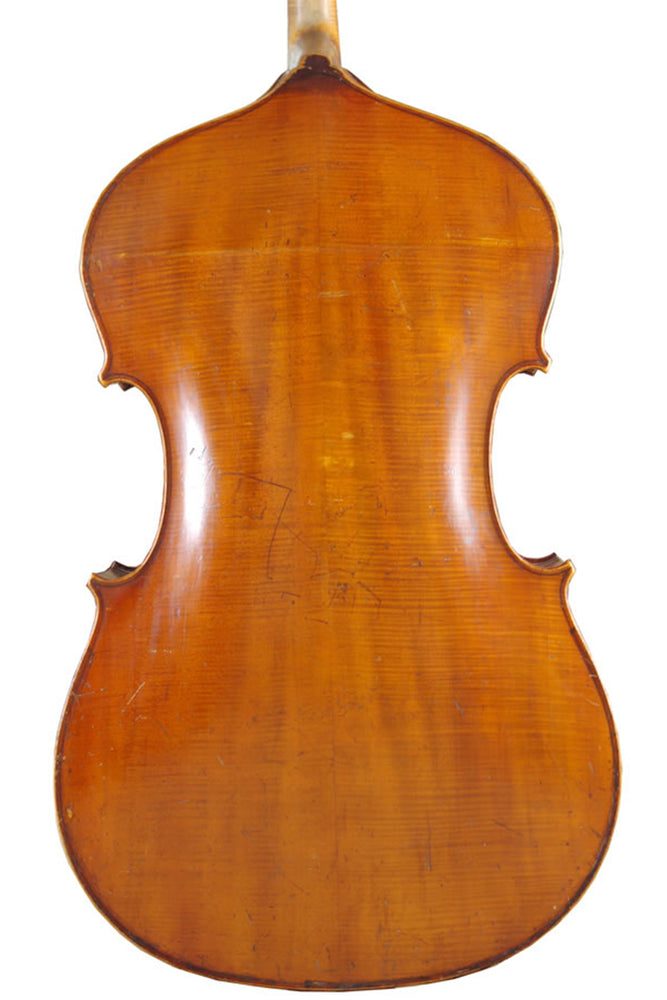
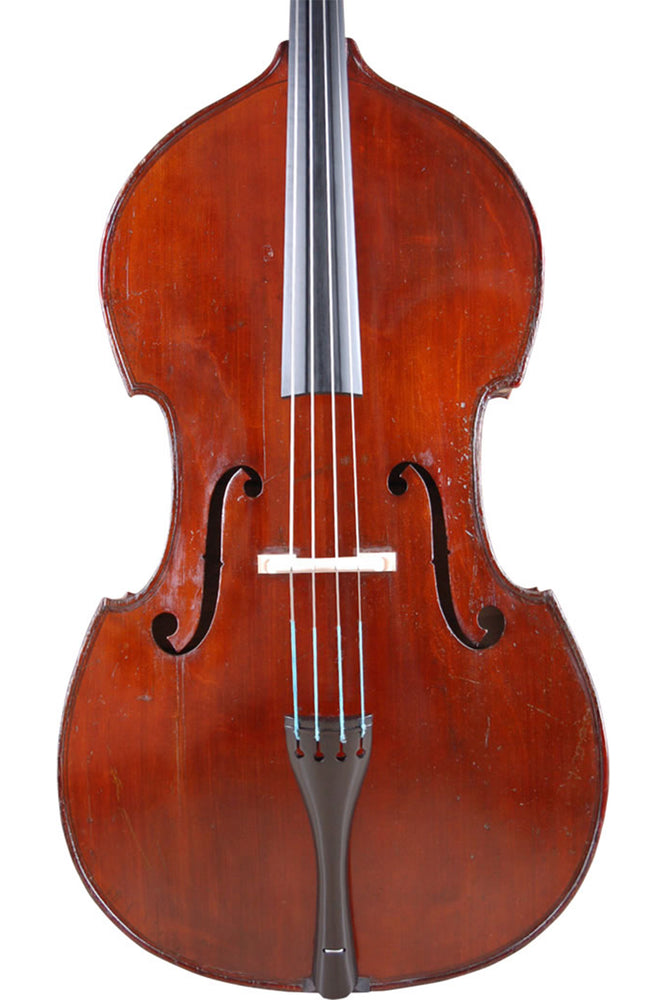
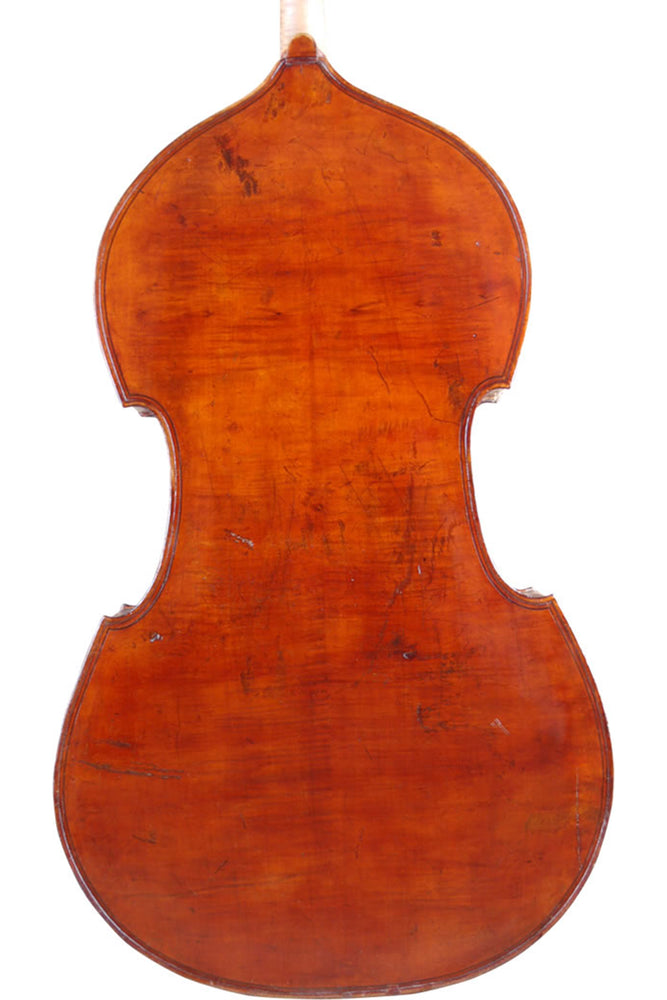
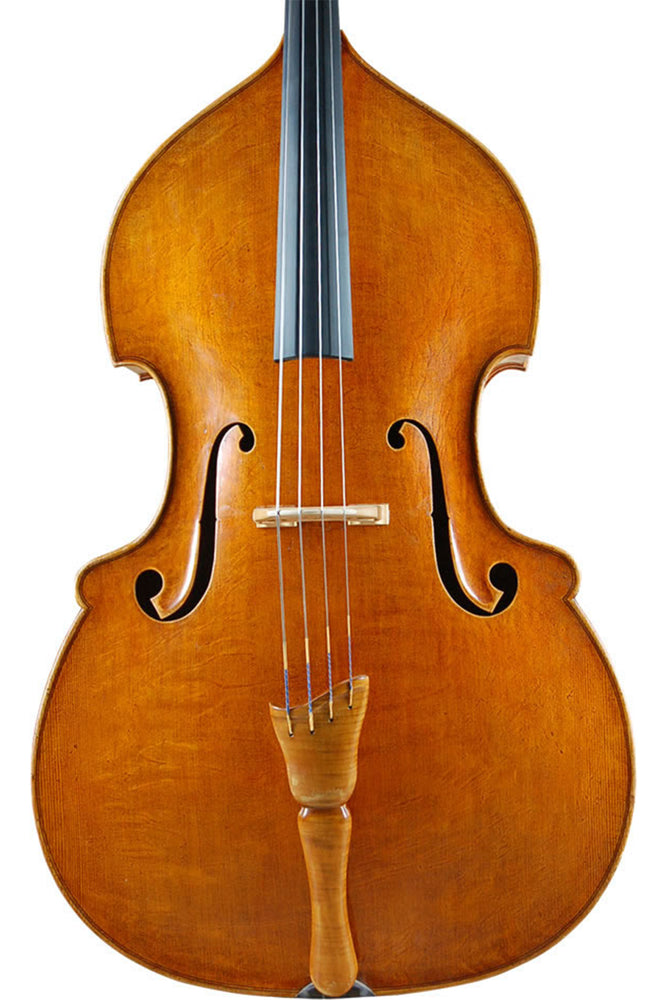
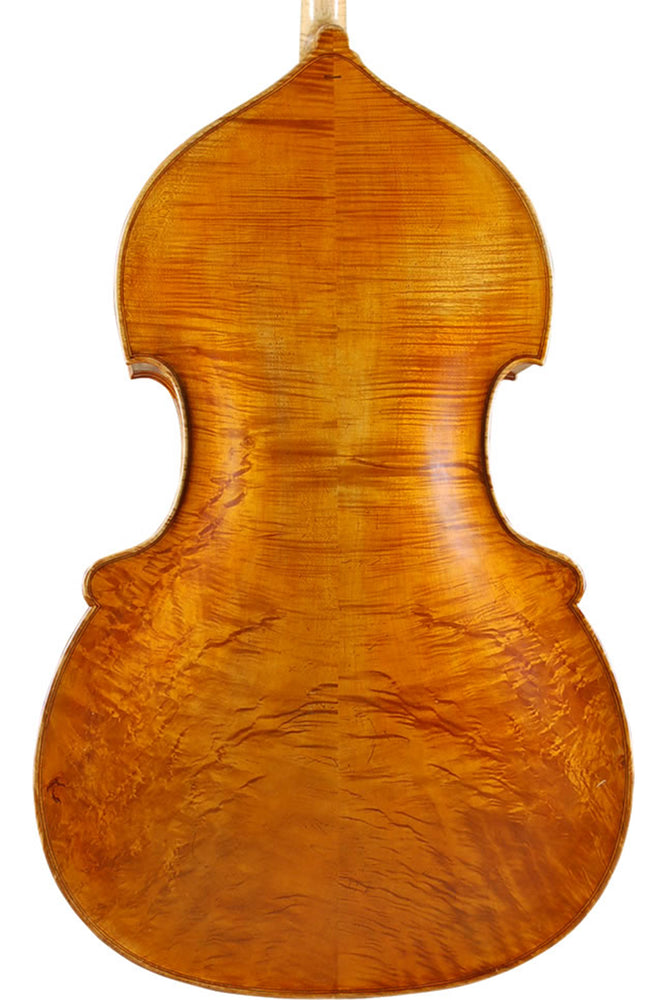
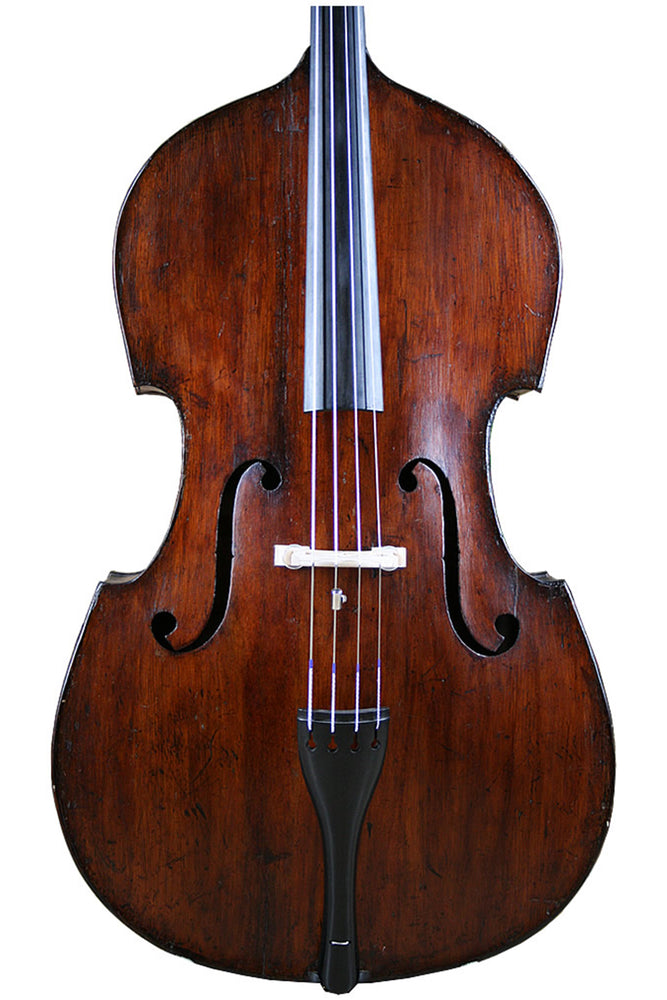
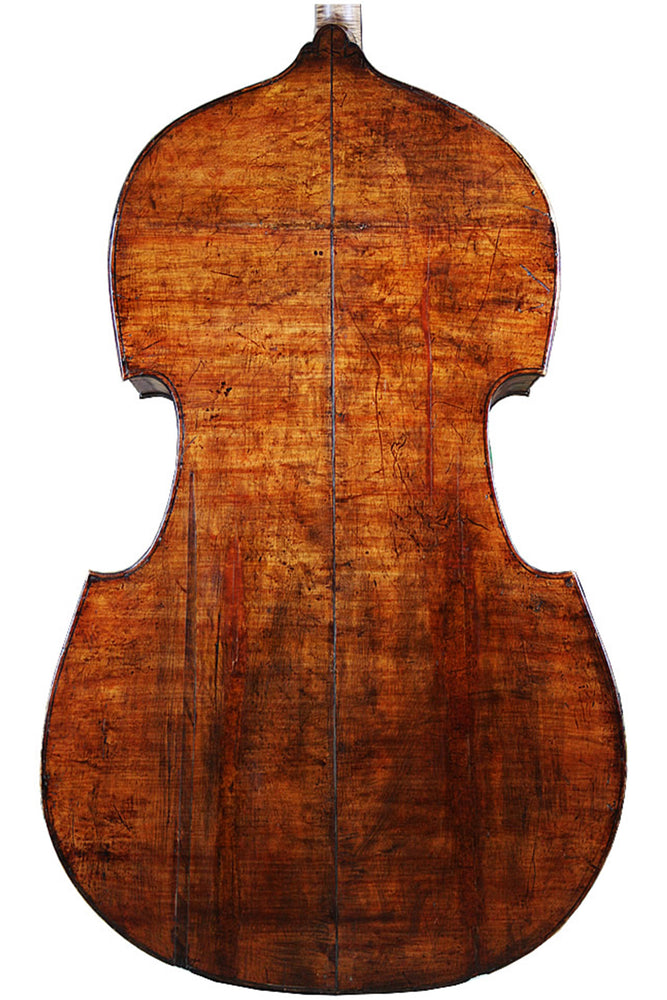
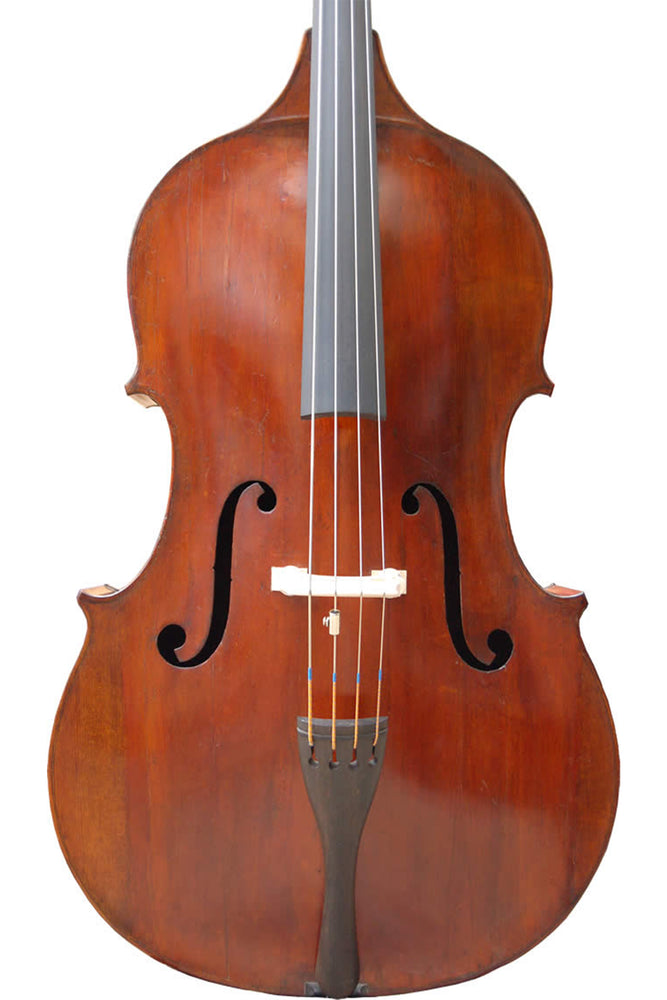
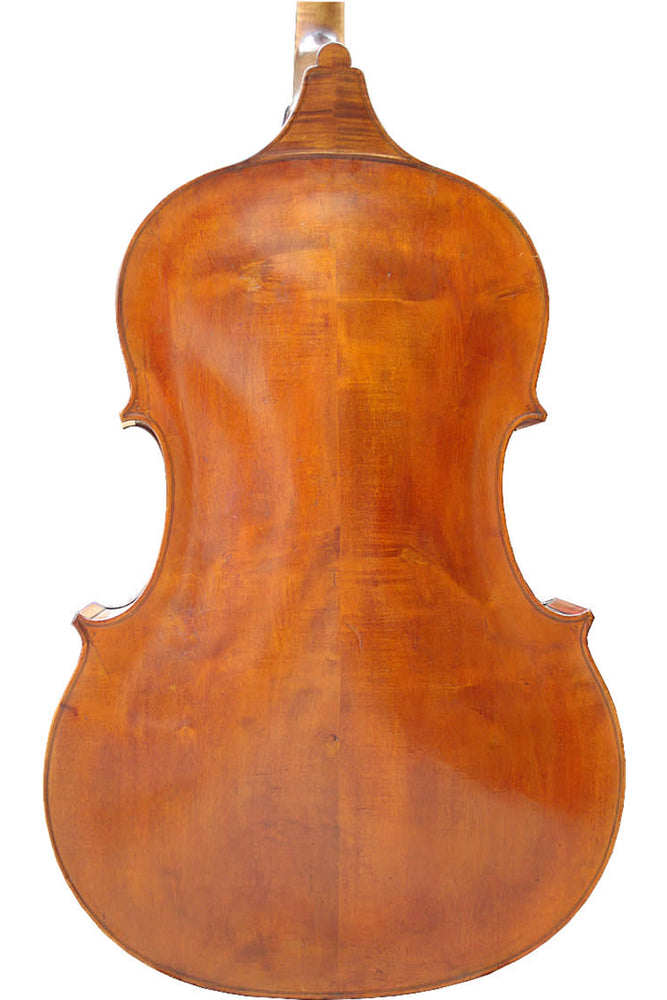
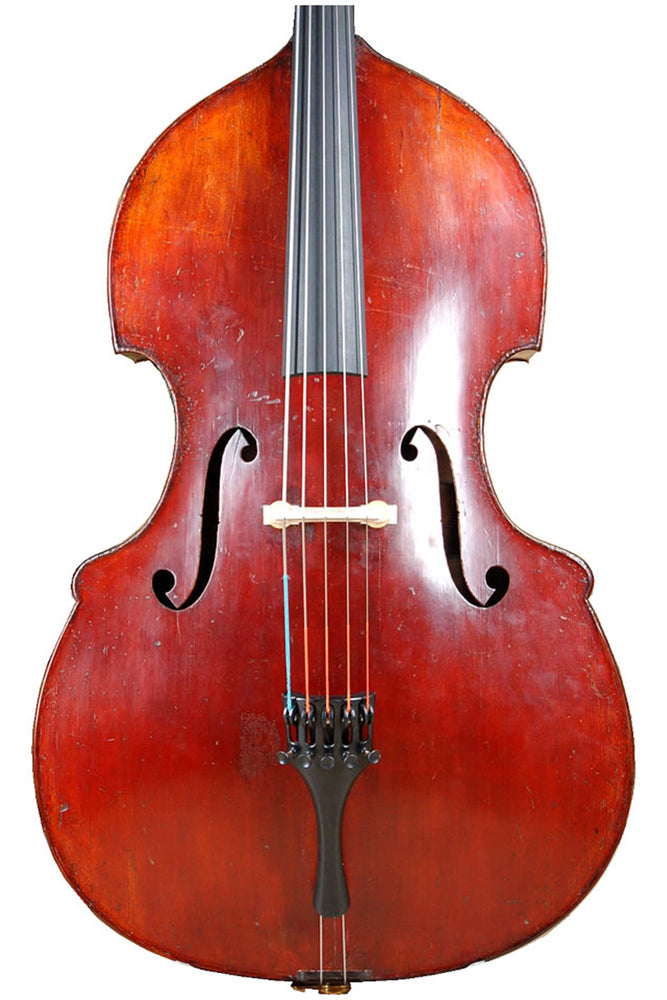
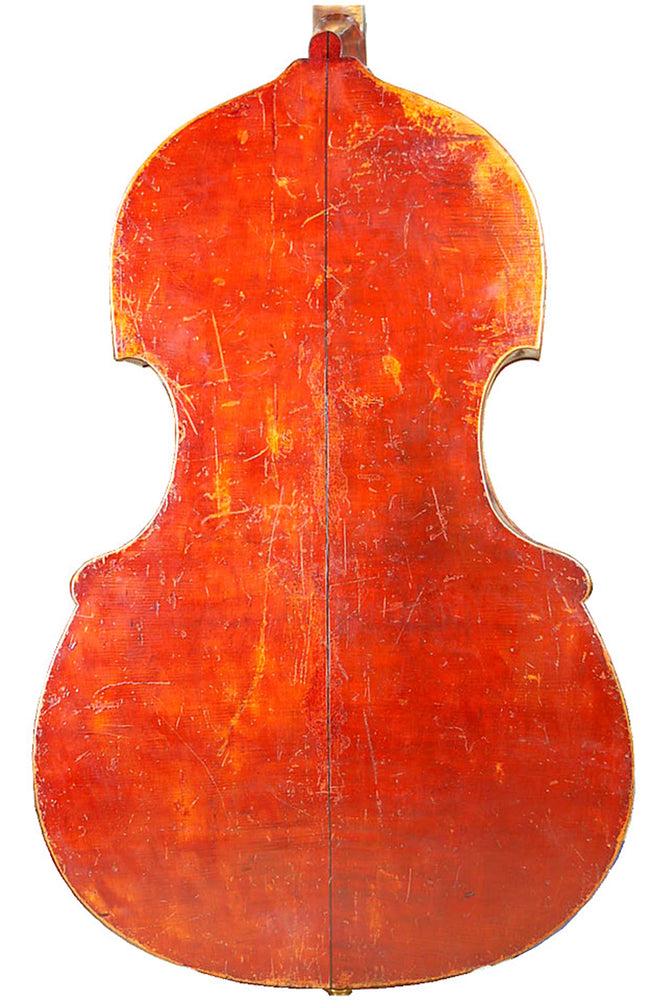
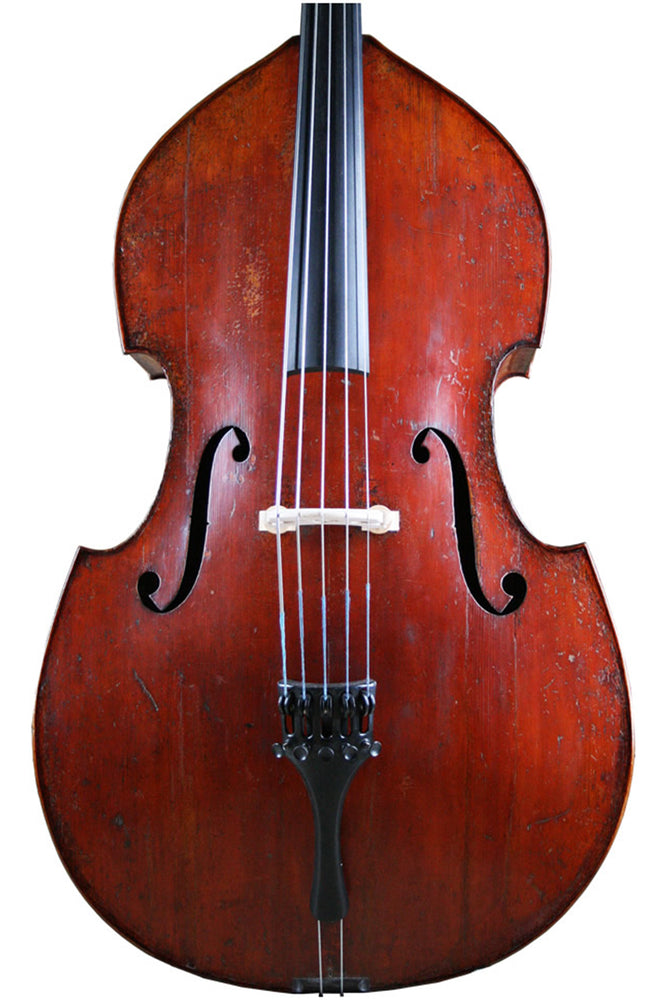
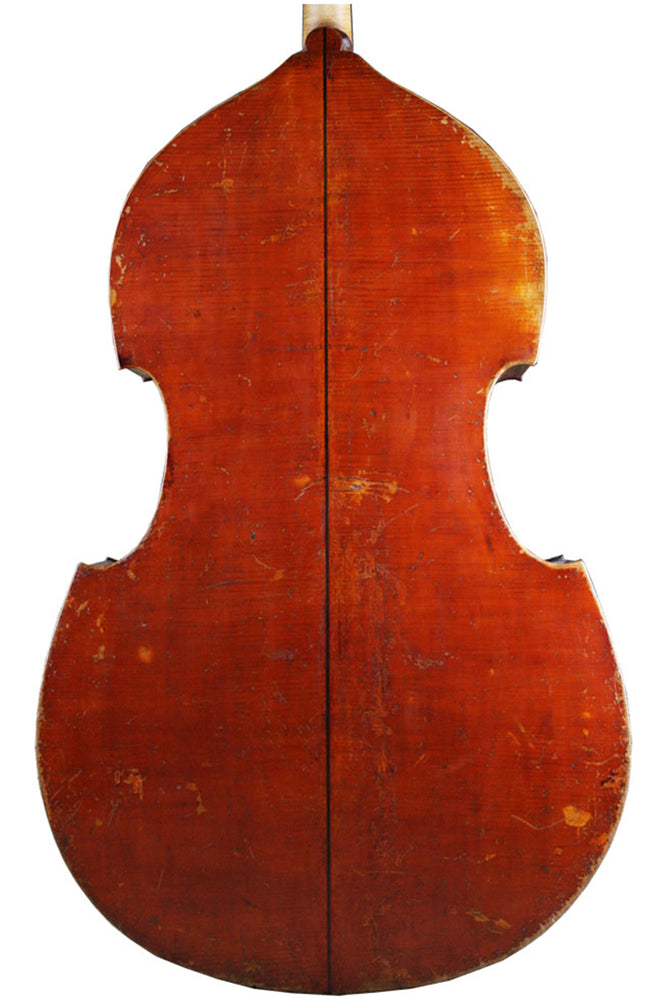
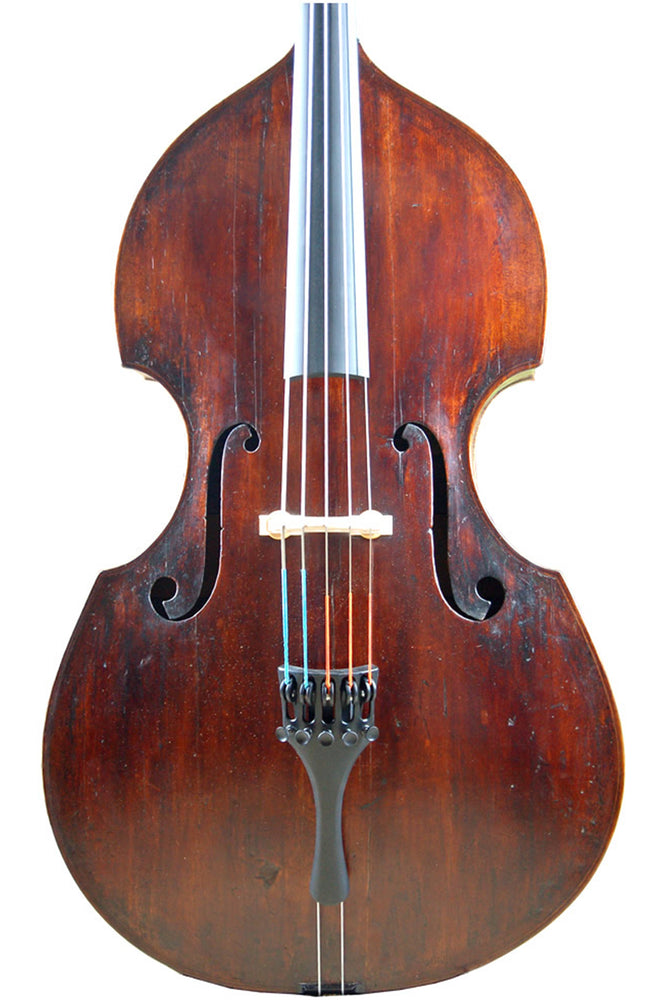
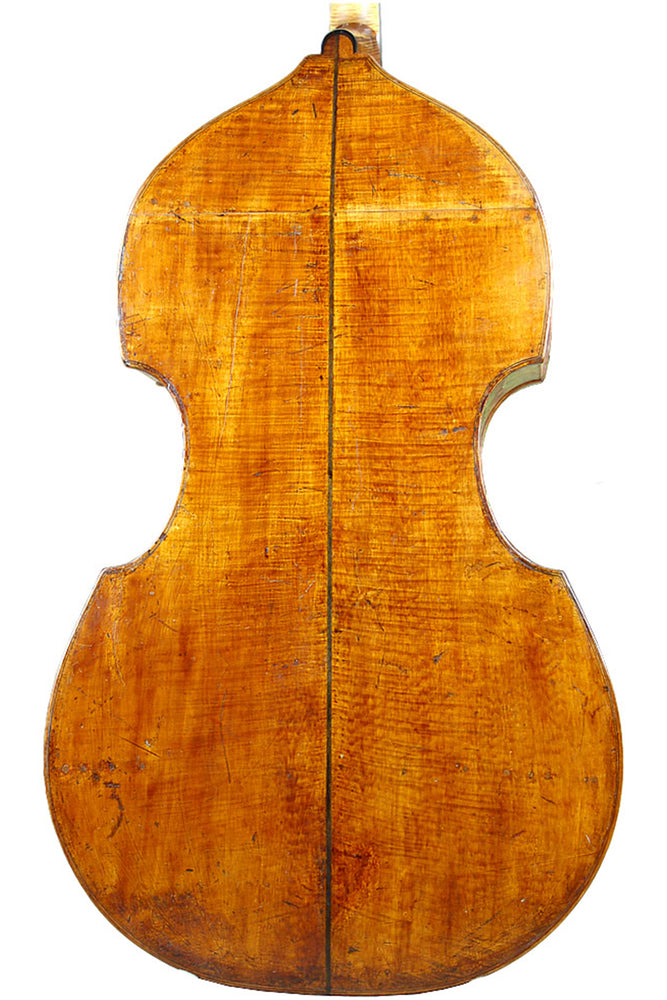
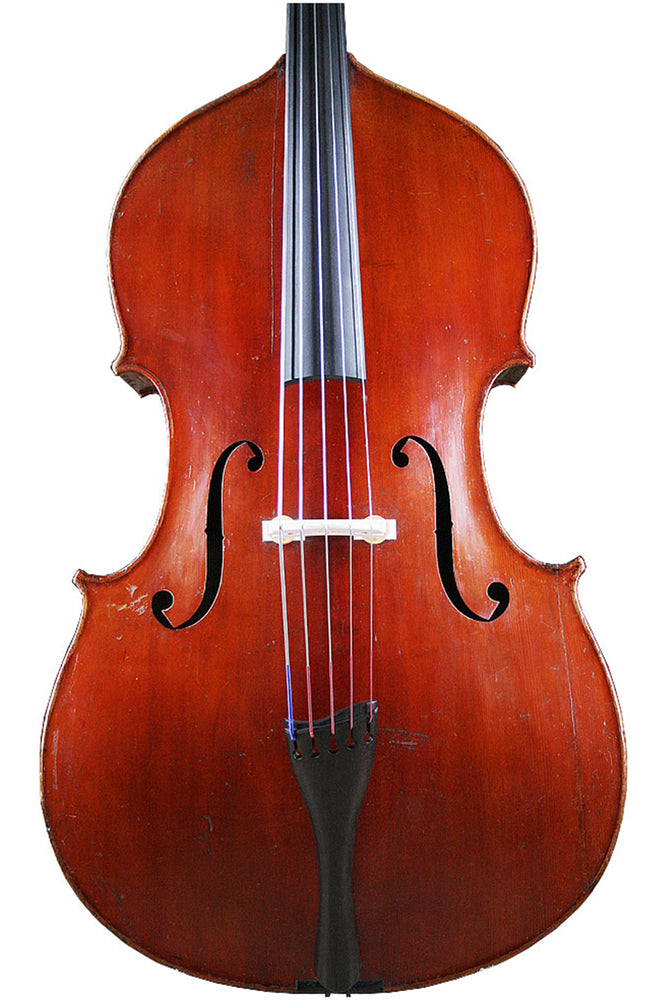
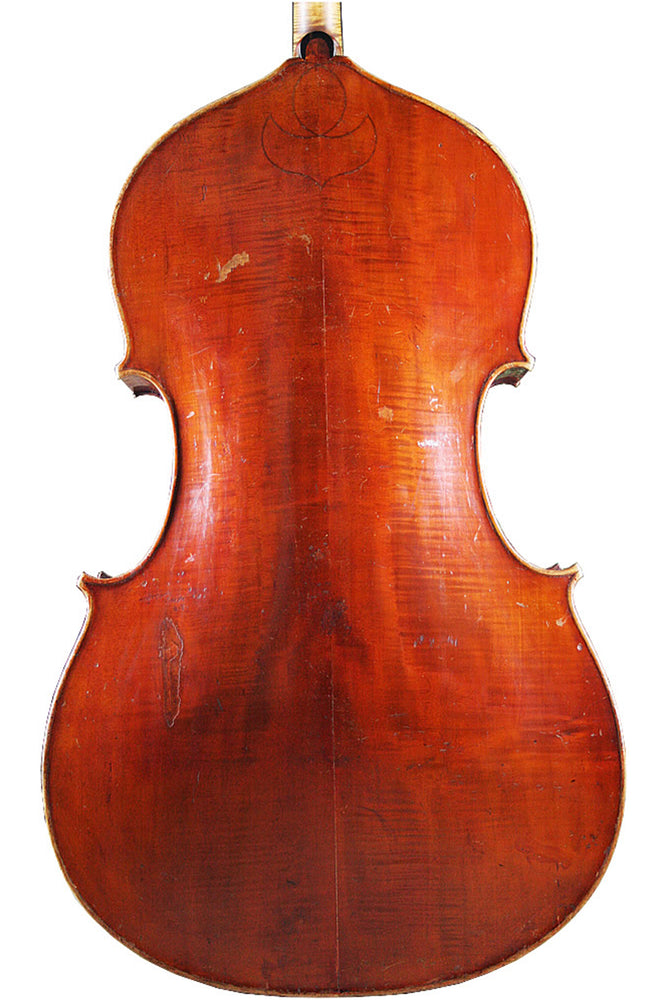
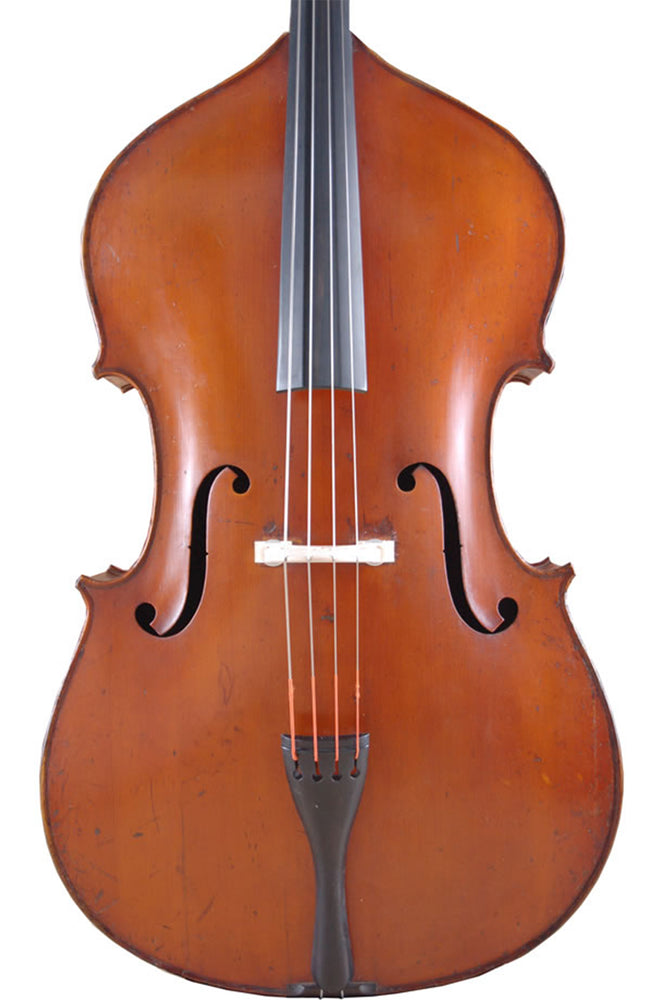
The instrument has turned out very, very well indeed.
There are many aspects that you will like and appreciate
as follows:
i) The English model: The violin outline with a
flat back and upper angle break follows in the glorious tradition
of English making.
ii) The proportions: Excellent proportions make this instrument
a delight to play.
iii) The wood: Beautiful English sycamore. Really nicely flamed
and well matched.
iv) The varnish: The transparent antique effect medium brown varnish
over a yellow ground is absolutely gorgeous.
v) The fittings: All fittings are of top quality. There is an
A1 fingerboard from Germany, a superb set of lightweight cogs - also
from Germany, a top quality Chevalets Despiau bridge from France
fitted with smooth running ebony adjusters and an endpin unit
par excellence made entirely by hand here in the UK to our own
specifications.
Full and rounded with a delightful amount of projection.
If you are currently in the process of trying to get one of those
coveted positions in an opera, symphony or chamber orchestra then
the good looks and sound of this instrument will certainly benefit
your cause.
To come across an instrument that has been started by one person
and then finished by someone else who lives in a totally different
country and who is of a totally different generation and background
is definitely unusual. In this instrument we are pleased to say
that the Anglo-Hungarian collaboration has worked out well above
expectations.
This is an instrument that looks good, feels good and plays good.
As such - this is an instrument that will appeal to a great many
players.
This is an instrument that is destined to endure the test of time
and ultimately become an antique of the future.
LOB (length of back) - 111.3cm (43.85in)
Width across upper bouts - 51.5cm (20.26in)
Width across middle bouts - 41.5cm (16.27in)
Width across lower bouts - 66.8cm (26.25in)
Depth of lower ribs inc both plates - 21.2cm (8.30in)
Body Stop - 59.4cm (23.35in)
String length - 104.3cm (41.05in)
|